Overview
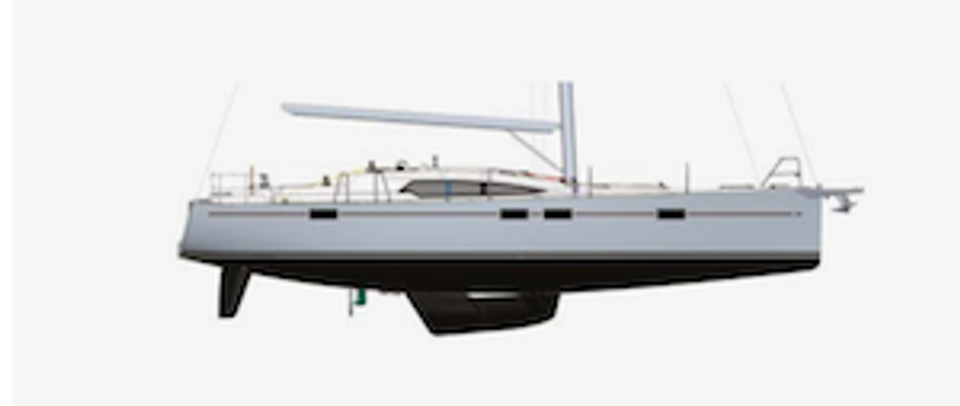
The Allures 45.9 is an aluminum, centerboard expedition cruiser built by Allures Yachting in Cherbourg, France, starting in 2018, to a design by Berret-Racoupeau, the same design office and Grand Large Yachting group behind the Garcia Exploration 45. It replaced the earlier Allures 45 after roughly seven years, and remains in current production.
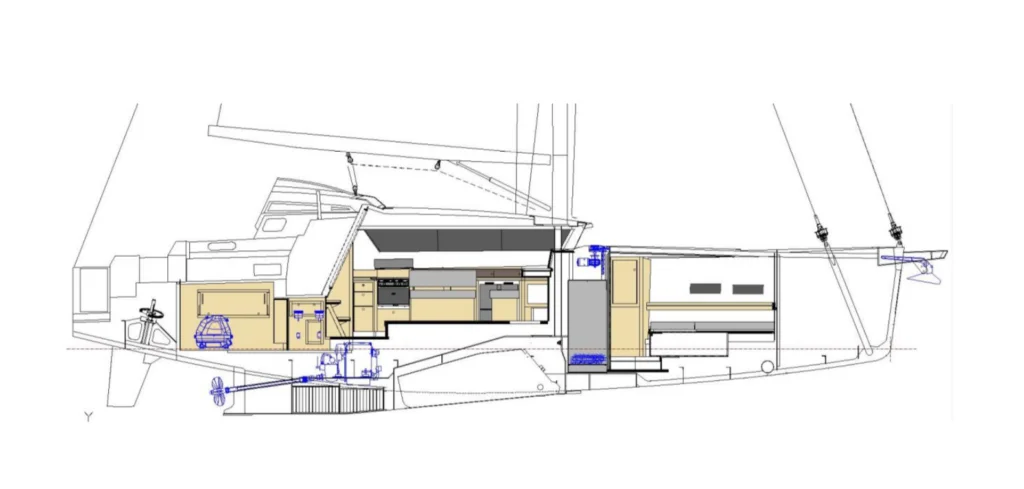
The centerboard arrangement gives real draft flexibility: 3.48 ft with the board up for shoal anchorages or ice-margin work, 9.51 ft down for upwind performance and stability offshore. Twin rudders keep steering redundant, a deliberate high-latitude and reef-country design choice rather than a performance-sailing one. sailboatdata.com also lists an alternate “swing keel” version of the boat with a lighter displacement and a different draft range, a real variant this file does not separately capture.
Design and Construction
At around 27,800 lb displacement with a 38 percent ballast ratio, the boat carries its ballast in the lifting centerboard itself rather than a separate internal weight, the same approach as its Garcia sibling. Allures builds an aluminum hull with a composite (fiberglass) deck and coachroof, a hybrid construction the company markets specifically as reducing weight aloft and simplifying interior finishing compared to an all-aluminum structure, while keeping the hull itself in the material most associated with grounding and ice tolerance.
Under Sail
No independent, third-party account of a specific Allures 45.9 completing a verified ocean passage was found in this research pass. Allures Yachting’s own site profiles two named hulls on substantial voyages: Loly, sailed by Genevieve and Etienne through the three-year Grand Large Yachting World Odyssey rally (2021-2024), and A Capella of Belfast, sailed by Julian and Patricia from the Atlantic to the Pacific via the Galapagos and Polynesia. Both are real, named-vessel accounts, but builder-published rather than independently verified, a real but self-interested data point rather than the stronger hull-specific evidence this catalog’s higher confidence tiers require.
Buyers Notes
As with any aluminum hull, electrolysis and stray-current corrosion are the main long-term maintenance concern, worth checking anode condition and history closely on survey. The centerboard and twin-rudder arrangement both add real mechanical complexity beyond a simple fixed fin keel, worth having surveyed by someone experienced with lifting-keel aluminum boats specifically. Buyers should also confirm which keel configuration (standard centerboard or the lighter “swing keel” option) a specific used hull actually has, since sailboatdata.com documents both under the same model name with meaningfully different displacement and draft figures.