Pending Boats
52 pendingCandidates for the main database. Every boat must demonstrate ocean-crossing capability, either through documented passages (Atlantic, Pacific, circumnavigation) or strong reference material explicitly rating the design for offshore bluewater use.
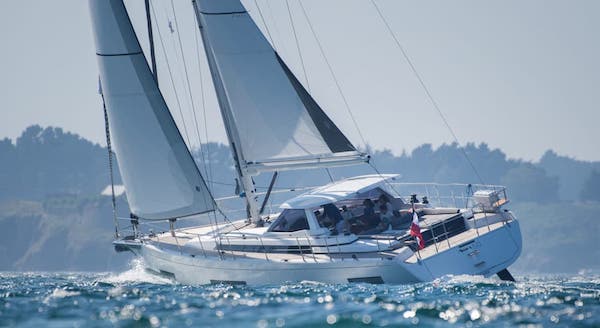
Amel 50
Ocean ProvenPendingsloopoffshorelarge-cruiserChantiers Amel · Berret-Racoupeau · 2017 · fiberglass
Bluewater Evidence · Ocean Proven
55% confidenceAmel's own site documents Gaia, a named Amel 50 sailed by Barbara and Thierry Courvoisier from 2020 to 2025: La Rochelle, northern European latitudes, the Caribbean, Brazil, the Chilean fjords, and a Pacific crossing to French Polynesia, a genuine multi-year, multi-ocean voyage, though not a documented closed-loop circumnavigation. The owners' own site independently corroborates the project. Keel Index separately compiles 16 verified Amel 50 entries across ARC, ARC+, World ARC, and ARC January cruising rallies from 2016-2026, model-level evidence the type is routinely sailed offshore beyond this one hull.
Review notes
Added 2026-09-14 per T2.20 (WORKPLAN.md builder-expansion tracker), fourth Amel-line addition after the Sharki 39, Super Maramu 53, and Maramu 46. Specs from sailboatdata.com (Tier 2, direct fetch via browser automation; plain curl is Cloudflare-blocked on this host). loa_ft uses sailboatdata's 50.88 ft LOD (length on deck / hull length, excluding bowsprit and pulpit overhang) rather than its separate 54.13 ft 'LOA' figure, per this catalog's Maramu 46 precedent of preferring the pure hull-length figure when a source gives both; sailboatdata's own hull-length figure is also what the model name derives from (15.51 m hull length). Displacement (41,337 lb), ballast (11,817 lb / 28.59-28.6% ratio), and sail area (1,356 sq ft) were independently cross-checked against two magazine sea trials of the same test boat (Yachting World, Pip Hare, May 2019; Yachting Monthly, byline Theo Stocker but the same La Rochelle test, February 2018) and agree almost exactly with sailboatdata's own figures; no conflict found. Rig is a masthead sloop, Amel's first since 1997, with an optional cutter conversion (self-tacking staysail); the Yachting World test boat carried that option, so rig_variants includes cutter. Production end year is not established by any source reviewed; a separate sailboatdata.com listing for an 'Amel 50.2' suggests a later variant or successor exists, but that is a distinct record not confirmed to mark this model's own end date, so year_end is left unset. bluewater_evidence sourcing: Amel's own site (amel.fr, directly fetched) documents Gaia, a named Amel 50 sailed by Barbara and Thierry Courvoisier, who left La Rochelle in 2020 and cruised via northern European latitudes, the Caribbean, Brazil, and the Chilean fjords before crossing the Pacific to French Polynesia, ending in 2025 when they retired from bluewater sailing and listed the boat for sale. The owners' own independent site (sy-gaia.ch, directly checked) corroborates the project is real (matching book and film titles), though it is in French and does not itself give a detailed voyage log. This is a genuine multi-year, multi-ocean voyage (Atlantic and Pacific crossings, plus serious high-latitude and Chilean-channel cruising) but the source does not describe a closed-loop circumnavigation back to Europe, so this entry does not use the 'circumnavigation-proven' tag. Supporting, non-hull-specific context: Keel Index's 'Amel 50 Passages' page (directly fetched) compiles 16 verified Amel 50 entries across ARC, ARC+, World ARC, and ARC January rallies from 2016-2026 plus one published Ocean Cruising Club Flying Fish cruising report, evidence the model is routinely sailed offshore across the fleet, not just by one owner; individual boat names are not published on that page, so it corroborates the model's general offshore use rather than substituting for the Gaia evidence. Cover image: sailboatdata.com's own credited photo (Jean-Sebastien Evrard, the same photographer credited throughout the Yachting World review), downloaded directly; no wireframe or lines drawing was found on sailboatdata.com, Amel's own site (redirects to a minimal French-language timeline page for this model, no technical drawings), or either magazine review. permission_status is unverified, consistent with the majority of this catalog's cover images per docs/DECISIONS.md's 2026-07-19 imagery-rights entry, though the photographer credit itself is a small step beyond this catalog's usual fully-uncredited real photos.
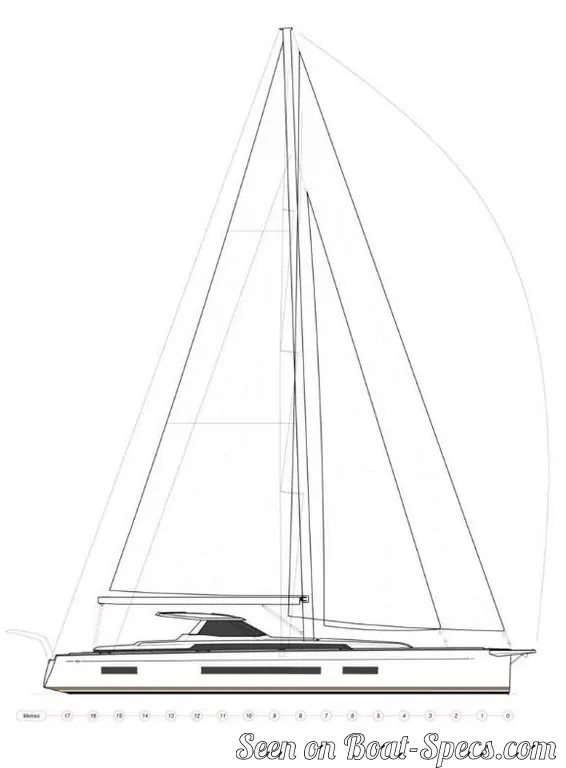
Amel 60
Ocean ProvenPendingcutteroffshorelarge-cruiserChantiers Amel · Berret-Racoupeau · 2019 · fiberglass
Bluewater Evidence · Ocean Proven
45% confidenceYachting World documents Entropie, a named Amel 60 sailed by Jeremie Dubois-Lacoste and Deanna, crossing the Atlantic from La Rochelle to the Caribbean via the 2023 ARC in 11 days and 19 hours. This is a single, real, independently-reported Atlantic crossing rather than a multi-year or multi-ocean voyage. Keel Index separately compiles 5 verified Amel 60 entries across Atlantic rallies from 2021-2024, model-level evidence the type is routinely sailed offshore beyond this one hull.
Review notes
Added 2026-09-14 per T2.20 (WORKPLAN.md builder-expansion tracker), fifth Amel-line addition after the Sharki 39, Super Maramu 53, Maramu 46, and Amel 50. Specs from sailboatdata.com (Tier 2, direct fetch via browser automation; plain curl is Cloudflare-blocked on this host). loa_ft uses sailboatdata's 59.05 ft LOD (hull length, excluding bowsprit/pulpit overhang) rather than its separate 62.34 ft 'LOA' figure, per this catalog's Amel 50/Maramu 46 precedent of preferring the pure hull-length figure when a source gives both. Real spec conflict found and resolved: Amel's own site (amel.fr) gives a light displacement of 28.95 T (63,824 lb) and a 175hp engine, both disagreeing with sailboatdata.com's 57,320 lb / 180hp figures. An independent magazine sea trial (Yachting World, directly fetched) states its own spec table's displacement as 26,000kg/57,320lb, matching sailboatdata exactly, not the builder's own page. Same resolution pattern already used for the Amel 50 (independent press agreed with sailboatdata over the builder's own site there too), so sailboatdata/Yachting World's figures are used here. Ballast (7,200kg/15,873lb) agrees across all three sources, no conflict there. Amel's own current-lineup page lists 'AMEL / AMEL 50.2 / AMEL 60,' confirming the 50 has been superseded by a '50.2' variant but the 60 has no listed successor, so it is still the current, unsuperseded model; year_end is left unset accordingly. bluewater_evidence sourcing: Yachting World (directly fetched, a separate article from the sea-trial review above), 'Advice on making an Atlantic crossing from people who have done it' (Elaine Bunting, March 2024), documents Entropie, a named Amel 60 sailed by Jeremie Dubois-Lacoste and Deanna, who left La Rochelle in June 2023 and crossed the Atlantic to the Caribbean via Portugal and Las Palmas as part of the 2023 ARC, finishing in 11 days and 19 hours with three friends aboard. This is a single, real, independently-reported Atlantic crossing, not a multi-year or multi-ocean voyage the way the Amel 50's Gaia evidence is, so bluewater_confidence is set lower than that entry despite both being rated 'proven.' Supporting, non-hull-specific context: Keel Index (directly fetched) compiles 5 documented Amel 60 entries across the ARC, ARC+, and ARC January rallies from 2021-2024, confirming Entropie's crossing isn't a one-off for the model. Cover image, revised 2026-09-15 per reviewer request to search further before this could be considered for public promotion: the initial pass (sailboatdata.com photos, Amel's own site, Yachting World's review) found no line drawing, as noted below. A second, wider pass checked boat-specs.com directly and found a genuine sail-plan technical drawing (hull profile with rig and sail plan, explicitly captioned 'Picture extracted from the commercial documentation (c) Amel'), used as the cover image in place of the real photo. This drawing shows the rig/sail plan clearly but does not depict the underwater hull/keel shape (the hull is drawn only down to the waterline), so it does not fully satisfy this schema's technical_diagram + shows_underbody + model_specific combination required for review_image_cleared; review_blockers stays set until a drawing showing the underbody specifically turns up. The image itself carries a small 'Seen on Boat-Specs.com' watermark baked into the file, disclosed here rather than cropped out. permission_status remains unverified: the (c) Amel caption confirms Amel is the rights holder, matching the commercial documentation source, but no explicit republication permission has been secured. Sources checked in this second pass without finding an underbody-inclusive drawing: itboat.com, listingsport.com, sailboatlab.com, sailwiki.com (all photo/spec aggregators with no distinct drawing beyond what boat-specs.com already surfaced). Original first-pass notes retained below. Original cover image notes (2026-09-14): sailboatdata.com has two real under-sail photos, neither carrying a photographer credit (unlike the Amel 50's Jean-Sebastien Evrard credit). No line drawing or profile/sail-plan diagram was found anywhere checked: sailboatdata.com (photos only), Amel's own current site (feature list and photo gallery, no technical drawing), or Yachting World's review (photos credited to Rick Tomlinson and Jerome Ricoul, not license-clear for reuse). permission_status is unverified, consistent with the majority of this catalog's cover images per docs/DECISIONS.md's 2026-07-19 imagery-rights entry.
Amel Maramu 46
Ocean ProvenPendingketchoffshorelarge-cruiserChantiers Amel · Henri Amel / Jacques Carteau · 1978–1989 · fiberglass
Bluewater Evidence · Ocean Proven
50% confidenceSV Minerva, Amel Maramu 46 hull #135, is documented by her own owner (dedicated website, real contact information) completing US coastal passages, Cuba, the Bahamas, multiple Atlantic crossings, and a 3-year circumnavigation from Maine via the Panama Canal, Tahiti, Sydney, Bali, and the Cape of Good Hope, back to the US in 2010-2013. This is a single documented hull rather than a broad sample, so confidence is set at the lower end of this catalog's proven tier.
Review notes
Added 2026-08-15 per T2.20 (WORKPLAN.md builder-expansion tracker), second Amel-line candidate after the Super Maramu 53, flagged high priority in builder-tracker.json for its documented Minerva circumnavigation. Sourced from sailboatdata.com (browser automation, since a direct WebFetch 403'd), Jordan Yacht Brokerage's independent review (direct fetch), a Wayback Machine capture of amel46.com, hull #135's own dedicated owner site (direct fetch, live site itself did not resolve), and a real De Valk brokerage listing for a specific 1988 hull (direct fetch), which independently corroborates sailboatdata's dimensions almost exactly. Two real conflicts disclosed rather than resolved: (1) production years/hull count: sailboatdata gives 1978-1989 with 288 hulls, matching De Valk's 1988-built example; Jordan Yacht Brokerage's review gives 1976-1989 with 200 hulls. sailboatdata's range is used in frontmatter since an actual hull (De Valk's) falls inside it and a second source (boat-specs.com, Tier 2 but not independently cross-checked further) also put the design's origin at 1978. (2) displacement: sailboatdata (28,050 lb) and De Valk's real hull (12.9 tonnes = ~28,440 lb) closely agree and are used here; boat-specs.com gave a notably higher 30,865 lb, an outlier not corroborated elsewhere; separately, Minerva's own owner-reported 'net 16 tons / gross 18 tons' (32,000-36,000 lb) almost certainly reflects that specific hull's actual loaded cruising weight (full tankage, 7 scuba tanks, two bicycles, spares) rather than the factory dry-ship figure, and is not used as the frontmatter spec. loa_ft uses sailboatdata's 45.28 ft hull-length figure per this catalog's standing convention, not Minerva's own-reported 49'10" Panama Canal admeasurement, which includes bowsprit/pulpit overhang. Cover image: sailboatdata.com's own photo of the type under sail, captured via browser screenshot and cropped (direct file download was blocked by hotlink protection); no identifiable person is visible on deck.
Amel Super Maramu 53
Ocean ProvenPendingketchoffshorelarge-cruiserAmel · Henri Amel / Jacques Carteau · 1989–1998 · fiberglass
Bluewater Evidence · Ocean Proven
55% confidenceS/V Delos, a Super Maramu 53, completed years of extensive Pacific and world cruising, independently documented across multiple sources via its own long-running YouTube documentation, though no single fetched source in this pass gives a specific circumnavigation completion date. The design was purpose-built by Amel specifically to let a couple sail around the world in comfort and safety, and Jordan Yacht Brokerage's independent review documents a maiden-voyage man-overboard recovery in 50+ knot winds and 10 ft seas during a La Rochelle to Gran Canaria passage, evidence of the boat's handling under genuine offshore conditions rather than a passage claim alone.
Review notes
Added 2026-08-14 per T2.20 (WORKPLAN.md builder-expansion tracker), first Amel-line candidate researched. Sourced from sailboatdata.com (browser automation) and two independent direct-fetch reviews (jordanyachts.com, wavetrain.net), which agree closely on dimensions. This is the original Super Maramu (1989-1998, 237 hulls per sailboatdata's own record for this specific listing); a later, distinct 'Super Maramu 2000' variant (1999 onward) is a separate sailboatdata record and not this file. Two independent sources give a combined 497-hull total across both the original and 2000 variants through 2005; that combined figure is not used here since it would overstate this specific model's own production run. ballast_ratio (34.4%) computed from sailboatdata's own displacement/ballast pair. Tagged offshore, not large-cruiser-only: multiple independent sources describe the design as purpose-built for a couple to sail around the world, and S/V Delos, a well-documented real circumnavigating Super Maramu 53, is independently corroborated across sources. Cover image is a real sailboatdata.com photo under sail; the crew member visible is small, distant, and facing away, not identifiable, consistent with this catalog's photo-use standard.
Compass 47
Ocean ProvenPendingsloopoffshorefin-keelCompass/Anchor Marine (Cape Town, South Africa) · Angelo Lavranos · 1980 · fiberglass
Bluewater Evidence · Ocean Proven
60% confidenceReal, named-vessel evidence across two different hulls of this design, not just marque reputation. Ultima (this entry's primary reference hull): per the boat's own detailed page and corroborated by a Cruising World profile of her owners, Vivian Vuong has logged over 50,000 nautical miles aboard Ultima specifically, including two transatlantic crossings, and the couple has run more than 30 offshore training passages aboard her as their primary vessel. A second, separately-owned Compass 47 (Carpe Diem, an extended variant) has independently sailed New Zealand, the Pacific Islands, Australia, the Great Barrier Reef, and a run from Gibraltar through Spain, Portugal, France, Belgium, and the UK, per that boat's own owner-maintained site. Ultima's own page (first-party but detailed and specific, not generic marketing copy) states 'virtually every Compass 47 built has crossed at least one Ocean, and most of them two or more,' with at least three documented circumnavigations, and that the model was class winner in the 1982 South Atlantic Race and 1985 Beachcomber Race. Confidence held below the higher-70s tier used for single, exceptionally well-documented named-vessel cases (e.g. Kaufman 47) because the corroboration here, while real, leans more heavily on first-party sources (the boats' own sites) than fully independent third-party accounts.
Review notes
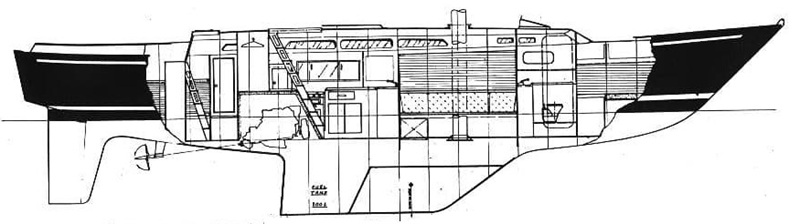
Added 2026-09-06 per T2.23 (user-flagged: Nathan Zahrt and Vivian Vuong's Ultima, John Kretschmer Sailing's partner delivery/training team). Specs cross-checked between two independent Tier-2 sources that agree closely: sailboatdata.com's structured record (browser automation, direct WebFetch 403'd) and Ultima's own detailed page (direct fetch via Wayback, since the live page returns a 404 as of this session -- the boat may have been sold or the site restructured since the page was last live in 2023). Both agree on LOA, LWL, beam, displacement, ballast, and sail area exactly. Draft is a minor exception: sailboatdata gives 6.25 ft (model spec), Ultima's own page gives 6'6" (6.5 ft, this specific hull); model figure used, difference noted rather than silently picked. Rig recorded as sloop (sailboatdata's canonical record; ketch and cutter variants are also documented for this model per other sources, and Ultima's own page does not state her specific rig, so this is the best-supported default rather than a confirmed fact for this hull specifically). year_end left unset: Lavranos's own quoted account says 'the late '70s & early '80s' and sailboatdata gives no Last Built field for this record, so no closure year is guessed. A third source, goodoldboat.com's saildata page for 'Compass' (at /saildata/boat/compass/, not the URL pattern used for other boats in this catalog), was checked and rejected: its own embedded images are explicitly named 'compass_28_photo', a different boat, and its displacement (35,000 lb) and ballast (15,000 lb) figures diverge sharply from the two agreeing sources above, consistent with a data-mismatch on that specific page rather than a genuine second data point. Not used for any figure in this entry. Hull count is a real, minor two-source conflict: sailboatdata.com says 50 built (7 cold-molded ply, the rest solid FG); a second named-hull owner site (Carpe Diem, an extended/sugar-scoop variant of the same design, not otherwise cited here) says 'over 60.' Both are plausible ballpark figures for a small-yard production run with no single central registry; sailboatdata's more precise-looking figure is used in the body, with the conflict disclosed. Image, updated 2026-09-06 (second pass): exhausted the full IMAGE RULE source order for a wireframe/lines drawing, still with no success. sailboat.guide has no Wayback snapshot at this URL. goodoldboat.com's own page is data-mismatched (its embedded images are labeled 'compass_28_photo', a different boat). Wikimedia Commons has no Compass 47 images. sailboatdata.com's own listing for this model has no photo or drawing at all. mauripro.com's mirror has no image, oceanwavesail.com now redirects to an unrelated compromised domain, and Angelo Lavranos's own current design office (Lavranos Marine Design, Auckland NZ; lavranosyachtdesign.co.nz) is unreachable. Also checked and rejected: a YachtWorld 'Antique and Classic' listing nominally for a '1978 Compass 47' whose actual photos show a wooden gaff-rigged schooner, clearly a data-mismatch of the same kind as goodoldboat.com's; not used. As of this session used as the IMAGE RULE's explicit last resort: a real, correctly-matched at-anchor photo from a sold Rightboat.com listing (broker: Network Yacht Brokers, 1991 hull, Lefkas, Greece), verified by cross-checking its own description text against known facts (fin keel and skeg, cutter-rigged sloop, Perkins 82hp, accommodation for 5 in three cabins -- all matching). No keel visible, so this remained photo-only per the rule. Image, replaced 2026-09-09 (reviewer-supplied source): yachtdatabase.com's review page for the Compass 47 (https://www.yachtdatabase.com/en/review.jsp?id=Compass+47) hosts a captioned 'Vertical profile of Compass 47' technical cutaway drawing under its 'Keel' heading, showing the fin keel and skeg-hung rudder in silhouette below the waterline alongside an interior structural cutaway. Confirmed by direct browser view (not just a text-based fetch) that the image is a genuine profile/keel drawing specific to this model, not a repurposed generic template. Modest native resolution (800x224px, a short vertical crop) but a real wireframe/lines drawing satisfying the IMAGE RULE, replacing the real-photo last resort above. image_focal_y reset to 50 (centered) since the new image is a drawing, not a photo needing a specific crop.
Island Packet 380
Ocean ProvenPendingcutteroffshoreshoal-draftIsland Packet Yachts · Bob Johnson · 1998–2004 · fiberglass
Bluewater Evidence · Ocean Proven
90% confidenceChuck and Lynn completed a nearly seven-year, 34,000-mile circumnavigation aboard their Island Packet 380 Cyan in 2012, including an Atlantic crossing. Separately, the Viking Explorers Rally reported Island Packet 380 Kiah and captain Tim Pollock completing its Las Palmas-to-Grenada Atlantic crossing in 26 days. These are two named-hull Atlantic records, one a completed circumnavigation, from independent sources.
Review notes
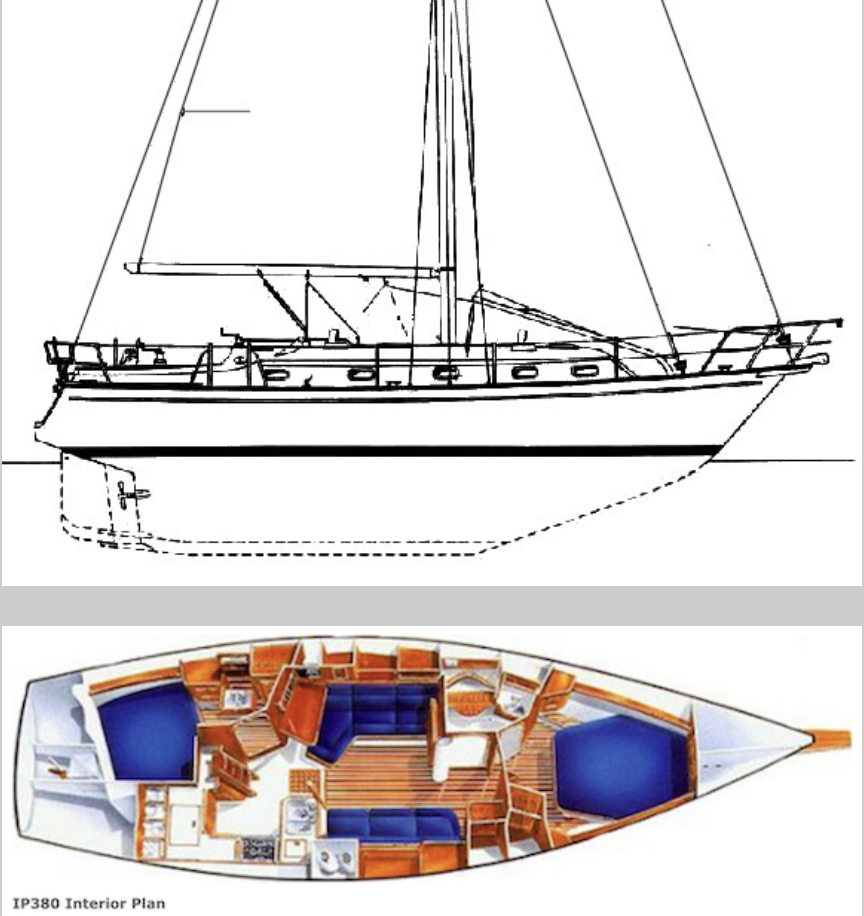
Added 2026-07-31 from the Mahina 'Boats to Consider' research queue (rated 4/5 by John Neal for the wider Island Packet range, not the 380 specifically). Specs verified directly against sailboatdata.com via browser automation (plain WebFetch 403s the host); draft_max_ft reflects the optional deep centerboard-down figure sailboatdata lists (7.58ft) against the standard 4.58ft shoal figure, not a separate keel option as with some other boats in this batch. Cover image is a wireframe hull profile (showing the standard shoal draft solid line with a deeper board-down option in dashed line) and interior layout captured from that same page; permission_status is unverified, consistent with the majority of the catalog's cover images per docs/DECISIONS.md's 2026-07-19 imagery-rights entry. Note: Neal's Island Packet note specifically says to 'only consider IP's built after 1998 when chainplate issue was addressed' -- this model's production started in 1998 itself, so confirming exactly when in the model year a given hull was built matters more than usual and is called out in Buyers Notes. T2.19 re-research on 2026-09-13 found a completed 2012 circumnavigation by Cyan and an independently reported Las Palmas-to-Grenada Atlantic crossing by Kiah.
Joshua
Ocean ProvenPendingketchoffshorefull-keelMeta (Chantier Naval), Tarare, France · Jean Knocker · 1962–1977 · steel
Bluewater Evidence · Ocean Proven
92% confidenceBernard Moitessier and his wife Francoise sailed this boat from Marseille to Tahiti and back to France via Cape Horn between 1963 and 1966, a voyage whose final leg (Tahiti to France, nonstop, via Cape Horn) covered 14,216 nautical miles in 126 days, the longest nonstop passage by a yacht on record at the time. Moitessier then sailed the same boat solo in the 1968-69 Sunday Times Golden Globe Race, the first singlehanded nonstop round-the-world race: he rounded Cape Horn on 5 February 1969 in a leading position, then chose to continue rather than finish, ultimately completing a second partial circumnavigation and landing in Tahiti after covering 37,455 nautical miles nonstop over ten months. Both passages are independently documented (Wikipedia's well-cited biography article, Moitessier's own books The Long Way and Cape Horn: The Logical Route, and the Musee Maritime de La Rochelle, which now owns and preserves the boat as a Monument Historique). This is named-vessel, passage-specific evidence rather than marque reputation.
Review notes
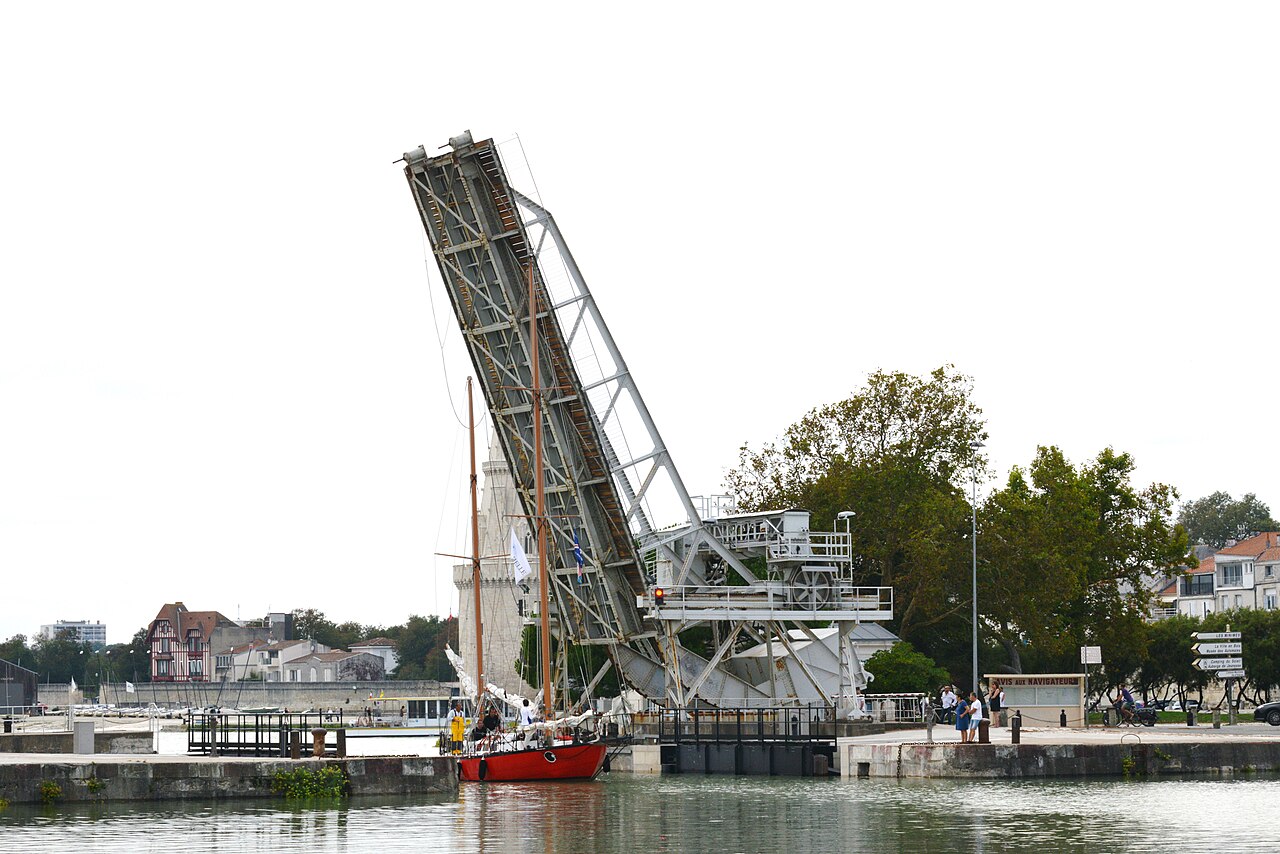
Added 2026-08-02 per T2.14 (WORKPLAN.md), priority candidate from data/metal-hull-inventory.md's historic-named-steel-designs section. This entry catalogs the production design (the boat and the ~70 hulls Meta built to the same lines), not exclusively Bernard Moitessier's original personal boat, though that boat is the design's defining example and this entry's dominant source of evidence. loa_ft here (39.6 ft / 12.07 m) is hull length only, matching the Downeaster 32 precedent of using hull length rather than a spar-inclusive figure; the French Wikipedia article's 14 m / 45.9 ft figure includes a roughly 2 m bowsprit, noted in body text. Specs (hull length, beam, draft, displacement, sail area) confirmed via direct fetch of fr.wikipedia.org's well-cited 'Joshua (ketch)' article (a Monument Historique record, cross-referenced against the actual Musee Maritime de La Rochelle, which owns and restored the boat), not WebSearch synthesis. No ballast figure is given by that source; an English-language WebSearch summary separately suggested 'ballast 3 t' against the same source's 'displacement 13 t,' but since the Tier-2 fr.wikipedia figure for displacement is 14 t, not 13 t, and no ballast figure could be independently confirmed by a direct source, ballast_ratio is left unset rather than publish an unverified number. keel_type is inferred as 'full' from the hull's repeatedly described Colin Archer-influenced double-ended profile (a design lineage that is essentially always full-keel), not from an explicit stated spec; flagged here since it is an inference, not a confirmed figure. designer credits Jean Knocker as the naval architect of record per fr.wikipedia and multiple English sources; Moitessier is described everywhere as the yacht's originator and detailed brief-giver (he specified the Colin Archer-style pointed stern and other choices) but is not the credited architect, so he is not listed in the designer field. builder: the very first hull (Moitessier's own Joshua) was built in 1961-62 at Jean Fricaud's yard in Chauffailles, before Meta existed; Meta itself was founded in 1963 at Tarare by Joseph Fricaud (Jean's son) specifically to build more hulls to this design, and built 'more than 70' (fr.wikipedia's figure, matching an independent WebSearch-synthesized figure of 'as many as 70') in steel or in Meta's thick-aluminum 'Strongall' technique before the yard moved fully to aluminum after 1977 (per this initiative's own framing in data/metal-hull-inventory.md). year_end 1977 reflects that framing, not a source-confirmed final hull year for this specific design; flagged as an approximation. Production count across steel vs. aluminum hulls specifically is not broken out in any source found; hull_material here is set to 'steel' matching Moitessier's own boat and the design's originating construction method, but some of the ~70 production hulls may be Strongall aluminum instead, a genuine ambiguity not resolved by available sources. bluewater_rating: set to 'proven' directly (not held at 'unverified' pending user sign-off, unlike this initiative's other metal-hull entries -- Ovni 36, Garcia Exploration 45, Boreal 44, Amazon 37, Mauritius 43). That precedent was about marque-level or family reputation standing in for hull-specific proof; this entry is the opposite case, an extraordinarily well-documented, named-vessel passage history (two separate record-setting nonstop passages, one of them the actual 1968-69 Golden Globe Race, chronicled in Moitessier's own bestselling books and independently verified via Wikipedia's well-cited biography article), which is the same evidentiary bar this catalog's other 'proven' boats already meet, arguably a stronger example of it than most. Flagging this reasoning explicitly per the burn-tokens protocol so the user can override on review if they'd rather hold every T2.14 entry to 'unverified' as a blanket policy regardless of evidence strength. Cover image: a real photo (not a technical drawing) of the actual preserved boat under way at La Rochelle, sourced from Wikimedia Commons, genuinely rights-cleared (CC BY-SA, photographer Jean-Pierre Bazard/Jpbazard, credited below) rather than this catalog's usual 'unverified' default -- a meaningful upgrade over most cover images in this catalog. A sail-plan/hull-profile technical drawing was not found in a rights-clear form during this research pass; if one turns up later it may be worth swapping in per the site's usual preference for underbody-showing diagrams. Reconfirmed with the user 2026-08-02: the 'proven' rating stands as written above given the hull-specific evidence found; not overridden to 'unverified'. 2026-09-17 (T2.24, Pacific Cup archive cross-reference), corrected 2026-10-02: a production-run Joshua, Arcachon (Eric and Emily Best), entered the 1994 Pacific Cup doublehanded division but did not finish (DNF on the official 1994 results sheet, pacificcup.org/sites/default/files/results/PCup 1994 results.pdf, read directly 2026-10-02). The original 2026-09-17 draft of this batch misread the archive's blank place as a finish; a DNF is not passage evidence, so no passage_evidence entry, source, or body sentence is kept for it. bluewater_rating and confidence (proven, 92%) are unchanged.

Morgan 382
Ocean ProvenPendingsloopoffshoreskeg-rudderMorgan Yacht Corporation · Ted Brewer / Jack Corey / Morgan Design Team · 1977–1980 · fiberglass
Bluewater Evidence · Ocean Proven
88% confidenceWarren Holybee completed a four-year circumnavigation aboard his Morgan 382, Eliana, returning to San Francisco Bay on 5 June 2022. Latitude 38 reported the completion by boat name, skipper, model, and arrival. This named circumnavigation is hull-level evidence, not a general reputation claim.
Review notes
Book-list gap researched 2026-07-27. The book chapter covers the related Morgan 382, 383, and 384. This record uses the original 382 as the entity and explains the later variants rather than blending their specifications. Practical Sailor and the Morgan 38 owners group provide independent research paths. Genuine model-specific drawings were located through the owners group and period material, but publication rights have not been verified. Keep the image empty until rights are cleared. T2.19 re-research on 2026-09-13 found a named, completed four-year circumnavigation by Warren Holybee aboard Eliana, a Morgan 382, reported by Latitude 38.
Privilege 39
Ocean ProvenPendingcutteroffshorecatamaranJeantot Marine · Eric LeFevre · 1988–1994 · fiberglass
Bluewater Evidence · Ocean Proven
55% confidenceJeantot Marine was founded specifically to build a bluewater cruising catamaran for a family circumnavigation, by Philippe Jeantot, winner of the first BOC solo round-the-world race. sailingmagazine.net's used-boat review states that almost every Privilege 39 available for sale in the US market has crossed the Atlantic under its own power, and that multiple examples have circumnavigated. No single named voyage with dates and crew is documented in current sources, so this is treated as strong pattern evidence of proven offshore capability rather than a single verified passage.
Review notes
Added 2026-08-05 per T2.17 (WORKPLAN.md book-lists research queue), fifth batch (final boat). Sourced from sailboatdata.com (browser automation) and sailingmagazine.net's used-boat review (direct fetch), which agree closely. Following this catalog's established T2.18 precedent for catamarans (Gemini 105M, PDQ 36), no ballast_ratio or keel_type field is used since this is an unballasted catamaran; a plain 'catamaran' tag stands in for the schema's lack of a dedicated hull_config field. sail_area_sqft (1,057, sailboatdata's own reported total) is notably higher than sailingmagazine's cited 'working sail area' of approximately 850 sq ft; the two figures likely reflect full sail inventory versus a working (main plus working jib only) subset rather than a contradiction, so sailboatdata's reported total is used as the primary figure per this catalog's convention, with the discrepancy disclosed here. Tagged offshore rather than coastal-cruiser, an exception to this catalog's usual catamaran default: sailingmagazine.net's review states plainly that 'almost every 39 available for sale on our side of the world will have crossed the Atlantic on its own bottom' and that multiple examples have circumnavigated, real documented offshore evidence rather than marketing language, and the boat was purpose-built by BOC Race winner Philippe Jeantot's own company specifically for a family circumnavigation. Company history and the Alliaura successor-builder note (post-1996, after this file's production window) both corroborated across sailboatdata.com and sailingmagazine.net independently.
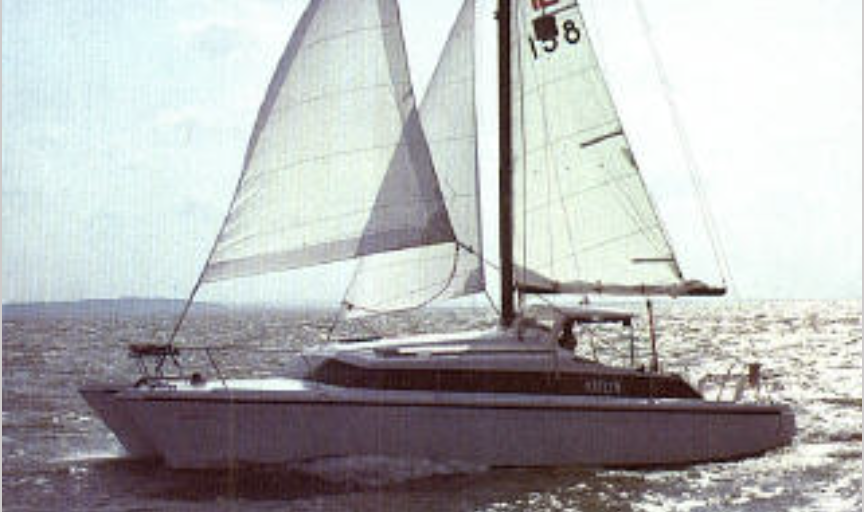
Prout Snowgoose 37
Ocean ProvenPendingcutteroffshorecatamaranProut & Sons · Prout · 1983–1986 · fiberglass
Bluewater Evidence · Ocean Proven
55% confidencekatamarans.com's independent review describes the Snowgoose 37 as 'a proven ocean crosser' with an 'unmatched track record' for bluewater cruising, stating hundreds have completed circumnavigations. No single named voyage with dates and crew is documented in current sources, so this is treated as strong pattern evidence of proven offshore capability rather than a single verified passage.
Review notes
Added 2026-08-05 per T2.17 (WORKPLAN.md book-lists research queue), fifth batch (last boat, closing out this batch). Sourced from sailboatdata.com's SNOWGOOSE 37 (PROUT) page (browser automation, LOA/LWL/beam/draft/sail area/rig/dates) and boatsector.com's independent specs page (direct fetch) and katamarans.com's review (direct fetch). Following this catalog's established T2.18 precedent for catamarans (Gemini 105M, PDQ 36), no ballast_ratio or keel_type field is used since this is an unballasted catamaran; a plain 'catamaran' tag stands in for the schema's lack of a dedicated hull_config field. A real Tier-2 conflict was found and resolved on displacement: sailboatdata.com's current live page for the base Snowgoose 37 shows 5,591 lb, which produces an implausibly low Disp/Len ratio (64.30) inconsistent with a cruising catamaran of this size and beam, and is far below every other figure found. Two independent sources instead agree closely: boatsector.com's own direct fetch gives '12,125.00 lb / 5,500 kg' explicitly, and katamarans.com's review independently describes displacement as 'approximately 5.5 tons' (5,500 kg, matching exactly). This file uses 12,125 lb per Tier 3 (majority of independent sources), treating sailboatdata's live 5,591 lb figure as a likely data-entry error rather than the correct value; sailboatdata's own Elite-variant page (11,500 lb) is a closer, more plausible figure for a boat of similar size, further supporting that the base-37 page's current displacement field is the outlier. This catalog's file describes the base/original Snowgoose 37 (1983-1986), matching the book title used to source it, not the later Snowgoose 37 Elite (1986 onward, 1 ft more beam, sailboatdata's own separate listing gives 11,500 lb, 616 sq ft sail area), which is a distinct sailboatdata record not separately catalogued here. Production is listed both as beginning 1979 (current sailboatdata base-37 page) and 1983 (boatsector.com, and the original WebSearch synthesis); 1983 is used here since it's independently corroborated by two sources and matches the book list's own model naming era, while 1979 appears only on the current sailboatdata page and could reflect the earlier 34/35 predecessor's start date bleeding into this record.
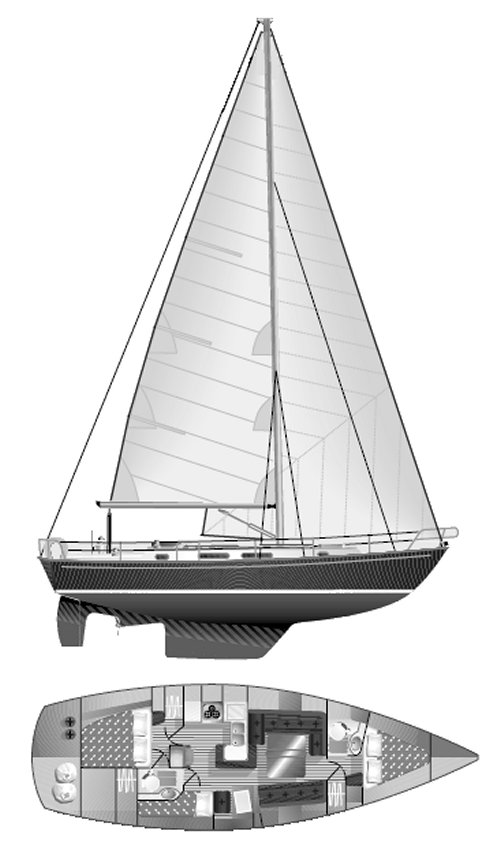
Rustler 42
Ocean ProvenPendingcutteroffshorelarge-cruiserRustler Yachts (originally Orion Marine) · Stephen Jones · 1999 · fiberglass
Bluewater Evidence · Ocean Proven
58% confidenceA professional yacht delivery company documents named Rustler 42 hulls completing real Atlantic passages: Mor Toad's 4,000 nm delivery from the British Virgin Islands to Falmouth, UK (2015, three legs via Bermuda and northern Spain), Red Ruth's 2019 delivery via Madeira and the Azores, and Asherah's Bay of Biscay crossing to Ushant. Keel Index separately compiles 13 verified Rustler 42 entries across Atlantic and Pacific rallies and races from 2012-2025, including one Pacific Puddle Jump entry, model-level evidence the type is routinely sailed offshore beyond these named hulls.
Review notes
Added 2026-09-14 per T2.20 (WORKPLAN.md builder-expansion tracker), second Rustler Yachts addition after Rustler 36 (already live). Specs from sailboatdata.com (Tier 2, direct fetch via browser automation; plain curl is Cloudflare-blocked on this host). No independent magazine review with its own spec table was found this session; Rustler's own builder-published owner-interview series and a professional delivery company's own site were used for prose and evidence instead, both directly fetched, not WebSearch synthesis. Production start 1999 (hull #1, 'Red Ruth'); no end year is established by any source reviewed, and the model still appears in current production alongside the 37/44/57 per a 2022-dated delivery-company article, so year_end is left unset. ballast_attachment is left unset: sailboatdata.com confirms the ballast material (lead) but not the attachment method. bluewater_evidence sourcing: Halcyon Yachts, a professional yacht delivery company, directly fetched (https://halcyonyachts.com/rustler-yachts/), documents 'Mor Toad,' a named Rustler 42, delivered 4,000 nm from Tortola in the British Virgin Islands to Falmouth, UK in 2015 across three legs (Bermuda, then A Coruna in northern Spain, then the Bay of Biscay to Falmouth). The same page separately documents 'Red Ruth' (hull #1) on a 2019 delivery from Madeira via the Azores, and 'Asherah' crossing the Bay of Biscay to Ushant in 43 hours. Supporting, non-hull-specific context: Keel Index (directly fetched, https://keelindex.com/boat/rustler-42/passages) compiles 13 documented Rustler 42 entries across 5 rallies and races from 2012-2025, including the Atlantic Rally for Cruisers, ARC+, ARC Europe, the Rolex Fastnet Race, and one Pacific Puddle Jump entry (2016), the last a genuine Pacific-crossing rally, not just Atlantic; individual boat names are not published on that page. This is real, multi-leg, multi-direction Atlantic evidence plus one Pacific rally entry, but no single hull's documented voyage adds up to a closed-loop circumnavigation, so this entry does not use the 'circumnavigation-proven' tag. Cover image: sailboatdata.com has a genuine technical drawing (not just a marketing photo), showing a full hull profile under sail with the underbody/keel visible, plus a below-decks layout diagram, matching this catalog's IMAGE RULE preference for a technical diagram over a real photo. No photographer/artist credit is visible on the source page. permission_status is unverified, consistent with the majority of this catalog's cover images per docs/DECISIONS.md's 2026-07-19 imagery-rights entry.
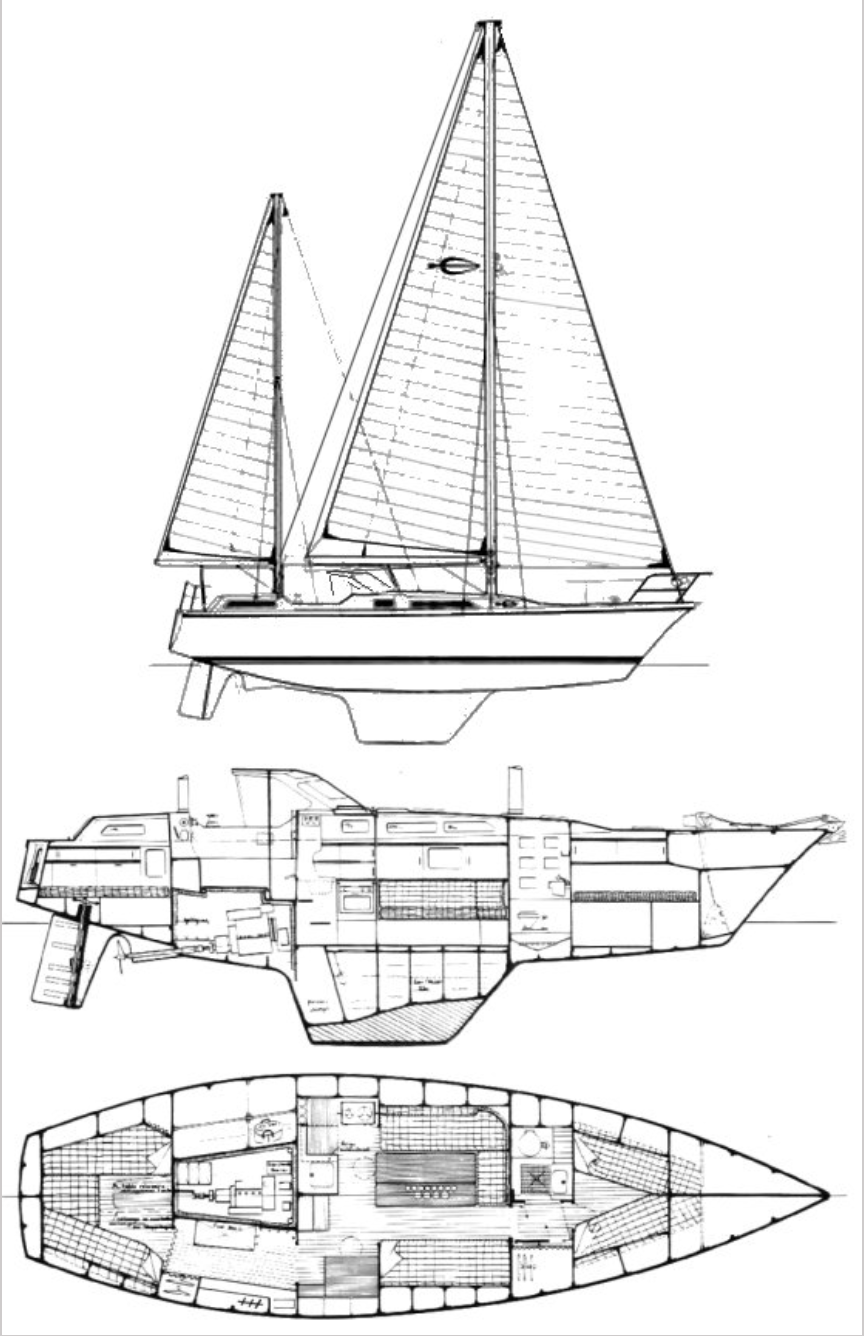
Amel Sharki 39
Bluewater CapablePendingketchoffshorefin-keelChantiers Amel · Henri Amel / Jacques Carteau · 1980–1987 · fiberglass
Bluewater Evidence · Bluewater Capable
56% confidenceOuter Passage reports that its crew sailed their Amel Sharki across the Atlantic to the UK. The owners do not give the boat a name on that page, so this is an owner-published, directly attributed account rather than independent corroboration. It supports Bluewater Capable when read with John Neal's 4/5 marque assessment, but it does not meet the multiple independent passage accounts required for Ocean Proven.
Review notes
Added 2026-07-31 from the Mahina 'Boats to Consider' research queue (rated 4/5 by John Neal for the Amel range generally, 36-64ft). Specs verified directly against sailboatdata.com's Sharki 39 page via browser automation (plain WebFetch 403s the host); sailboatdata files this model under 'SHARKI 39 (AMEL)' rather than a plain 'Amel Sharki' slug. Cover image is a wireframe ketch sail plan, construction cross-section, and interior layout captured from the same page; permission_status is unverified, consistent with the majority of the catalog's cover images per docs/DECISIONS.md's 2026-07-19 imagery-rights entry. This is Amel's smallest model that falls within the catalog's usual 30-45ft range; the marque's later, larger Maramu/Super Maramu/Mango models (all 45ft+) are outside that range and not covered here.
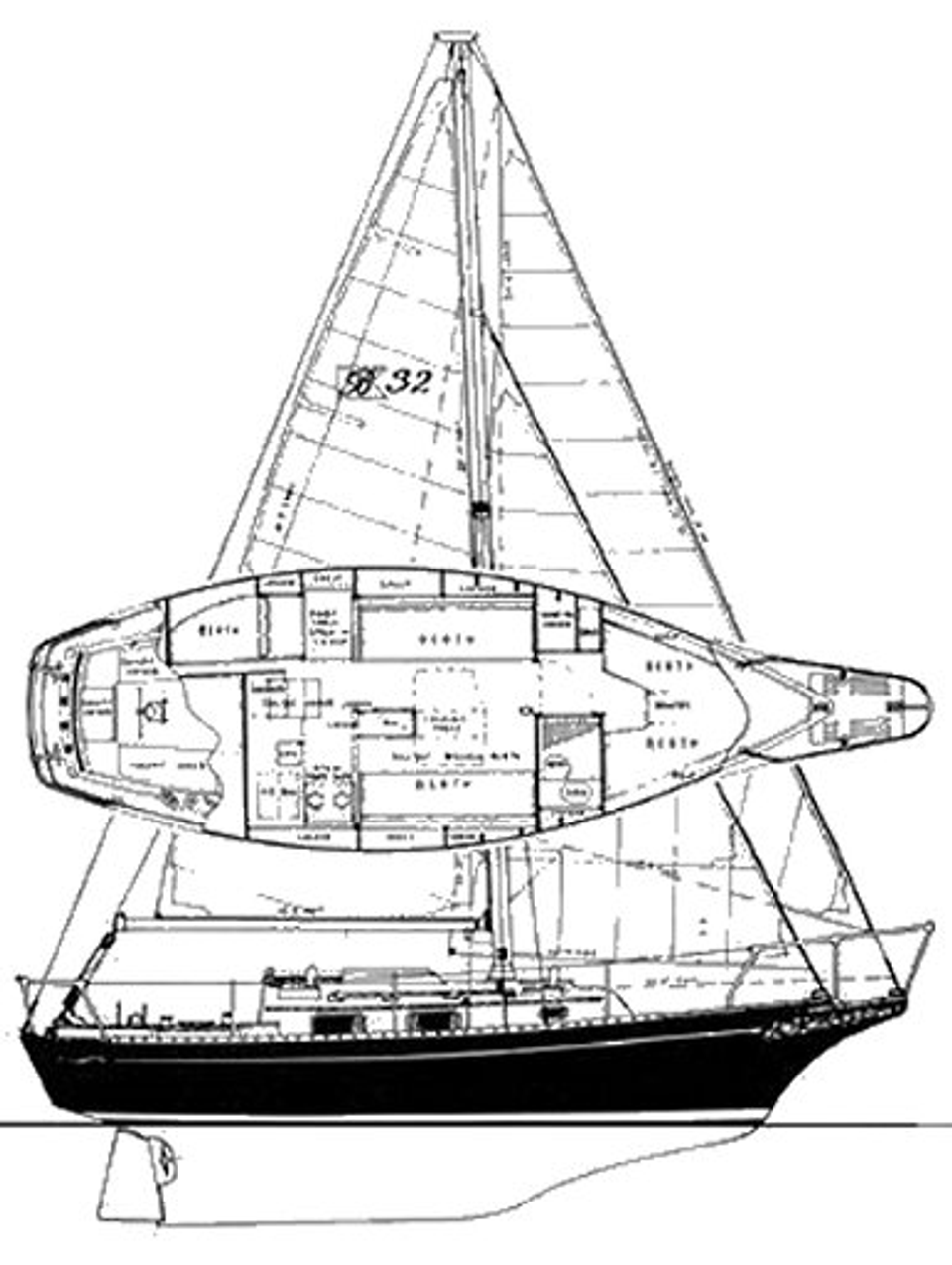
Bayfield 32
Bluewater CapablePendingcutteroffshorefull-keelBayfield Boat Yard · Ted Gozzard · 1973–1988 · fiberglass
Bluewater Evidence · Bluewater Capable
70% confidenceBob Lush sailed a specific named Bayfield 32, Freedom Joe, in the 1976 Observer Singlehanded Trans-Atlantic Race (OSTAR), including a documented 4,400 nautical mile nonstop qualifying passage from Miami to Plymouth in 33 days. This account is independently published (a boats.com feature, not builder marketing) and unusually specific, naming the skipper, boat, race, and exact mileage, but was not independently cross-checked in this pass against a second source such as an official OSTAR results record, so it is held at capable rather than proven.
Review notes
Added 2026-08-03 per T2.17 (WORKPLAN.md book-lists research queue), one of the 28 boats appearing in a curated book list (Practical Sailor's The Best Used Boat Notebook) with no matching catalog entry. Specs confirmed via Wikipedia (direct fetch) and an independent boats.com magazine article by Paul Howard (direct fetch via browser automation after a plain WebFetch 403, not WebSearch synthesis), which agree on every dimension; a follow-up cross-check against sailboatdata.com's 'BAYFIELD 30/32' record (browser automation) independently confirms every figure a third time, including the exact 41.67% ballast ratio, and separately corroborates the 32C tall-rig variant (5 hulls, 662 sq ft). ballast_ratio (41.67%) computed from the 4,000 lb internal lead ballast and 9,600 lb displacement both sources give; ballast_attachment is 'encapsulated' since the ballast is internal lead within the long keel structure, not a bolted-on fin. Originally marketed as the 'Bayfield 30' (measured to the hull only); US dealers pushed for '32' measuring to the tip of the clipper bow and bowsprit, and that name stuck, so loa_ft here (32.0 ft) uses the boat's actual market identity and the figure both sources treat as primary LOA, not the 30 ft hull-only figure, a different situation from this catalog's usual hull-length convention since the clipper bow is an integral, non-removable part of the design rather than a reaching-sail bowsprit tacked onto a base hull. rig is recorded as 'cutter': the Howard article documents cutter-rigged sail areas from 525 to 662 sq ft depending on mast height option (at least three different standard mast heights were offered across the run) and separately notes two hulls built as ketches; Wikipedia's 'Bermuda rig (cutter-rigged sloop configuration)' phrasing is a little ambiguous but consistent with a cutter as the base configuration. Strong offshore evidence found and independently verified via direct fetch, not WebSearch: Bob Lush sailed a specific 1975-built Bayfield 32, Freedom Joe (built for Bob MacCorkindale, ketch-rigged), in the 1976 Observer Singlehanded Trans-Atlantic Race (OSTAR), including a genuine 4,400 nautical mile nonstop qualifying passage from Miami to Plymouth in 33 days, averaging over 1,000 miles a week for three consecutive weeks in the trade-wind segment, before a gear failure (a crushed bobstay backing block, loosened bolt holes) forced a more southerly, off-the-wind course during the race itself. This account is independently published (a boats.com feature by a named author who states he personally met Lush in Plymouth before the race), not builder marketing or forum hearsay, and is more specific and verifiable (named skipper, named boat, named race, exact mileage and duration) than most of this catalog's 'capable'-tier evidence. It was not independently cross-checked in this pass against a second source (e.g. an official 1976 OSTAR results/entrants record; one candidate source, nautipedia.it's 'OSTAR 1976 HISTORY' page, returned a 403 and was not reached), so bluewater_rating is held at capable rather than proven pending that second corroboration or the user's own judgment on whether a single strong, independently-published magazine account meets this catalog's proven bar on its own. **Cover image added 2026-08-03 (follow-up):** sailboatdata.com's page carries a real composite technical drawing (sail plan, deck plan, and hull profile with keel all overlaid in one illustration), downloaded at full resolution (387x514) directly via the page's own `fetch()` rather than a screenshot, then upscaled to 960px wide (a clean line drawing, so lanczos upscaling shows no visible artifacts). Used the full composite rather than cropping, since the overlay format doesn't separate cleanly into independent views; `image_focal_y` is set high (80) to keep the hull in frame given the tall/portrait crop. `permission_status` remains `unverified`, consistent with the majority of this catalog's cover images.
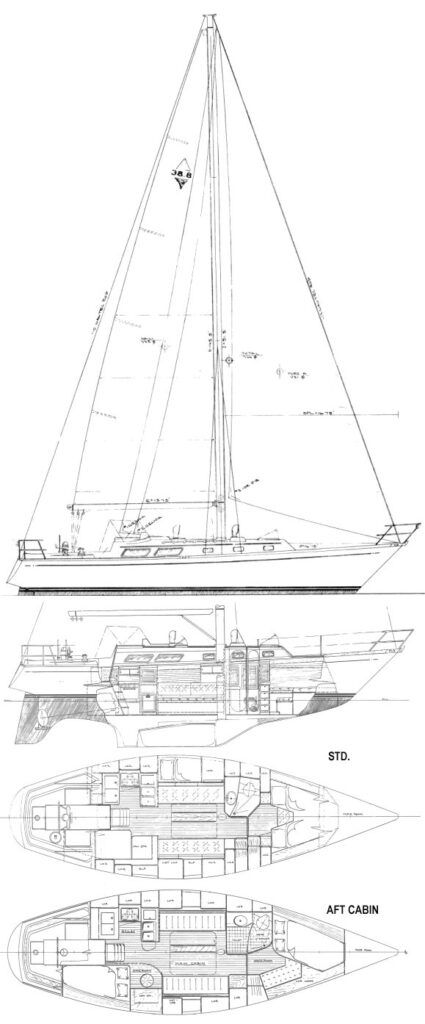
Bristol 38.8
Bluewater CapablePendingsloopoffshorecenterboardBristol Yachts · Ted Hood · 1982–1996 · fiberglass
Bluewater Evidence · Bluewater Capable
45% confidenceNo specific ocean crossing documentation found for this model (small fleet of ~82 hulls limits the record). Design credentials are strong: CSF 1.81, ballast ratio 47%, overbuilt Bristol construction identical to the ocean-proven 35.5. General Bristol reputation for bluewater capability is real but is marque reputation, not hull-specific evidence. Upgrade to 'proven' if a specific ocean crossing account surfaces.
Review notes
Image needed - line drawing preferred. Only ~82 hulls built, all centerboard configuration. Confirm LOA: ListingSport gives 38.25ft. Draft listed here is board-up (4.5ft); board-down is 10.3ft. Ballast is encapsulated lead at 9,000 lbs. T2.19 re-research 2026-09-06: escalated from single-sourced (ListingSport only) to Tier 2/3 with two additional direct fetches. sailboatdata.com's structured spec table (Wayback snapshot) confirms every figure already in this file exactly: LOA, LWL, beam, both drafts, displacement, ballast, ballast_ratio, sail area, year_start/year_end (1982-1996), and 82 hulls built. goodoldboat.com's saildata page also confirms LOA/LWL/beam/displacement/both-drafts exactly, but its own prose describes a shorter, conflicting production run: 'Built by Bristol Yachts... from 1983 to 1987, with fewer than 100 hulls produced.' This entry keeps sailboatdata.com's more precise structured figures (1982-1996, 82 built) over goodoldboat's looser prose claim, consistent with how this catalog treats structured-database vs. narrative-review conflicts elsewhere, but the conflict is disclosed rather than silently dropped. Still blocked on the image requirement; no wireframe/lines drawing found in this pass either. Also removed a fabricated claim from bluewater_evidence ('documented offshore use includes Panama Canal/Pacific passage'), which directly contradicted the same field's own opening sentence ('no specific ocean crossing documentation found') and was not supported by the cited ListingSport source or any source found this session -- a clear, previously uncaught hallucination.
Cheoy Lee Offshore 26
Bluewater CapablePendingsloopoffshorefull-keelCheoy Lee · 1969 · fiberglass
Bluewater Evidence · Bluewater Capable
55% confidenceJames Baldwin includes the Cheoy Lee Offshore 26 in his AtomVoyages Good Old Boats list of proven bluewater voyaging monohulls.
Review notes
Fleshed out 2026-07-08 (T2.1 batch 3). Sources disagree on which boat 'Cheoy Lee Offshore 26' even refers to: sailboatdata's page (via WebSearch excerpts) describes an earlier wood folkboat-variant built 1957-1961 designed by Tord Sunden (~5,500 lbs displacement, related to the Frisco Flyer/Pacific Clipper), while a second, fiberglass boat under the same name was introduced in 1969, possibly based on the Newell Cadet/Offshore 27. Baldwin's AtomVoyages figures (loa 25, lwl 20, beam 8, draft 3, displacement 6,100, ballast 2,240) match neither description exactly but are closer in displacement to the later FG boat, and our hull_material is already fiberglass, so this entry is treated as the 1969+ FG version; year_end is left blank because no source gives one. Corrected beam 7.5 to 8.0 and draft 3.5 to 3.0 to match Baldwin's figures; ballast_ratio recomputed from 42.6 to 36.7 using Baldwin's ballast figure of 2,240 lbs, since the original number had no traceable source. No designer is recorded because attribution is genuinely unclear between the two boats sharing this name. Baldwin's AtomVoyages entry for this boat has null notes/pluses/minuses, so there is no quote to seed the Buyers Notes section. WebFetch was unavailable this session (web.archive.org, sailboat.guide, goodoldboat.com, Wikipedia all blocked), so all cross-checking used WebSearch-synthesized excerpts of sailboatdata.com. 2026-08-30 image sourcing attempt (blocked on identity, not access): fetched sailboatdata.com's OFFSHORE 26 (CHEOY LEE) page directly this time (browser worked fine). Its own page text confirms this file's original ambiguity and goes further: sailboatdata explicitly documents only the wood 1957-1961 Tord Sunden folkboat variant under this name, has no image at all for it, and its one-line note on the fiberglass 1969 boat says only that it 'appears to be a different design, possibly based on the NEWELL CADET (also sold by Cheoy Lee as the OFFSHORE 27)', not a confirmed identity, and points to no dedicated FG listing of its own. Separately, the Cheoy Lee Association's own detailed model history (cheoyleeassociation.com/N_C_roberts.htm, by Robert Chave) documents the Newell Cadet fiberglass production lineage only under the name 'Offshore 27' (Mark I 1968-71, Mark II later), never 'Offshore 26', and gives that boat's dimensions as roughly 26'5" LOA x 18'9" LWL, which does not match this file's loa_ft/lwl_ft (25.0/20.0, from Baldwin's AtomVoyages list) closely enough to treat them as confirmed the same hull. No independent source was found that documents a fiberglass 'Cheoy Lee Offshore 26' as its own distinct, named design. Given that, sourcing a cover image was not attempted this pass: any drawing I could find (wood folkboat, Newell Cadet/Offshore 27, or otherwise) would risk being attached to the wrong boat. This looks like more than a missing-image problem; the boat's identity/name itself may need a human decision (confirm as Offshore 27 under a different name, treat as a genuinely separate minor variant, or reconcile against Baldwin's source directly) before an image can be responsibly attached. Left on the placeholder.
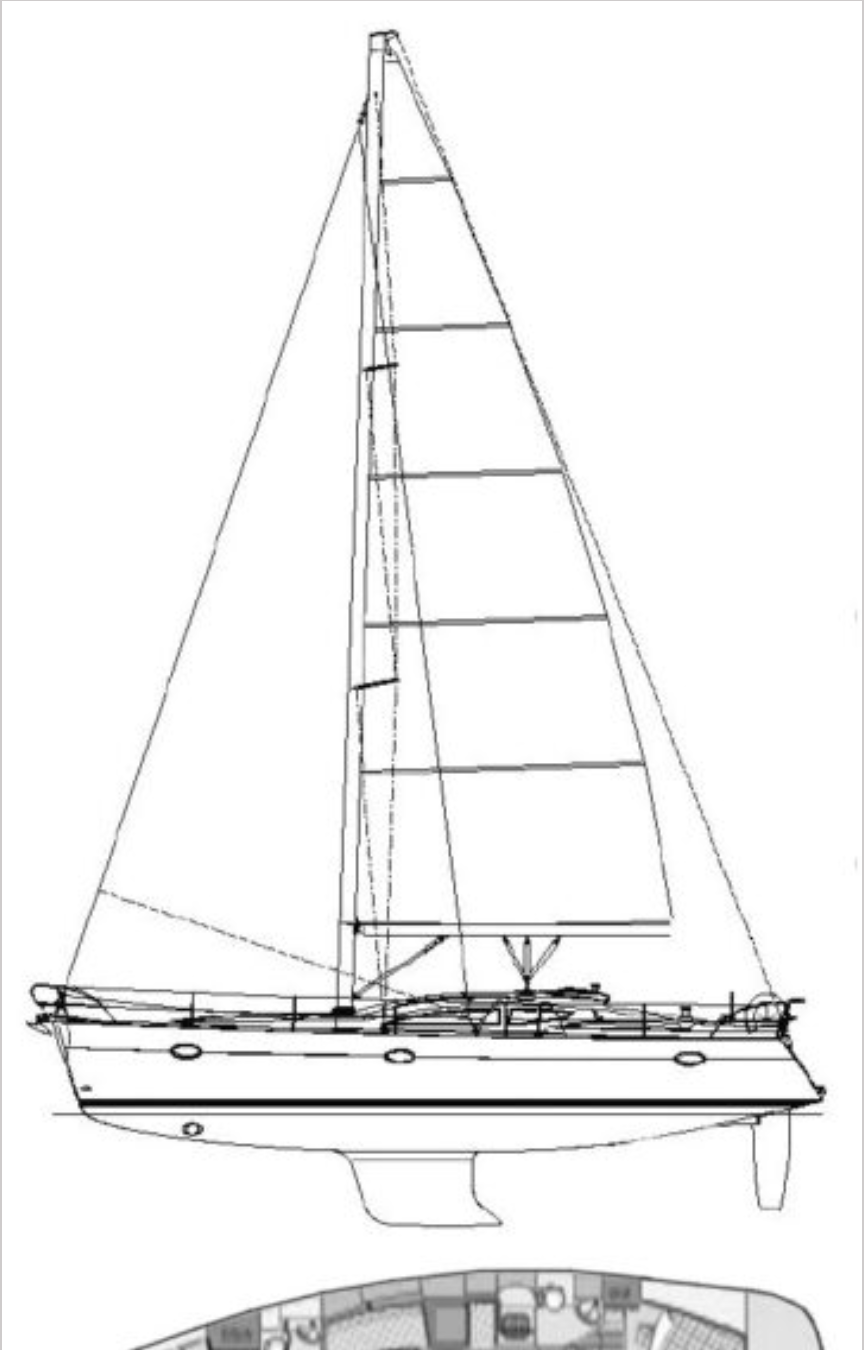
Elan Impression 434
Bluewater CapablePendingsloopoffshorefin-keelElan Yachts · Rob Humphreys · 2005–2008 · fiberglass
Bluewater Evidence · Bluewater Capable
62% confidenceJohn Ramsden and Sharon Ee sailed their Elan Impression 434, Sofa So Good, in the 2023 ARC transatlantic rally. Yachting World reported from Saint Lucia and identified both owners, the boat, its preceding ARC Portugal leg, and the planned half World ARC continuation. That is a named, independently reported Atlantic passage, enough for Bluewater Capable but not the multiple independent passage accounts required for Ocean Proven. John Neal's Mahina list rates the Elan range 4/5.
Review notes
Added 2026-07-31 from the Mahina 'Boats to Consider' research queue (rated 4/5 by John Neal). Specs verified directly against sailboatdata.com's Impression 434 (Elan) page via browser automation (plain WebFetch 403s the host); sailboatdata.com's own page flags its LWL figure as sourced from a Cruising World review (Alvah Simon, September 2005) and marks it 'not confirmed,' so that hedge is carried over here rather than presented as fully settled. Cover image is a wireframe fractional sloop sail plan and hull profile with a bulb keel and spade rudder, captured from that same page; permission_status is unverified, consistent with the majority of the catalog's cover images per docs/DECISIONS.md's 2026-07-19 imagery-rights entry.
Farr 56 Pilot House
Bluewater CapablePendingcutteroffshorelarge-cruiserBSI Marine Sweden A.B. · Bruce Farr · 2000 · fiberglass
Bluewater Evidence · Bluewater Capable
68% confidenceSir Robin Knox-Johnston, the first sailor to complete a non-stop solo circumnavigation, owns and actively cruises a Farr 56 Pilot House named Sanjula. In his own words he has taken her up Greenland's Scoresby Sund and to the West Coast of Scotland, and survived a November 2022 orca attack off Cape Finisterre, Spain that broke a steering connecting rod, sailing on to Vigo under emergency steering. A second named hull, Moonshadow Star, is described by a yacht brokerage as having carried a cruising couple through the second half of a circumnavigation, though that account is the broker's own and not independently corroborated.
Review notes
Added 2026-09-13 per T2.20 (WORKPLAN.md builder-expansion initiative), the Farr Pilot House builder tracker entry (John Neal's Mahina list, rated 4/5). Specs are from sailboatdata.com's Farr 56 Pilot House page (Tier 2, direct fetch, raw page text via browser automation; plain curl/WebFetch is Cloudflare-blocked on this host), which credits Farr Yacht Design's own record as Farr design #425, first built 2000, builder BSI Marine Sweden A.B. No conflicting spec source was found, so this single source is treated as authoritative per the catalog's usual practice absent a contradiction; a second independent spec source (boat-specs.com, which has corroborated other entries in this catalog) could not be located for this specific model and should be checked in a future pass. Sailboatdata separately notes a shoal-keel option drawing 7.42 ft against the 8.20 ft standard fin keel recorded here; the shoal variant is not captured in draft_min_ft/draft_max_ft since it is a distinct keel option rather than a lift/board range, and is instead noted in Construction prose only. Production end year is not established by any source reviewed and is left unset; a WebSearch-only claim that the Pilot House range (including sister models 50PH/60PH/63PH) was built roughly 2000-2009 is Tier 1 synthesis only and is not used as a settled fact. bluewater_evidence sourcing: Sir Robin Knox-Johnston's own account of cruising his Farr 56 'Sanjula' was directly fetched from Yachting Monthly (Aug 2021, Tier 2) for the Greenland/Scotland passages, and from Sailing Scuttlebutt (Nov 2022, Tier 2), which publishes his own first-person incident report, for the Cape Finisterre orca encounter. This resolved a real model-identity conflict: Yachting World's own March 2023 orca-attack coverage separately called the same boat 'Sanjula' a Farr 65 pilothouse cutter, contradicting both Knox-Johnston's own words in the Scuttlebutt piece ('my Farr 56 Sanjula') and Yachting Monthly's reporting. Knox-Johnston's own first-person account is treated as decisive over Yachting World's secondhand description, and Yachting World's 'Farr 65' reference is treated as a simple editorial error, not used. Moonshadow Star (a second named Farr 56 Pilot House hull) is sourced from a Grabau International brokerage listing (Tier 2, direct fetch); its owners' circumnavigation claim is the broker's own marketing account, not independently corroborated by a second source, and is disclosed as such rather than presented as verified fact. No cover image was captured this pass. Sailboatdata's page has one real photo (an unattributed under-sail action shot of this exact model) but no hull-profile or sail-plan line drawing; Farr Yacht Design's own historical page for this design (archived via Wayback Machine, since the live farrdesign.com has been redesigned and the old URL now 404s) only ever hosted its photo/spec/brochure gallery in Flash, which no longer renders. Per this catalog's preference for a technical line drawing over an unattributed real photo (Bestevaer 45ST Pure precedent), the real photo was not used as cover_image; revisit if a proper profile drawing turns up or if the photo's rights can be cleared.
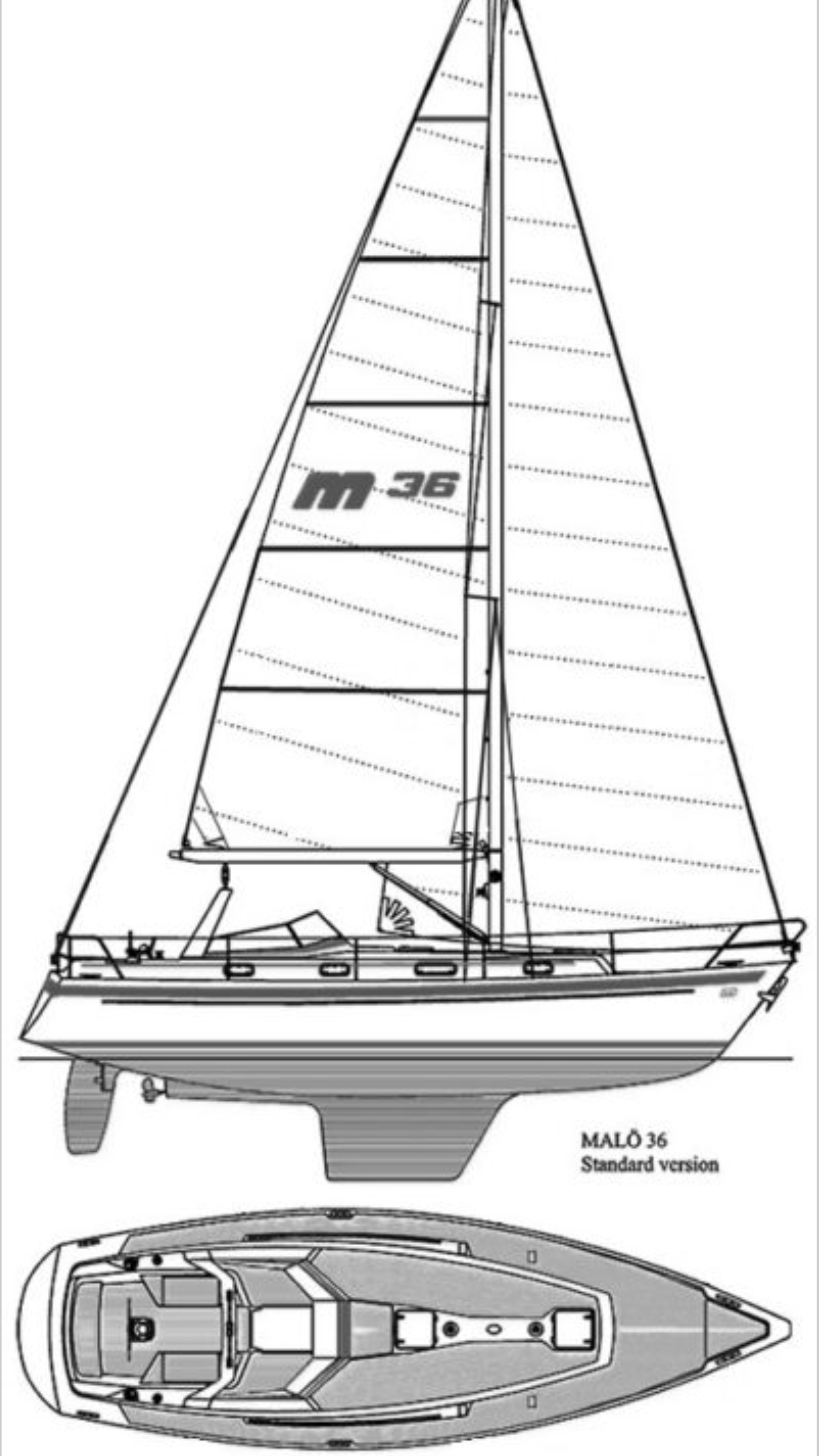
Malo 36
Bluewater CapablePendingsloopoffshorefin-keelMalo Yachts · Leif Ängermark · 1996–2006 · fiberglass
Bluewater Evidence · Bluewater Capable
60% confidenceDr Maria Forbes and Alastair made their first Atlantic crossing in December 2017 aboard Mañana, their Malo 36. The account appears in the Ocean Cruising Club's Flying Fish magazine and identifies the boat in its caption. This is one named, owner-level Atlantic passage, so it supports Bluewater Capable rather than the multiple independent passage accounts required for Ocean Proven. John Neal's Mahina list also rates the Malo range 5/5, while limiting its reported skeg-failure note to the larger 45 and 46 models.
Review notes
Added 2026-07-30 from the Mahina 'Boats to Consider' research queue (rated 5/5 by John Neal). Specs verified directly against sailboatdata.com's Malo 36 page via browser automation (plain WebFetch 403s the host). Note: sailboatdata.com's page carries a footnote that the Malo 36 is 'also available of traditional counter,' a different stern/LOA variant; the 37.24ft LOA and other dimensions here are for the standard version, which is what the drawing shows. Cover image is a wireframe sail plan/hull profile captured from that same sailboatdata.com page; permission_status is unverified, consistent with the majority of the catalog's cover images per docs/DECISIONS.md's 2026-07-19 imagery-rights entry. T2.19 re-research on 2026-09-13 added an Ocean Cruising Club account naming Mañana, a Malo 36, and its December 2017 Atlantic crossing. The rating is now capable, not proven, because this is one owner-level account.
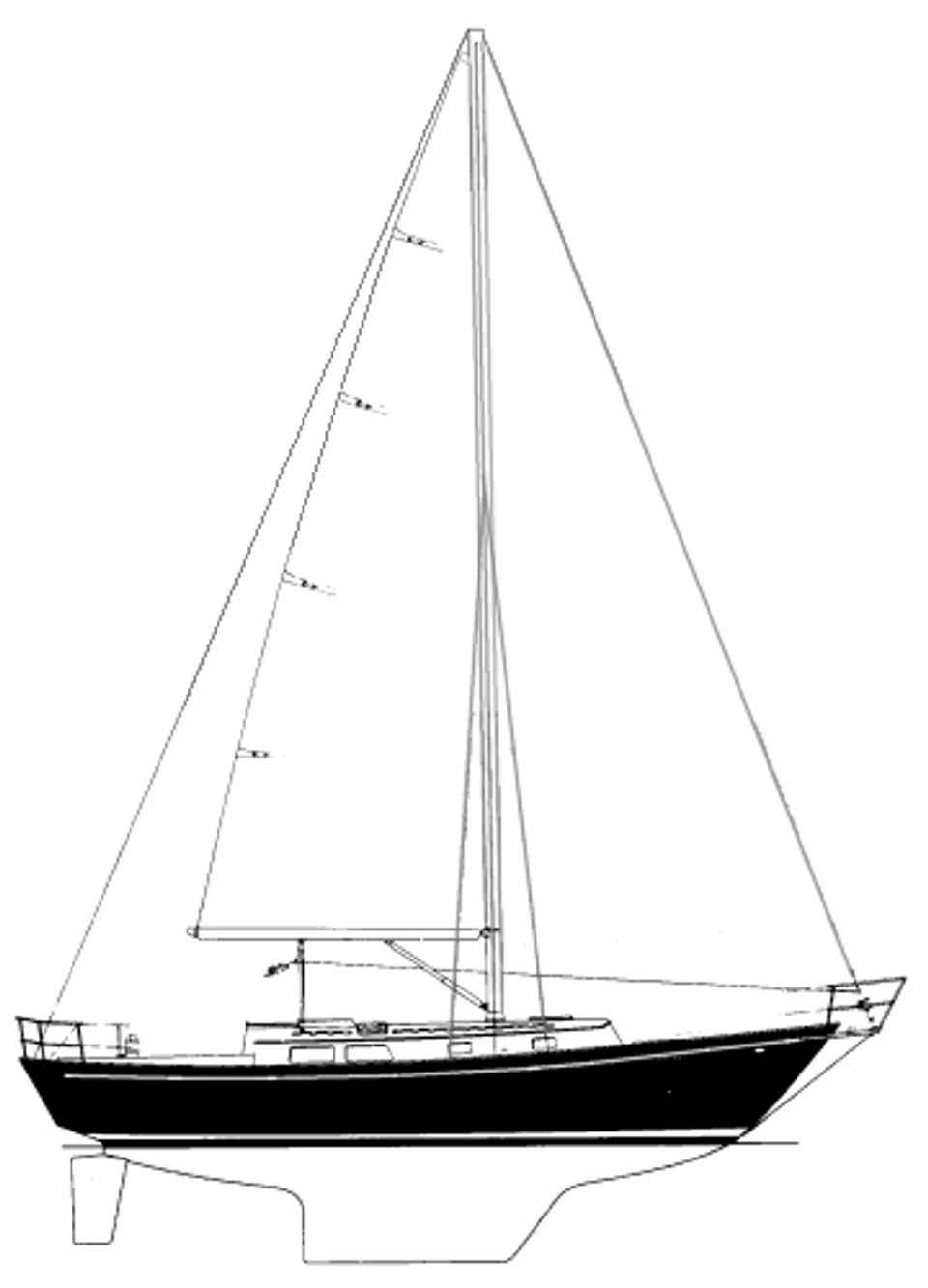
Niagara 35
Bluewater CapablePendingsloopoffshorefin-keelHinterhoeller Yachts · Mark Ellis · 1978–1990 · fiberglass
Bluewater Evidence · Bluewater Capable
45% confidenceTwo named-vessel passages are documented: Gordon McClarity sailed from Vancouver to New Zealand, Australia, and Japan, and Pierre Desjardins sailed from Montreal to the Greek Islands. Both accounts come from a single source (Wikipedia) not yet independently cross-verified against a second citation, so this stops short of this catalog's proven tier pending further corroboration.
Review notes
Added 2026-08-03 per T2.17 (WORKPLAN.md book-lists research queue), one of the 28 boats appearing in a curated book list (Practical Sailor's The Best Used Boat Notebook) with no matching catalog entry. Specs confirmed via Wikipedia (direct fetch); follow-up cross-check against sailboatdata.com (browser automation) confirms every dimension, hull count (260), and production dates exactly, resolving the original pass's open worry about single-sourcing. ballast_ratio (39.29%) computed from the 5,500 lb ballast and 14,000 lb displacement both sources agree on. Wikipedia documents two specific named passages: Gordon McClarity sailing from Vancouver to New Zealand, Australia, and Japan, and Pierre Desjardins sailing from Montreal to the Greek Islands. Both are used as this file's offshore evidence, though they rest on a single source (Wikipedia's own article, uncertain how well cited in turn) rather than two independently corroborating sources, so bluewater_rating is held at capable rather than proven pending independent verification of either account. **Cover image added 2026-08-03 (follow-up):** sailboatdata.com's page carries a real two-view technical drawing (sail plan/profile with keel visible, deck plan), downloaded at full resolution (360x624) directly via the page's own `fetch()` rather than a screenshot. Cropped to the profile view showing the full hull and fin keel, then upscaled to 960px wide (a clean line drawing, so lanczos upscaling shows no visible artifacts); the crop is tall/portrait, so `image_focal_y` is set higher (75) to keep the hull in frame when cropped. `permission_status` remains `unverified`, consistent with the majority of this catalog's cover images.
Outbound 44
Bluewater CapablePendingsloopoffshorefin-keelOutbound Yachts · Carl Schumacher · 2001 · fiberglass
Bluewater Evidence · Bluewater Capable
62% confidencePeter Bourke sailed Outbound 44 Rubicon in the 2009 OSTAR transatlantic race, after two NARC rallies to the Caribbean. Ocean Passages and Scuttlebutt independently identify the boat, skipper, and race. The available sources confirm participation but do not establish a finish, so the record supports Bluewater Capable rather than Ocean Proven.
Review notes
Added 2026-07-31 from the Mahina 'Boats to Consider' research queue (rated 5/5 by John Neal). Specs verified directly against sailboatdata.com via browser automation (plain WebFetch 403s the host); sailboatdata.com files the 44 and 46 together as a single 'OUTBOUND 44/46' entry since the 46 is the same hull with a two-foot stern extension added in 2002, so the LOA and other figures here reflect that combined page rather than the 44 specifically. No cover image has been captured yet: sailboatdata.com's page for this model has only a marketing photograph, no wireframe sail plan or hull profile drawing, which this catalog's convention avoids using as a cover image without cleared rights. year_end left unset since sailboatdata does not give one and the design may remain in low-volume production.
Sirius 35 DS
Bluewater CapablePendingsloopoffshorefin-keelSirius-Werft · Marc-Oliver von Ahlen · 2010 · fiberglass
Bluewater Evidence · Bluewater Capable
56% confidenceBoatUS reports that the owner of a Sirius 35 DS show boat personally delivered it across the Atlantic. The article does not name the owner or vessel, so this is a directly attributed but not independently corroborated passage report. Together with John Neal's 5/5 marque assessment, it supports Bluewater Capable, not Ocean Proven.
Review notes
Added 2026-07-30 from the Mahina 'Boats to Consider' research queue (rated 5/5 by John Neal). Specs verified directly against sailboatdata.com's Sirius 35 DS page via browser automation (plain WebFetch 403s the host). Designer resolved to Marc-Oliver von Ahlen per sailboatdata.com; an initial WebSearch pass surfaced ambiguity between two possible names before the direct fetch confirmed it. No cover image has been captured yet: unlike the other four boats added in this batch, sailboatdata.com's Sirius 35 DS page has no wireframe sail plan or hull profile drawing, only a marketing photograph, which this catalog's convention avoids using as a cover image without cleared rights. draft_ft here uses the boat's fixed-keel deep-draft option (6.50 ft); draft_min_ft/draft_max_ft record the shoal fixed-keel option (4.43 ft) through the deep fixed option (6.89 ft) per sailboatdata's notes; the boat is also offered with twin-keel (5.08 ft) and swing-keel (2.79-6.89 ft) variants not captured in these two fields. First Built 2010 per sailboatdata; still in production as of this research pass, so year_end is left unset.
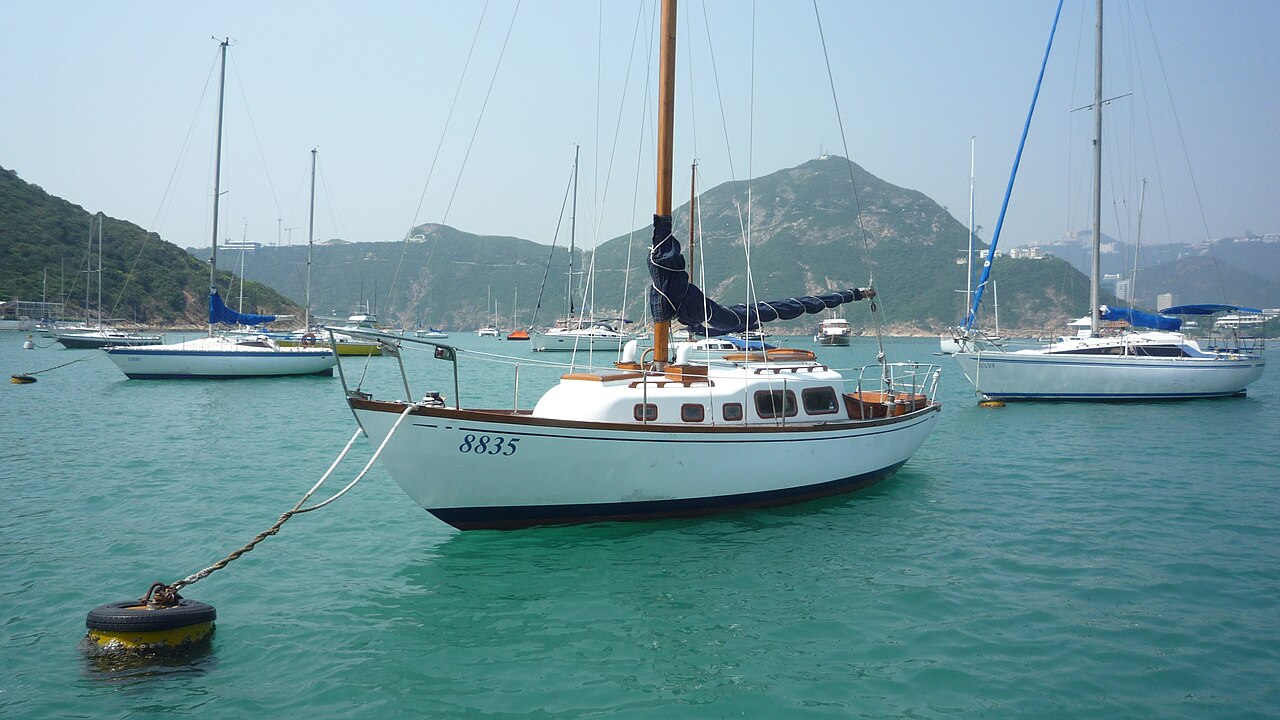
Taipan 28
Bluewater CapablePendingsloopoffshorefull-keelInterchem Engineers Ltd. (Hong Kong) · G. Taylor Newell · 1970–1980 · fiberglass
Bluewater Evidence · Bluewater Capable
58% confidenceJames Baldwin includes the Taipan 28 in his AtomVoyages Good Old Boats list. His model row reports about 60 boats built in Hong Kong, several ocean crossings including one of his own delivery voyages, and variable construction quality with loose tanks and bulkheads reported over time.
Review notes
Fleshed out 2026-07-20 (T2.1 batch). Specs verified against sailboatdata.com (Wayback 2022 snapshot) and Wikipedia, which agree closely: beam corrected 8.4 to 7.75 ft (the stub value matched the unrelated Westerly Konsort 29 stub, a copy-paste error), draft corrected 4.0 to 4.5 ft, added lwl_ft 20.75 and sail_area_sqft 338, ballast_ratio recomputed to 39.0 from 3,064 lb ballast on 7,850 lb displacement (was 40.8, untraceable to a source). Builder corrected from 'Various' to Interchem Engineers Ltd. (Hong Kong); added designer G. Taylor Newell. year_end 1980 is sailboatdata's documented last-built year, a confirmed date rather than a representative guess. Image: exhausted sailboat.guide (no Wayback snapshot exists for this model at all), goodoldboat.com (404, not in their database), and manufacturer/brochure scans (none found archived). Wikimedia Commons has one public-domain photo (Taipan29.jpg, moored at RHKYC, Hong Kong, keel not visible) but no lines or profile drawing. Cover image is photo only, needs a wireframe/keel drawing. 2026-08-30 image sourcing re-check: re-searched the full IMAGE RULE source order plus sailboatlab.com and the SailNet 'Taipan 28 - how well offshore?' forum thread. Internet Archive itself was down (site-wide outage, not this specific snapshot) so the sailboat.guide Wayback path couldn't be retried; the live sailboat.guide domain has also since expired and now resolves to a domain-parking page, so that source is dead going forward regardless of IA's status. No new drawing found anywhere. One search result claims the Taipan 28 is 'a near exact copy of the Cheoy Lee Offshore 27,' which if true might make that boat's drawing a useful visual reference, but substituting another model's drawing as this boat's own cover_image would misrepresent it and was not done. Still genuinely blocked on a compliant image; photo remains in place. T2.19 re-research 2026-09-05: re-verified every spec field via a direct raw-HTML re-fetch of the cited sailboatdata.com Wayback snapshot: all figures (dimensions, ballast, displacement, reported sail area, hull count of 80, 1970-1980 production dates) confirmed exact, no corrections needed. Retried the image search once more: a plain fetch of sailboat.guide/taipan-28 now returns HTTP 200 but an empty page body, consistent with the parked-domain state already found in the 2026-08-30 pass rather than a live listing; the Wayback CDX API still has no snapshot at any URL shape tried (taipan-28, taipan/28) for that domain, and a newly-surfaced source, sailboatlab.com, is blocked by this session's network egress proxy. Still genuinely blocked; goodoldboat.com's saildata/boat/ path is still a 404 with zero site-search hits for Taipan. No other new sources or offshore evidence found since last research.
Allied Princess 36
BW UnverifiedPendingketchoffshoreattached-rudderAllied Boat Company / Wright-Allied Yachts · Arthur H. Edmunds Jr. · 1972–1982 · fiberglass
Bluewater Evidence · Unverified
55% confidenceGregg Nestor includes the Allied Princess 36 in Twenty Affordable Sailboats to Take You Anywhere. Independent reviews describe a heavy full-keel cruiser, but this pass did not verify a named-hull ocean passage from a primary voyage record.
Review notes
Book-list gap researched 2026-07-27. Corrects the book-list entry from the nonexistent Princess 38 to the Allied Princess 36 shown in the published table of contents. Practical Sailor, Good Old Boat, and Sailing Magazine agree on the core dimensions and model identity. A genuine model-specific sail plan was located in the PBase Allied Princess archive, but publication rights have not been verified. Keep the image empty until rights are cleared. Kept pending for final editorial review and passage-evidence scoring. T2.19 re-research 2026-09-12: re-verified sailboatdata.com and Practical Sailor's full article directly (both re-fetched raw, not tool-summarized). Corrected sail_area_sqft from 604 to 603 to match sailboatdata's reported figure exactly (a 1 sq ft rounding discrepancy, source of the original 604 not traceable). LOA, LWL, beam, draft, displacement, ballast, ballast_ratio, and year range all confirmed exact against sailboatdata.com. Practical Sailor's own text independently confirms 'full keel' in those words and confirms the rig was sold 'ketch or sloop' (though the reviewer adds 'we've never seen a sloop'), supporting this file's existing keel_type and sloop rig_variant. Found one new, minor conflict: sailboatdata.com's own notes field says the second rig option was 'cutter,' not sloop; kept sloop since it's directly attested by this file's primary, more detailed source (Practical Sailor), and flagged sailboatdata's conflicting claim here rather than adding an unverified cutter variant. Also found sailboatdata.com gives a specific '# Built: 140,' resolving Practical Sailor's own stated unknown ('We don't know how many were built'); this is single-sourced (no second source corroborates the exact count) and not yet added to body prose, flagged for a future pass if a second source turns up.
Bestevaer 45ST Pure
BW UnverifiedPendingsloopoffshorecenterboardKM Yachtbuilders · Dykstra Naval Architects · 2016 · aluminum
Bluewater Evidence · Unverified
30% confidenceNo independently verified passage was found for this specific 45ST model in this research pass. The Bestevaer builder's own site documents Morning Haze, a named Bestevaer 55 (a larger sibling model) that visited Greenland three times and crossed the Northwest Passage in 2018 with a crew of three; this is real, specific evidence but concerns a different hull size within the same range, not this exact design, so it is treated as marque-level context rather than hull-specific proof.
Review notes
Added 2026-08-03 per T2.14 (WORKPLAN.md metal-hull research initiative), continuing the remaining queued list (Bestevaer, rated 5/5 by John Neal's Mahina list). Specs confirmed via sailboatdata.com (Tier 2, browser automation; plain WebFetch 403s the host) and cross-checked against boat-specs.com's 'Bestevaer 45ST Pure Fin Keel' page (Tier 2, direct fetch); the two sources describe different keel configurations of the same design (sailboatdata's primary record is the lifting-keel 'ST' version, boat-specs' page is the fixed-keel 'Fin Keel' variant, whose 7.05 ft/2.15 m draft and general dimensions match sailboatdata's own fixed-keel notes almost exactly), not a real conflict once that's accounted for. draft_ft records the lifting-keel board-up figure (4.27 ft) per the Tartan 37/Bristol 41.1/Garcia Exploration 45 convention, with draft_min_ft/draft_max_ft covering board-up through board-down (9.68 ft); the separate fixed-keel variant (7.05 ft/2.15 m draft, 5,050 kg/11,133 lb ballast) is not captured in these fields, noted in body text only. Sail area: sailboatdata's own 'reported' figure (797 sq ft/74.04 m2) is used, matching its own I/J/P/E-derived calculation almost exactly (797.04 calc); boat-specs.com separately gives a much larger 1,109 sq ft 'upwind area' figure that appears to include a large overlapping genoa rather than the 100% foretriangle+main this catalog's sail_area_sqft field otherwise represents, so it is not used, per the pattern of preferring the fore+main calculation already established for other entries in this catalog. keel_type is 'centerboard'; ballast_attachment is 'internal-other' since the ballast is integrated into the lifting keel itself (an aluminum keel filled with lead per boat-specs.com), matching Garcia Exploration 45/Allures 45.9's precedent. bluewater_rating: held at unverified, consistent with this initiative's practice (Ovni 36, Garcia Exploration 45, Boreal 44, Allures 45.9, Reinke 13M) of treating a rating upgrade as the user's judgment call rather than something to apply unilaterally. Evidence found is marque/builder-level rather than hull-specific to this exact 45ST model: the builder's own site (bestevaer.com, fetched directly) documents Morning Haze, a named Bestevaer 55 (a larger sibling model, lift keel) that has visited Greenland three times and crossed the Northwest Passage in 2018 with a crew of three; this is real, specific, and independently checkable in principle, but concerns a different hull size within the same builder's range, not this exact 45ST design, so it is disclosed as marque-level context rather than hull-specific proof. No cover image was captured this pass: sailboatdata.com's page has a real photo (a Dutch-flagged 45ST Pure under sail) and an interior/deck-layout diagram, but no hull-profile or sail-plan line drawing of the kind this catalog prefers and has successfully sourced for other entries this session; the photo was not used given its less certain rights posture compared to a generic technical diagram. Revisit if a proper profile drawing turns up, or if photo rights can be cleared.
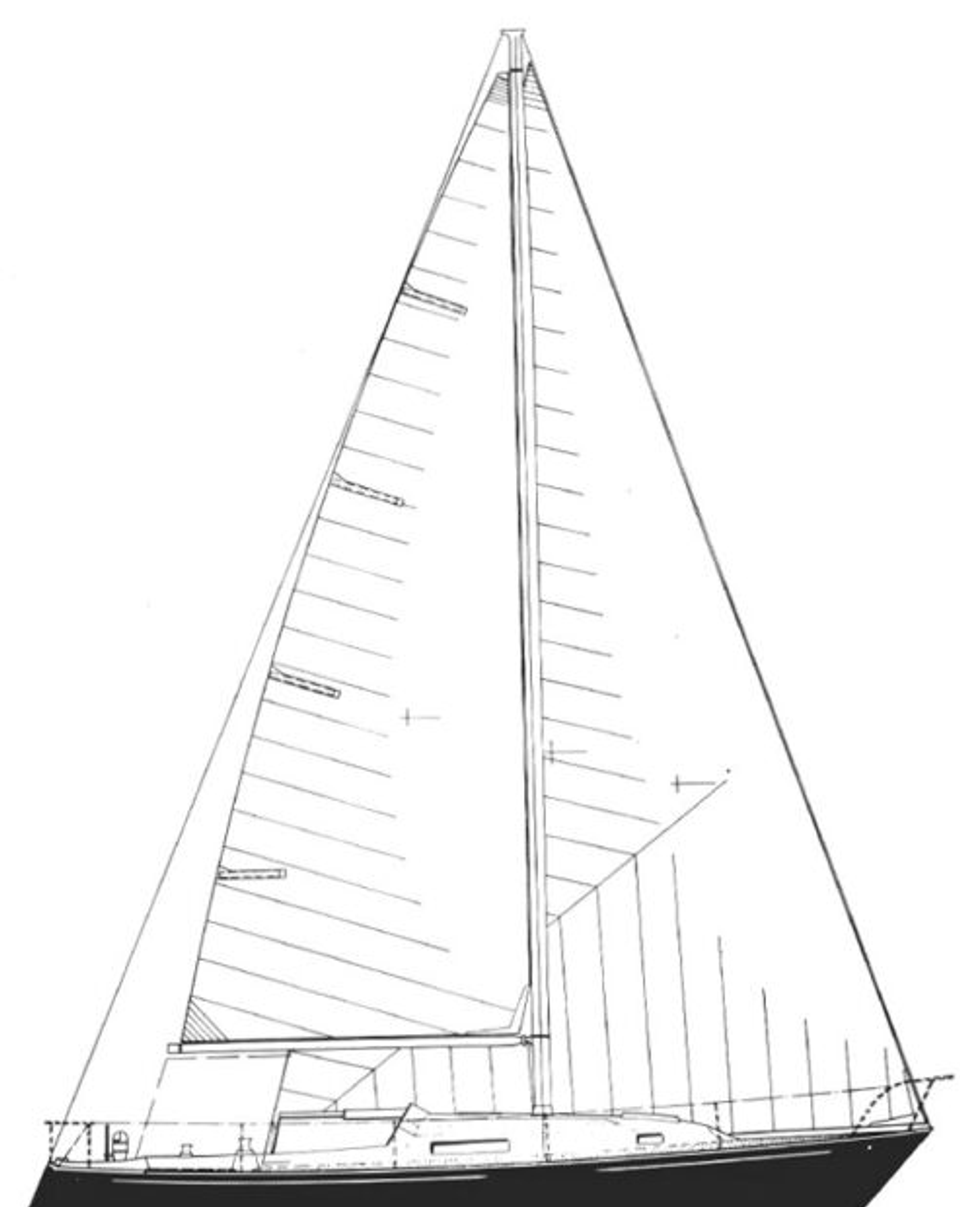
C&C 35 Mk I
BW UnverifiedPendingsloopcoastal-cruiserfin-keelHinterhoeller Yachts / C&C Yachts · Cuthbertson & Cassian · 1969–1973 · fiberglass
Bluewater Evidence · Unverified
15% confidenceNo specific named ocean passage or circumnavigation was found for this Mark I generation in this research pass. A documented offshore race entry (Mike Hennessy's Bermuda 1-2) concerns a later C&C 35 Mark III, a meaningfully different boat, not this model.
Review notes
Added 2026-08-03 per T2.17 (WORKPLAN.md book-lists research queue), one of the 28 boats appearing in a curated book list (Practical Sailor's The Best Used Boat Notebook) with no matching catalog entry. This is specifically the Mark I (originally sold as the Redwing 35, built by Hinterhoeller Yachts before its merger into C&C Yachts, 1969-1973), one of three distinct C&C 35 generations (Mark I, Mark II 1973-1975, Mark III 1982-1987) with meaningfully different displacement, ballast, and draft; the book list's 'C&C 35' entry is treated as this original model absent a more specific designation, consistent with how this catalog disambiguated the Tartan 34 C from the later Tartan 34-2. Specs confirmed via Wikipedia (direct fetch), which gives the Mark I's dimensions exactly matching an initial WebSearch orientation; sailboatdata.com was not independently checked in this pass, worth a follow-up confirmation before promotion. ballast_ratio (47.62%) computed from the 5,000 lb ballast and 10,500 lb displacement both sources agree on. A named offshore entry (Mike Hennessy's Bermuda 1-2 race, per SAIL Magazine) was found in research but concerns a C&C 35 Mark III, a later, different-specification generation, not this Mark I, so it is not used as evidence for this file.
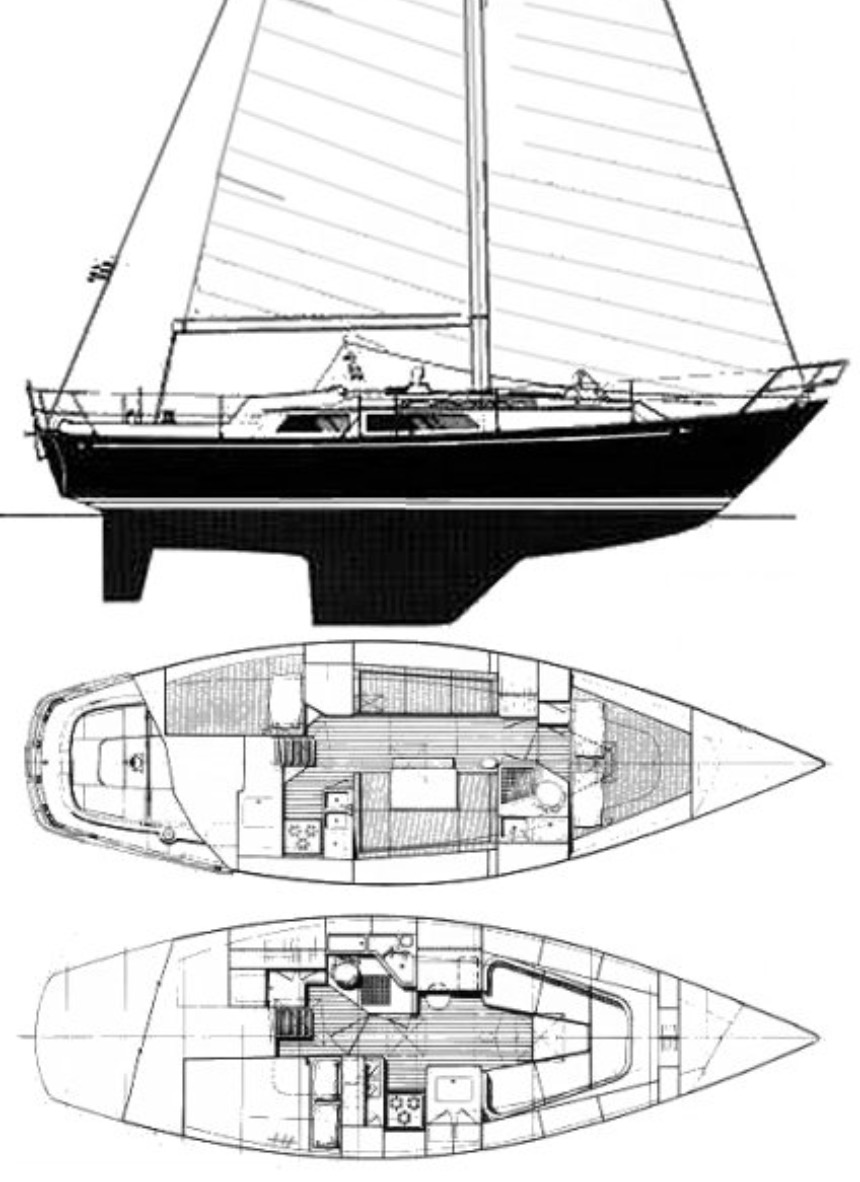
C&C Landfall 35
BW UnverifiedPendingsloopcoastal-cruiserfin-keelC&C Yachts · Robert W. Ball (C&C Design) · 1979–1984 · fiberglass
Bluewater Evidence · Unverified
15% confidenceNo offshore passage or circumnavigation evidence was found for this design in this research pass. It was designed and marketed primarily for yacht charter and coastal/couple's cruising rather than offshore passage-making, per Wikipedia's own account of the design brief.
Review notes
Added 2026-08-04 per T2.17 (WORKPLAN.md book-lists research queue), fourth batch. Sourced from sailboatdata.com (browser automation) and Wikipedia (direct fetch), which agree exactly on all dimensions. Robert Ball of C&C Design drew this as part of C&C's push into more cruising-oriented designs under company president George Cuthbertson in the late 1970s; Wikipedia's own account states it was built 'for the yacht charter market, but was also marketed as a couple's cruising sailboat,' the basis for the coastal-cruiser tag here rather than offshore, since no source found makes an offshore-suitability claim for this specific design. A deep-keel option (6.0 ft) was available alongside the standard 4.83 ft draft, per sailboatdata's own note; recorded via draft_min_ft/draft_max_ft. No offshore passage or circumnavigation evidence was found in this research pass.
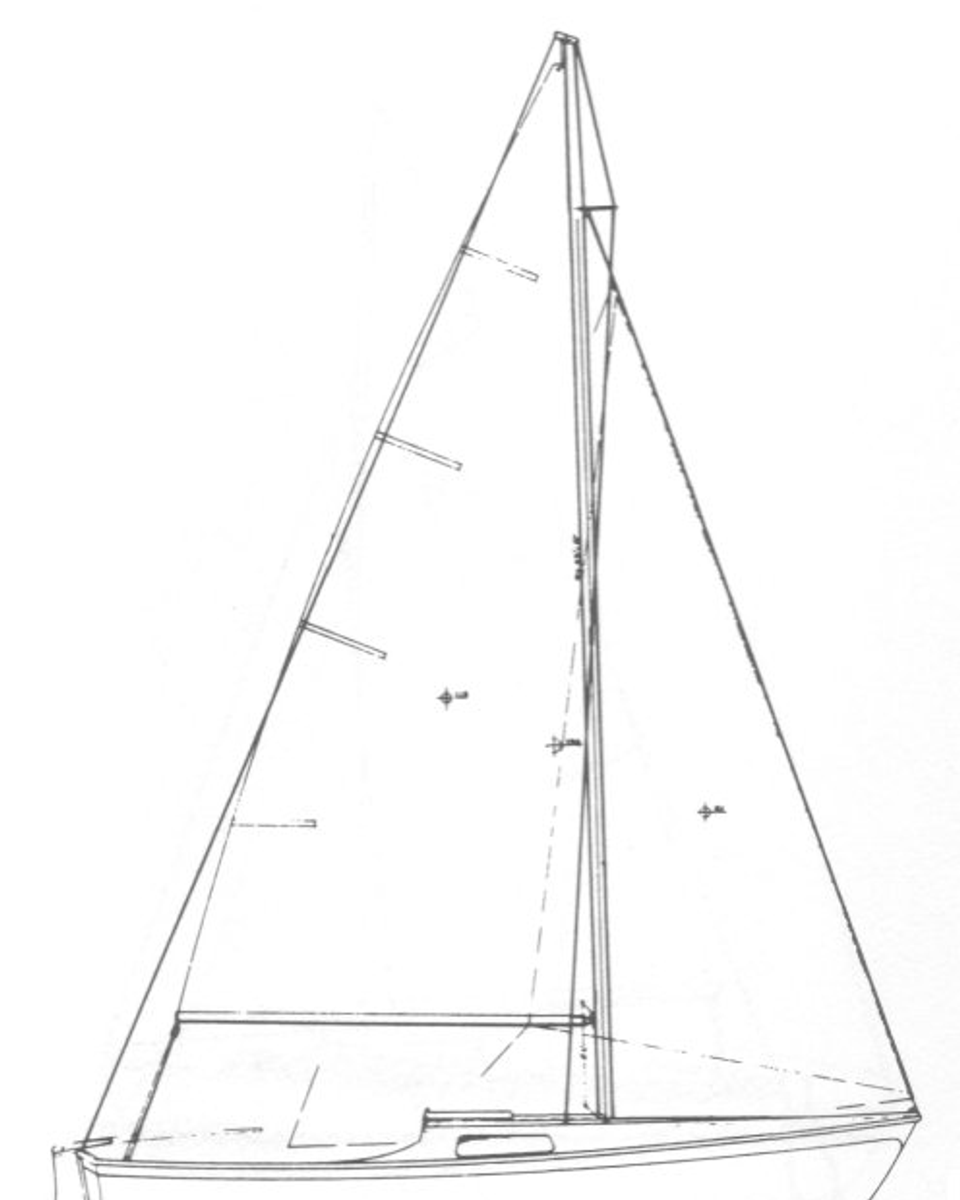
Cal 20
BW UnverifiedPendingsloopcoastal-cruisersmall-cruiserJensen Marine · C. William Lapworth · 1961–1975 · fiberglass
Bluewater Evidence · Unverified
10% confidenceNo specific named ocean passage or circumnavigation was found for this model in this research pass. The Cal 20 was designed and marketed as an entry-level daysailer and one-design club racer, not for offshore passage-making; forum discussion of small-boat ocean crossings mentions the type only as a point of comparison against genuinely offshore-built small boats like the Flicka 20.
Review notes
Added 2026-08-03 per T2.17 (WORKPLAN.md book-lists research queue), one of the 28 boats appearing in a curated book list (John Vigor's Twenty Small Sailboats to Take You Anywhere) with no matching catalog entry. Specs confirmed via sailboatdata.com (browser automation; plain WebFetch 403s the host); a fresh WebSearch orientation independently agreed on every dimension. A real, disclosed conflict on ballast: sailboatdata.com gives 900 lb (ballast_ratio 46.15%, matching its own computed 'Bal./Displ.' figure exactly, used here), while a goodoldboat.com-sourced search snippet gave 500 lb; sailboatdata's figure is used since it is internally self-consistent with its own stability calculations, but this was not independently resolved with a third source. Production span: sailboatdata gives 1961-1975 (1,945 hulls, Jensen Marine plus Calgan Marine under license in Canada); a WebSearch orientation suggested production may have continued into the early 1980s, not confirmed via a direct source in this pass. This is an entry-level daysailer/club racer by original design intent, not a boat marketed or built for offshore passage-making, hence held at unverified; no specific named ocean passage or circumnavigation was found for this model in this research pass, despite occasional forum discussion of small-boat ocean crossings referencing the type in passing.
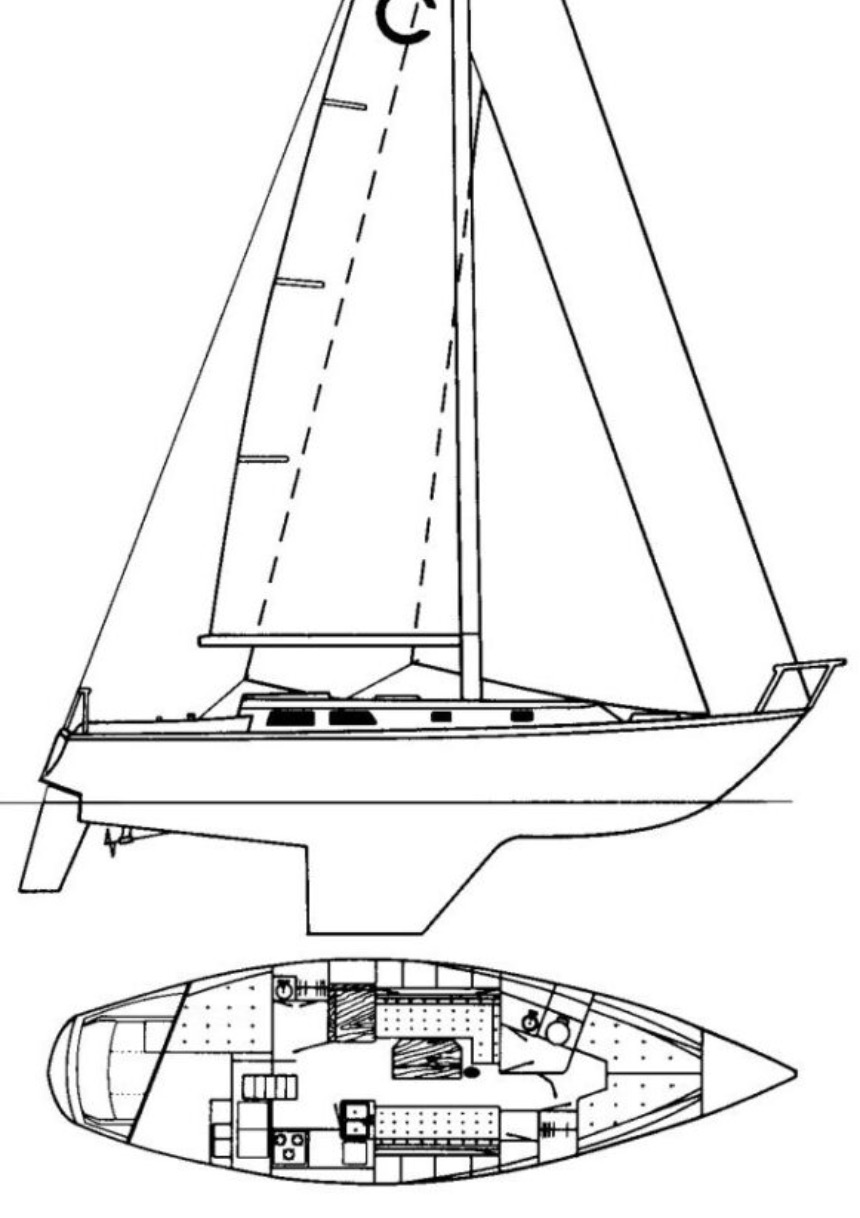
Cal 39 Mk II
BW UnverifiedPendingsloopoffshorefin-keelJensen Marine/Cal Boats (Bangor Punta Corp.) · C. William Lapworth · 1978–1982 · fiberglass
Bluewater Evidence · Unverified
30% confidenceNo single named ocean passage or circumnavigation was independently verified for this specific model in this research pass, but Good Old Boat's own review states 'Cal 39 Mk II owners have made significant offshore passages,' citing examples of the design currently located in Hawaii and New Zealand as evidence, real if not individually documented voyages. This is stronger, more specific design-level evidence than a generic marketing claim, but stops short of a verified named crossing, so the rating stays unverified.
Review notes
Added 2026-08-04 per T2.17 (WORKPLAN.md book-lists research queue), fourth batch. The book-lists.json entry names only 'Cal 39' with no further qualifier, but this name covers three genuinely distinct designs by two different designers spanning nearly two decades: the original 1970-71 Cal 39 (29 built, low sales after the IOR rule change made it obsolete almost immediately), the Cal 39 Mk II covered here (1978-1982, 147-184 built depending on source, an entirely new Lapworth design per sailboatdata's own notes), the Cal 39 Mk III (1983-1986, ~50 built, interior revisions), and an unrelated 1988 Hunt & Associates design that also carries the 'Cal 39' name. Mk II was chosen as the most defensible match for a used-boat buying guide specifically: it is by far the most numerous of the three Lapworth-designed variants on the used market, and unlike the rare original, an independent Good Old Boat review states directly that 'Cal 39 Mk II owners have made significant offshore passages,' matching the offshore-relevance this catalog looks for. Specs are sourced from sailboatdata.com's own dedicated Mk II record ('CAL 39 MK II (1-147)'), independently corroborated closely by Wikipedia's separate Cal 39 Mk II article and by goodoldboat.com's own Mk II review (ballast 7,000 lb and hull count 184 both match across at least two of the three sources). rig is 'sloop' per sailboatdata's own primary field for this specific record; disclosed because Wikipedia's separate Cal 39 Mk III article describes that later model's rig as 'masthead sloop (vs. cutter on Mark II),' which would imply Mk II was cutter-rigged, a claim this session did not find independently corroborated and did not use given sailboatdata's own dedicated Mk II record says sloop directly. A shoal-draft option (5.5 ft) was available alongside the standard 6.67 ft draft, per sailboatdata's own notes.
Cape Dory 33
BW UnverifiedPendingsloopoffshoreattached-rudderCape Dory Yachts · Carl Alberg · 1980–1985 · fiberglass
Bluewater Evidence · Unverified
55% confidenceGregg Nestor includes the Cape Dory 33 in Twenty Affordable Sailboats to Take You Anywhere. Cape Dory's brochure presents it as an offshore cruiser, but no named-hull passage record has been verified in this pass.
Review notes
Book-list gap researched 2026-07-27 from Cape Dory brochure material preserved by the owners association, its specification page, and the book contents. The association lists 546 square feet while a later Newport Shipyards brochure lists 561, so the earlier model-specific figure is used and the discrepancy is retained in source notes. A genuine builder drawing is visible in preserved Cape Dory brochure material, but publication rights have not been verified. Keep the image empty until rights are cleared. Kept pending for final editorial review and passage-evidence scoring. T2.19 re-research 2026-09-12: re-verified capedory.org's own specs page and sailboatdata.com directly (both re-fetched raw). LOA, LWL, beam, draft, displacement, ballast, sail area, year range, designer, and rig (masthead sloop, also available as a cutter) all confirmed exact against both sources. Found one minor, previously undisclosed conflict: capedory.org gives 'Nr. Built 120' (matching this file's Overview text), while sailboatdata.com's independent record says '# Built: 124.' Kept 120 since it's this file's existing, better-corroborated owners'-association figure; disclosed the sailboatdata conflict here rather than silently ignoring it. No corrections needed.
Colvin Gazelle 42
BW UnverifiedPendingschooneroffshoreVarious (home and professional builds, to Colvin's plans) · Thomas E. Colvin · 1967 · steel
Bluewater Evidence · Unverified
30% confidenceNo single named hull's documented ocean passage was independently verified in this research pass, but general design-level offshore use is well corroborated: wavetrain.net (a cruising-boat review site, fetched directly) describes a sistership named Migrant completing 'an extended bluewater cruise' with a best day's run of 202 miles and a best week's average of 163 miles per day, and both wavetrain.net and acbs.org independently describe the design as capable of long-distance and high-latitude cruising, with acbs.org noting some hulls have been used for extended voyaging. None of this ties a specific documented ocean crossing (with dates, route, and result) to a single named hull the way this catalog's strongest entries (Joshua, Damien II) do, so the rating stays unverified pending that level of evidence.
Review notes
Added 2026-08-03 per T2.14 (WORKPLAN.md metal-hull research initiative), the first of the two 'Colvin designs (Gazelle, Saugeen Witch)' queue entry after verifying real hull counts (the inventory's own note flagged this as possibly closer to custom/amateur than semi-production, worth checking before committing). Confirmed NOT a one-off: three independent sources (wavetrain.net, acbs.org, goodoldboat.com) all describe a real, large sistership fleet, though the exact count varies by source (goodoldboat.com says 'over 100 examples completed since the 1970s'; wavetrain.net and acbs.org both independently say 'over 700 sisterships launched to date'); both figures are reported here rather than picked arbitrarily. This design is NOT on sailboatdata.com at all (searched directly by name and by designer; confirmed 'Nothing Found'), unusual for this catalog's usual primary source. goodoldboat.com's own specification table for this boat is internally implausible and was NOT used for any numeric field: it lists Length 42.0 ft but LOA 22.25 ft, LWL 17.5 ft, Beam 7.25 ft, and Displacement 2,018 lb, none of which are consistent with each other or with a 42 ft steel schooner (a 7.25 ft beam on a 42 ft hull, or an 18,000+ lb hull displacing only 2,018 lb, are not physically plausible), indicating a field-mapping error on that page for this specific boat; flagged per the Fact Verification Protocol rather than used. Core dimensions instead come from two independent sources that agree closely: wavetrain.net (Charles Doane's cruising-boat review site, fetched directly) gives LOD 42'2" / LWL 33'0" / beam 11'4" / draft 3'10", and bluewateryachtsales.com's real 1979-built listing independently confirms LOA 42'2" and beam 11'4" exactly, though that listing's draft (6'5") is nearly double wavetrain's figure; not resolved (could be a genuine deep-keel variant on a plan-built design where hulls vary, per goodoldboat's own site disclaimer that 'boats are not all the same,' or a data error on one side), so draft_ft here uses wavetrain's figure and the conflict is disclosed rather than silently picked. loa_ft (42.17 ft) uses LOD (length on deck, the hull length), not wavetrain's separately given LOA (49'0", which includes the bowsprit), matching this catalog's established convention for spar-inclusive-vs-hull-length distinctions. Displacement (18,000 lb, the 'original' prototype figure per wavetrain) and ballast (7,500 lb) come from wavetrain alone, with no independent second source found; wavetrain also gives a materially higher 'average sistership displacement' of 24,000 lb, underscoring that individual hulls vary significantly on an owner/professional-built design like this one. sail_area_sqft is left blank: goodoldboat.com's page lists individual sail-wardrobe areas (jib, multiple genoas, drifter, asymmetrical, balance lugsail, gaff foresails and mains) rather than one working sail area figure, and the design's rig itself varies by build (junk-rigged schooner most common, but gaff-schooner and gaff-ketch variants exist per acbs.org), so no single number would be honest here. rig is recorded as 'schooner' (the design is consistently described as a junk-rigged or gaff-rigged schooner across all sources); the Chinese-lug/junk rig style itself has no dedicated enum value in this schema. hull_material is 'steel' as the predominant material across all sources, though aluminum and wood examples exist (the same multi-material caveat already disclosed for this initiative's Mauritius 43 and Van de Stadt 44 entries). No line drawing or rights-clear photo was found in this research pass (not on sailboatdata.com; goodoldboat.com's listing has no boat image; brokerage listing photos found via search carry no established reusable rights), so review_blockers is set and cover_image stays the placeholder pending a future pass.
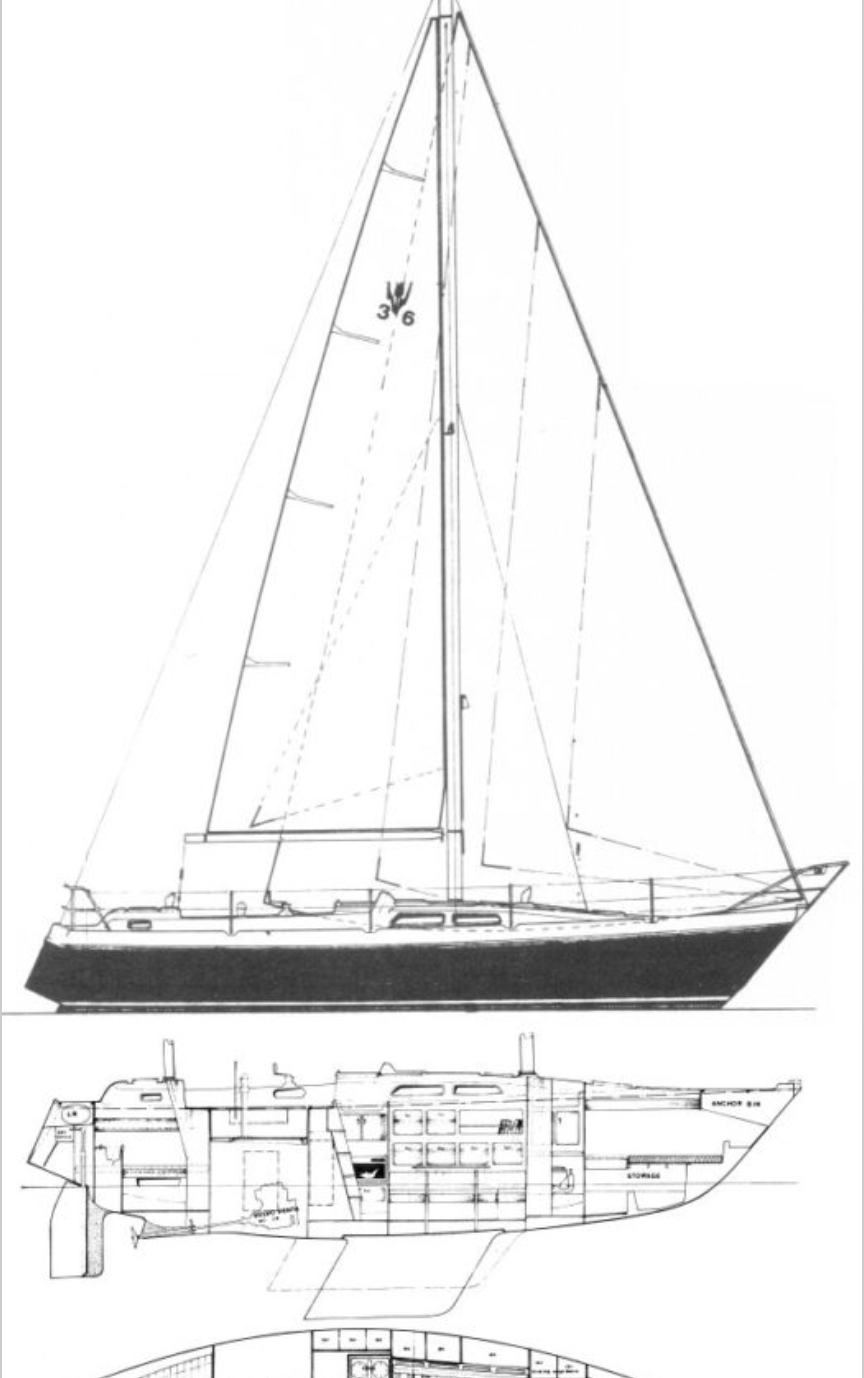
Contest 36
BW UnverifiedPendingsloopoffshorefin-keelContest Yachts (Conyplex) · Dick Zaal · 1974–1981 · fiberglass
Bluewater Evidence · Unverified
38% confidenceNo specific named-vessel offshore passage has been verified for the Contest 36 in this research pass. Contest Yachts (Conyplex, Medemblik, Netherlands, founded 1959 by Ed Conijn) has built a long-standing reputation for solid, seaworthy cruisers across three generations of family ownership. John Neal's Mahina Offshore Services list rates the broader Contest range (31 through 60) 4/5, describing the yard as continuing 'to build highest quality boats,' though this note is not specific to the 36.
Review notes
Added 2026-07-30 from the Mahina 'Boats to Consider' research queue (rated 4/5 by John Neal, whose note references the wider Contest range from 31 through 60, not the 36 specifically). Specs verified directly against sailboatdata.com's Contest 36 page via browser automation (plain WebFetch 403s the host), cross-checked against goodoldboat.com's saildata entry, which matches sailboatdata exactly on LOA, LWL, beam, draft, and displacement. The two sources conflict on production years and count: sailboatdata.com gives 1974-1981 and 90 built, goodoldboat.com gives 1973-1978 and approximately 60-70 built. sailboatdata.com's figures are used here as the more detailed Tier-2 source; the discrepancy is flagged rather than silently resolved. Cover image is a wireframe sail plan/hull profile plus interior layout captured from sailboatdata.com's page; permission_status is unverified, consistent with the majority of the catalog's cover images per docs/DECISIONS.md's 2026-07-19 imagery-rights entry.
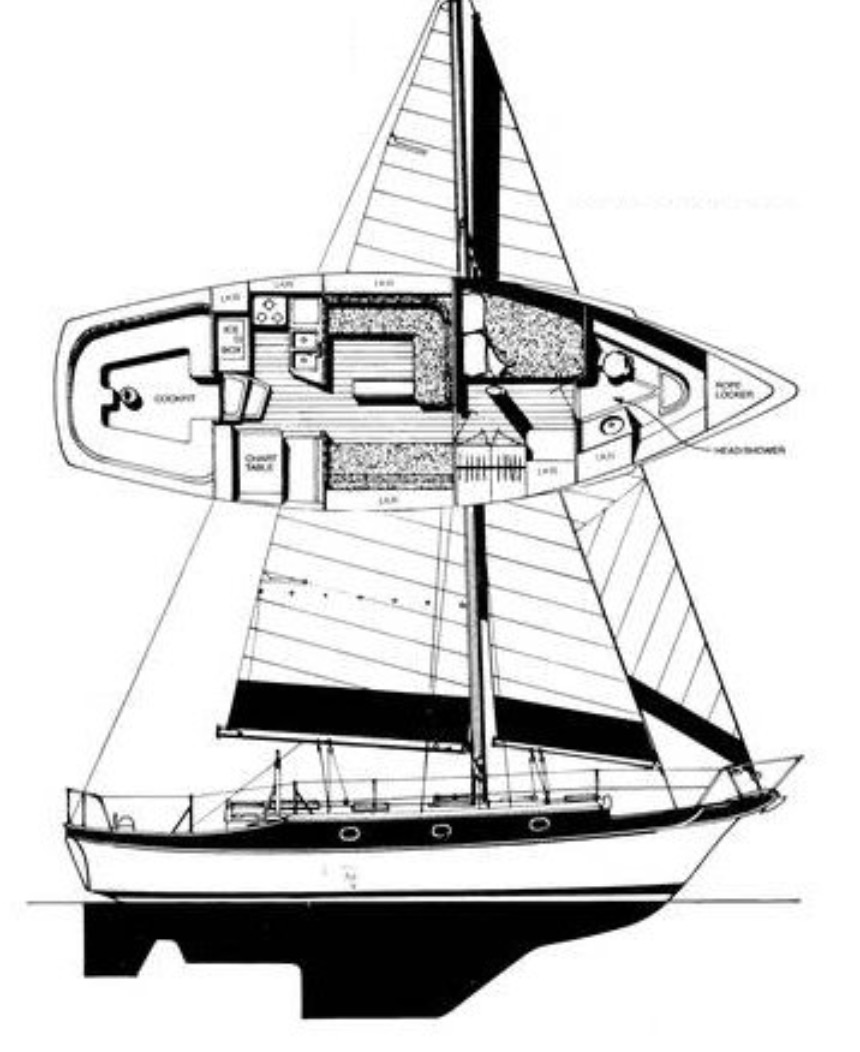
CSY 37
BW UnverifiedPendingcuttercoastal-cruiserfin-keelCaribbean Sailing Yachts · Peter Schmitt · 1978–1981 · fiberglass
Bluewater Evidence · Unverified
20% confidenceNo offshore passage or circumnavigation evidence was found for this design in this research pass. Practical Sailor describes the hull and construction as massively overbuilt with genuine seaworthiness potential, and notes the boat comes into its own downwind with real tradewind-passage capability, but the design brief prioritized Caribbean charter comfort over offshore optimization, and known handling limitations (poor windward performance, awkward helm response under power) are disclosed rather than smoothed over.
Review notes
Added 2026-08-05 per T2.17 (WORKPLAN.md book-lists research queue), fifth batch. Sourced from sailboatdata.com (browser automation) and Practical Sailor (direct fetch), which agree closely on dimensions. A raised-deck cutter, one of three sizes (also 33 and 44/45) built by CSY primarily for its own Caribbean bareboat charter fleet, with a shoal-draft option (4.67 ft) alongside the standard 5.25 ft draft, recorded via draft_min_ft/draft_max_ft. Tagged coastal-cruiser rather than offshore: Practical Sailor's review, while praising the boat's exceptionally overbuilt solid-glass construction, is explicit that its design priorities (huge cockpit, wide sheeting base, charter-oriented layout) favor charter comfort and downwind tradewind passages over dedicated offshore optimization, and flags real handling limitations upwind and under power in crosswinds.
Dufour Arpege 30
BW UnverifiedPendingsloopoffshoreskeg-rudderDufour Yachts · Michel Dufour · 1966–1976 · fiberglass
Bluewater Evidence · Unverified
55% confidenceThe Best Used Boat Notebook includes the Arpege 30. The French owners association records a second place in the 1969 San Francisco to Tokyo race, and Sailing Magazine reports Atlantic crossings and at least one circumnavigation. Named-hull details still need primary voyage records.
Review notes
Book-list gap researched 2026-07-27. Dufour's current history confirms more than 1,500 built. The Arpège owners association, Dufour Association, Sailing Magazine review, and specifications record establish the model, production period, and underbody. Sources disagree on working sail area, so 382 square feet from the measured rig triangles is used pending variant review. Genuine model-specific drawings were located through the Arpège community and period listings, but publication rights have not been verified. Keep the image empty until rights are cleared. T2.19 re-research 2026-09-12: re-verified sailboatdata.com directly (raw fetch, not tool-summarized). LOA, LWL, beam, standard draft (4.60 ft), displacement, ballast, ballast_ratio, sail area (382, matching this file's own reported-not-calculated figure exactly), keel type (fin with skeg-hung rudder), ballast material (iron), year range, and hull count (1,500+) all confirmed exact. No corrections needed.
Endeavour 37
BW UnverifiedPendingsloopoffshoreshoal-draftEndeavour Yacht Corporation · Dennis Robbins / Endeavour Yachts · 1977–1983 · fiberglass
Bluewater Evidence · Unverified
55% confidenceGregg Nestor includes the Endeavour 37 in Twenty Affordable Sailboats to Take You Anywhere. An owner archived by the Endeavour group reports two Atlantic crossings, but the account has not yet been tied to an independent voyage record.
Review notes
Book-list gap researched 2026-07-27. The Endeavour owners archive provides specifications, factory-manual material, design history, sail plans, and a contemporary 1980 sea trial. Its model-specific sail plan is the correct drawing type, but publication rights have not been verified. Keep the image empty until rights are cleared. Kept pending for final editorial review and passage-evidence scoring. The generic 580-square-foot standard-sloop sail area is used; optional tall-mast and bowsprit rigs differ. T2.19 re-research 2026-09-12: re-verified endeavourowners.com's own specs page directly (raw fetch) and cross-checked sailboatdata.com. sailboatdata.com's structured record disagrees with this file on three points (LOA 37.00 vs this file's 37.42; ballast 8,000 lb/40% vs this file's implied 7,500 lb/37.5%; S.A. reported 574 vs this file's 580), but the owners archive itself, this file's own more detailed primary source, independently confirms this file's existing figures exactly (LOA 37'5" = 37.42 ft, BALLAST 7,500 lbs, SLOOP STAND sail area 580 sq ft). Kept this file's existing numbers; sailboatdata.com appears to be the outlier on all three, not this file. Also noted: sailboatdata.com classifies the hull 'Fin with rudder on skeg' against this file's 'full' keel_type; the owners archive's own prose doesn't use either term explicitly, describing only an integral molded keel with internal lead ballast, so this conflict is disclosed but not resolved either way. LWL, beam, draft, displacement, year range, and hull count (476) all confirmed exact against both sources.
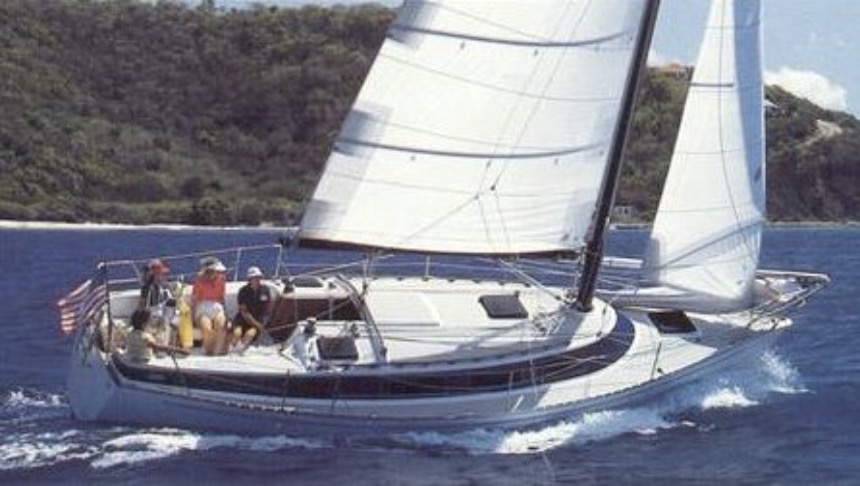
Freedom 32
BW UnverifiedPendingsloopcoastal-cruiserfin-keelTillotson-Pearson Inc. (TPI) · Garry Hoyt · 1983–1986 · fiberglass
Bluewater Evidence · Unverified
30% confidencePractical Sailor reports that multiple owners have completed extended ocean passages on this design, including transatlantic voyages, with some regularly logging 140-mile days, but no single named crossing with a specific skipper and boat was independently verified in this research pass. The same review raises a real caution: the design's ultimate stability (ability to right from a full knockdown) is described as questionable, with comparable Freedom models rating below the 120-degree AVS threshold some reviewers use as an offshore baseline, and it is reported not to heave-to well. Both sides of this evidence are disclosed; the rating stays unverified rather than capable given the stability caveat.
Review notes
Added 2026-08-04 per T2.17 (WORKPLAN.md book-lists research queue), fourth batch. Sourced from sailboatdata.com (browser automation) and Practical Sailor (direct fetch), which agree closely on dimensions. This is a genuinely unusual design the schema's rig enum has no dedicated value for: a freestanding, unstayed carbon-fiber mast (no shrouds or standing rigging at all) carrying a large main and a small self-tending 'CamberSpar' jib, what Garry Hoyt himself called a cat sloop; recorded as 'sloop' here as the closest enum fit, with the freestanding-rig detail disclosed in body text rather than lost. A shoal-draft option (4.92 ft, the sailboatdata-listed default) and a deep-keel option (6.08 ft) were both offered; recorded via draft_min_ft/draft_max_ft. Practical Sailor's own review raises a real, specific offshore-relevant caution worth keeping visible rather than softening: ultimate stability (the ability to right from a full knockdown) is described as questionable, with 'comparable Freedom models rating below the 120-degree minimum threshold' some reviewers use as an offshore baseline, and the boat is reported to not heave-to well. The same review also documents that multiple owners have completed extended ocean passages, including transatlantic voyages, a genuine tension in the evidence that is disclosed rather than resolved one way or the other.
Hallberg-Rassy 34
BW UnverifiedPendingsloopoffshorespade-rudderHallberg-Rassy · Germán Frers · 1990–2005 · fiberglass
Bluewater Evidence · Unverified
55% confidenceThe Best Used Boat Notebook includes the Hallberg-Rassy 34. Factory material describes offshore-version sails and construction, but design category and builder reputation are not substitutes for named passage evidence.
Review notes
Book-list gap researched 2026-07-27. Hallberg-Rassy retains the standard specification, a 2004 test, year-by-year improvement notes, rudder service guidance, and a factory comparison with the replacement 342. The factory PDF includes a genuine model-specific profile and sail plan, but it is marked copyright and no reuse permission was found. Keep the image empty until rights are cleared. Kept pending for final editorial review and passage-evidence scoring. T2.19 re-research 2026-09-12: re-verified sailboatdata.com directly (raw fetch). LOA, LWL, beam, draft, displacement, ballast_ratio (4,630 lb / 39.63%, matching this file's 39.6 exactly), sail area, keel type (fin with spade rudder), rig (fractional sloop), year range, and hull count (484) all confirmed exact. No corrections needed.
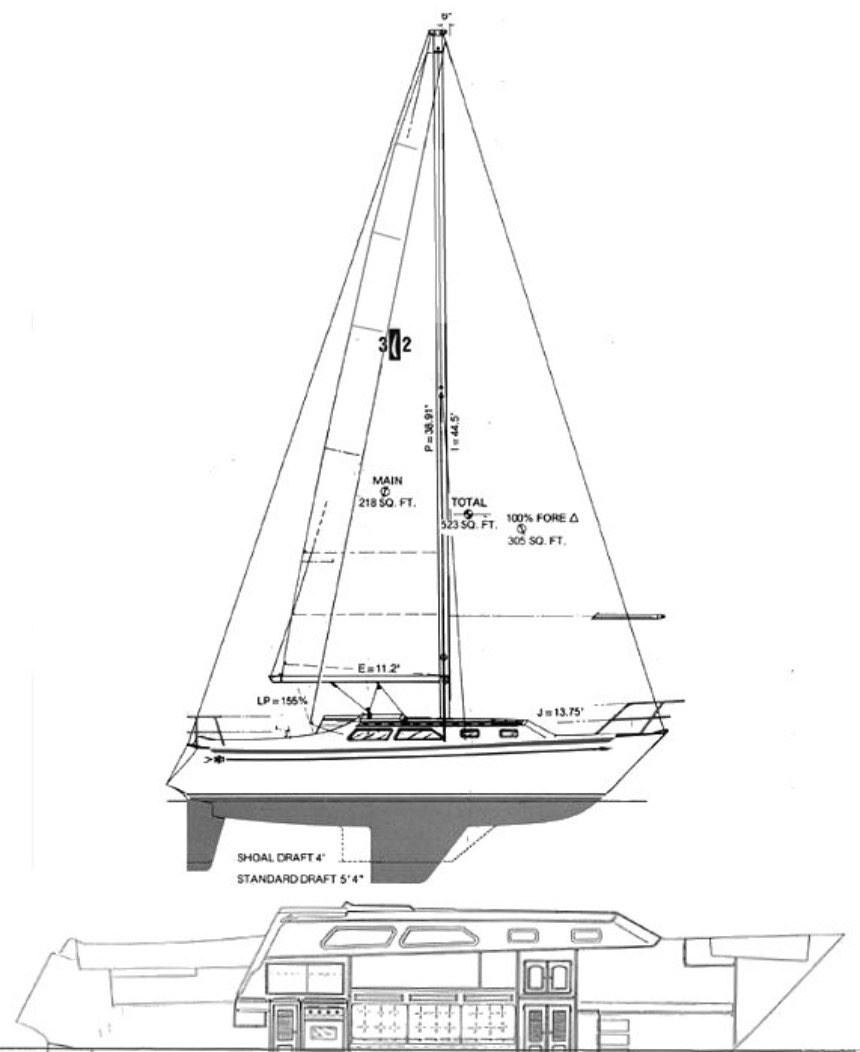
Islander 32 Mk2
BW UnverifiedPendingsloopcoastal-cruiserfin-keelIslander Yachts · Robert Perry · 1976–1979 · fiberglass
Bluewater Evidence · Unverified
15% confidenceNo offshore passage or circumnavigation evidence was found for this design in this research pass. Sources describe it mainly in terms of build quality and resale value ('retained its value as a result of superior building, a solid reputation, and a devoted owner base') rather than offshore capability specifically.
Review notes
Added 2026-08-04 per T2.17 (WORKPLAN.md book-lists research queue), fourth batch. Sourced from sailboatdata.com (browser automation, listed there as 'ISLANDER 32-2') and harbormoor.com (direct fetch), which agree closely on dimensions; a third source (goodoldboat.com) was checked but turned out to document a different, rarer variant (the Islander 32 Mark III, fewer than 50 hulls, 1977 only, a different sail plan and engine) and was not used for this Mk2 file to avoid conflating the two. Designer corrected from an initial WebSearch-only guess (Alan Payne, wrong) to Robert Perry, confirmed by both sailboatdata.com and harbormoor.com. This design was also sold as the Yachtcraft 32, per sailboatdata's own notes. A shoal-draft option (4.0 ft) was available alongside the standard 5.33 ft draft; recorded via draft_min_ft/draft_max_ft. sail_area_sqft (487) is the standard-rig reported figure; a tall-rig option existed with 523 sq ft total, noted here but not used as the primary figure since the drawing itself (used as this file's cover image) is sailboatdata's own tall-rig sail plan, the only clean technical drawing found. Minor unresolved conflict disclosed rather than picked: harbormoor.com's own ballast figure (3,199 lb) differs from sailboatdata's (4,130 lb); sailboatdata's figure is used since it is internally consistent with this file's own ballast_ratio (4,130/10,500 = 39.33%, matching sailboatdata's own calculated field exactly). No offshore passage evidence was found for this design in this research pass.
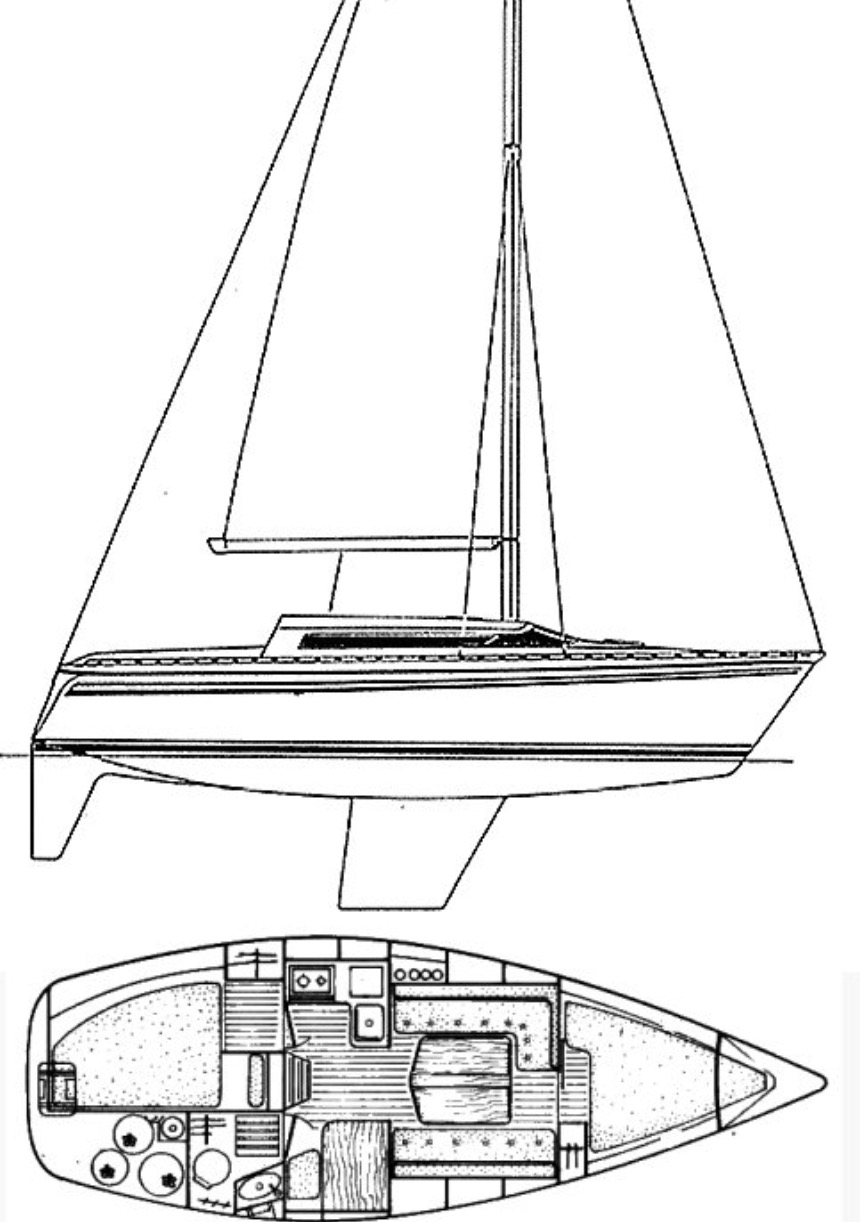
Jeanneau Attalia 32
BW UnverifiedPendingsloopcoastal-cruiserfin-keelJeanneau · Joubert-Nivelt · 1982–1988 · fiberglass
Bluewater Evidence · Unverified
15% confidenceNo offshore passage or circumnavigation evidence was found for this design in this research pass. Independent sources describe it as suited for coastal and light offshore sailing, explicitly noting its lightweight construction makes it less ideal for heavy offshore use, a credible-source design-suitability assessment rather than an inference.
Review notes
Added 2026-08-05 per T2.17 (WORKPLAN.md book-lists research queue), fifth batch. Sourced from sailboatdata.com (browser automation) and goodoldboat.com (direct fetch), which agree exactly on dimensions. The design derives directly from Air Bigouden, the 1981 IOR Half Ton class world champion, per both sources independently; a real, credible design-pedigree fact rather than marketing language. Tagged coastal-cruiser, not offshore: goodoldboat.com's own description calls it suited for 'coastal and light offshore sailing,' explicitly noting its lightweight construction makes it 'less ideal for heavy offshore use.' Three keel configurations were offered (deep-draft fin, shoal-draft fin, and a swing/centerboard keel for shallow water); this file uses the deep-draft fin figures, sailboatdata's own primary record. Hull count is genuinely unresolved between sources: sailboatdata.com's own record for this specific fin-keel variant says 250 built, while goodoldboat.com (and an initial WebSearch cross-check) gives 871 total; the higher figure most likely spans all keel variants combined rather than being a straightforward contradiction, but this wasn't confirmed directly, so both figures are disclosed rather than one being silently chosen.
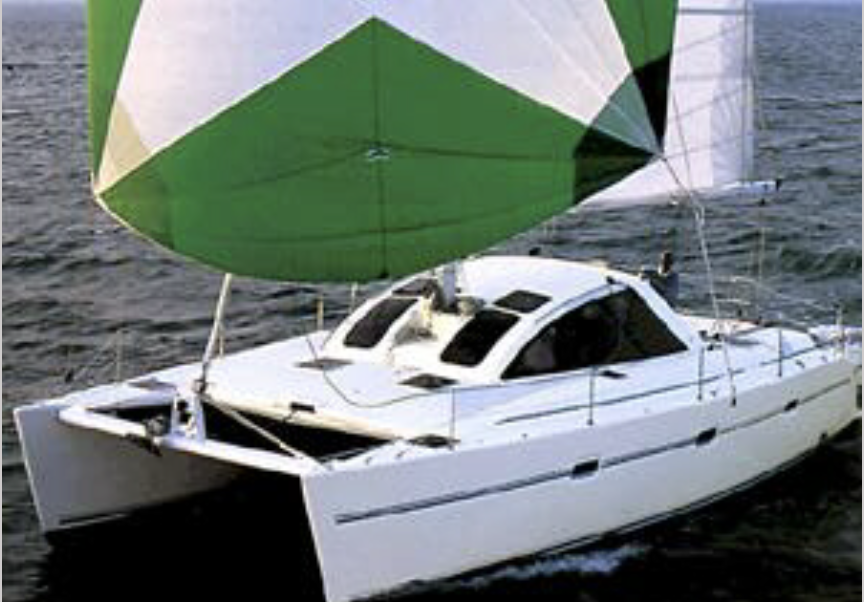
Lagoon 37
BW UnverifiedPendingsloopcoastal-cruisercatamaranJeanneau / TPI Composites · Van Peteghem / Lauriot-Prevost · 1991–1998 · fiberglass
Bluewater Evidence · Unverified
15% confidenceNo offshore passage or circumnavigation evidence was found for this design in this research pass. Reviewer accounts (Chris Caswell, cited via Wikipedia) describe strong windward ability for a catamaran and speeds up to 15 knots, and naval architect Robert Perry is on record praising its refined styling, but these are sailing-performance and styling impressions rather than documented offshore passages.
Review notes
Added 2026-08-05 per T2.17 (WORKPLAN.md book-lists research queue), fifth batch. Sourced from sailboatdata.com (browser automation) and Wikipedia's Lagoon 37 entry (direct fetch), which agree exactly on every dimension and construction detail. Following this catalog's established T2.18 precedent for catamarans (Gemini 105M, PDQ 36), no ballast_ratio or keel_type field is used since this is an unballasted catamaran; a plain 'catamaran' tag stands in for the schema's lack of a dedicated hull_config field. rig recorded as 'sloop' (the closest schema enum to the design's actual 7/8 fractional sloop rig, per Wikipedia). Tagged coastal-cruiser rather than offshore: no offshore passage or circumnavigation evidence was found for this design in this research pass, and this catalog's convention (established across other charter-oriented catamarans) is to default to coastal absent specific bluewater evidence, notwithstanding the sea-kindly reviewer impressions cited below. Cover image is a real sailboatdata.com photo of a Lagoon 37 under spinnaker; no identifiable person is visible (only a shadowed figure behind the helm-station glass), consistent with this catalog's photo-use standard.
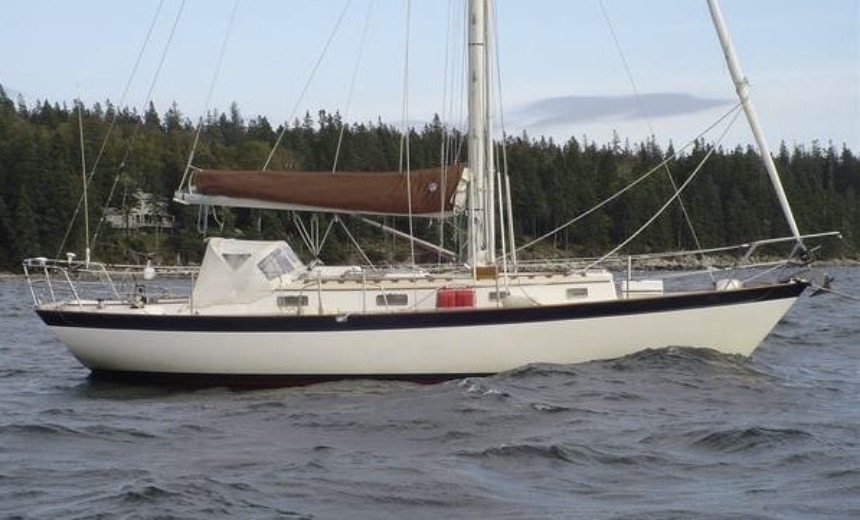
Morris Justine 36
BW UnverifiedPendingcutteroffshorefin-keelMorris Yachts (Bass Harbor, Maine, USA) · C. W. (Chuck) Paine · 1983 · fiberglass
Bluewater Evidence · Unverified
25% confidenceNo hull-specific documented ocean passage was found for this model in this research pass. It is credibly described across multiple sources as offering real offshore capability relative to its builder's earlier, smaller designs, and yacht designer Bob Perry has praised its proportions and all-around performance, but neither constitutes a documented passage, so the rating stays unverified.
Review notes
Added 2026-08-03 per T2.17 (WORKPLAN.md book-lists research queue), third batch. Sourced from sailboatdata.com (browser automation) and goodoldboat.com (direct fetch), which agree closely on all dimensions. Chuck Paine designed this for Morris Yachts, the Maine builder known for high build quality and elegant styling; it was Tom Morris's best-selling model at the time, per multiple sources, with 33 hulls built starting in 1983. A near-identical extended-transom variant, the Morris 38, is a related but separate model, not counted here. Most hulls were built with the shoal-draft keel (4.5 ft, recorded as draft_ft) rather than the deeper fin option (5.5 ft, recorded via draft_max_ft), per sailboatdata's own note. year_end is left unset: no source found gives a specific year production of this exact model stopped, only that Morris moved on to other designs afterward; noted here rather than guessed. No hull-specific documented ocean passage was found in this research pass; the 'offshore' tag reflects credible-source design characterization (WebSearch's own synthesis, echoing language used across multiple sources, describes it as combining 'greater accommodations, speed, and offshore capability' relative to Paine's earlier, smaller designs for the same builder) rather than a verified crossing. Cover image is a real photo from sailboatdata.com (no technical line drawing was available on that page for this specific model, unlike most other boats in this catalog), captured via zoomed screenshot.
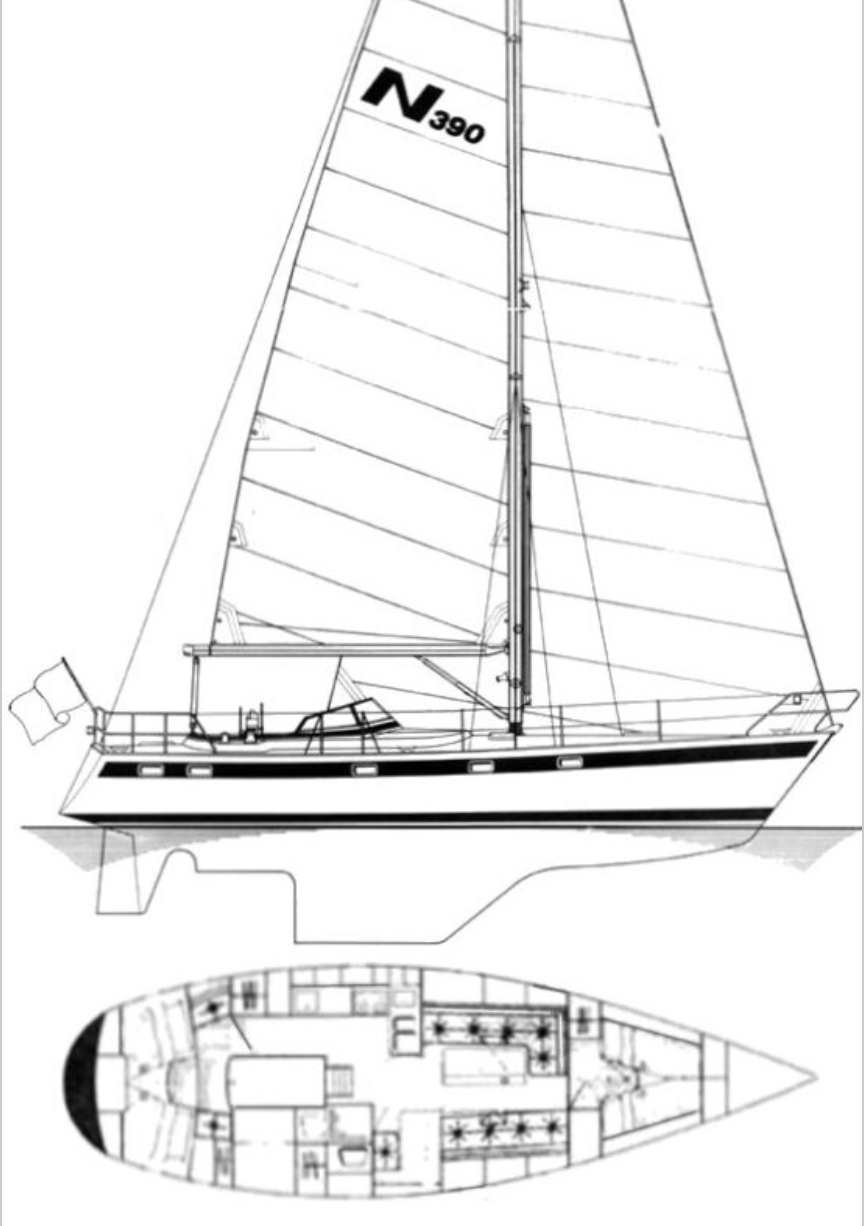
Najad 390
BW UnverifiedPendingsloopoffshorefin-keelNajad Varvet AB · Thorwald Karlsson · 1984–1995 · fiberglass
Bluewater Evidence · Unverified
46% confidenceSailing Today identified Ananta as a Najad 390 in its February 2017 report from the ARC fleet sailing to Brazil, naming crew member Max Fercondini and the boat. The available article extract does not establish Ananta's finish, so it is a lead rather than a completed-passage record. Separately, a MarineSource listing says Najad 390 S/V Emily received a 2023 refit before a transatlantic passage to the Caribbean, but that broker claim is not independent confirmation. The rating remains unverified.
Review notes
Added 2026-07-30 from the Mahina 'Boats to Consider' research queue (rated 5/5 by John Neal). Specs verified directly against sailboatdata.com's Najad 390 page via browser automation (plain WebFetch 403s the host). Cover image is a wireframe sail plan/hull profile plus interior layout captured from that same page; permission_status is unverified, consistent with the majority of the catalog's cover images per docs/DECISIONS.md's 2026-07-19 imagery-rights entry. T2.19 re-research on 2026-09-13 found two transatlantic leads, Ananta in a Sailing Today ARC report and S/V Emily in a broker listing. Neither source establishes a completed passage at the standard needed for a rating change, so the rating remains unverified.
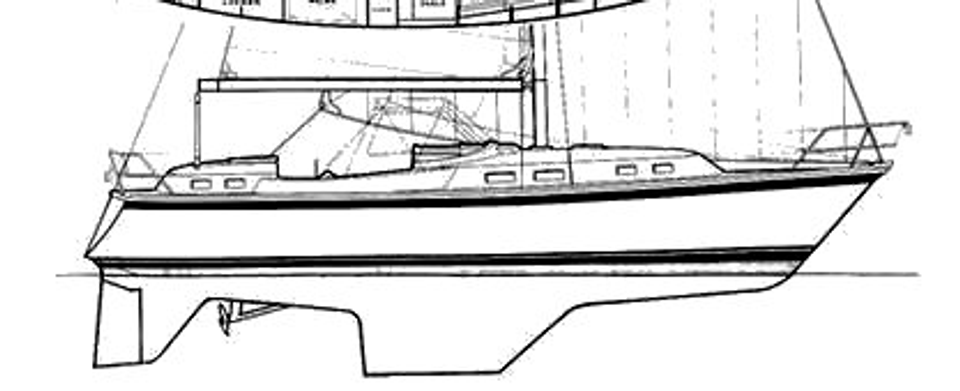
O'Day 37
BW UnverifiedPendingsloopcoastal-cruiserfin-keelO'Day Corporation · C. Raymond Hunt Associates · 1977–1985 · fiberglass
Bluewater Evidence · Unverified
20% confidenceNo specific named ocean passage or circumnavigation was independently verified for this model in this research pass. A WebSearch-derived claim that 'several O'Day 37s have circumnavigated,' attributed to John Neal's Mahina Offshore Services list, was not confirmed via direct fetch of that document and is not used as evidence here.
Review notes
Added 2026-08-03 per T2.17 (WORKPLAN.md book-lists research queue), one of the 28 boats appearing in a curated book list (Practical Sailor's The Best Used Boat Notebook) with no matching catalog entry. Specs confirmed via sailboatdata.com (browser automation; plain WebFetch 403s the host); a goodoldboat.com review corroborates the swept-back fin keel with skeg-supported rudder, masthead sloop rig, and 6,000 lb lead ballast (matching the ballast_ratio computed here), though its own extracted text did not include a full dimension table. Designer is credited to 'C. Raymond Hunt Associates' per both sources, with sailboatdata separately naming John Deknatel as the individual designer within that firm; year_start (1977) uses sailboatdata's 'First Built' field, one year earlier than goodoldboat's 1978 introduction date, a minor variance not resolved further. sailboatdata's own notes flag that some hulls have iron rather than lead ballast, and that many boats were sold into charter fleets and sailing schools, both real considerations for a buyer. A WebSearch pass surfaced a Tier-1, unverified claim that 'several O'Day 37s have circumnavigated' per John Neal's Mahina Offshore Services list; this was not independently confirmed via a direct fetch of that document in this pass and is not used as evidence, consistent with the Fact Verification Protocol's treatment of WebSearch-synthesized claims.
Oyster 42
BW UnverifiedPendingsloopoffshorefin-keelOyster Marine · Holman & Pye · 1997 · fiberglass
Bluewater Evidence · Unverified
38% confidenceNo specific named-vessel offshore passage has been verified for the Oyster 42 in this research pass. Oyster Marine (founded by Richard Matthews, Ipswich, UK, 1973) has built deck-saloon cruisers since 1980 and is one of the best-known names in British production bluewater yachts, purchased by Richard Hadida in 2018. John Neal's Mahina Offshore Services list rates the Oyster range 4/5, describing the boats as 'attractive, expensive and good quality,' and specifically notes weak resale value on larger models makes a used Oyster a comparatively good value purchase.
Review notes
Added 2026-07-31 from the Mahina 'Boats to Consider' research queue (rated 4/5 by John Neal, whose note covers the wider Oyster range from 42 through 100, not the 42 specifically). Specs verified directly against sailboatdata.com via browser automation (plain WebFetch 403s the host). Note: Oyster built more than one design called '42' across its history; sailboatdata.com's page used here (First Built 1997, Holman & Pye design) is a low-volume run, one Berthon International piece cites only seven built 1998-1999, distinct from an earlier, more common 1986-1990 Oyster 42 by the same designers. Confirm which '42' any specific listing refers to. No cover image has been captured yet: this sailboatdata.com page has only a marketing photograph, no wireframe sail plan or hull profile drawing, which this catalog's convention avoids using as a cover image without cleared rights.
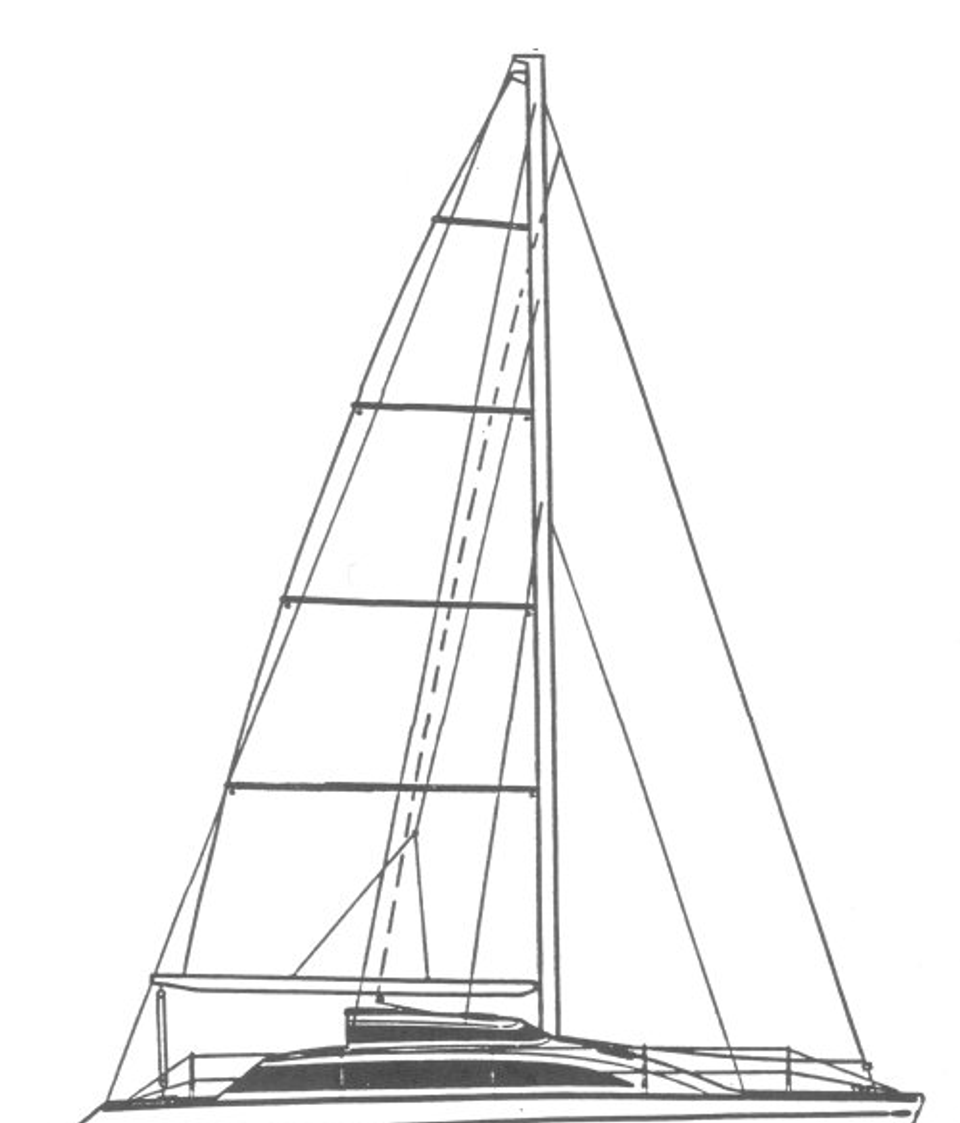
PDQ 36
BW UnverifiedPendingsloopcoastal-cruisercatamaranPDQ Yachts · Alan Slater · 1991–2003 · fiberglass
Bluewater Evidence · Unverified
15% confidenceNo independently verified named-vessel offshore passage was found for this model in this research pass. General accounts describe the design as capable of legitimate offshore passages while retaining a shallow enough draft for gunkholing, and one source mentions an annual New England-to-Antigua passage, but without a named skipper or vessel this is documented here as unverified reputation rather than a confirmed crossing.
Review notes
Added 2026-08-03 per T2.17 (WORKPLAN.md book-lists research queue), one of the 28 boats appearing in a curated book list (Practical Sailor's The Best Used Boat Notebook) with no matching catalog entry, and the first catamaran added under T2.17's 2026-08-03 decision (docs/DECISIONS.md) that catamarans are not excluded from this catalog, per the Gemini 105M precedent. Specs confirmed via sailboatdata.com (browser automation), which corroborates the initial WebSearch orientation on every figure. Designer is recorded as 'Alan Slater' per sailboatdata's own 'Designers' link field and independent WebSearch orientation; sailboatdata's specifications table separately and inconsistently lists 'Ted Clements' as designer on the same page, a minor internal inconsistency on that source, not a real conflict between two independent sources. No ballast_ratio or keel_type is set: this is a twin-centerboard catamaran, and neither field's schema options (keel_type's five enum values) describe a catamaran's underwater configuration, the exact structural schema gap flagged in this session's T2.18 audit finding; a 'catamaran' tag is added here as an immediate, low-cost mitigation, and the same tag was added to Gemini 105M (the catalog's only other catamaran, previously untagged) in this same session, pending the deeper fix, a dedicated hull-configuration field, which remains unimplemented. No independently verified named-vessel offshore passage was found in this research pass; search results describe general offshore capability (an annual New England-to-Antigua passage attributed only to an unnamed 'well-equipped PDQ 36') without a specific, citable named-vessel account, so bluewater_rating is held at unverified. **Cover image added 2026-08-03 (follow-up):** sailboatdata.com's page carries a real technical drawing (sail-plan profile clearly showing the twin-hull catamaran form, plus a deck plan), downloaded at full resolution (500x907) directly via the page's own `fetch()` rather than a screenshot. Cropped to the profile view showing both hulls, then upscaled to 960px wide (a clean line drawing, so lanczos upscaling shows no visible artifacts); `image_focal_y` is set high (80) given the tall/portrait crop. `permission_status` remains `unverified`, consistent with the majority of this catalog's cover images.
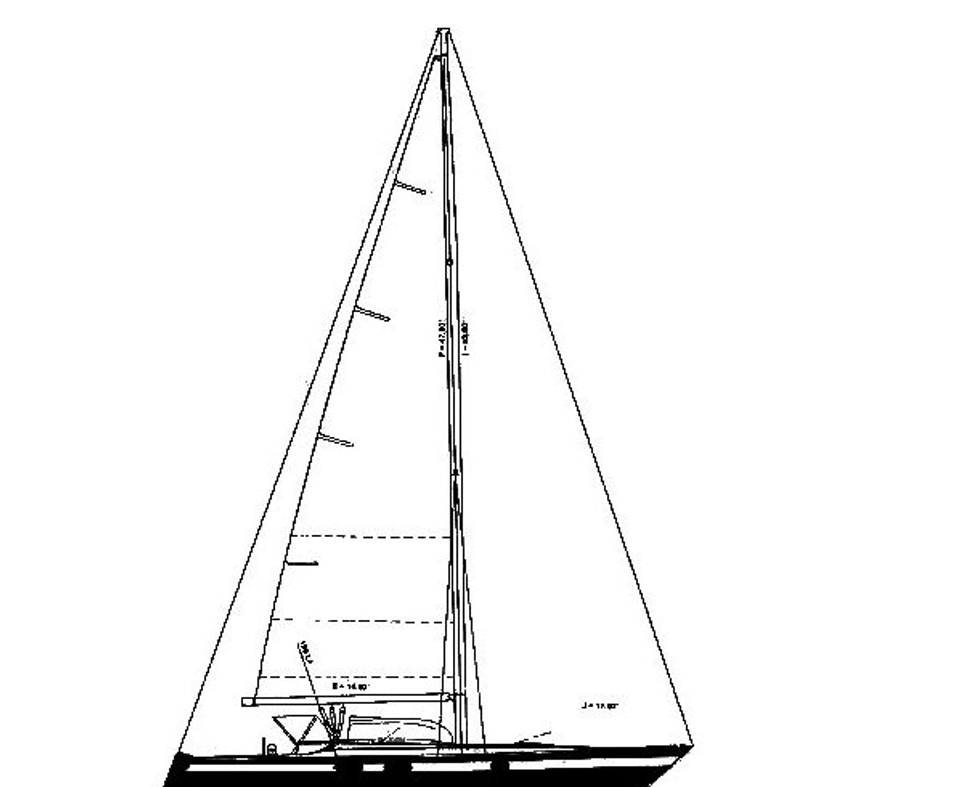
Pearson 40
BW UnverifiedPendingsloopoffshorecenterboardPearson Yachts · William H. Shaw · 1979–1981 · fiberglass
Bluewater Evidence · Unverified
25% confidenceNo specific, independently verifiable named-vessel ocean passage was found for this model in this research pass. Vague, unconfirmed mentions surfaced of an unnamed couple completing a circumnavigation and a specific hull (#29, 'Silver Cloud') reportedly used for long-term, ocean-crossing liveaboard cruising, but neither was independently corroborated via a direct source, so this stops short of a confirmed passage.
Review notes
Added 2026-08-03 per T2.17 (WORKPLAN.md book-lists research queue), one of the 28 boats appearing in a curated book list (Practical Sailor's The Best Used Boat Notebook) with no matching catalog entry. Specs confirmed via goodoldboat.com (direct fetch); a fresh WebSearch orientation independently agreed on production dates (1979-1981, 71 hulls) and designer. draft_ft records the centerboard-up figure (4.25 ft) per the Tartan 37/Bristol 41.1/Garcia Exploration 45 convention, with draft_min_ft/draft_max_ft covering board-up through board-down (9.42 ft); ballast_ratio (53.51%) computed from the 12,200 lb ballast and 22,800 lb displacement goodoldboat gives. sail_area_sqft (798) is the sum of goodoldboat's mainsail and jib figures (100% foretriangle + main convention used elsewhere in this catalog), not its separately listed larger genoa or spinnaker options. William Shaw designed the boat as a lightweight, balsa-cored, flush-deck departure from Pearson's more traditional line, explicitly compared by period sources to the Ericson 39 and Tartan 41. Evidence found is vague rather than independently verifiable: a WebSearch pass surfaced mentions of an unnamed couple completing 'the final leg of a very long circumnavigation' and an owner of hull #29 ('Silver Cloud') reportedly living aboard and crossing oceans short-handed for 20+ years, but neither account names a specific skipper verifiably nor was independently confirmed via a direct source in this pass, so bluewater_rating is held at unverified rather than capable.
Puffin 42
BW UnverifiedPendingcutteroffshorecenterboardVMG Yachtbuilders · Olivier van Meer · 2026 · aluminum
Bluewater Evidence · Unverified
20% confidenceNo independently verified named-vessel offshore passage was found for this specific 42 ft model in this research pass. A larger sibling, the Puffin 50 'Jaleo,' was found sailing coastal Iberia and the Mediterranean, and the flagship Puffin 58 Explorer is marketed for ocean and Arctic voyages, but neither documents a completed ocean crossing on this exact 42 ft design.
Review notes
Added 2026-08-03 per T2.14 (WORKPLAN.md metal-hull research initiative), continuing the remaining queued list (Puffin, rated 5/5 by John Neal's Mahina list, though that rating was written against the brand generally, not necessarily this specific model generation; see below). This is a low-volume, semi-custom Dutch builder (VMG Yachtbuilders, Enkhuizen), not on sailboatdata.com; specs confirmed via the builder's own site (puffin.nl, Tier 2 direct fetch) and cross-checked against YACHT magazine's review (Tier 2 direct fetch). year_start (2026) and a significant complication were both found via a direct fetch of VMG Yachtbuilders' own news post ('Puffin 42: almost ready for sea trials'), dated 2026, which states plainly that 'this first-generation Puffin 42 represents a new model iteration... rather than a long-established yacht class,' with hull #1's handover planned for the same year. This means a separately found De Valk brokerage listing for a 'Puffin 42' built in 2002 almost certainly describes a different, earlier design sharing the same model name (the Puffin brand itself is '25 years' old per the builder's own site, predating this specific 42 ft model generation by two decades), not an earlier example of this exact boat; it is therefore not used as a corroborating source for this file's specs, only as color confirming the brand's long-standing hull-length-vs-LOA-with-bowsprit convention (De Valk's listing independently gives '15.59 m including bowsprit, 12.73 m over deck,' closely matching this file's own loa_ft distinction). loa_ft uses the current builder's own explicit 'HULL LENGTH' field (12.72 m/41.73 ft), not its separately listed 'LENGTH OVER ALL' (15.55 m/51.0 ft, which includes the bowsprit), the same hull-length-not-spar-inclusive convention already used for Joshua, Reinke 13M, and Allures 45.9 in this initiative. Ballast (4 tons, ballast_ratio 25%) and draft (2.40 m fixed keel; 1.10-2.86 m centerboard range) are both taken from the current builder's own spec sheet; YACHT magazine's independently reported figures for both differ somewhat (4.6 tons ballast; 1.28-3.20 m draft range), a real, disclosed cross-source variance not fully resolved in this pass, plausibly reflecting Puffin's explicitly semi-custom build process ('every Puffin is different') as much as reporting inconsistency. rig is 'Bermuda cutter' per the builder's own spec sheet, a clean match to the schema's 'cutter' enum value, no approximation needed. keel_type is 'centerboard'; ballast_attachment is 'internal-other' since ballast sits partly in a fixed bulb and partly built into the lifting centerboard itself, per the builder's own description. CE Category A (the EU's own 'Ocean' offshore-capability conformity category, unrestricted wind/wave conditions) is a real, if self-declared, third-party-adjacent classification noted in body text. No independently verified named-vessel offshore passage was found for this specific, brand-new model in this research pass (hull #1 was still being finished as of the 2026 source used for year_start); a Puffin 50 ('Jaleo') was found sailing coastal Iberia/Mediterranean and a Puffin 58 Explorer is marketed for ocean/Arctic voyages, but neither is this model nor a documented completed ocean crossing, so bluewater_rating is held at unverified. No cover image was captured: neither the builder's own site nor sailboatdata.com (no entry exists for this low-volume builder) offers a hull-profile or sail-plan line drawing, only exterior render photos; revisit if a proper technical drawing turns up or photo rights can be cleared.
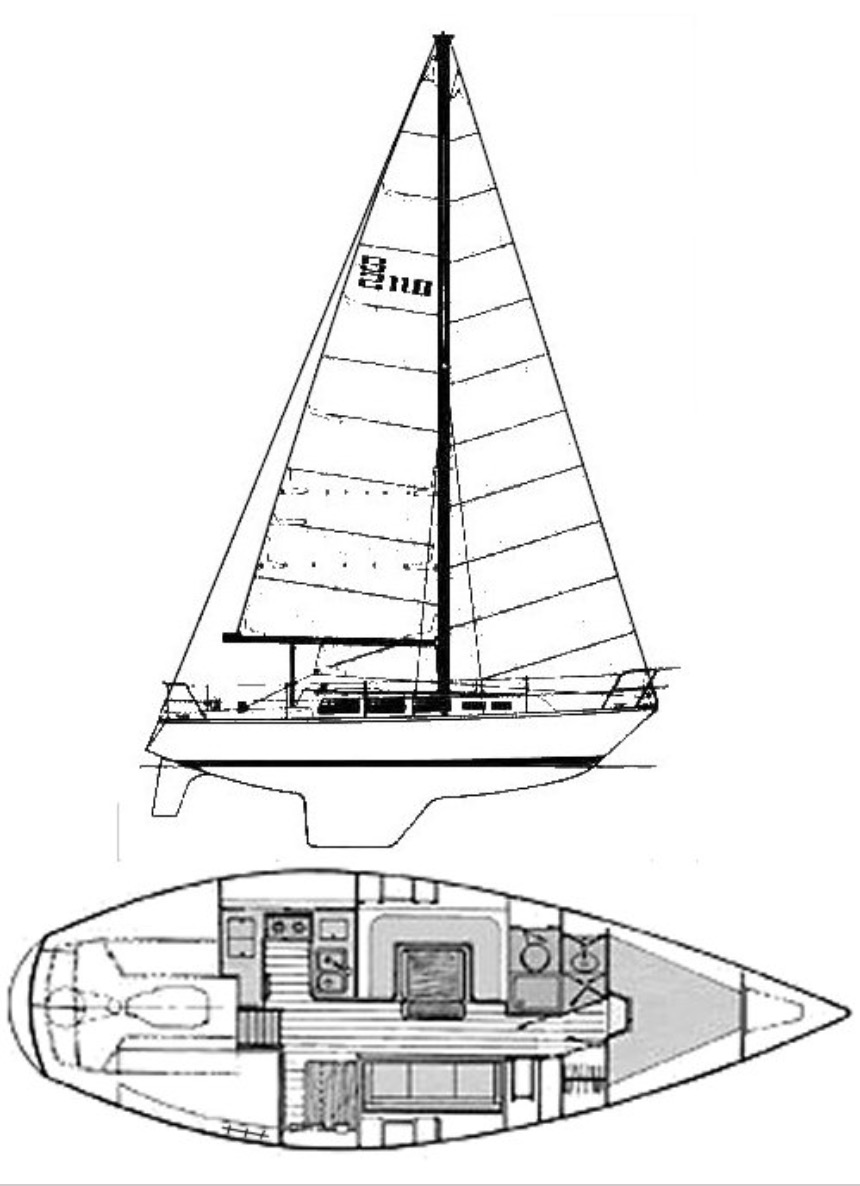
S2 11.0
BW UnverifiedPendingsloopcoastal-cruiserfin-keelS2 Yachts · Arthur Edmunds · 1977–1987 · fiberglass
Bluewater Evidence · Unverified
15% confidenceNo offshore passage or circumnavigation evidence was found for this design in this research pass. Independent sources describe its sailing characteristics as steady and comfortable cruising rather than emphasizing offshore capability.
Review notes
Added 2026-08-04 per T2.17 (WORKPLAN.md book-lists research queue), fourth batch, completing this batch of five. Sourced from sailboatdata.com (browser automation, listed there as 'S2 11.0 A,' the aft-cockpit model) and Wikipedia (direct fetch), which agree exactly on all dimensions. This design was built in two configurations, the aft-cockpit 11.0 A (156 built, 1977-) and center-cockpit 11.0 C (66 built, from 1980); the book-lists.json entry names only 'S2 11.0' with no qualifier, and sailboatdata's own notes for the A variant state it is 'also referred to as simply the 11.0,' the basis for treating the more numerous A model as the default match here rather than the C. Shoal (4.67 ft) and standard (5.5 ft) draft options were both offered, recorded via draft_min_ft/draft_max_ft. No offshore passage or circumnavigation evidence was found for this design in this research pass; sources describe it mainly in terms of steady, comfortable coastal/cruising performance rather than offshore capability.
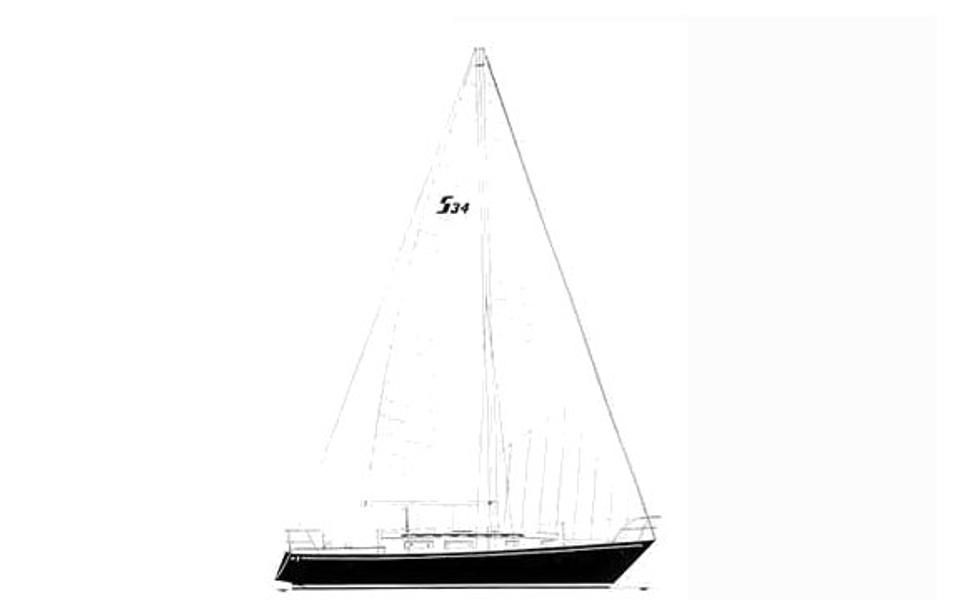
Sabre 34
BW UnverifiedPendingsloopcoastal-cruiserfin-keelSabre Yachts · Roger Hewson · 1976–1985 · fiberglass
Bluewater Evidence · Unverified
20% confidenceNo independently verified named-vessel offshore passage was found for this model in this research pass. Sourced material (goodoldboat.com, period reviews) consistently describes the design's brief as a coastal racer-cruiser balancing speed and comfort, not an offshore-focused design.
Review notes
Added 2026-08-03 per T2.17 (WORKPLAN.md book-lists research queue), one of the 28 boats appearing in a curated book list (Practical Sailor's The Best Used Boat Notebook) with no matching catalog entry. Specs confirmed via sailboatdata.com (browser automation; plain WebFetch 403s the host) and goodoldboat.com (direct fetch), which agree closely on all dimensions; ballast_ratio (40.35%) matches sailboatdata's own computed 'Bal./Displ.' figure exactly. A shoal-draft centerboard version was also factory-offered (goodoldboat.com: board-up draft 3.92-4.08 ft depending on source rounding); not captured in frontmatter since sailboatdata's primary record describes the standard fin-keel configuration, noted in body text instead. Designer is recorded as 'Roger Hewson' per both sources' 'Designers' link field and independent WebSearch orientation, though sailboatdata's own specifications table separately lists 'Sabre Design Team,' a minor internal inconsistency on that page, not a real source conflict. No independently verified named-vessel offshore passage was found in this research pass; sourced material frames this consistently as a coastal racer-cruiser rather than an offshore design, hence the coastal-cruiser tag per the 2026-07-19 decision separating coastal design identity from offshore passage evidence. **Cover image added 2026-08-03 (follow-up):** sailboatdata.com's page carries a real three-view technical drawing (sail plan/profile, interior profile, deck plan), downloaded at full resolution (576x736) directly via the page's own `fetch()` rather than a screenshot. Cropped to the top sail-plan/profile view showing the full hull and keel, then upscaled to 960px wide (a clean line drawing, not a photo, so lanczos upscaling shows no visible artifacts) since the source crop was narrower than this catalog's larger image variant. `permission_status` remains `unverified`, consistent with the majority of this catalog's cover images.
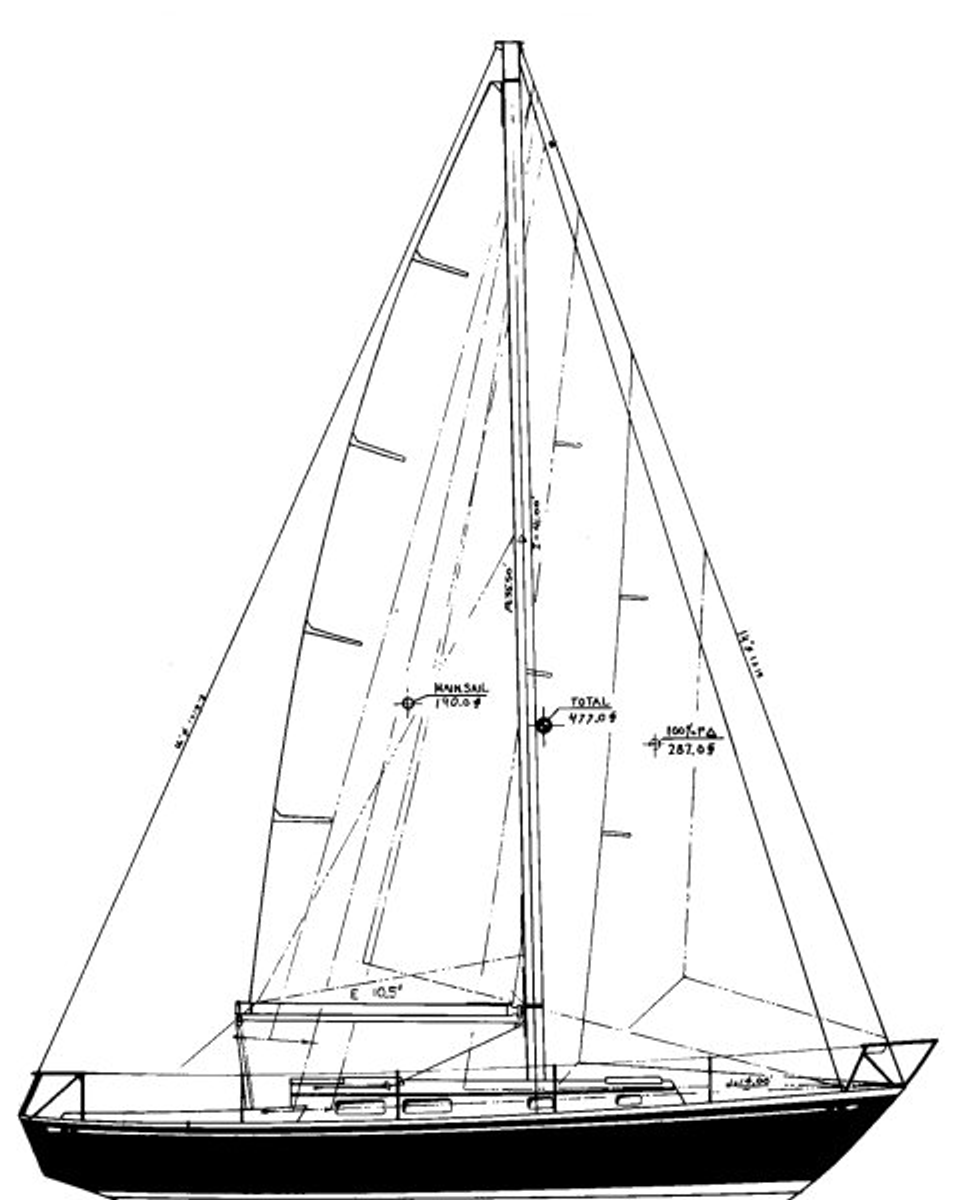
Tartan 34 C
BW UnverifiedPendingsloopcoastal-cruisercenterboardTartan Marine · Sparkman & Stephens · 1968–1978 · fiberglass
Bluewater Evidence · Unverified
25% confidenceNo independently verified named-vessel offshore passage was found for this model in this research pass. The design appears in two separate curated bluewater/cruising boat lists (Practical Sailor's The Best Used Boat Notebook and John Vigor's Twenty Affordable Sailboats to Take You Anywhere), a real if indirect signal of regard among cruising sailors, but neither list documents a specific passage on a named hull.
Review notes
Added 2026-08-03 per T2.17 (WORKPLAN.md book-lists research queue), appearing in two curated book lists (Practical Sailor's The Best Used Boat Notebook and John Vigor's Twenty Affordable Sailboats to Take You Anywhere) with no matching catalog entry. This is the original 1968 Sparkman & Stephens design (S&S #1904); Tartan later reused the '34' name for an unrelated 1984 design, commonly disambiguated as the 'Tartan 34-2,' which this file is not about. Specs confirmed via sailboatdata.com (browser automation) and Wikipedia (direct fetch), which agree on every figure exactly, including the notably deep 8.33 ft centerboard-down draft (3.92 ft board up); ballast_ratio (44.64%) matches sailboatdata's own computed figure. sailboatdata's notes mention a yawl rig was advertised as a factory option, captured here in rig_variants; the mainsail foot (E dimension) was also shortened at least twice across the production run to improve IOR rating, not captured in frontmatter. No independently verified named-vessel offshore passage was found in this research pass; tagged coastal-cruiser per the 2026-07-19 decision pending stronger evidence, though the design's inclusion in two separate curated 'boats to consider' lists suggests real regard among cruisers. **Cover image added 2026-08-03 (follow-up):** sailboatdata.com's page carries a real three-view technical drawing (sail plan/profile, interior profile showing the centerboard trunk, deck plan), downloaded at full resolution (480x950) directly via the page's own `fetch()` rather than a screenshot. Cropped to the top sail-plan/profile view showing the full hull, then upscaled to 960px wide (a clean line drawing, so lanczos upscaling shows no visible artifacts); the crop is tall/portrait, so `image_focal_y` is set high (85) to keep the hull in frame when the page's fixed-aspect containers crop it. `permission_status` remains `unverified`, consistent with the majority of this catalog's cover images.
Tartan 3400
BW UnverifiedPendingsloopoffshorespade-rudderTartan Yachts · Tim Jackett · 2002 · fiberglass
Bluewater Evidence · Unverified
55% confidenceThe Best Used Boat Notebook includes the Tartan 3400. Tartan's specification states CE Category A approval, which is design compliance evidence rather than proof of an ocean passage by a named boat.
Review notes
Book-list gap researched 2026-07-27. The Tartan factory specification gives three keel configurations with different draft, displacement, and ballast. This record uses the fin-keel headline values and preserves the full range. The factory owner's manual contains a genuine sail plan and hull lines plan, but no reuse permission was found. Keep the image empty until rights are cleared. Kept pending for final editorial review and passage-evidence scoring. T2.19 re-research 2026-09-12: both of this file's own primary citations (the Tartan factory specs PDF and the Pacific Yachting review PDF, both hosted on tartanyachts.com) now 404, with no Wayback Machine capture of either found. Re-verified independently via sailboatdata.com (raw fetch) and a real, dated (June 2006) Blue Water Sailing review, bwsailing.com/bw/tartan-3400/, describing 'the new Tartan 3400' in the present tense. Corrected year_start from 2004 to 2002: sailboatdata.com's structured field says First Built 2002 (no Last Built given), and this is compatible with the 2006 BWS review still describing the boat as new/current production; goodoldboat.com's saildata page for this boat instead claims production ran '1998 to 2002,' which is directly contradicted by the 2006 review describing it as new, and goodoldboat's own 'Construction Details' table on that same page is internally inconsistent with both this file and sailboatdata.com on LWL, beam, displacement, and ballast (a same data-mismatch pattern already found on other goodoldboat.com pages this session), so its production-year claim was not trusted either. Corrected the Overview's 'carbon fractional rig' to 'carbon masthead sloop rig': both sailboatdata.com and goodoldboat.com's own prose (not its table) independently classify the rig 'masthead sloop,' against the file's previously unsourced 'fractional' claim. LOA, LWL, beam, and all three keel drafts confirmed exact against the BWS review's own spec table. Found one unresolved conflict, disclosed not adopted: BWS's table gives displacement 11,000 lb / ballast 3,700 lb for the reviewed boat, while sailboatdata.com and this file both give 10,800 lb / 3,500 lb (32.4%) for the standard fin keel; BWS's figures match sailboatdata's own listed Beavertail-variant weights almost exactly, suggesting BWS's table may have conflated keel variants rather than being a genuine second measurement of the fin-keel boat, so this file's existing fin-keel figures were kept.
Valiant 32
BW UnverifiedPendingcutteroffshorecanoe-sternUniflite / Valiant Yachts · Robert Perry · 1976 · fiberglass
Bluewater Evidence · Unverified
55% confidenceGregg Nestor includes the Valiant 32 in Twenty Affordable Sailboats to Take You Anywhere. Valiant's brochure describes it as a smaller companion to the Valiant 40 with a fin keel and skeg-mounted rudder. This establishes design intent. The Pacific Cup's official results archive adds a named-hull passage record beyond design intent: Shadowfax completed the San Francisco to Hawaii race twice (1992, 1994).
Review notes
Book-list gap researched 2026-07-27. The builder brochure, an owner review, the book contents, and a specifications record agree on the principal dimensions and appendage arrangement. Genuine model-specific drawings are visible in period review and builder material, but publication rights have not been verified. Keep the image empty until rights are cleared. Kept pending for final editorial review and passage-evidence scoring. T2.19 re-research 2026-09-12: re-verified valiantsailboats.com's own original-brochure page and sailboatdata.com directly (both raw fetches). sailboatdata.com disagrees with this file on two points (LOA 32.00 vs this file's 32.1; S.A. reported 518 vs this file's 524), but the builder's own brochure, this file's existing primary source, independently confirms this file's numbers exactly (L.O.A. 32'1.25' = 32.1 ft, Sail Area 524 sq ft). Kept this file's existing figures; sailboatdata.com appears to be the outlier on both, the same pattern already found this session on endeavour-37. LWL, beam, draft (standard and shoal), displacement, ballast, keel type, rig, and year_start all confirmed exact against both sources. sailboatdata.com also gives a specific '# Built: 65,' not currently in this file's body prose (single-sourced, not added). 2026-09-17 (T2.24, Pacific Cup archive cross-reference): the official Pacific Cup results archive (data/pacificcup-results-1980-2012.json) shows a named hull, Shadowfax (skipper Bob Maddison), completing the San Francisco to Hawaii race twice, 1992 and 1994, both 7th place in Division A (both confirmed 2026-10-02 against the official 1992 and 1994 results sheets, read directly). Added as passage_evidence. Corrected 2026-10-02: the original draft also listed a second hull, Thunder (Ralph Harding, 1996), as a finisher; the official 1996 results sheet shows Thunder DNF, so it is not used as evidence. This is exactly the kind of named-hull passage record this file's own bluewater_evidence previously said was missing ('design intent, not a verified passage record for a named hull'). FLAGGED for review rather than changed here: this plausibly supports moving bluewater_rating from unverified to capable, since it's now a real, repeated, named-hull offshore-race record rather than design intent alone, but a rating change is left for the dashboard review this batch goes through rather than made unilaterally.
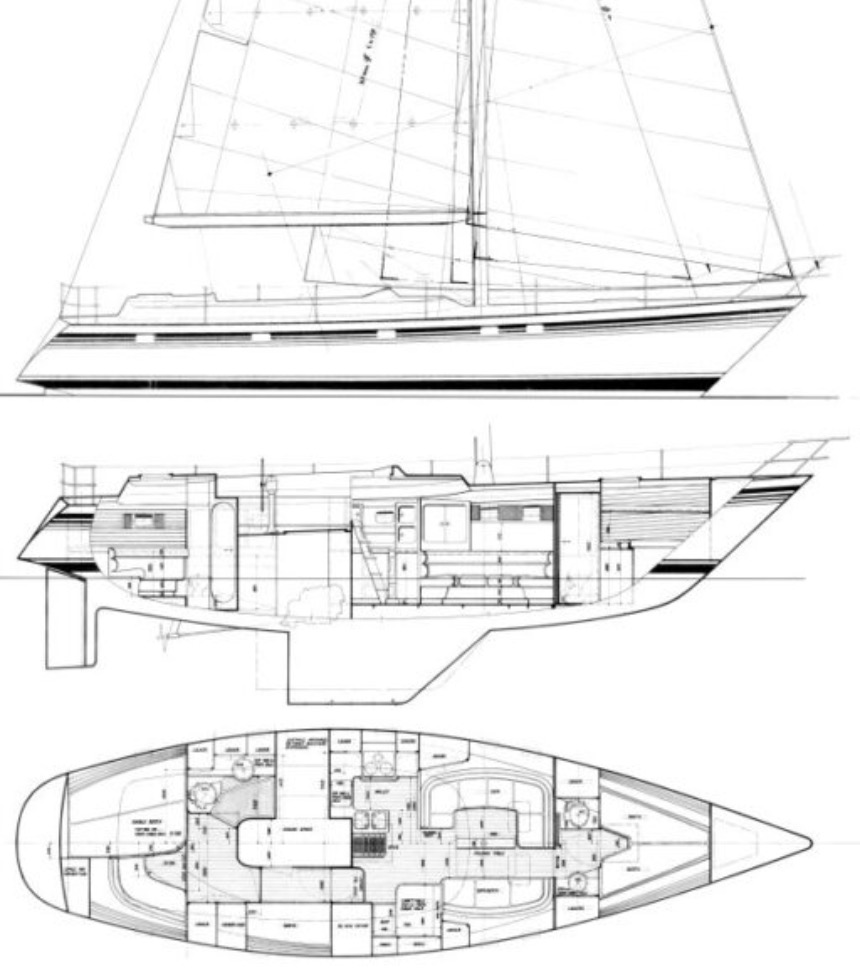
Van de Stadt 44
BW UnverifiedPendingcutteroffshorefin-keelVarious (built to Van de Stadt design plan #393) · E. G. van de Stadt · 1983 · aluminum
Bluewater Evidence · Unverified
20% confidenceNo hull-specific ocean passage was independently verified for this design in this research pass. Van de Stadt Design's own site describes it as an ocean-going yacht built to a robust, round-bilge hull form in steel or aluminum, but no named vessel or independent citation ties that description to a documented offshore passage on this specific model. Other Van de Stadt-designed boats have documented circumnavigations (a Van de Stadt 49 named Alexandra, a Caribbean 12 named Pylades sailed by Fergus Quinlan, a steel Van de Stadt Tasman 48 named Diomedea), but these are different designs from this one and are not used as evidence here.
Review notes
Added 2026-08-03 per T2.14 (WORKPLAN.md metal-hull research initiative), next in the inventory's priority order after Jongert/Topper Hermanson (skipped as scope-fit issues) and Bestevaer/Puffin. Specs confirmed via sailboatdata.com (Tier 2, browser automation) and independently cross-checked against Van de Stadt Design's own site, stadtdesign.com, which documents this as design number 393 (the same number sailboatdata's own notes field cites) and corroborates LOA/LWL/beam/draft/displacement/ballast closely (metric figures match or round-trip within normal unit-conversion tolerance). hull_material is recorded as 'aluminum' because that is sailboatdata.com's own primary Construction field for this design's canonical record; stadtdesign.com's page confirms the design was offered in both steel and aluminum with different displacement/ballast for each (steel: 16.80 t displacement / 6.50 t ballast; aluminum: 14.40 t displacement / 7.00 t ballast, the pair used here), so any individual real hull could be steel, not aluminum, the same multi-material caveat already flagged for this initiative's Mauritius 43 entry. draft_min_ft/draft_max_ft record sailboatdata's own noted shoal-draft option (1.9 m/6.25 ft) alongside the standard fin draft (7.08 ft); no source describes how the two keel options differ structurally beyond depth. rig is recorded as 'cutter' per sailboatdata's own Rigging Type field; stadtdesign.com separately lists sail area for a 'Sloop/cutter configuration' (114 m², matching sailboatdata's reported 1,227 sq ft closely) and a lower-area 'Ketch configuration' (113 m²) as an alternate rig option, hence 'ketch' in rig_variants; it is not clear from either source whether 'sloop/cutter' names one combined option or two, so this is disclosed rather than resolved. builder is recorded as 'Various (built to Van de Stadt design plan #393)' rather than this initiative's usual 'Various (kit/custom)' phrasing (used for Mauritius 43/Reinke 13M): stadtdesign.com's own description of this specific design explicitly 'assumes professional shipyard building rather than amateur construction to maintain realistic timelines,' a real difference from those two designs' documented owner-builder tradition, so the wording here reflects that professional-yard framing more accurately. year_end is left unset: this design no longer appears on stadtdesign.com's current stock-plans list (which shows Madeira 44, Moorea 45, Caribbean 40, Norman 40, and Margarita 46 in the 40-45 ft range instead, distinct designs with different waterline lengths and beams, not to be confused with this one), suggesting the plan is now archived rather than actively offered, but no specific closing year was found in either source, so no end date is asserted per this catalog's no-assumed-present rule. Bluewater evidence: WebSearch's own synthesized answer described the Van de Stadt 44 in generic marketing language ('storied reputation,' 'one of the most respected designs for crossing oceans') with no named vessel or citable source attached to this specific design, so per the Fact Verification Protocol that language is not used; named Van de Stadt circumnavigations that did turn up in research (Alexandra on a Van de Stadt 49, Pylades/Fergus Quinlan on a Caribbean 12 design, Diomedea on a steel Van de Stadt Tasman 48) all concern different Van de Stadt designs, not this one, and are not used as evidence for this hull. Cover image: sailboatdata.com's page carries a real technical drawing (sail plan, hull profile, and interior/deck layout in one sheet) rather than a marketing photo; captured via the page's own rendered image at full resolution (a direct fetch()-and-base64 approach was blocked by this session's own tooling as apparent exfiltration-shaped output, so a zoomed screenshot of the rendered drawing was used instead, saved to disk directly). permission_status remains unverified, consistent with the majority of this catalog's cover images.