Overview
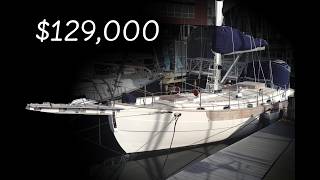
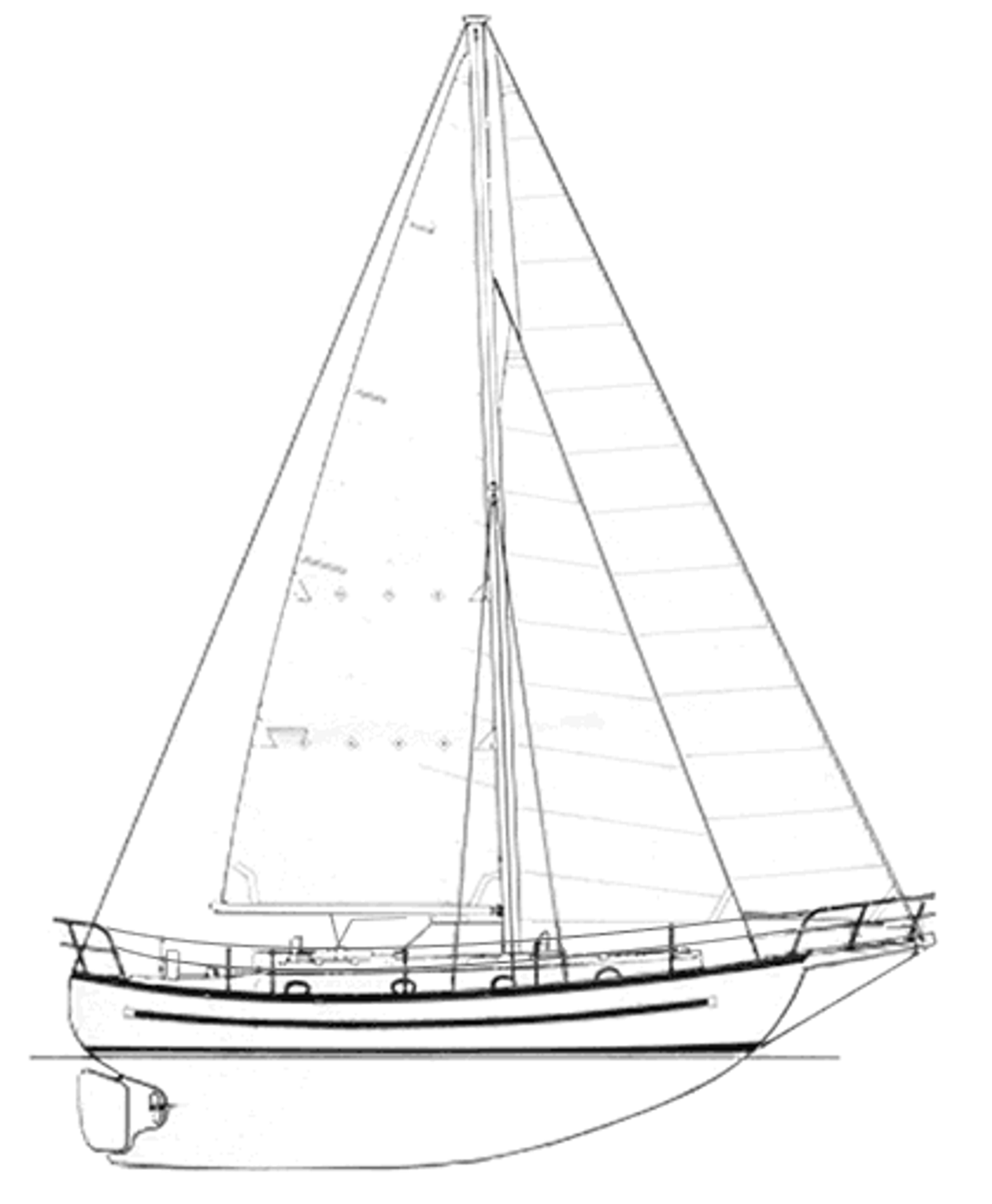
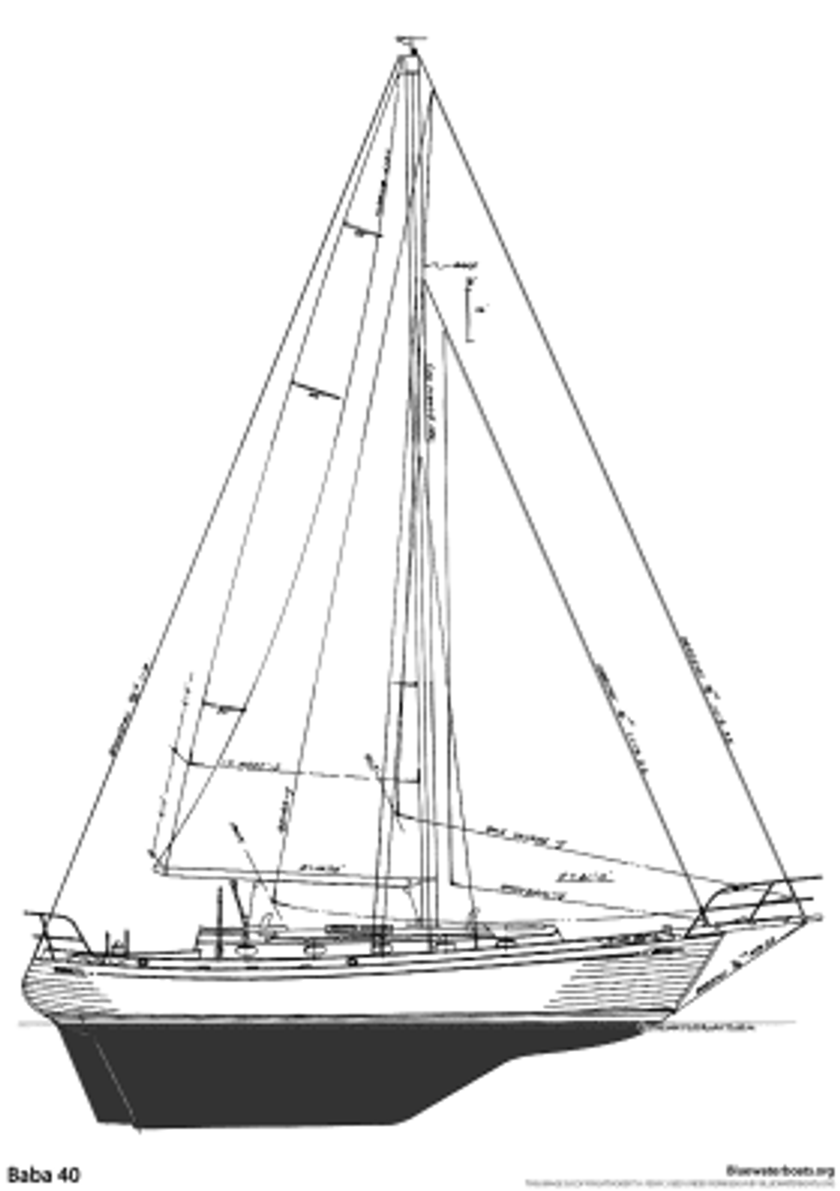
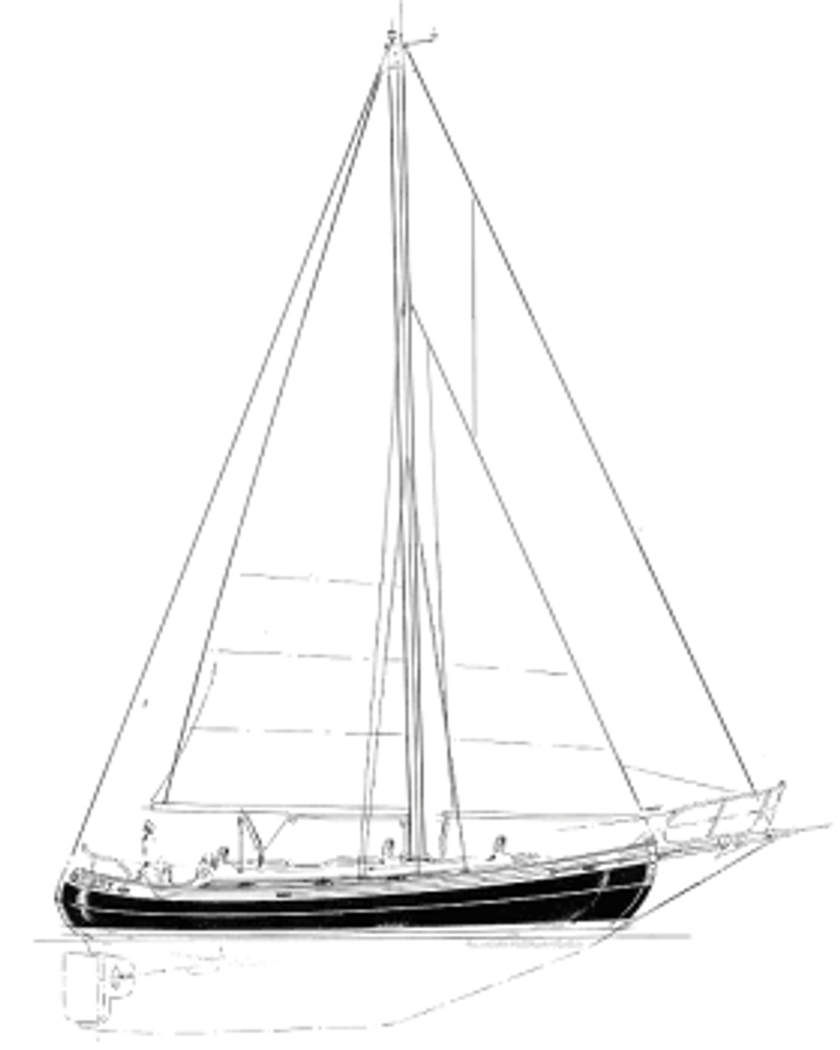
The Hans Christian 38 MkII is a separate Harwood Ives design from the better-known 38 Traditional. Both are heavy-displacement, double-ended cutters, and both carry enough family styling to be confused in listings. The MkII began in 1978 and was built alongside the Traditional rather than replacing it. A buyer should confirm the variant from the hull, interior arrangement, and documentation before relying on a generic “Hans Christian 38” specification sheet.
The first specification trap is length. Its hull is about 37 feet 9 inches on deck, while the published 46-foot overall figure includes the bowsprit and stern hardware. The 33-foot waterline, 12-foot-6-inch beam, 27,500-pound displacement, and 10,300 pounds of ballast describe the boat more usefully. The long keel and cutter plan fit the period’s emphasis on tracking, carrying stores, and dividing sail area into manageable pieces.
MkII differences
Sailboatdata distinguishes the MkII by fuller beam, a taller rig, and more sail area than the 38 Traditional. It also notes a mast position farther aft. Older summaries have made the opposite claim about the mast, so the present record does not repeat a precise movement in inches without an original drawing to settle it. The published MkII rig dimensions are 52 feet for I, 22 feet for J, 49 feet for P, and 15.33 feet for E.
Sail area is another definition problem. Sailboatdata lists 979 square feet, a figure based on the main and lapper. Its calculated 100-percent foretriangle plus mainsail is about 948 square feet. The frontmatter uses the listed figure and records the distinction rather than treating the two totals as a factual dispute.
The interior also helps identify the variant. MkII plans place the galley around an island counter and put the engine under the companionway. That engine location can simplify routine access from the front, though tanks, cabinetry, and owner modifications can still obstruct service points. The boat’s substantial fuel and water figures should be checked against the actual tanks because replacement work over four decades often changes capacity.
What the records do not settle
Two current databases disagree sharply about how many MkIIs were built. The model-specific Sailboatdata page reports 30. Good Old Boat’s combined Hans Christian 38 record assigns 87 hulls to the MkII and 167 to the Traditional. Neither total is presented here as final. Both support a production period ending around 1989, but neither provides a hull-by-hull factory register.
Builder attribution is similarly untidy. The model page names Anderson Yachts and also links the boat to Shing Fa Boatbuilding. This catalog retains both names so a future factory document can resolve their roles. A broad statement that all 38s came from one yard would erase a real uncertainty in the surviving record.
Buying notes
The MkII’s displacement, exterior wood, systems capacity, and cutter rig make it a large refit even though the model name says 38. Survey access should include the bowsprit and its supporting fittings, chainplates, deck penetrations, steering, rudder and keel structure, tanks, wiring, and engine installation. Teak condition can dominate cosmetic labor, while obsolete tanks or inaccessible plumbing can dominate structural labor. Model reputation is useful for making a shortlist, but the maintenance record of an individual hull is the deciding evidence.
Sophia provides a named Atlantic-passage record for this exact MkII variant. Its dimensions and arrangement remain only part of the assessment. The preparation and history of any boat offered for sale still require inspection.