Overview
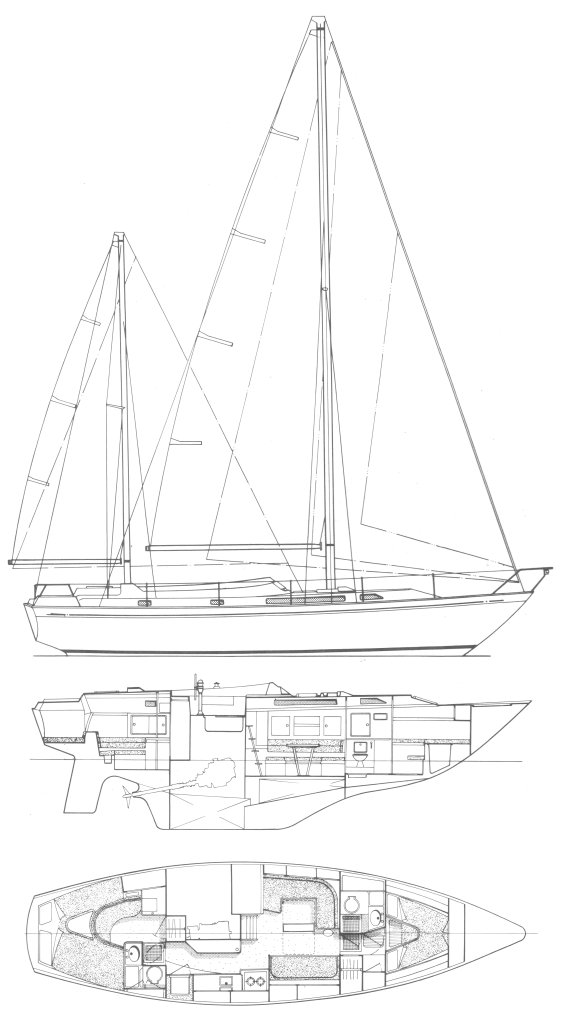
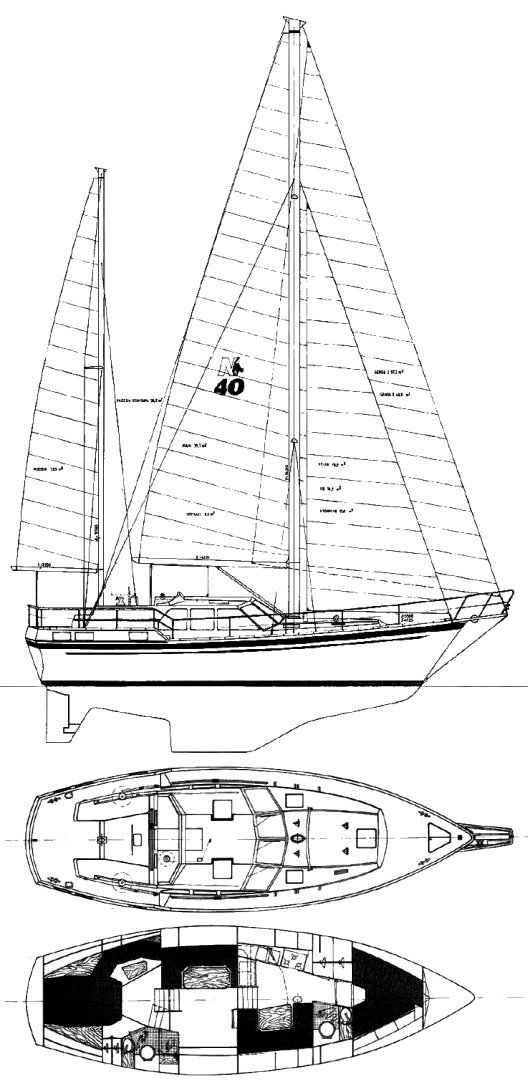
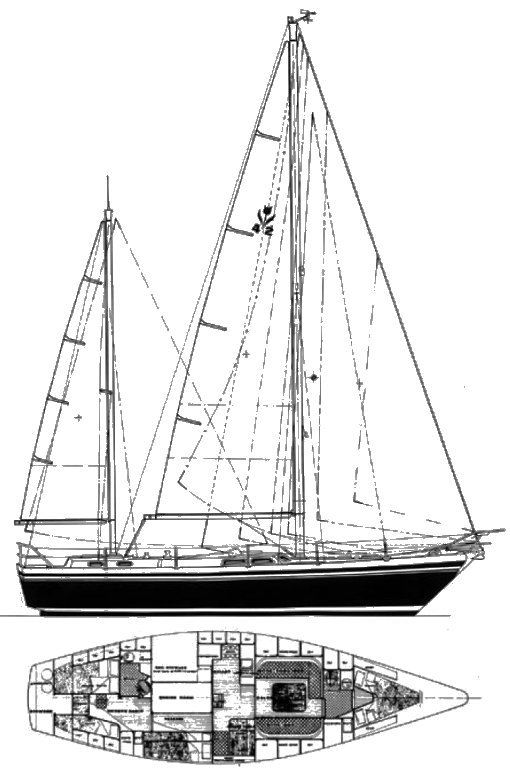
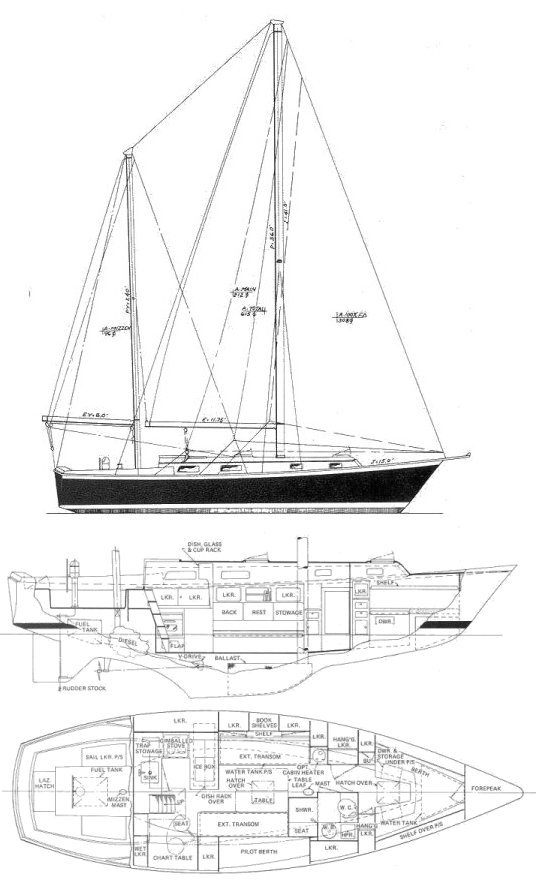
The Pearson 365 is a Bill Shaw design introduced in 1976, one of Pearson’s most successful cruising boats, with 405 built by 1982. It was designed as a ketch and also sold as a sloop.
Design and Construction
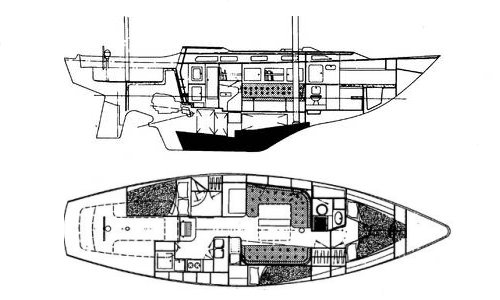
A modified fin keel carries 7,300 lb of lead, set into the molded hull, and the rudder hangs on a skeg for tracking. The hull is solid fiberglass and the deck balsa-cored. Pearson used molded fiberglass pans and liners inside; the bulkheads sit in molded slots rather than being tabbed to the deck, and the hull-to-deck joint is screwed. Good Old Boat reports that Shaw said Pearsons of that era were not intended for offshore work, but that the 365 has made numerous offshore passages safely.
Under Sail
On Good Old Boat’s test the boat reached 5 knots in 8 to 10 knots of breeze with no weather helm. With a sail area to displacement ratio of 14.5 as a ketch, light-air performance is sluggish. Sailing Magazine owners disagree on upwind ability but several trust it in big seas. Dick Dixon calls the low-aspect, well-balanced ketch rig able to stand up in a blow, and gives the sloop an even lower sail area/displacement ratio of 13.5. The mainsheet and traveler are adjusted from the forward end of the cockpit, out of the helmsman’s reach, while the jibsheet winches are within reach and the mizzen sheet sits directly behind the helm.
Buyers Notes
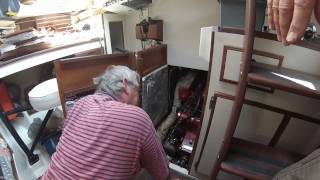
Check the bulkheads and hull-to-deck joint (see Known Issues). Some owners have replaced the original steel or aluminum fuel tank. Engine access, behind the companionway steps, is poor. Water capacity is 150 gallons in three tanks. The 50-gallon fuel tank is under the cockpit, aft of the engine, and headroom below is 6 feet 3 inches. A deck plate in the cockpit sole covers the rudder stock and comes off for fitting the emergency tiller.