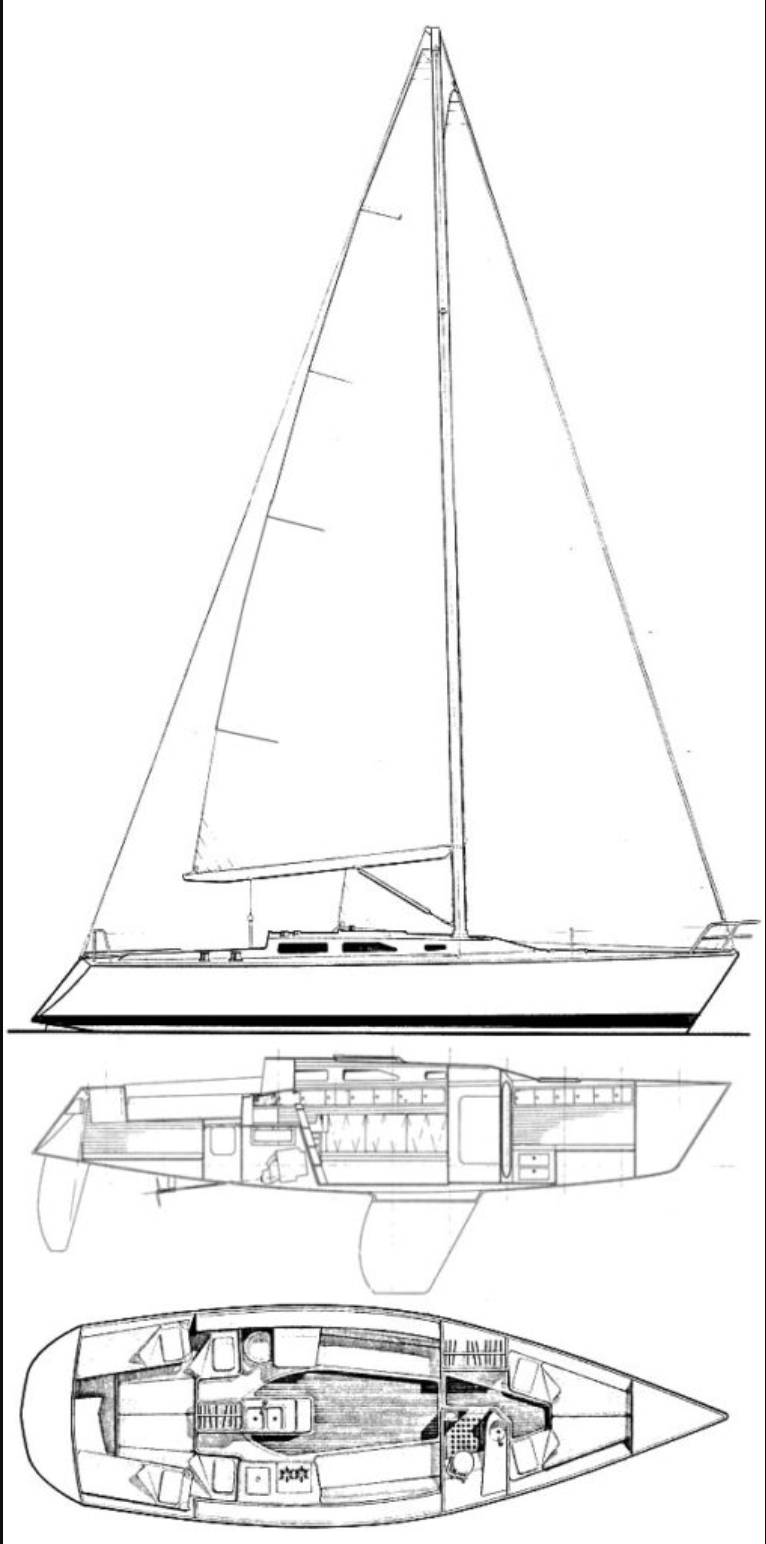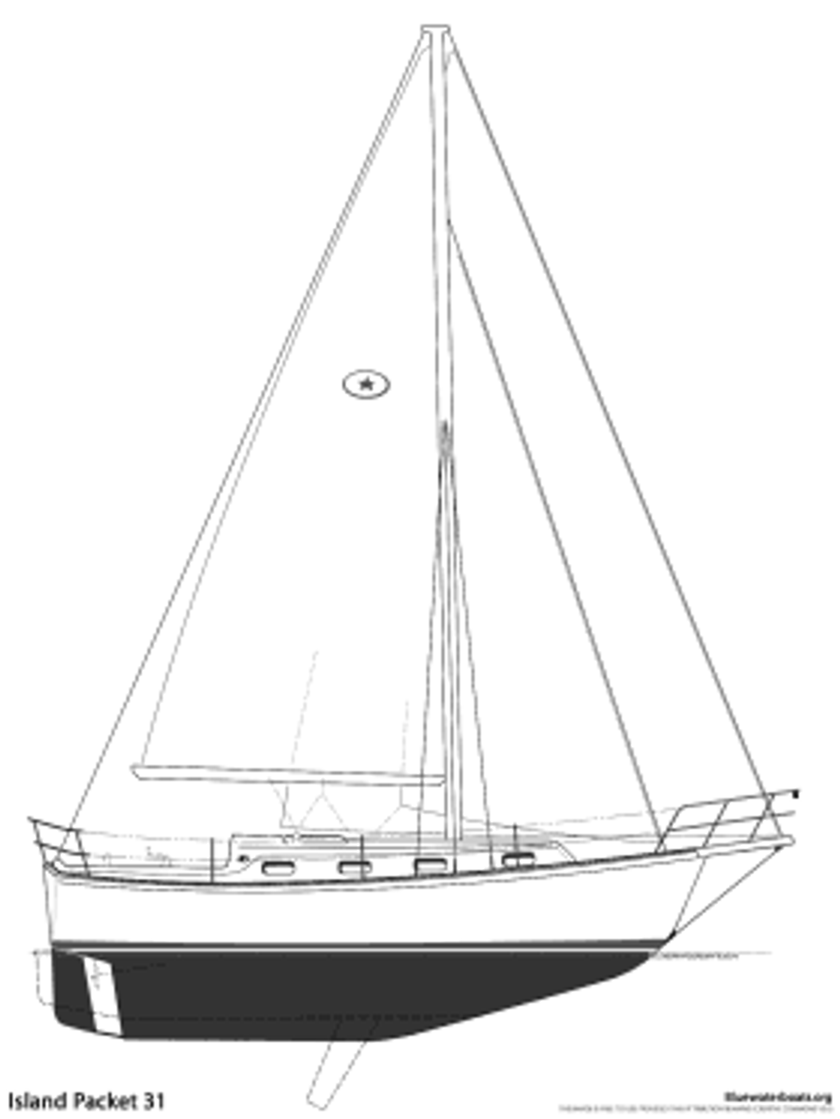
Overview
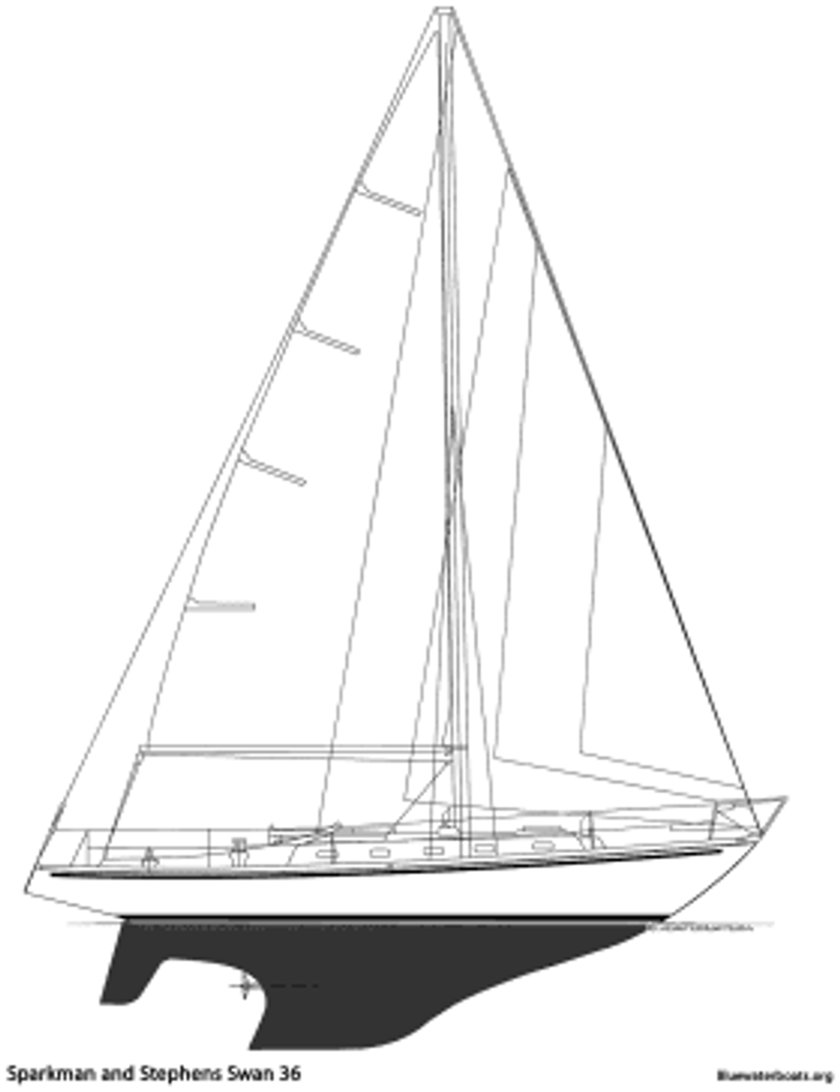
The Sparkman and Stephens Swan 36 was Nautor’s first production yacht. Pekka Koskenkylä founded the Finnish yard in 1966, and the first Swan 36 followed in 1967. It joined molded fiberglass construction to a racer-cruiser brief at a time when both the material and the separated fin-keel underbody were still relatively new in series-built yachts of this size.
The design is S&S number 1710.51. Its long overhangs, narrow beam, tumblehome, and deep hull still read as a 1960s yacht above the water. Below it, the fin keel and separate skeg-hung rudder moved away from the attached-rudder arrangements common on older cruisers. Nautor now describes that combination as central to the boat’s place in the company’s history.
Dimensions and source conflicts
The S&S Swan Association lists 35.79 feet overall, 25.94 feet on the waterline, 9.65 feet of beam, and 6.2 feet of draft. Its displacement is 7,000 kg, about 15,432 pounds, with 3,600 kg of ballast. The published RORC sail plan has 301 square feet of foretriangle and 229 square feet of main. Those class-association figures are used here.
Sailboatdata carries a different set: 14,300 pounds of displacement, 546 square feet of sail, and slightly different hull measurements. It also reports 80 boats, while Nautor and the S&S Swan Association say 90 were delivered between 1967 and 1970. The disagreement may reflect measurement conventions or incomplete records, but the available pages do not prove a cause. This catalog keeps the conflict visible instead of averaging the numbers.
Sailing character
The design began as a racer-cruiser, not as a purpose-built heavy passagemaker. Nautor points to the 1968 Cowes Week performance of Casse Tete II, owned by Dave Johnson and Michael Hurrell, which won each of its races that week. That result supports the boat’s period racing credentials. It does not establish offshore preparation for every surviving hull.
The narrow waterline and high ballast share suggest a boat that depends on form, ballast, and sail trim rather than broad modern beam for stability. A separated rudder can provide a cleaner steering surface than an attached rudder, while the skeg gives it some protection. The short waterline limits displacement speed, and the long overhangs increase effective sailing length as the boat heels. Actual performance will depend heavily on the rig version, sail inventory, and added cruising weight.
Accommodation and age
The Swan 36 offered a finished cruising interior inside a hull narrow by current standards. The S&S Swan Association lists a 50-liter fuel tank, 170 liters of fresh water, and a 15 hp Volvo Penta MD2 as original equipment. Those figures are historical references. Most boats will have had engines, tanks, wiring, deck gear, and plumbing changed during more than fifty years of service.
The model name needs care in searches. Nautor introduced an unrelated Germán Frers Swan 36 in 1988, now commonly called the Swan 36-2. A listing that says only “Swan 36” should be checked for designer and build year before any specifications are applied.
Buying notes
Age is the primary inspection category. A survey should establish laminate and deck condition, keel and rudder structure, chainplates, mast support, rigging age, engine installation, tanks, and prior repairs. Racing history can mean careful upgrades or hard use, and neither should be assumed without records. Original S&S drawings and the active class association are useful comparison points when a particular boat has been altered.
The current research set documents design history and inshore racing success, but not a named ocean passage for this model. PassageBoats therefore leaves its bluewater status unverified while treating the Swan 36 as an important early fiberglass racer-cruiser with a substantial surviving owner community.