Overview
Rod Stephens of Sparkman & Stephens designed this fast, three-stateroom cruiser in 1981, and it’s held up as one of the more respected bluewater three-stateroom designs of her generation, commanding real prices on the brokerage market decades later. Owners and delivery crews alike describe a soft motion in a seaway, genuinely swift passages, and accommodations well ahead of most yachts her age.
History
The design reportedly drew inspiration from Vince Lazzara’s Gulfstar 50 of the late 1970s. Builder and owner Queen Long Marine of Taiwan gave Sparkman & Stephens a free hand, hoping for a design that would sell well. Though aimed at the charter trade, Bill Stevens, known in the Caribbean charter world, saw more in her: he bought as many as he could for his British Virgin Islands fleet and lent his name to the boat. Queen Long built 138 hulls in total, 56 under the Stevens name before rebranding the design as the Hylas 47 for another 82. Production ended in 1991 when the line evolved into the larger Hylas 49, still in production today.
Design and Construction
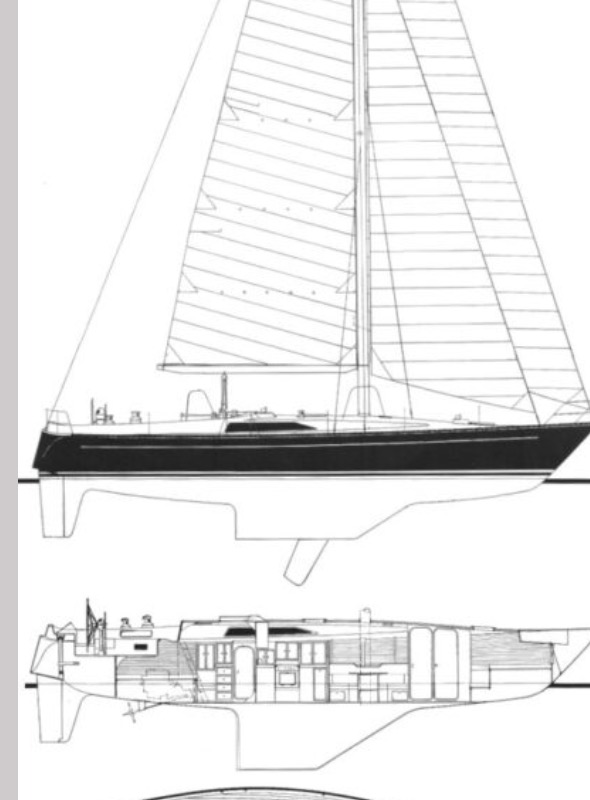
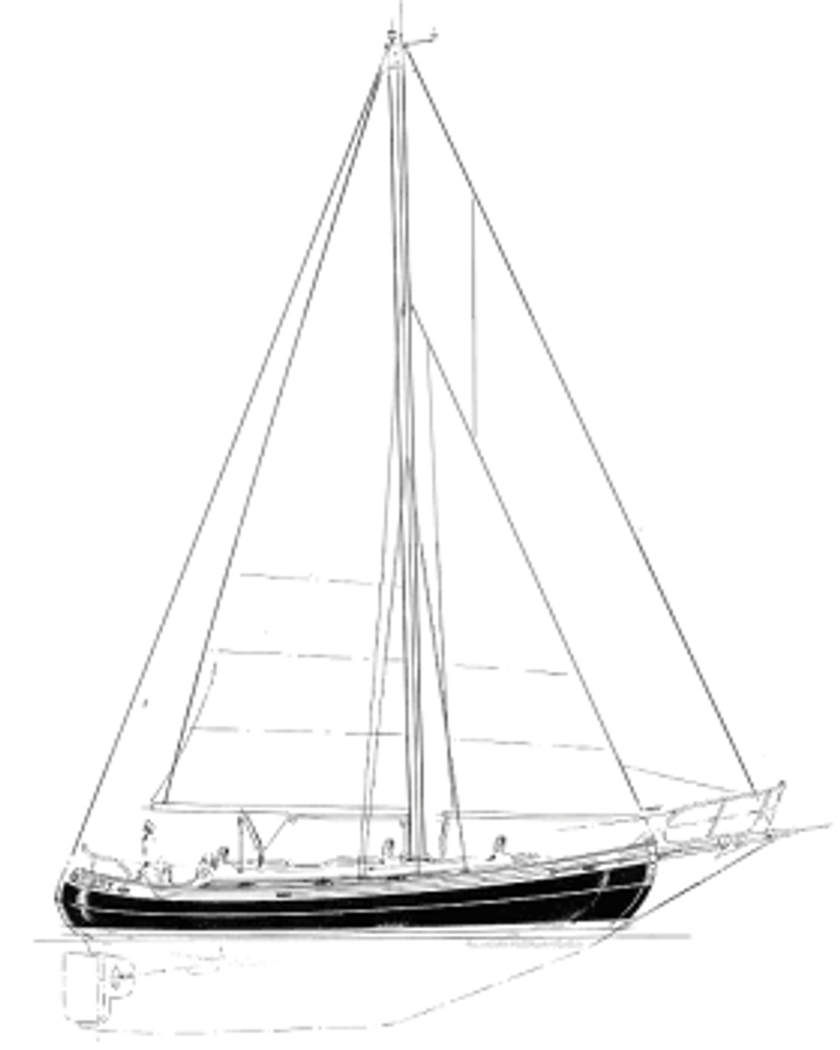
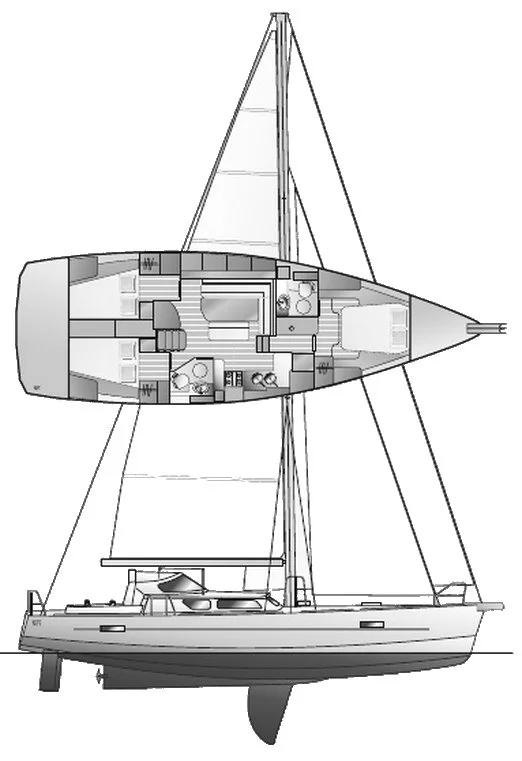
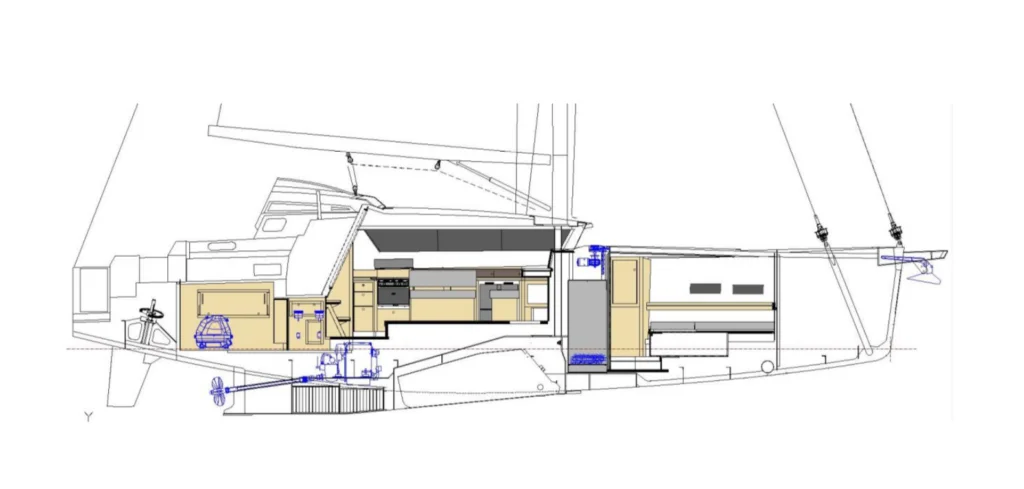
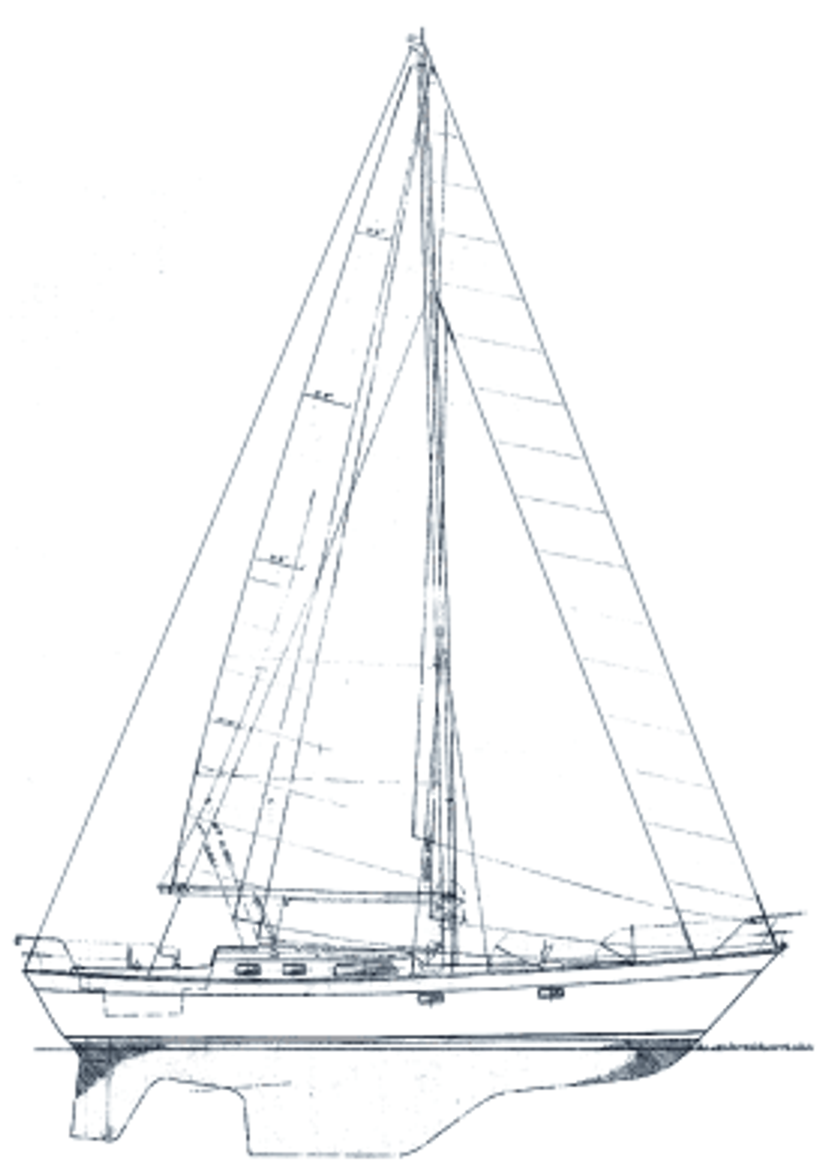
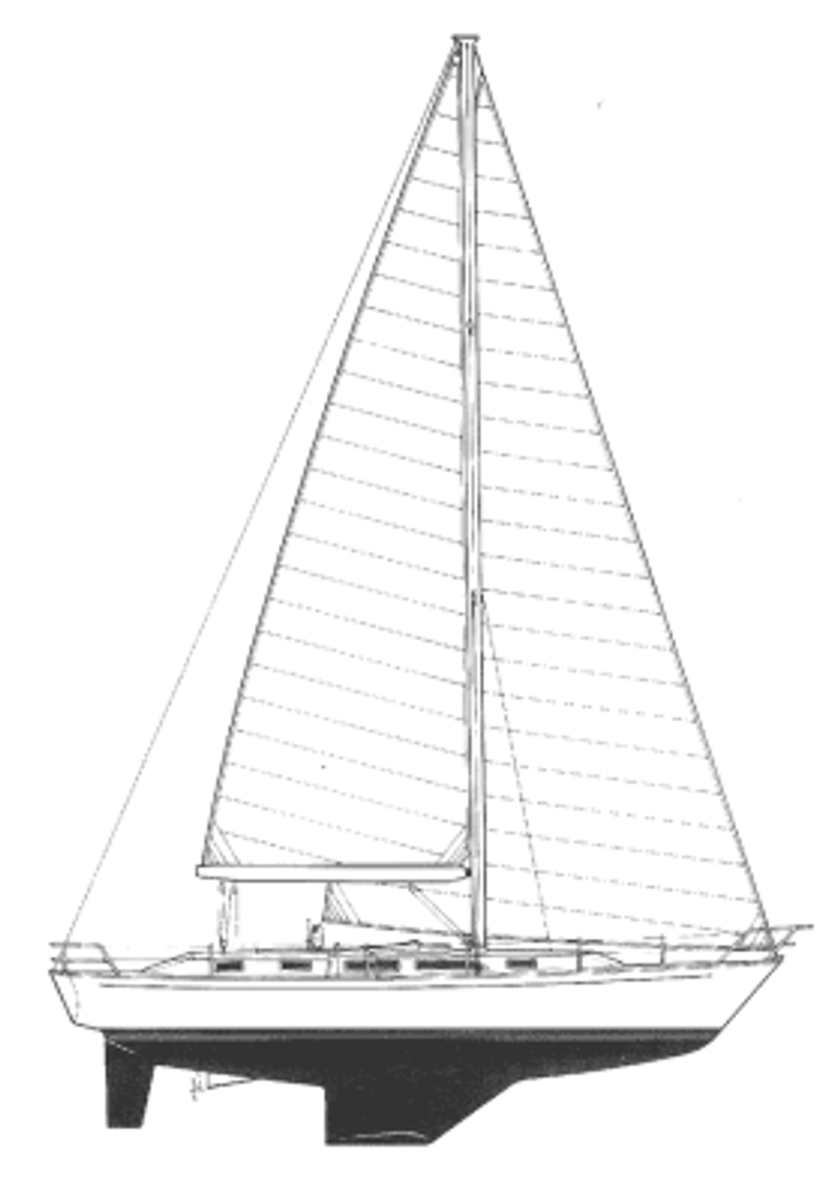
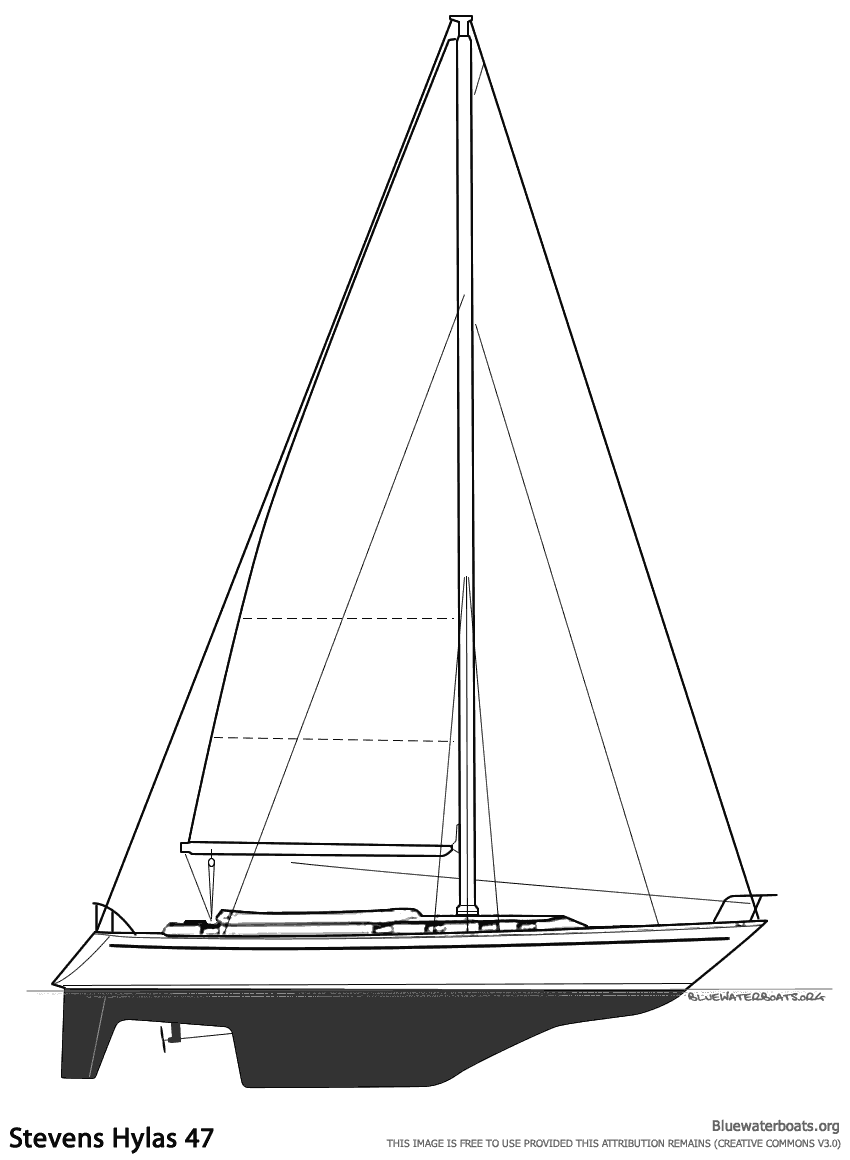
A raked bow gives easy anchor clearance, paired with a slight sheer and a distinctive “rocket ship” stern. A long keel with a separate skeg-hung rudder gives a soft, balanced motion offshore, and inboard-mounted chainplates keep the side decks clear while allowing tight sheeting angles for the powerful cutter rig; the mast stands a bridge-clearing 63 feet for Intracoastal Waterway use. The hull is solid hand-laid fiberglass, with a balsa- or Airex-cored deck joined via a traditional inner-flange hull-to-deck joint. Nine full-length stringers, twelve transverse timbers, and a stainless steel I-beam supporting the keel-stepped mast stiffen the structure, and 14,500 lb of lead ballast is encapsulated in the fiberglass keel. Her beamy hull gives real room below for three staterooms, most with a centerline queen aft though some Stevens-era boats have split berths instead, all finished in light teak with genuinely fine joinery.
Under Sail
Sailing performance is the boat’s strongest suit. The hull and keel-rudder combination makes her surprisingly stiff and fast, well balanced across conditions with a smooth offshore motion; Rod Stephens himself predicted she’d be quick without giving up real cruising comfort, and John Kretschmer’s own delivery passages have averaged 143 nautical miles a day.
Buyers Notes
Stevens and Hylas-era boats were both built to a good standard at Queen Long, but Stevens-era boats tend to carry beefier deck hardware, a holdover from their commissioning through Bill Stevens’ North Carolina operation. Most surviving boats have been seriously refitted by now. The cockpit runs cramped with low coamings by modern standards, and the nav station is tight; neither is a defect so much as a character trait of the design worth sitting in before buying. Check portlights for leaks, since water intrusion there can damage the teak veneer joinery nearby.