Overview
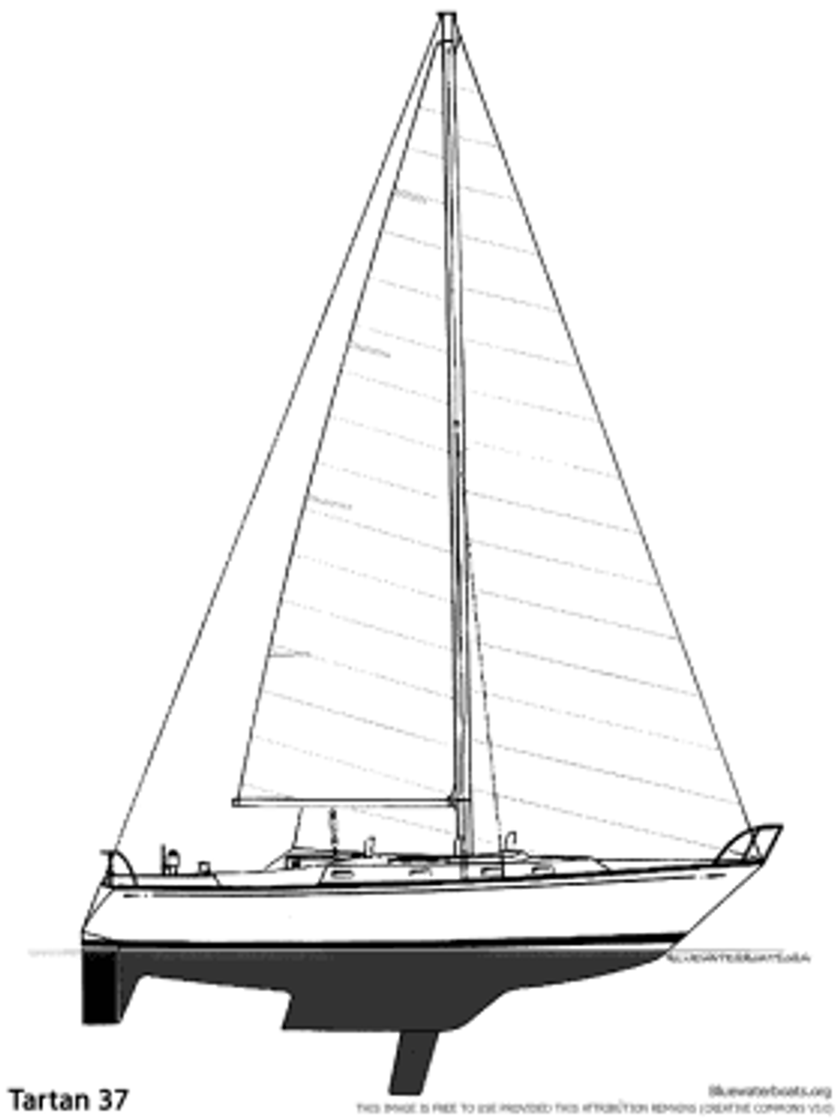
The Tartan 37 is widely regarded as a classic among moderate-displacement cruisers, a Sparkman & Stephens design built with substantial input from Tartan Yachts itself. Introduced in 1976, it was originally conceived alongside a racier sibling, but it was the shoal-draft centerboard cruiser that really caught on, with 486 hulls built over 13 years.
History
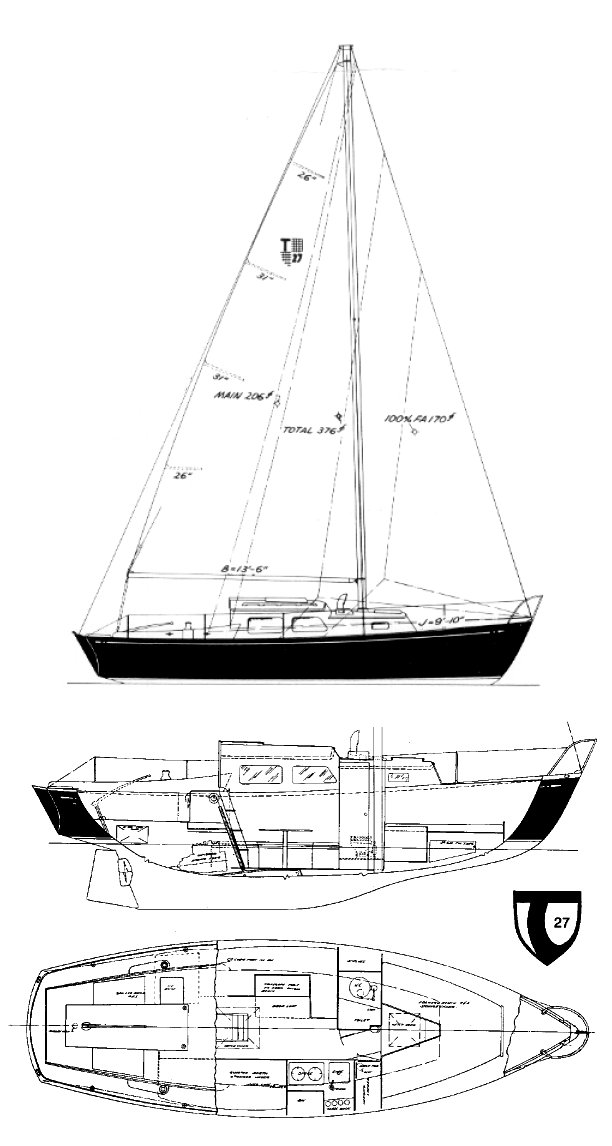
The project began in the spring of 1975, when Tartan founder Charlie Britton wrote to Sparkman & Stephens with his ideas for a new 37-footer, the latest in a design relationship stretching back to the Tartan 27 in the early 1960s. The original brief called for both sloop and ketch rig options and both a cruising and a racing version. As the design developed, the ketch was dropped, and the racing variant, with a deep fin keel and tall rig, was spun off as the separate Tartan 38, leaving the 37 as the dedicated cruiser, offered with a fixed fin keel or the more popular shoal-draft centerboard. A Scheel keel option and a tall-rig option (matching the 38’s rig) arrived later in the production run; roughly 10 percent of hulls left the factory with a deep fixed keel.
Design and Construction
The hull is hand-laid fiberglass with end-grain balsa coring, tapered to solid laminate at high-load areas like the mast step, chainplate terminals, through-hulls, engine beds, and keel sections. Interior joinery is widely considered among the best in production sailboats of its era, with clean fillet bonding and no exposed raw fiberglass edges. Two real maintenance points are worth flagging directly: Practical Sailor identifies galvanic corrosion risk where aluminum backing plates were glassed into the hull-to-deck joint and bolted through the deck, which can loosen or strip bolts over time, and notes that toerail bedding on many hulls has failed enough to admit a knife blade, letting water into the coring. The standard centerboard swings the draft from 7.75 ft down to 4.17 ft up; the optional fixed fin keel draws 6.58 ft, and a later Scheel keel option draws 4.58 ft.
Under Sail
Nobody expects a shoal-draft centerboarder to set racing records, but the Tartan 37’s race-derived proportions show through: Steve Pettingill set a record in the Port Huron to Mackinac Island singlehanded race sailing his fin-keel 37, Ambergris, and several 37s have raced Marion-Bermuda and Newport-Bermuda creditably. Owners describe a stable, well-mannered boat, strongest on a reach, with an efficient rudder and a genuinely easy-to-singlehand rig. No specific named ocean crossing or circumnavigation is documented in current sources, though several sources note individual 37s have made ocean passages once properly equipped.
Buyers Notes
Practical Sailor’s survey flags cored-deck water damage as the primary concern on used examples, expensive to repair properly and worth probing carefully during survey, along with the hull-to-deck joint’s aluminum backing plates and toerail bedding noted above. The companionway’s relatively low bridgedeck is worth understanding for anyone planning genuinely offshore use, since it offers less protection against a flooded cockpit than a higher sill would. An active Tartan 37 owners’ association (Tartan37.com) is a strong resource for model-specific history and parts sourcing.