Overview
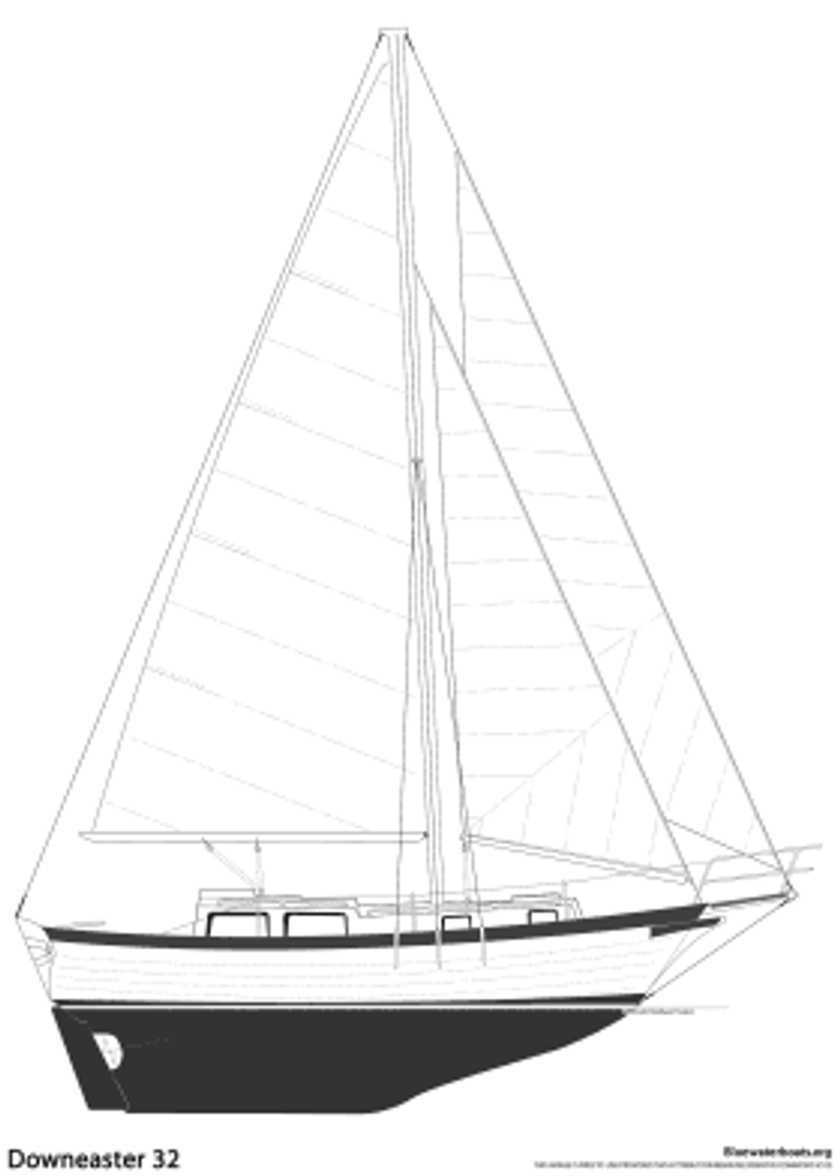
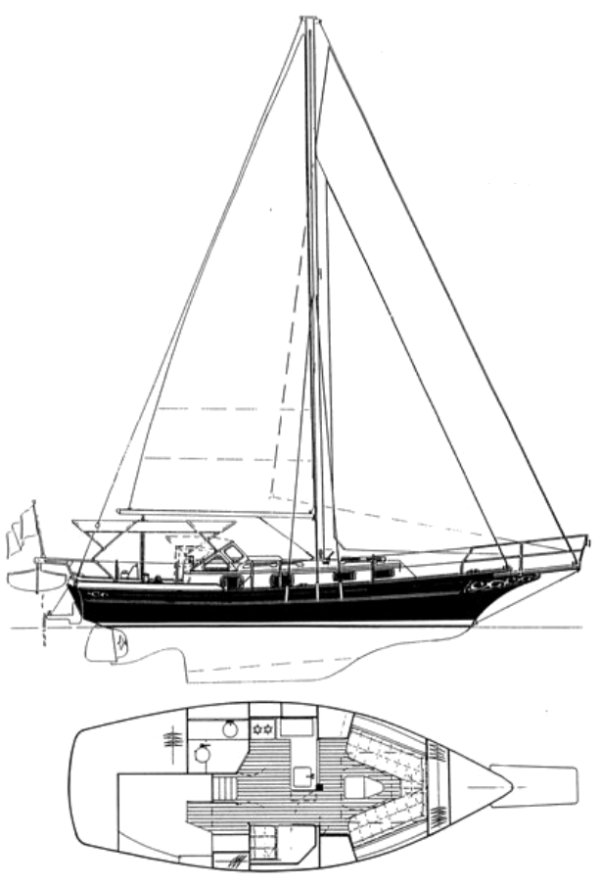
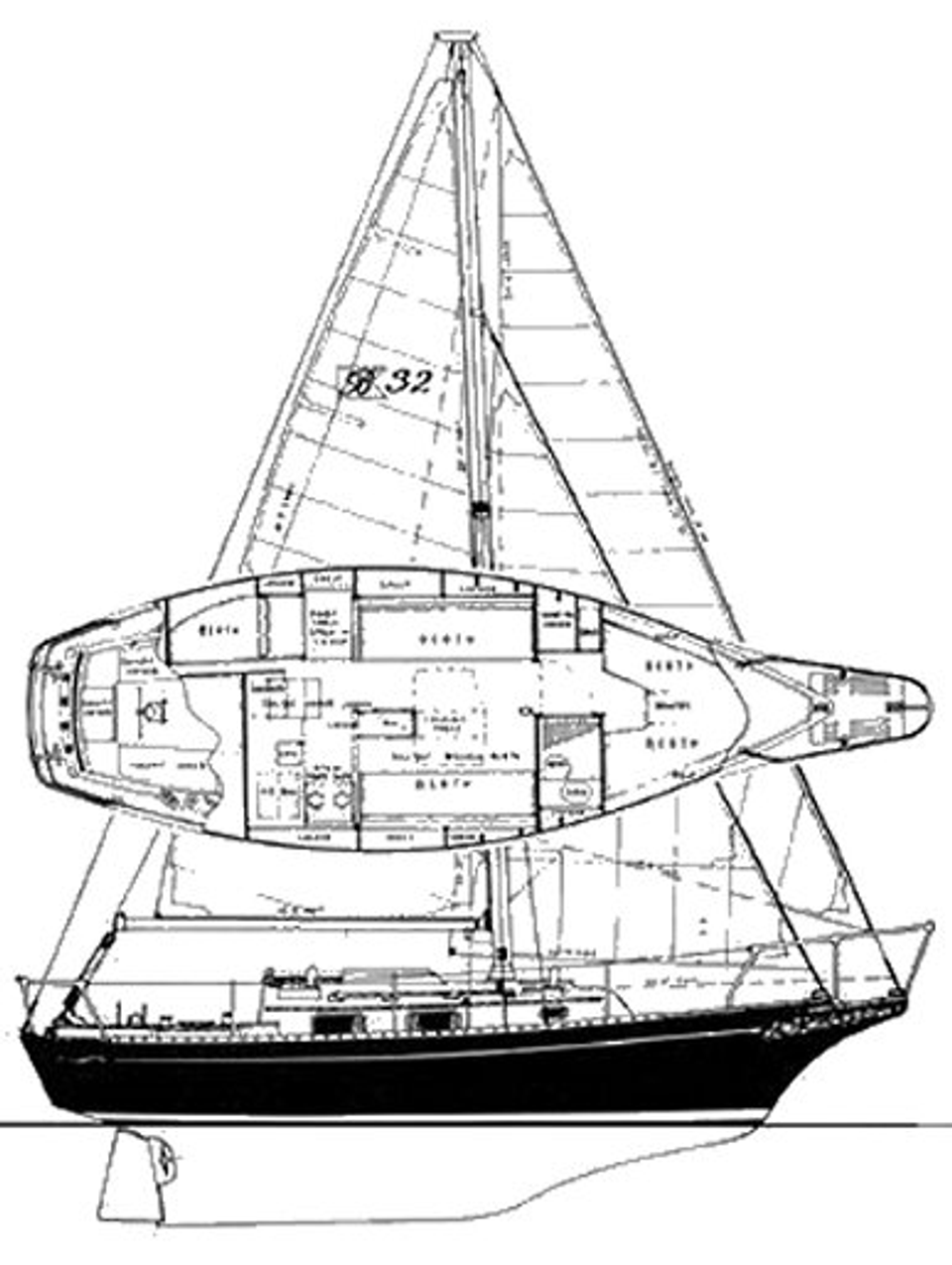
Ted Gozzard designed the Bayfield range as a deliberate reaction against the fin-keeled racer-cruisers most builders favored in the early 1970s, drawing on L. Francis Herreshoff’s classic lines for a series of clipper-bowed, full-keeled cruising boats with real traditional character. The 32 (originally sold as the “Bayfield 30,” renamed after US dealers insisted on measuring to the tip of the clipper bow and bowsprit) was launched in 1973 and became the best-selling model in the range, more than 300 hulls built before Bayfield Boat Yard closed in 1988.
Design and Construction
At 9,600 lb displacement with 4,000 lb of internal lead ballast (about 42 percent), the 32 carries a full keel and keel-mounted rudder drawing a shoal 3.75 ft, genuinely useful for gunkholing and drying out. Construction is fiberglass with a balsa-cored deck. Across the production run, Bayfield varied engine choices (early boats used an unusual Sperry-Vickers hydraulic drive before shifting to conventional Mercedes and Yanmar diesels), mast heights (at least three standard rig heights, plus a taller “tall rig” built for a handful of boats after a informal Lake Ontario racing challenge), and interior finishes.
Under Sail
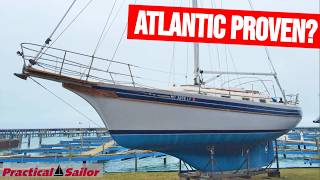
The clearest evidence of this design’s offshore capability is a specific named hull: Bob Lush sailed Freedom Joe, a 1975-built, ketch-rigged Bayfield 32, in the 1976 Observer Singlehanded Trans-Atlantic Race. His qualifying passage alone, Miami to Plymouth nonstop, covered 4,400 nautical miles in 33 days, and he reported the boat performing beyond expectations downwind, averaging over 1,000 miles a week through the trade-wind segment. During the race itself, sailing the harder northern route back across the Atlantic, a bobstay fitting began to fail under sustained windward strain, forcing Lush onto a longer, more southerly course. Owners more generally describe the boat as comfortable and forgiving off the wind, with modest windward performance given its long, shallow keel and blunt bow, better suited to sailing a generous angle off the wind than pointing hard.
Buyers Notes
Given the wide variation in engine installations, rig heights, and equipment across the production run, confirming a specific hull’s exact configuration matters more than usual on this design. Early boats fitted with the original Sperry-Vickers hydraulic drive are known for maintenance issues if the units aren’t properly adjusted; most surviving hulls have long since been repowered with conventional diesel.