Overview
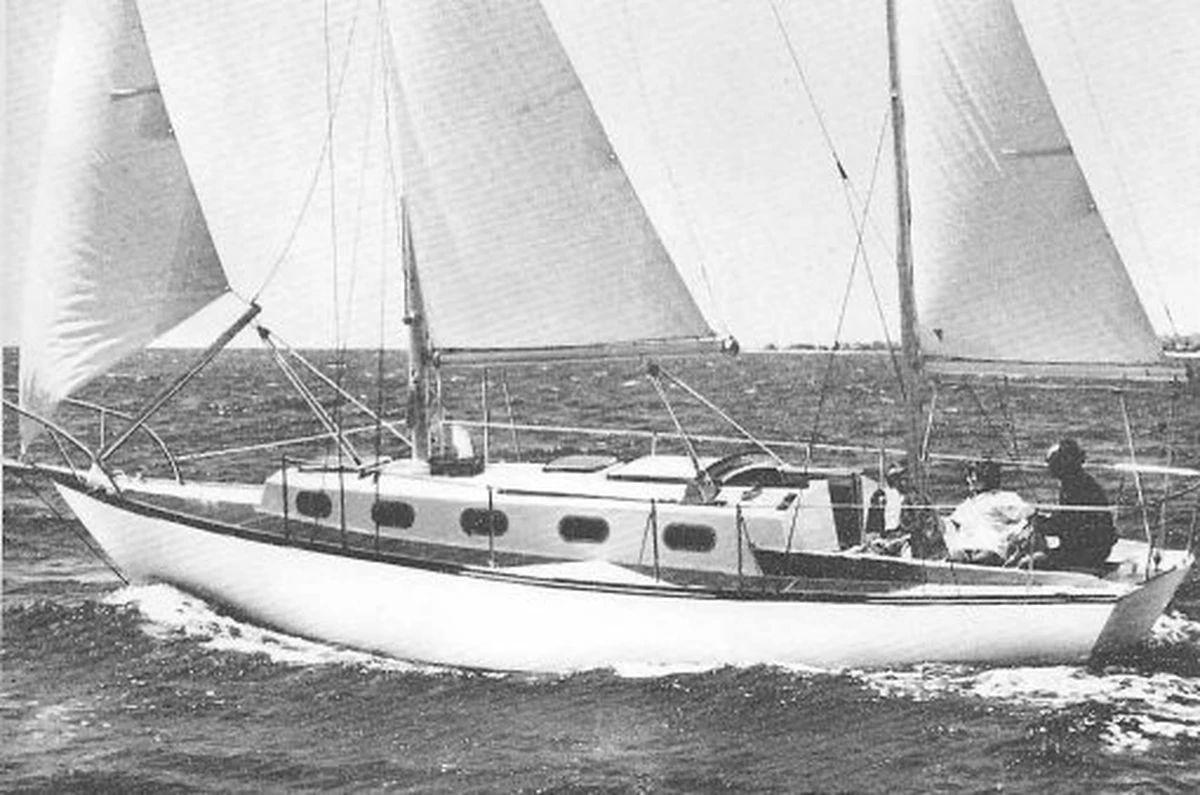
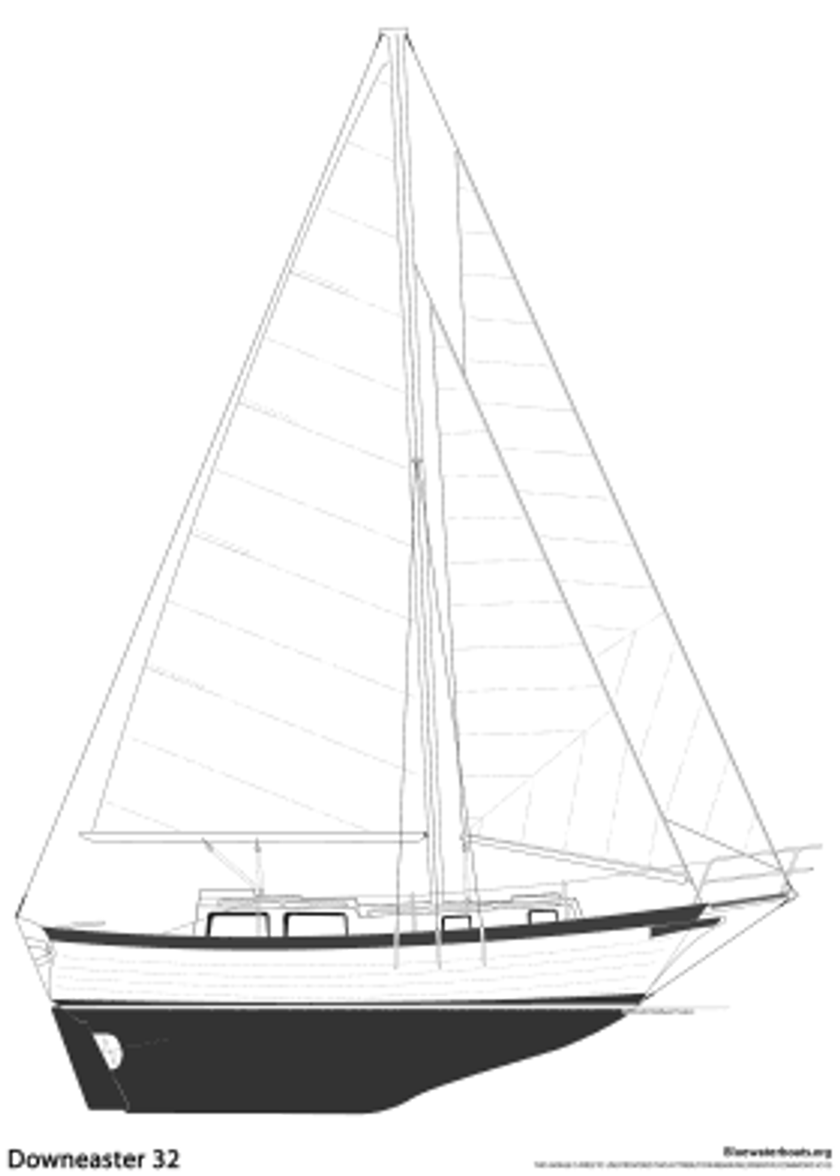
The Downeaster 32 is a 32-foot hull with a clipper bow and four-foot bowsprit. Earlier frontmatter showed 35.5 feet as LOA, which is the total length with the bowsprit. SailboatData separates the 32-foot hull from that spar-inclusive figure, and this page now does the same.
Bob Poole founded Down East Yachts in Santa Ana after working in engineering, quality control, and customer service at Columbia Yachts. The 32 followed the company’s larger Downeaster 38 in 1975. Production ended in 1980 after 134 hulls, making it the yard’s most numerous design.
Design and Attribution
The boat has a long keel, transom-hung rudder, 25-foot 10-inch waterline, 11-foot beam, and 4-foot 9-inch draft. It displaces 17,000 pounds with 5,500 pounds of ballast and carries 602 square feet in its cutter sail plan. The short waterline and displacement-to-length ratio above 400 put it firmly in the ultra-heavy category.
Most references name Poole as designer. Sailing Magazine also reports Henry Mohrschladt saying he designed the hull, rig, engine placement, and ballast but not the deck. The article elsewhere calls the 32 Poole’s own design. Without original drawings or title blocks, Bob Poole remains the catalog attribution and the conflict is recorded here.
Construction and Interior
Sailing Magazine describes a thick hand-laid fiberglass hull, keel-hung rudder, and mast stepped onto a compression post. Boats were finished below to owner preferences, which explains the variety in cabinetry, steering, tanks, and systems. Common layouts sleep up to six with a V-berth, saloon berths, and a starboard quarter berth.
Headroom is generous for the hull length. The same high coachroof and broad beam that create space also add windage. Engine and bilge access through side openings is restricted. The original 24-horsepower Farymann diesel earned criticism for limited power, though its hand-start feature had practical value. Many boats now carry a replacement Yanmar or Beta.
Under Sail
The cutter divides 602 square feet into manageable working sails. The long keel should track steadily and protect the rudder and propeller, while the short waterline and heavy displacement limit light-air pace. Tacking, reversing, and turning in confined water will ask for more room than a fin-keel 32-footer.
Sailing Magazine summarizes owner reports of good heavy-weather behavior and mentions a boat that sailed in Mexico and the South Pacific, including Hurricane Lester. It does not name that boat or provide a passage log. The archived review says at least three Downeaster 32s circumnavigated, also without names. Those statements do not support the previous circumnavigation-proven or single-handed tags.
What to Inspect
The 2019 review identifies a useful list for survey. Owners reported softening or sagging beneath the compression post, deck delamination and leaks around fittings, difficult fuel-tank replacement, spreader cracking, cutlass-bearing repairs, and uneven amateur interior work. These are reported concerns, not a measured defect rate.
Open access around the mast support and trace the load to the keel. Moisture-test the deck around every penetration. Inspect external chainplates, spreaders, bowsprit attachments, rudder hardware, through-hulls, tanks, engine beds, and the quality of any steering conversion. Determine whether a repower left adequate shaft alignment, ventilation, and service access.
Evidence Limits
The design has appropriate offshore ingredients and a magazine review that regards it as a long-range cruiser for two. No named circumnavigation or independently documented ocean crossing is attached to this record. The capable rating therefore rests on design, construction, and anonymous owner reports, with moderate confidence.