Overview
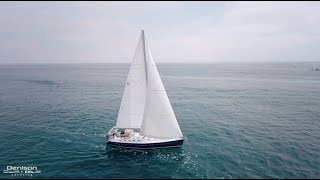
The Beneteau 523 is a Groupe Finot design, also sold as the Oceanis 523 and Oceanis Clipper 523. Cruising World named it Best Full-Size Cruiser for 2006 and praised its interior volume.
Design and Construction
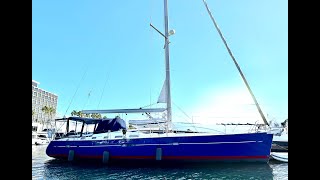
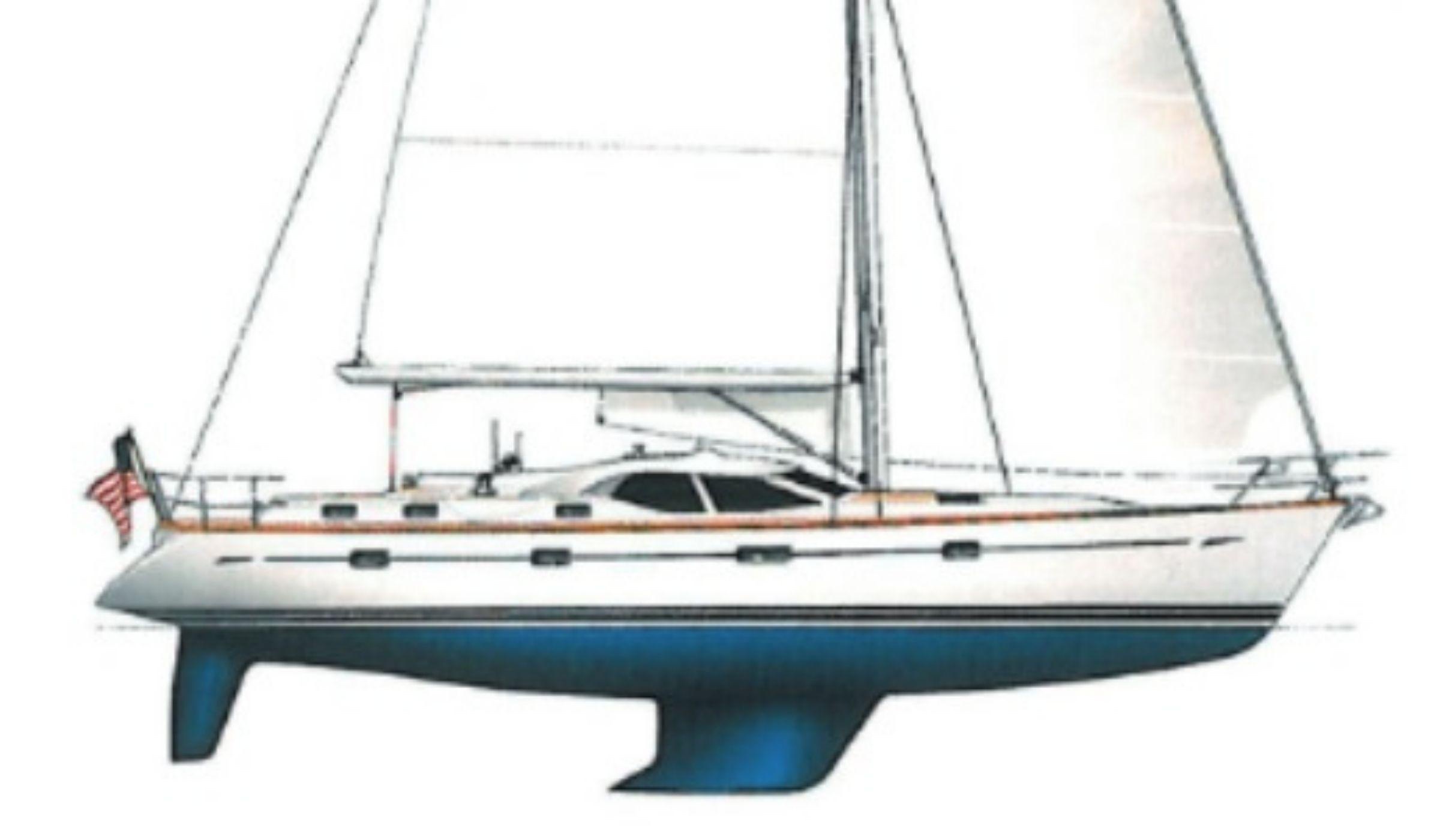
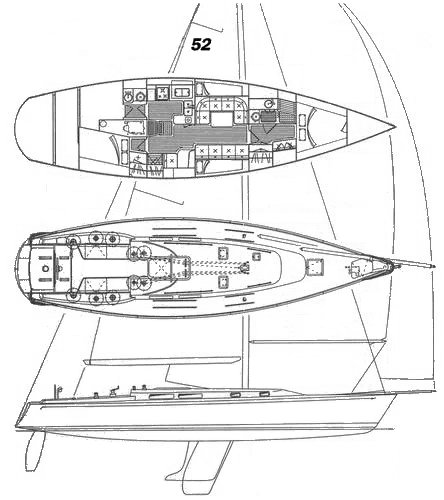
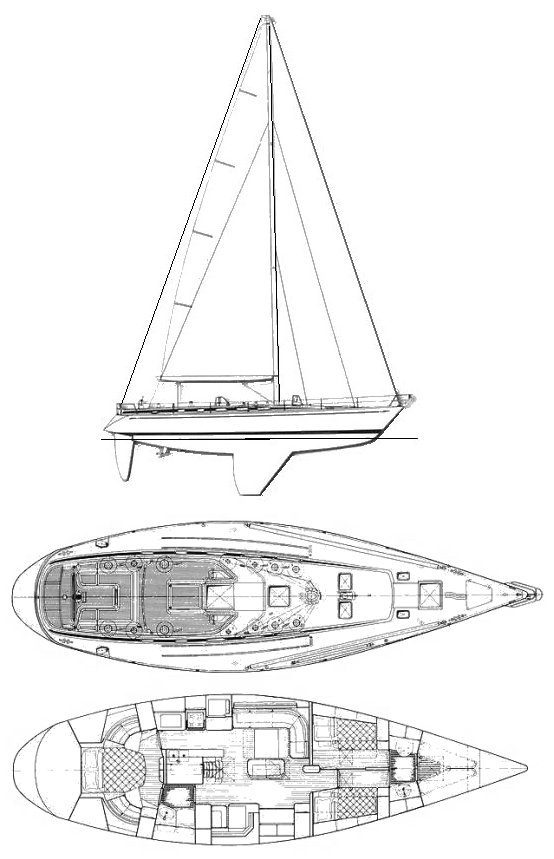
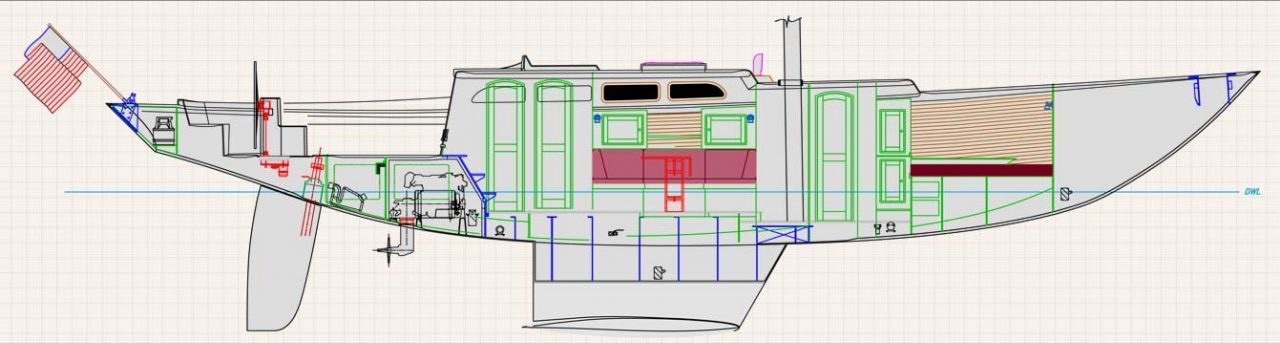
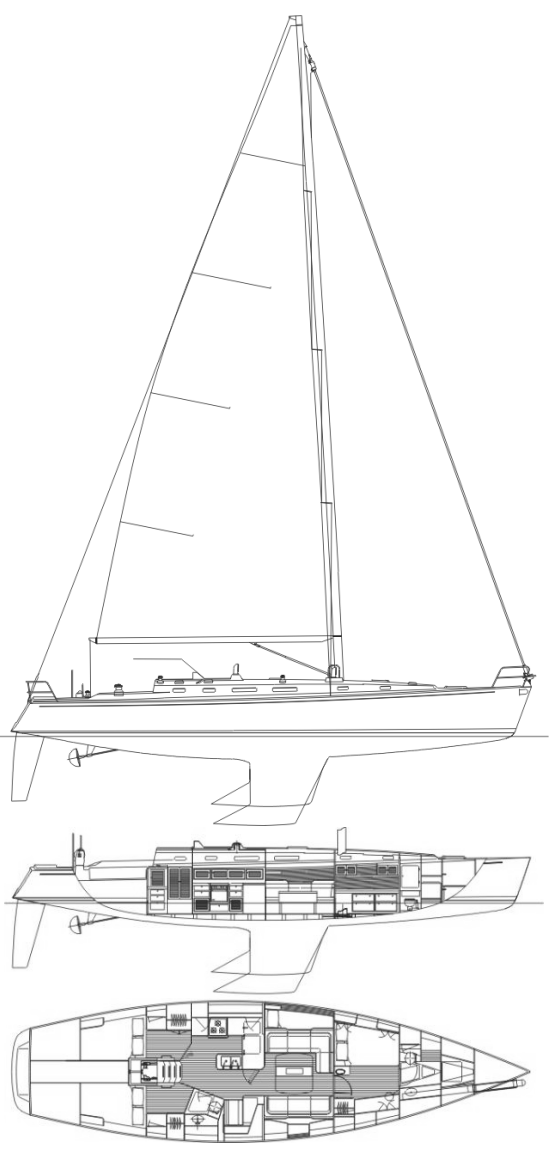
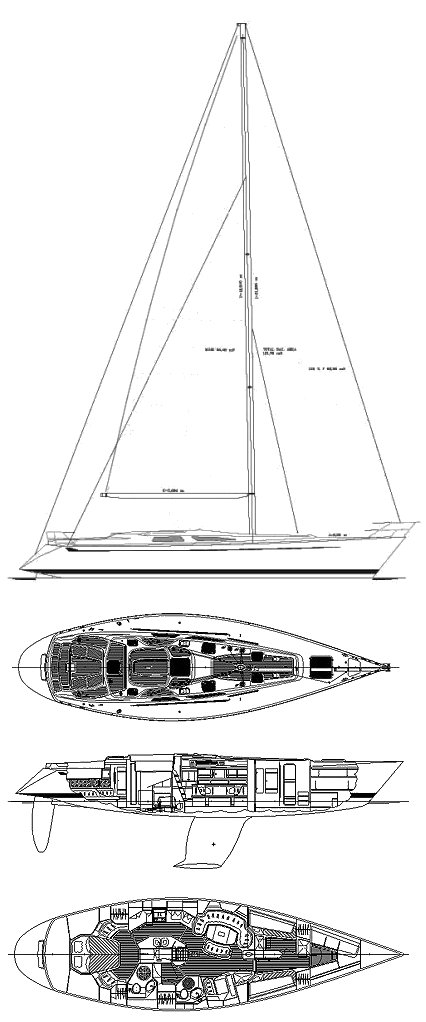
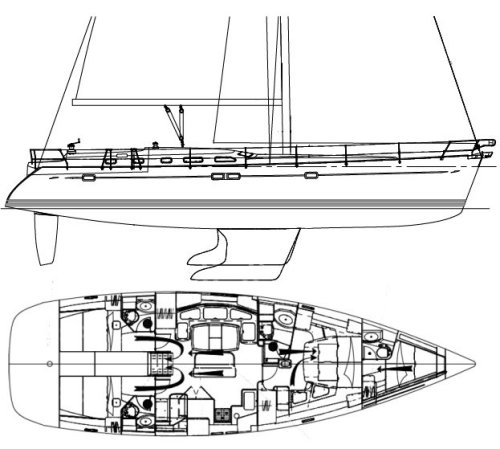
Beneteau used solid laminate for the hull and a balsa-cored deck, with a fiberglass grid bonded inside the hull. sailboatdata.com lists a fin keel with a bulb and a spade rudder, 53.31 ft overall on a 48 ft waterline, 16 ft of beam and 7.71 ft of draft; a shoal keel drawing about 6 ft 2 in was offered. The fractional sloop carries about 1,624 sq ft. Cruising World’s Jeremy McGeary notes that the hull has no salient sump, so the compartments under the sole are linked by limber holes and pipes to a bilge pump hidden under the floorboards aft of the main bulkhead. The rudder tube is supported by glassed-over flanges and extends almost to the cockpit sole, and the autopilot, an option, connects directly to the quadrant so it can steer if the wheel cable fails. The hull/deck joint sits in a low bulwark capped with teak, which carries the mooring cleats.
Under Sail
On Chesapeake Bay in 12 to 15 knots, Cruising World’s tester made about 8 knots with no tendency to fight the helm, and the boat tacked through 90 degrees. Under power it made over 8 knots at 2,800 rpm, though the engine was noisy. McGeary credits the inboard sheeting and shroud bases in the middle of the side decks for easy tacking, and says the twin helm stations let the helmsman see the jib telltales from either side. The primary winches sit inboard of and close to the helm stations, and a standard electric utility winch serves seven lines through rope clutches. A standard bow thruster covers any maneuvering quirks of the conventional shaft and propeller, and the engine, tucked under a hinged companionway ladder, is easy to work on. The measured engine noise was 83 decibels, higher than many boats the Boat of the Year team looked at.
Buyers Notes
Cruising World judged it not set up for voyaging as delivered but capable of being taken offshore. It flagged the lack of redundancy between the two wheels, a high boom and the need to secure floorboards before going to sea.
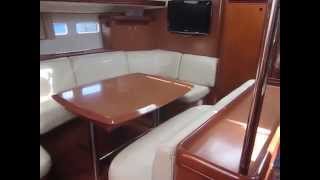
The standard layout has two staterooms, with a three-cabin arrangement available. McGeary found the galley amply sized, functional and secure, with the cook well wedged between counters, but said the traditional voyager might object to the smallish household-style fridge and to outboard sinks that may need a pump to drain on port tack. He thought the nav station desk could be slightly bigger for paper charts. The boom is set high to clear the bimini, so three mast steps are provided to reach the halyard and sail pack, and he would have liked a fourth step and firm handholds.
John Kretschmer wrote that the 523 replaced the Oceanus 50 and displaces nearly 33,000 pounds, and that bulkheads are bonded through 360 degrees to a hull liner he describes as a hull within a hull. The rudder stock is carbon fiber, and he preferred the standard deep keel because performance and motion are better. Off Miami in 6 to 15 knots he made 7.5 knots on a close reach under a 140 percent genoa with a light helm. He liked the life raft locker on the aft deck but wanted engine controls on both sides to make coming alongside to port easier, and he found the galley fridge front-opening and tricky on starboard tack. Freshwater capacity is 250 gallons and fuel 119 gallons, which he put at a range of well over 500 miles under power.