offshore

Cal 39 Mk II

Jensen Marine/Cal Boats (Bangor Punta Corp.) · 1978–1982 · Sloop rig

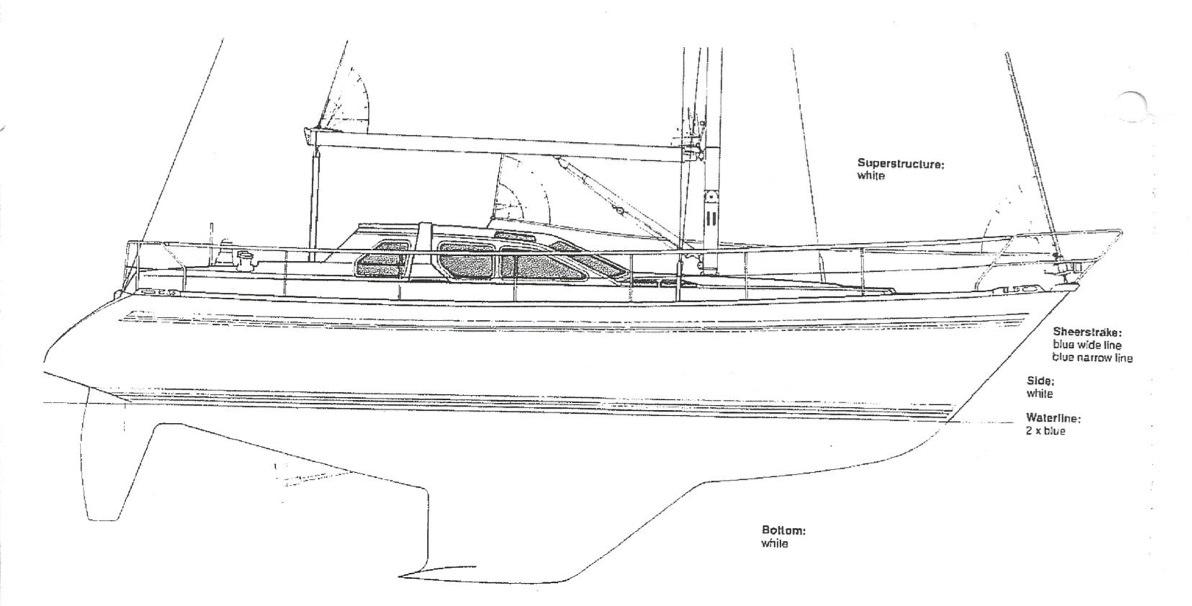
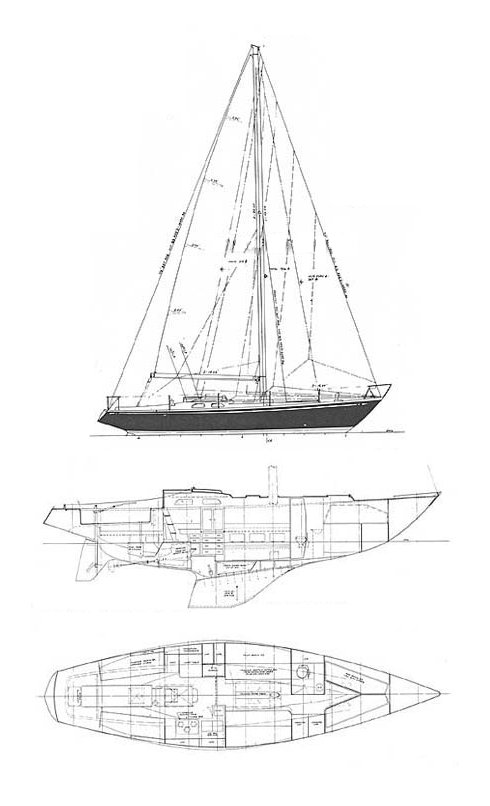
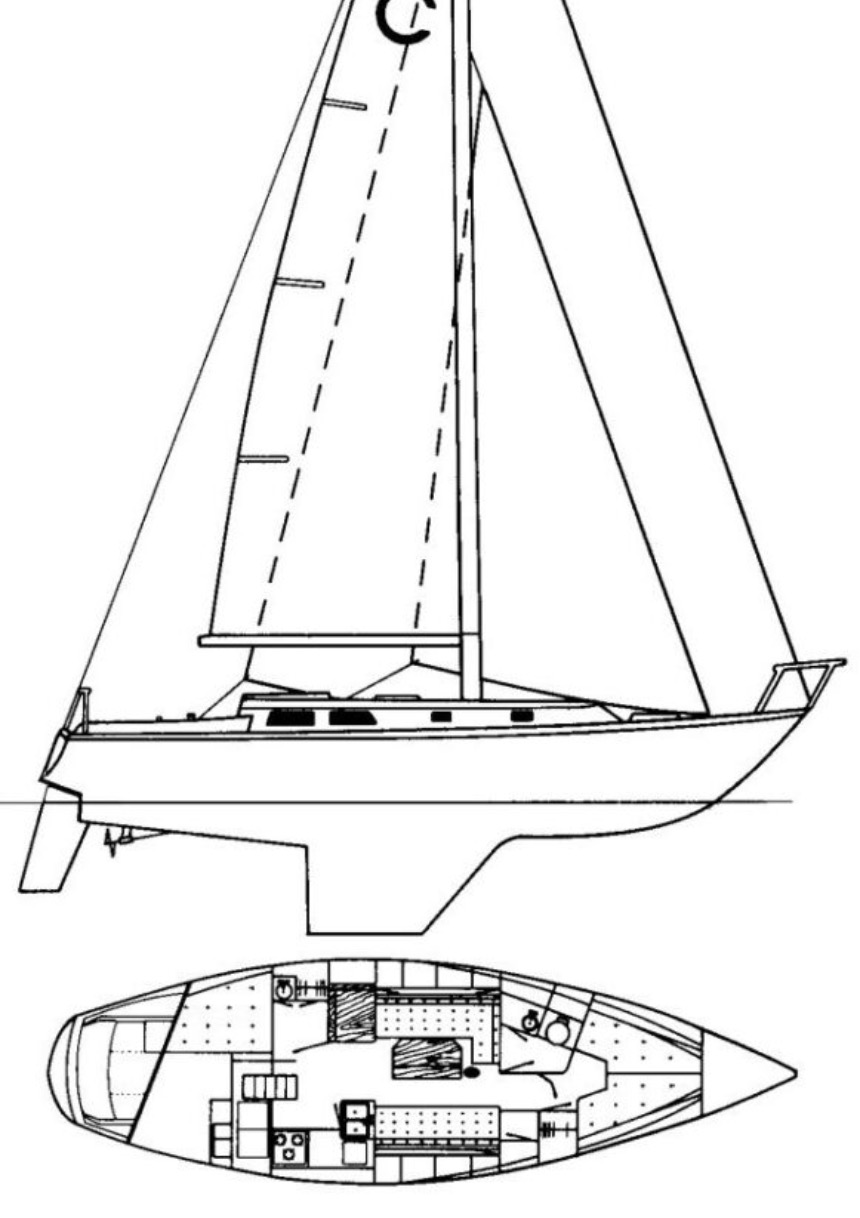
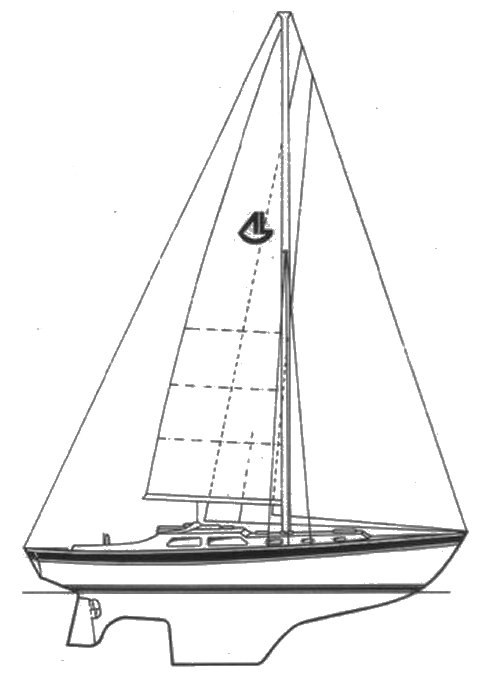
Cal 39 Mk II profile drawing
LOA39'
Beam12'
Draft6.67'
Displ.8.5t
Rigsloop
HullFiberglass

Bluewater Evidence · Ocean Proven

76% confidence

Practical Sailor's The Best Used Boat Notebook includes the Cal 39 Mk II, and Good Old Boat's review states that 'Cal 39 Mk II owners have made significant offshore passages,' citing boats now in Hawaii and New Zealand. No individual named crossing is on file yet.

Overview

Bill Lapworth redrew the Cal 39 almost entirely for 1978, an all-new design distinct from the rare original 1970-71 boat despite sharing a name. Built by Jensen Marine/Cal Boats under Bangor Punta, the Mk II became the most numerous of the several boats to carry the Cal 39 name, and it is the version most likely to turn up on the used market today.

History

The original Cal 39 launched in 1970 just as offshore racing shifted from the CCA rule to the IOR, a timing problem that limited it to only 29 hulls before Lapworth redesigned the boat from scratch. The Mk II ran from 1978 to 1982, followed by a Mk III in 1983 with mostly interior changes on the same hull, and, later still, a completely unrelated Hunt & Associates design that also used the Cal 39 name. The Mk II covered here is the version most commonly meant when the model is discussed today. Wikipedia, quoting a Boats.com report, notes that the 39 launched in 1978 during the hectic period when Cal’s manufacturing shifted to Tampa, Florida, and then up to Fall River, Massachusetts, as the company struggled to re-establish its identity.

Design and Construction

At 17,000 lb displacement with a 41 percent ballast ratio, the Mk II carries a fin keel with a spade rudder, a notable departure from the skeg-hung rudder of the original 1970 boat. Standard draft is 6.67 ft, with a 5.5 ft shoal-draft option also offered. The deck is balsa-cored fiberglass, and the boat came standard with a 50 hp Perkins 4-108 diesel (some delivered with a Pathfinder marinized VW unit instead). Good Old Boat’s reviewer describes a solid fiberglass hull with plywood coring added to the balsa deck in high-stress areas. The hull and deck are joined on an inward-facing flange with through-bolts and an adhesive bond, and leaks have been reported at that joint. Bulkheads are tabbed to the hull and carry the stainless-steel chainplates. The rudder is a fiberglass shell around a stainless-steel armature, filled with foam, and the review warns that leakage into the rudder can saturate the foam. The aluminum mast is stepped on the keel, and the review reports fairly significant water entry through the mast in some boats, so the keel step is worth inspecting.

Under Sail

Good Old Boat’s own review of the Mk II states plainly that owners have made significant offshore passages, pointing to examples of the design currently located in Hawaii and New Zealand as real, if not individually documented, evidence of its ocean-crossing use. No individual named crossing is on file yet. The same review credits the spade rudder with tight control on all points of sail, even with the wind up, and says the Mk II lives up to her sleek dockside appearance. It describes the T-shaped cockpit as relatively short, with a bridge deck that reduces its volume, which makes it suitable for offshore sailing, and finds that stiffness and good seakeeping make her an able passagemaker. On San Francisco Bay the review gives a PHRF rating of 114, or 108 for the tall rig, and calls the boat widely raced and competitive with more recent designs.

Buyers Notes

Because “Cal 39” covers at least three genuinely different hulls built across nearly two decades by two different designers, confirm which specific version (original, Mk II, Mk III, or the later Hunt & Associates design) any listing actually refers to before comparing specifications. Within the Mk II run, confirm whether a given hull has the standard or shoal-draft keel, since the difference is more than a foot.
Passage records

Chinook2024

Pacific Cup, San Francisco to Kaneohe (2024)

Finished 8th in the Weems & Plath PHRF 1 division.

Source: Pacific Cup 2024 results (pacificcup.org)

Known Issues

Hull-to-deck jointmoderateOwner-reported, unverified

Leaks have been reported at the hull-to-deck joint.

Inspection: Check the cabin sole, lockers and headliner along the joint for staining and moisture.

Source: Good Old Boat: Cal 39 Mk II review

RuddermoderateSurveyor-documented

The foam-filled rudder shell around a stainless armature can take on water and saturate the foam.

Inspection: Moisture-test the rudder and look for weeping or rust staining at the stock.

Source: Good Old Boat: Cal 39 Mk II review

Mast stepmoderateOwner-reported, unverified

Water entry through the keel-stepped mast has been reported.

Inspection: Inspect the mast step and the keel-stepped area for corrosion and water, repair as needed.

Source: Good Old Boat: Cal 39 Mk II review

Engine (Pathfinder)moderateOwner-reported, unverified

Some later boats had a Pathfinder marinized VW diesel, which has had problems.

Inspection: Find out which engine is fitted and check its service history and parts availability.

Source: Good Old Boat: Cal 39 Mk II review

Recommended In

As an Amazon Associate, PassageBoats earns from qualifying purchases.

What sailing channels say about the Cal 39 Mk II, quoted from video transcripts with a link to the exact moment. Opinions belong to the speakers; the written review above stays independent of them.

discusses

On a 1979 Cal 39 that sat in a barn for ten years, the presenters find the decks extremely stiff underfoot and no real water damage or core damage from their initial inspection. They have not yet used a moisture meter but expect any moisture to have dried out by now.

BoatFools Sailing

We Found a 1979 Cal 39 That’s Been Sitting in a Barn for 10 Years | Tour

▶ watch at 10:22
discusses⚙ chainplates

The presenters point to the backstay chainplate, with eight bolts spaced about 2 inches apart where four could have done, as a sign of overbuilding. Below, the chainplates are accessible, show very little corrosion, and bolt to a thick tabbed bulkhead with a backing plate.

BoatFools Sailing

We Found a 1979 Cal 39 That’s Been Sitting in a Barn for 10 Years | Tour

▶ watch at 15:22
warns⚙ engine⚙ rear main seal

On the Perkins 4108, 50 horsepower, one presenter lists the downsides as known leaky rear main seals and that it is not the lightest engine, against simplicity, parts availability and reliability. The engine on this boat looks very well kept.

BoatFools Sailing

We Found a 1979 Cal 39 That’s Been Sitting in a Barn for 10 Years | Tour

▶ watch at 23:42
discusses⚙ engine

Engine access is called great for a 1979 boat: the front of the Perkins is open to the strainer, raw water pump and other service points, and the forward section of the engine box lifts out. The port side is blocked by the refrigerator, with only the transmission end reachable through a cockpit locker.

BoatFools Sailing

We Found a 1979 Cal 39 That’s Been Sitting in a Barn for 10 Years | Tour

▶ watch at 25:20
warns⚙ mast step

One presenter notes that the mast step can be a problem on these boats, but on this one it looks either replaced or in mint condition with no corrosion.

BoatFools Sailing

We Found a 1979 Cal 39 That’s Been Sitting in a Barn for 10 Years | Tour

▶ watch at 30:20
discusses

In the wrap-up the presenters give a sail area to displacement ratio over 17, a ballast ratio over 41, displacement of 17,000 lb, and a comfort ratio of about 28 to 29. They call it a stiff boat that leans over at first and then settles in.

BoatFools Sailing

We Found a 1979 Cal 39 That’s Been Sitting in a Barn for 10 Years | Tour

▶ watch at 37:42
  1. [1]EditorialWikipedia: Cal 39 Mark II- Baseline specs from the article infobox and text: engine, engine_hp, rig_i_ft, rig_j_ft, rig_p_ft, rig_e_ft, phrf. Identity checked against this page's LOA and beam.
  2. [2]SpecificationsCAL 39 MK II (1-147) - SailboatData.com- Dimensions, displacement, ballast, sail area, hull type, rig (masthead sloop), designer, builder, and production years (1978-1982); the shoal-draft option.
  3. [3]ReviewCal 39 Mk II - Good Old Boat- Independently corroborates ballast (7,000 lb) and hull count (184); states owners have made significant offshore passages, citing boats located in Hawaii and New Zealand.
  4. [4]SpecificationsCal 39 Mk II - Wikipedia- Independently corroborates dimensions, displacement, ballast, and production years.
  5. [5]BookThe Best Used Boat Notebook (Editors of Practical Sailor)- Source of this boat's inclusion via data/book-lists.json (listed simply as 'Cal 39').
See something wrong? Suggest a correction

Corrections need evidence: a link or citation we can check. Sourced suggestions get reviewed and credited in the entry's change notes if applied.

Owner knowledge counts: name the boat and year so we can attribute it.