Overview
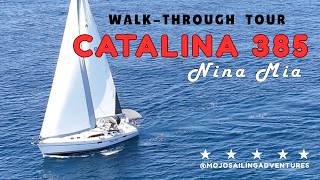
The Catalina 385 is a Gerry Douglas design introduced in 2012, a modern family cruiser built with more care than most mass-produced boats. Sail Magazine judged it primarily a coastal cruiser that could go offshore with modifications, and Neal rates it adequate for low to mid-latitude cruising but not for Cape Horn.
Design and Construction
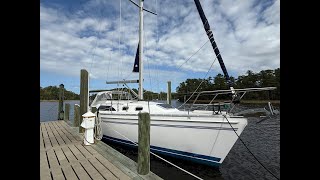
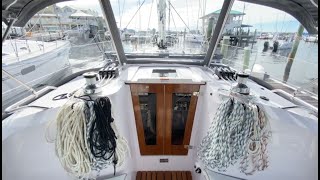
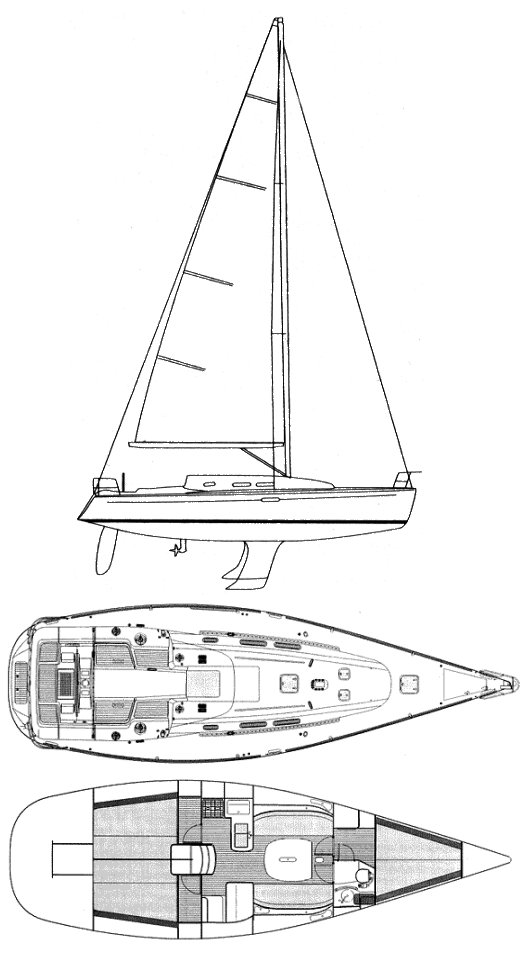
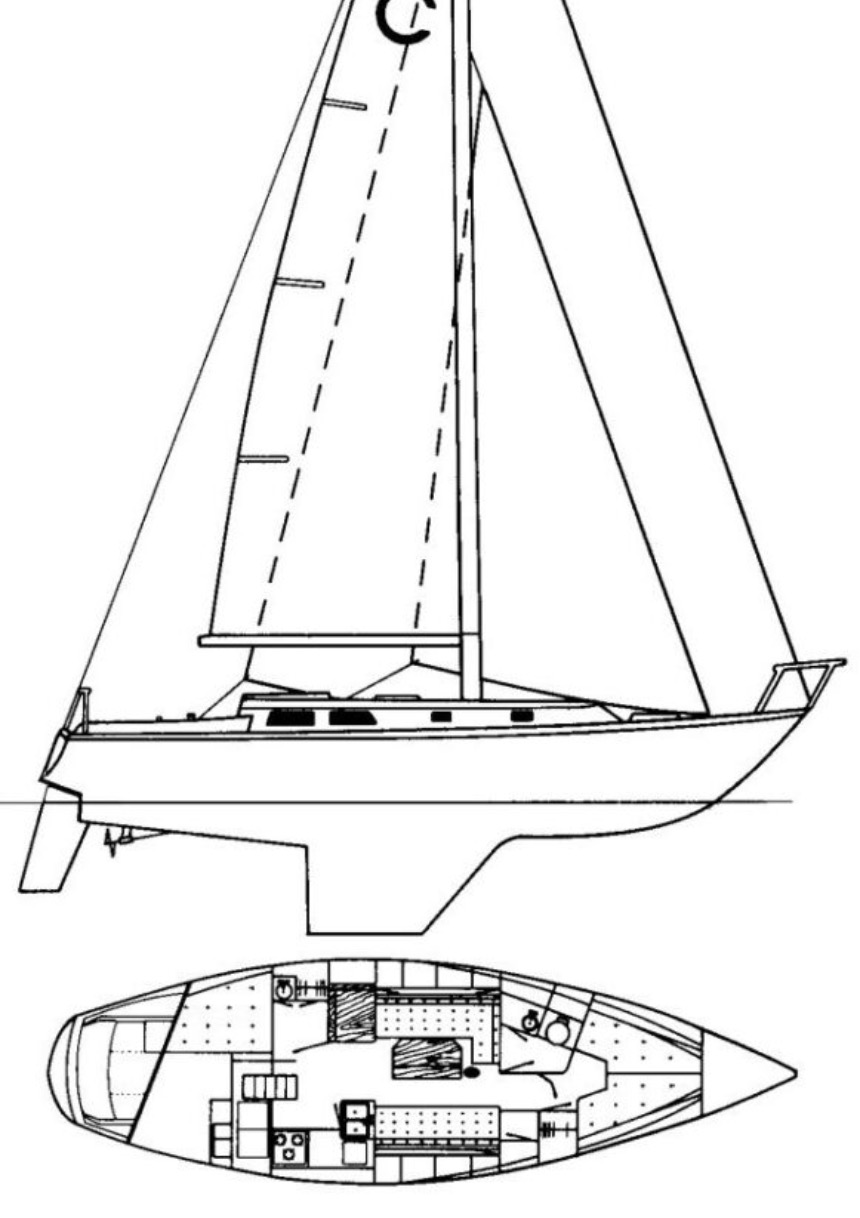
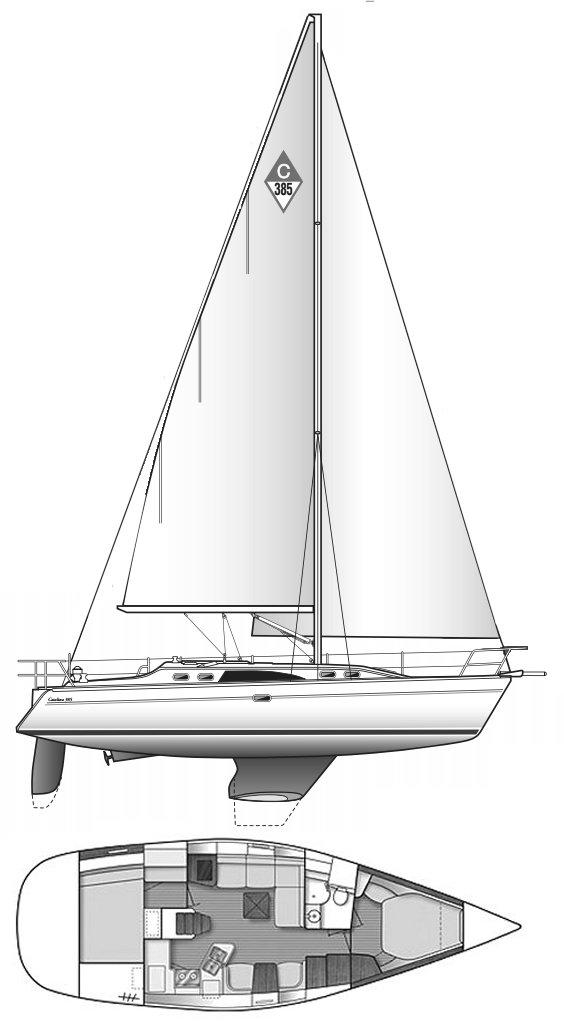
The hull is solid hand-laid fiberglass in knitted and unidirectional fabrics, with vinylester in the outer layers against blistering, a structural grid carrying the rig loads and a collision bulkhead forward. The balsa-cored deck is bonded and bolted on 4-inch centers, and the rudder stock is stainless. A bulb fin draws 6 ft 10 in; a shoal version draws 4 ft 8 in. Cruising World’s Alvah Simon described a simple T-shaped cockpit with long, wide, high-backed benches and a helm that lets you steer from either side or from a removable central seat. The cockpit self-bails through the aft entry and has a 9-inch bridgedeck against downflooding, and the lifelines stand 27 inches tall. Tankage is 100 gallons of water, 40 of fuel and 30 of holding, and the 40-horsepower Yanmar sits behind excellent access under the companionway ladder.
Under Sail
Sail’s test in about 5 knots of true wind kept over 3 knots under gennaker and pointed to 40 degrees apparent under a 150 percent genoa, with little leeway and a positive helm. Under power it stopped within two boatlengths and turned in about one and a quarter, but motored slower than the reviewer expected. Alvah Simon’s Cruising World test, on hull number one, found only the lightest of zephyrs, so he judged the hull from maneuvering under power and expected it to be slippery and quick with a sail-area to displacement ratio of 17.4. He noted that the bimini on the test boat totally obstructed the view of the mainsail, and that Catalina still uses a traditional shaft drive, which is simple to inspect but noisier below.
Buyers Notes
The cockpit is smaller than some competitors’ and does not walk straight through to the swim platform, and the engine hatches are small. The layout is two cabins with a V-berth forward and an athwartships double aft, and a single head with shower; Cruising World’s reviewer called trading a second head for deck and saloon volume a winning trade-off.