Overview
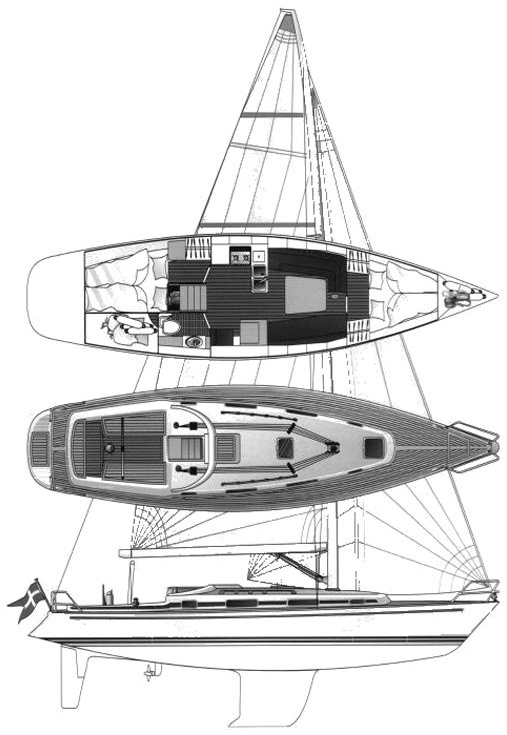
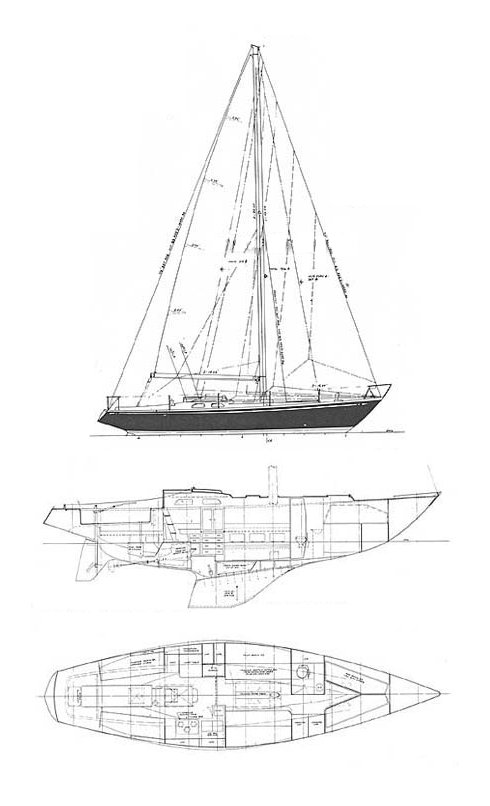
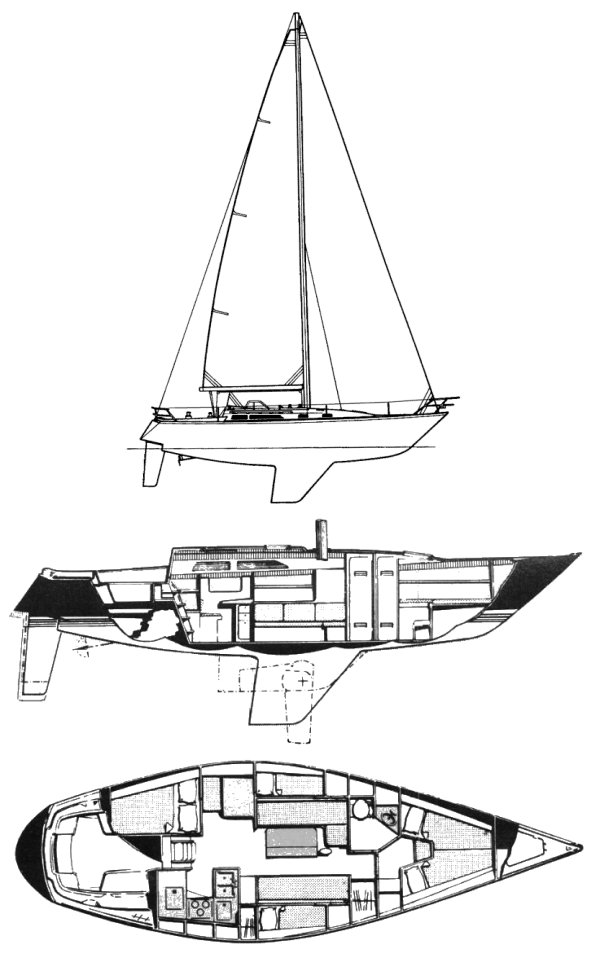
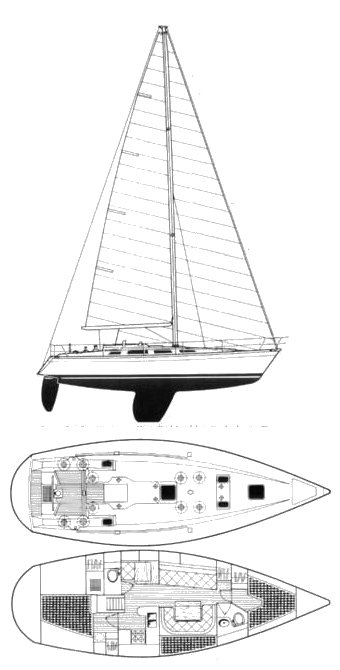
The Cal 40 is a 39-foot fiberglass sloop that C. William Lapworth designed for Jack Jensen’s Jensen Marine of Costa Mesa, California, first built in 1963. It was the fifth Cal design from the pair and the one that made both their names: a light, long-waterline boat with a fin keel and spade rudder at a time when offshore yachts were expected to be heavy and long-keeled. A Cal 40, Thunderbird, won the 1966 Bermuda Race, and Cal 40s sailed the 2003 and 2005 Transpacs as their own division, a Cal 40 won the 1996 Victoria to Maui race overall, and another, Restless, topped the ORR monohull standings of the 2025 Transpac. Practical Sailor says the first Cal 40 was built for George Griffith in 1963, that Cal 40s took the Transpac races of 1965, 1966 and 1967, and that production ended in 1972 as Bangor Punta moved the Cal line to Florida. Wikipedia quotes Tom Burden on the boat’s later following: owner Stan Honey says it “has no bad habits,” and Burden notes that Cal 40s have twice been the biggest one-design fleet in the Transpac, with 14 boats in 1966 and 2005.
Design and Construction
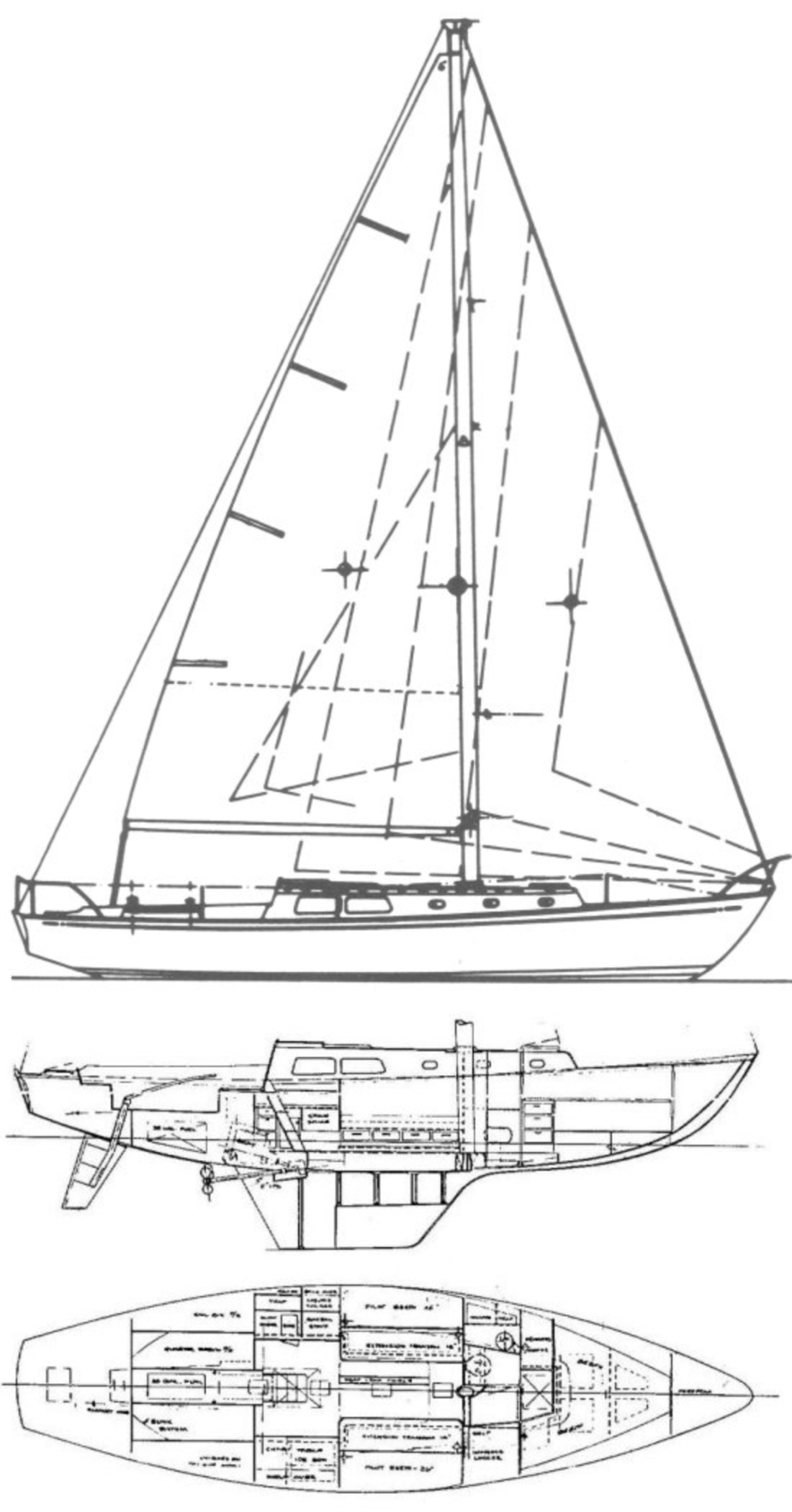
Displacement is 15,000 pounds on a 30-foot-4-inch waterline, roughly a quarter lighter than comparable boats of the period, with flat bilges that help it surf. The masthead rig uses chainplates set inboard of the toerail, which was unusual then and allows a narrower sheeting angle. The shroud chainplates tie into an aluminum weldment in the bilge that also carries the mast step.
The hull is solid hand-laid fiberglass. To save weight, the plywood bulkheads were kept small and their tabbing light, and the hull depends on them for stiffness. Many boats have since been reinforced with heavier tabbing and added glass. Practical Sailor describes the hull-to-deck joint as an inward-turning flange on which the deck molding is bonded, through-bolted and capped with a through-bolted teak toerail. The reviewer calls it a strong joint but reports minor leaking along it on a few boats, most likely because the light hull skin tends to oilcan in heavy weather. The deck is solid fiberglass with reinforcement built in during layup, so there are no backing plates under winches and cleats, which Practical Sailor generally recommends adding. The lead ballast is an internal casting dropped into the keel before the interior was assembled, so major repairs can be awkward.
Under Sail
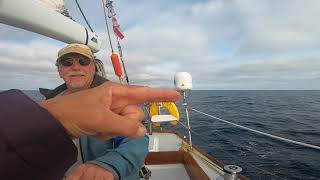
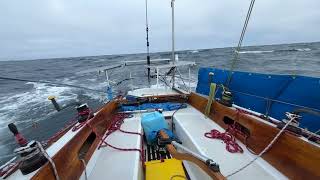
The boat is at its best in a breeze off the wind, where the long waterline and flat run let it reach and surf. Upwind, the flat forward sections pound in a chop and it does not point as high as later fin-keel designs. It is balanced well enough to steer with the original tiller, and many helmsmen prefer the tiller to a wheel. The masthead plan makes it simple to change down headsails as the wind builds. Practical Sailor found she is not dry on the wind, so a dodger is welcome, and that owners agree she sails best with the rail in the water. The reviewer gives a PHRF range of 108 to 120 seconds per mile depending on region, about the same as a C&C 38 or an Ericson 36, and quotes a typical owner comment on the rig: “Simple rig, nothing breaks, strong, easy to use.” The cockpit is roomy but low in volume, with a bridgedeck and small companionway, and the winch islands sit aft of the helmsman where the sheets are within reach for shorthanded sailing.
Buyers Notes
Every Cal 40 is now more than fifty years old, so condition matters more than the design. Check bulkhead tabbing, the rudder, and the hull-to-deck fasteners first. The earliest boats had Atomic 4 gasoline engines, and most have been repowered since. The interior is simple and dated: V-berth forward, head and hanging locker, settees with pilot berths in the saloon, and quarter berths that work best as sail stowage. Practical Sailor notes that the wiring was installed before the interior and sits low in the boat, where it can get wet if the bilges are not pumped and the boat heels. One owner lost all electrical power that way on an overnight passage, and the reviewer advises suspecting the worst until proven otherwise and budgeting for a rewire if the original has not been replaced. If the boat has suffered a hard grounding, the reviewer says to inspect the ballast cavity, which should not sound hollow when rapped.