Overview
The Compass 47 is South Africa’s best-known big offshore cruiser, a design by Angelo Lavranos built in small numbers at Compass/Anchor Marine in Cape Town from around 1980. Roughly 50 hulls were built, most in solid fiberglass with a handful in cold-molded plywood, and by the builder’s own account nearly all of them have made at least one ocean crossing under their own keel, an unusually active record for a design this obscure outside its home country.
History
Angelo Lavranos trained under Angus Primrose in the UK and then Sparkman & Stephens in New York before opening his own design office in Cape Town in 1975, and the Compass 47 followed not long after. Asked directly about the design decades later by one of the boat’s owners, Lavranos wrote back that it was “built mostly by Compass Marine in the late ’70s & early ’80s in Cape Town under my supervision. These were a first-class product.” Many were sold and delivered to Europe or the Americas during the final years of apartheid, a route that doubled as a way for owners to move money out of South Africa, which helps explain why so many hulls ended up with real transoceanic miles under them early in life. The model was class winner in the 1982 South Atlantic Race and the 1985 Beachcomber Race.
Design and Construction
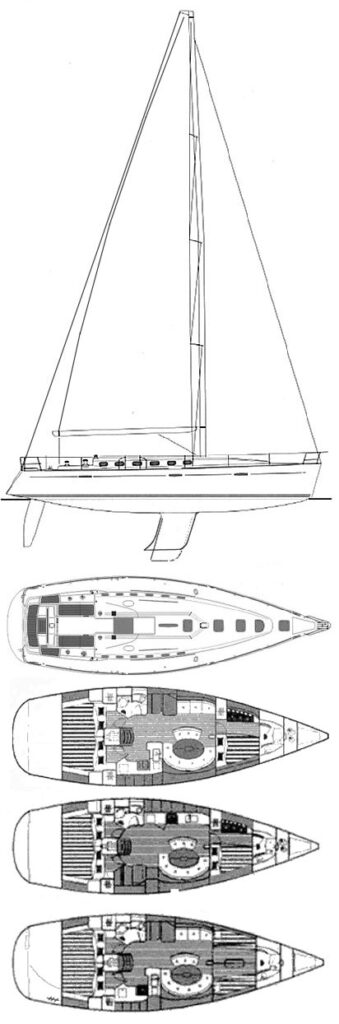
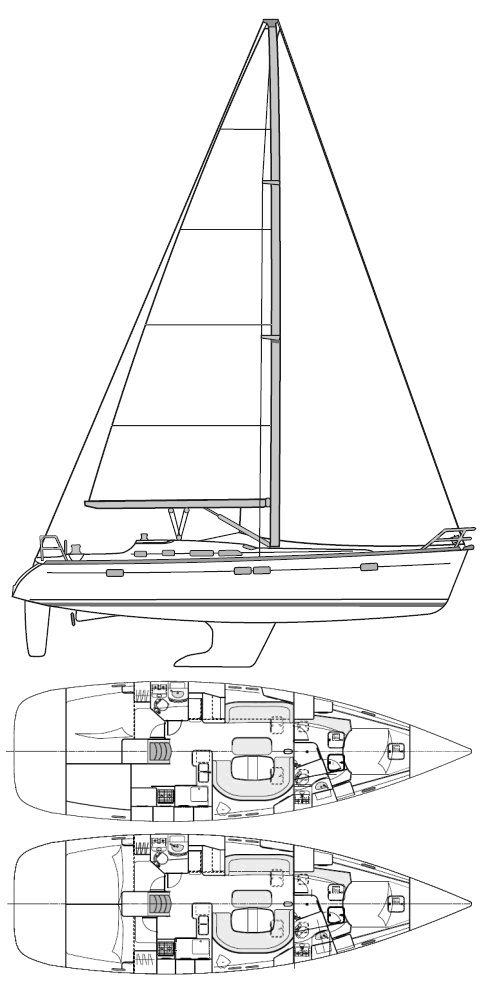
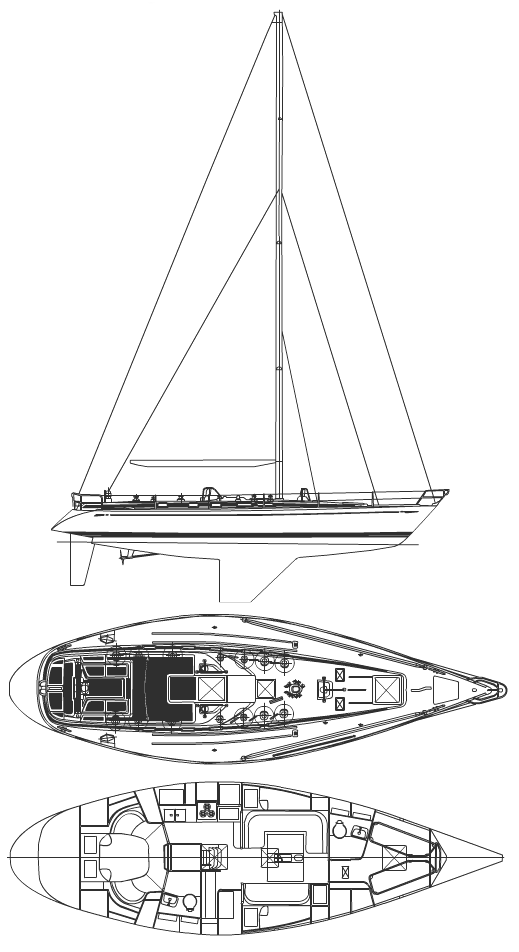
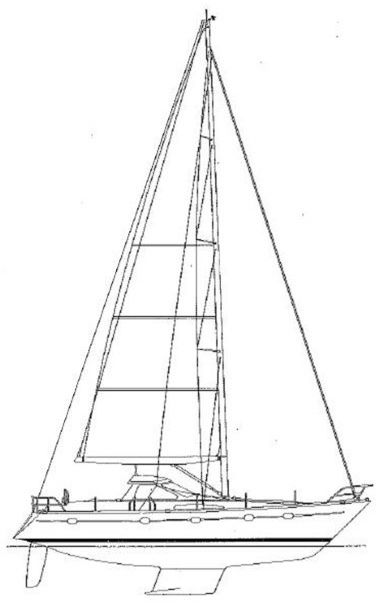
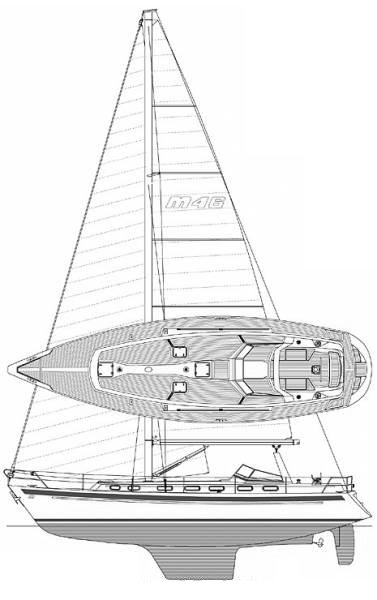
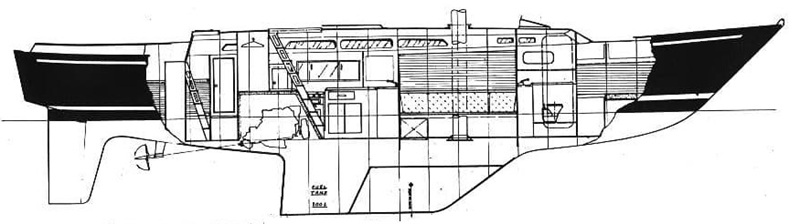
The hull is solid fiberglass with longitudinal stringers (a handful of early hulls were cold-molded plywood instead), carrying a fin keel and skeg-hung rudder rather than the full keel more typical of cruisers from this era. Displacement runs a substantial 27,500 lb on a 37 ft waterline, with 7,000 lb of ballast for a 25.45% ratio. Variants exist across the production run: sloop and ketch rig options, and both center-cockpit and aft-cockpit deck layouts, so two Compass 47s can look meaningfully different on deck despite sharing a hull.
Under Sail
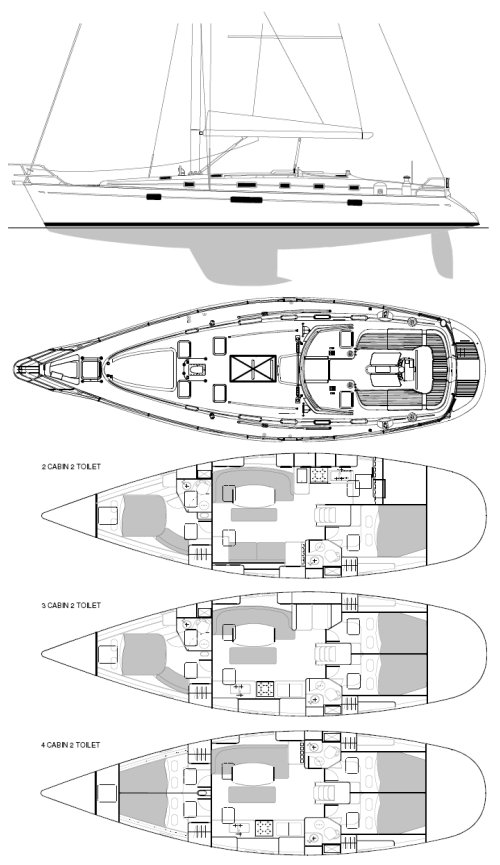
Owners describe a boat built for steady offshore work rather than light-air speed, with a moderate sail area to displacement ratio and enough ballast to stand up to a real breeze. Nathan and Vivian’s Ultima carries a 3-cabin, 2-head interior with dual companionways into a large, protected cockpit, a layout built around living aboard for weeks at a time rather than weekend sailing.
Buyers Notes
This is a rare boat outside South Africa, so expect a real search and be prepared to travel for a viewing. Rig configuration (sloop vs. ketch) and cockpit layout (center vs. aft) vary across the production run, so confirm which variant a specific hull is before assuming it matches another Compass 47 you’ve seen. Hull material also varies: most are solid fiberglass, but a handful of early hulls are cold-molded plywood, worth confirming on survey. Given the age of the design, expect the usual multi-decade-old-boat checklist: rigging, tankage, and engine history should all be confirmed independently rather than assumed from the base design’s reputation.