Overview
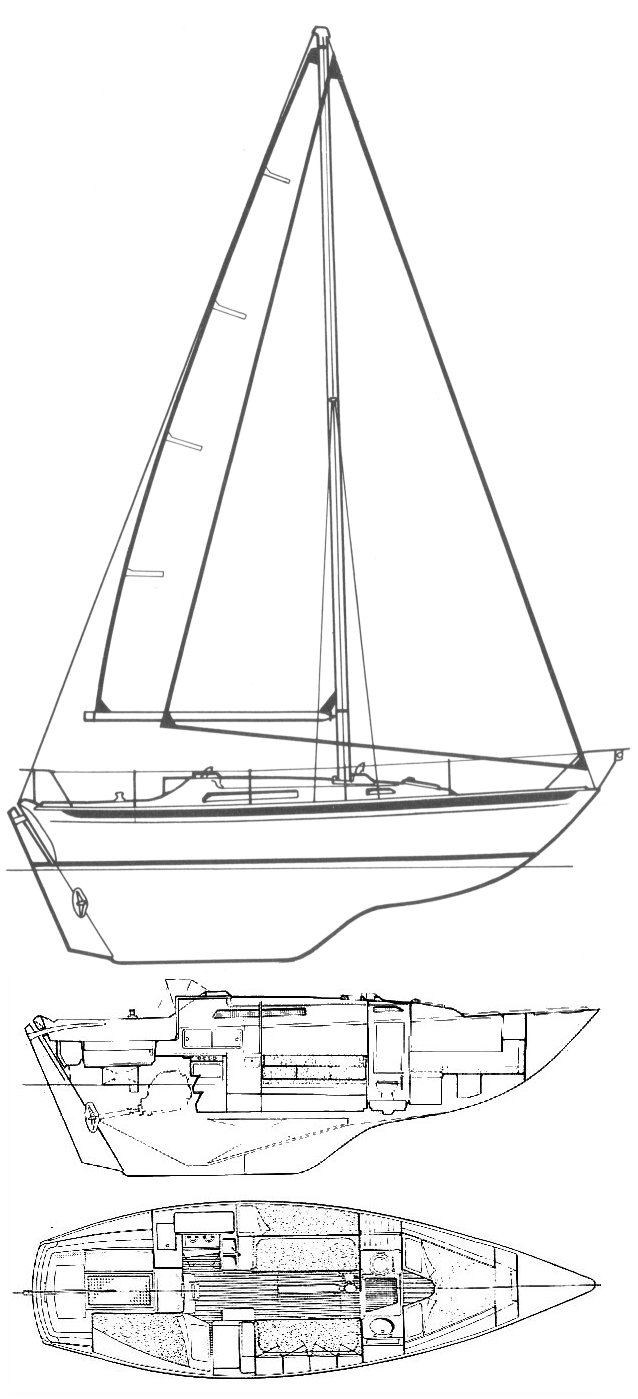
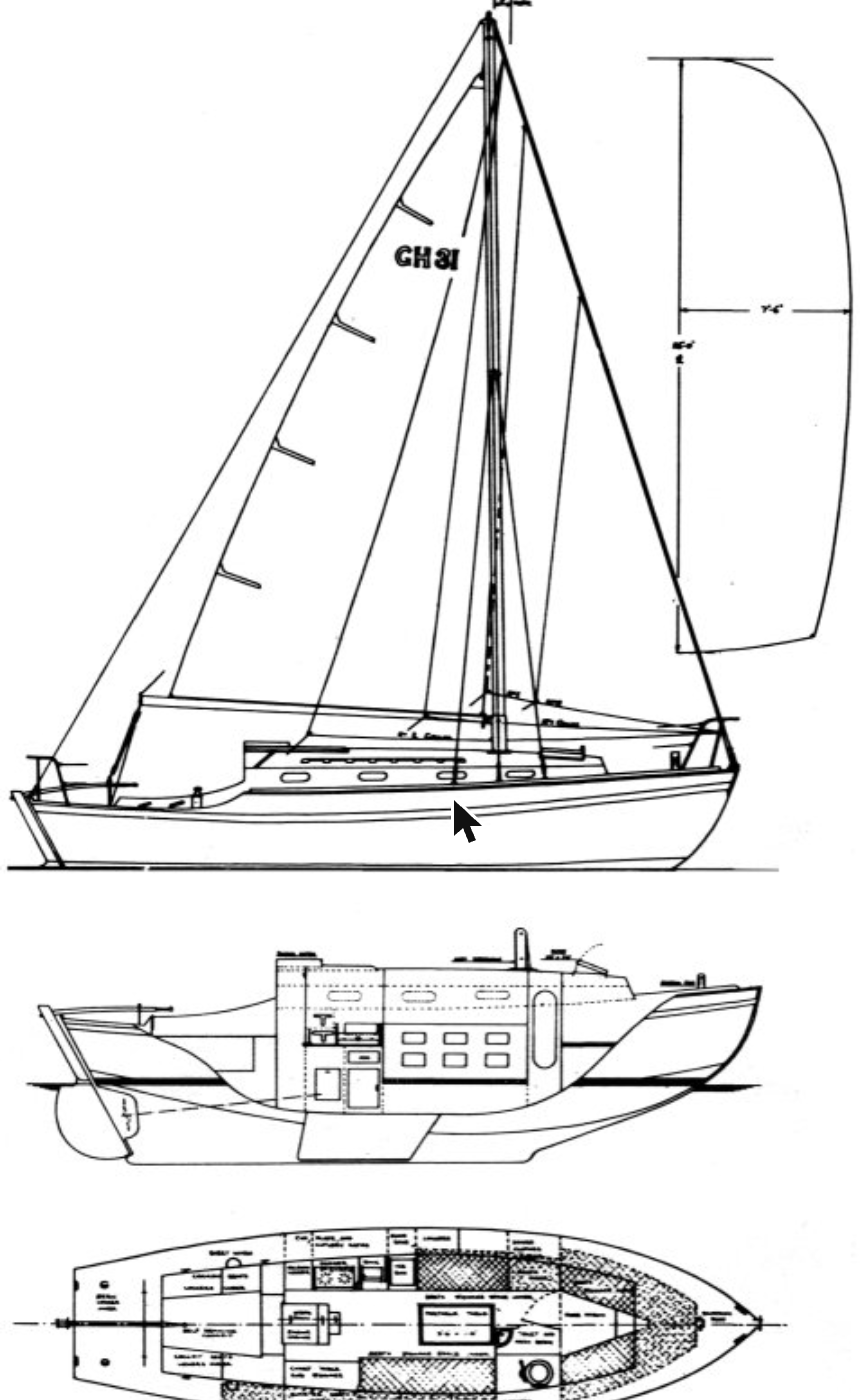
The Golden Hind 31 is a Maurice Griffiths shoal-draft design with a full keel and bilge plates that allow it to stand upright when taking the ground. Wave Train says Griffiths received the commission in 1965 and reports a tradition that the design once held the record for the most Atlantic crossings by a production sailboat. No primary voyage record was found in the Pilot 01 source set.
History
Hartwells built wooden predecessors, including documented 31 ft 6 in examples from 1967 and 1968. Wave Train reports that Terry Erskine began fiberglass-hull production in 1971, retaining a framed wooden deck and house. Production later resumed under Golden Hind Marine, which introduced the Mark II, and the tooling passed to Newson Boatbuilders in 2006. The frontmatter uses the original standard fiberglass configuration: 11,600 lb displacement and 4,100 lb ballast. Wave Train gives 13,500 lb and 5,196 lb for the later Mark II. Baldwin’s 13,500 lb and 5,100 lb figures align more closely with that later configuration. Published hull counts use conflicting model boundaries, so this page does not assign one exact count to the 31-foot family.
Construction
Wave Train describes the fiberglass boats as having a solid-laminate double-chine hull, mahogany cabinhouse sides, and a deck and coachroof framed in hardwood with plywood sheathing covered in cloth and epoxy. Cast-iron ballast is encapsulated in the full keel, and the bilge plates bolt through to a steel support frame inside the hull. The same source reports deterioration in wooden hulls when moisture entered the plywood.
Under Sail
James Baldwin summed up the tradeoff directly: “good boat if you need shoal draft and ability to stand the boat upright on its bilge keel plates,” but “if you don’t particularly need the shallow draft, the bilge plates along with full keel add drag reducing sailing efficiency.” Wave Train’s owner account also describes the boat as slow in light air and comfortable in heavy weather.
Buyers Notes
Baldwin records 6’2” of headroom. Wave Train says most original boats carried a short sloop rig, while Mark II boats usually had a taller cutter rig and some older boats were converted. Establish the builder and configuration of the individual hull before applying the page’s specifications. Survey the framed-plywood deck and house for moisture, inspect the bilge-plate fasteners and support frame, and examine a wooden hull for water damage.