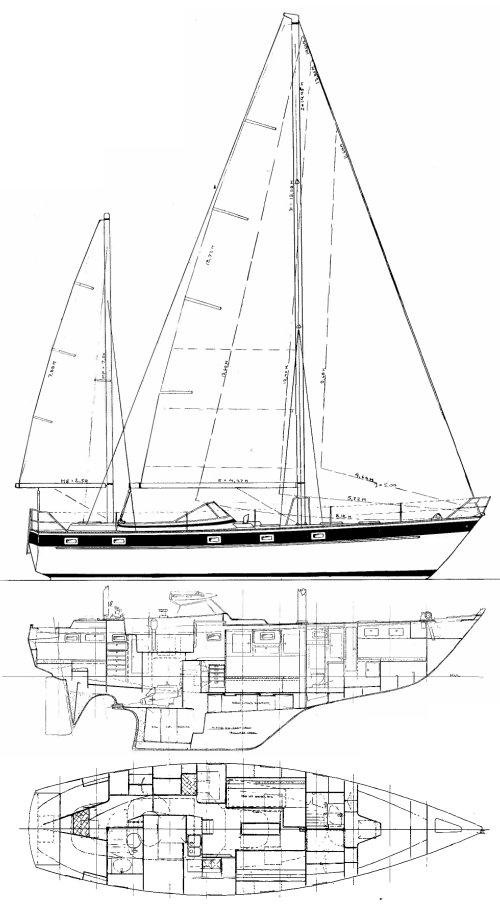
Overview
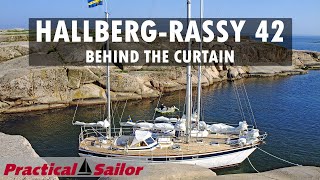
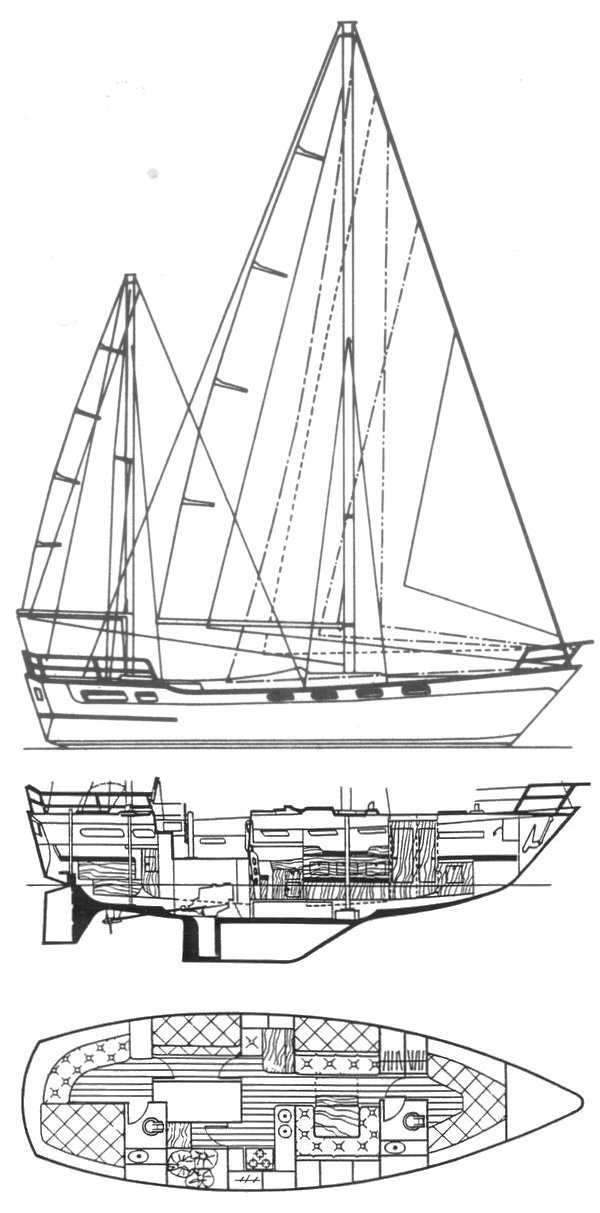
The Hallberg-Rassy 42 is an Olle Enderlein and Christoph Rassy center-cockpit cruiser built from 1980 to 1991, often called the 42E to distinguish it from the later Frers 42F. It began as a ketch only; sloops were introduced later and by the end were most of production. Hallberg-Rassy says numerous boats have sailed around the world.
Design and Construction
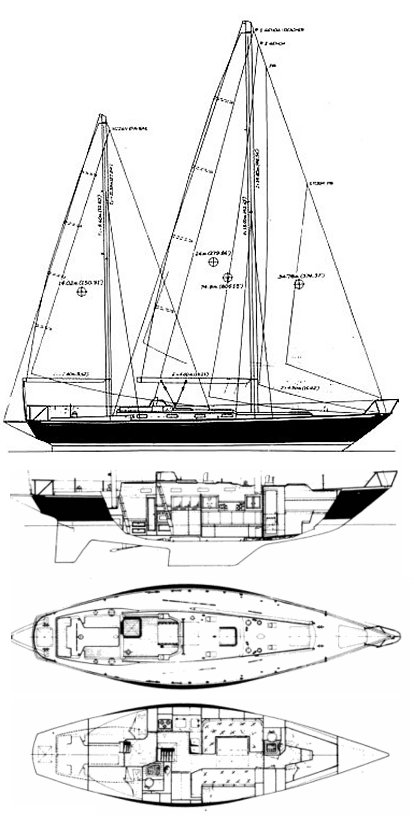
The underbody is a long cruising fin behind a cutaway forefoot, with the rudder hung on a full-length skeg. The hull is solid fiberglass and the deck foam-cored, and the flush foredeck gives high freeboard with all the portlights in the hull side. Displacement is about 25,350 lb with 9,920 lb of ballast. Practical Sailor puts production of the Enderlein 42 at 255 boats from 1980 to 1991, and quotes a brochure saying the solid hull was built to Lloyd’s specifications under a Lloyd’s surveyor. Fiberglass stringers are bonded to the hull, ballast is an iron casting set into the hull, the deck is cored with 25 mm PVC foam, and the hull-deck joint is fiberglassed over. Water tanks were described as integral fiberglass tanks bonded to the hull, though some boats had removable stainless tanks. Fuel is carried in two stainless tanks totaling about 120 US gallons.
Under Sail
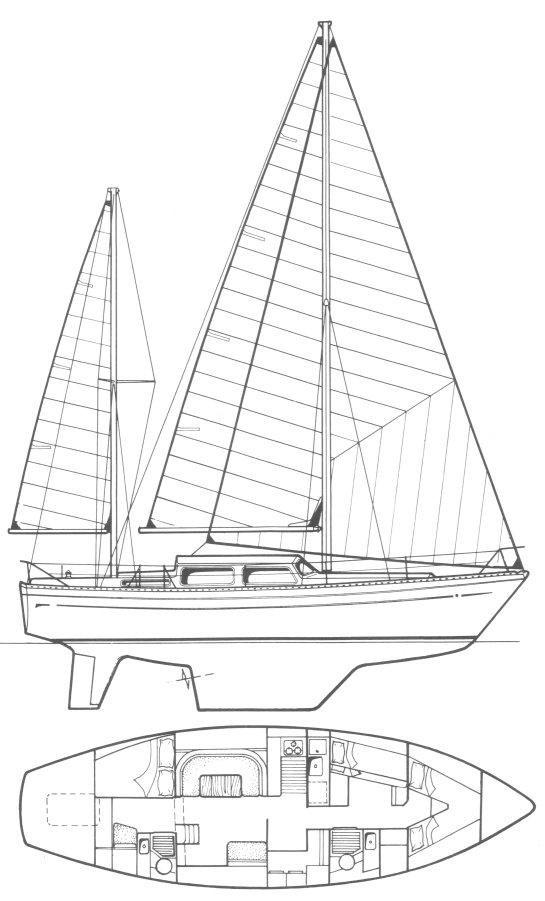
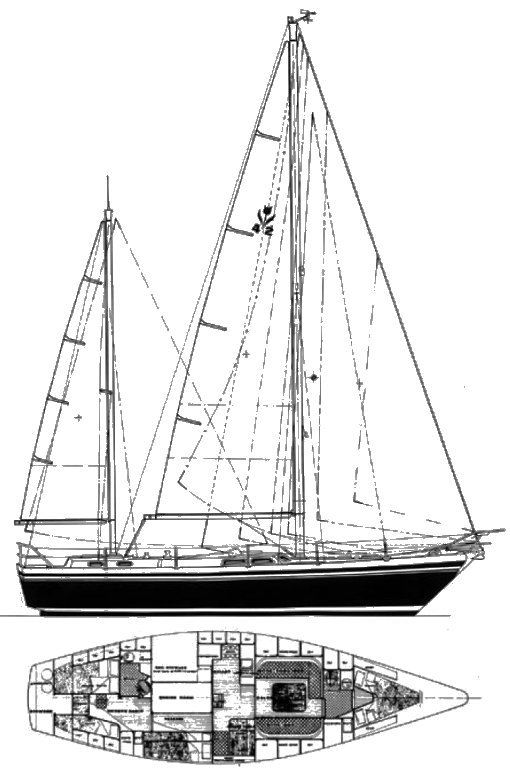
The masthead ketch rig is fairly low in aspect. Owners rate upwind and downwind speed as average and seaworthiness and stability as above average, and the boat can be sailed under jib and mizzen alone. The high freeboard can hurt pointing and makes docking in a crosswind harder. Practical Sailor puts the sail area to displacement ratio at 14.7 and the displacement to length ratio at 278, and says hull speed is just under 8 knots on a 34 ft 5 in waterline. It calls the boat not spritely under sail but a passagemaker that should make 180-mile days fairly easily in the right conditions. The ketch rig is balanced enough to run under jib and jigger without much helm, which suits an autopilot, and the reviewer recommends replacing the three-blade fixed prop with a feathering one. Under power the 42 makes about 8 knots. Original engines were Volvo Penta diesels (MD 21B, MD 30 and MD 31 appear in brochures).
Buyers Notes
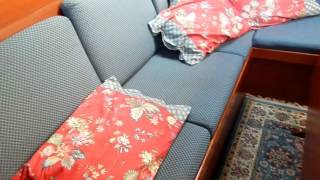
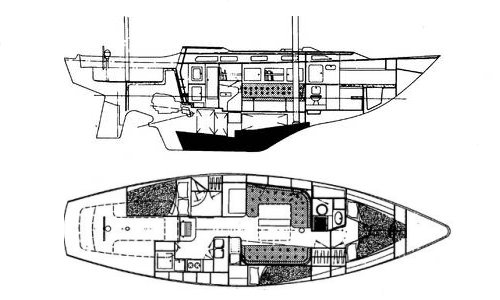
Practical Sailor criticizes the deck-stepped mast for offshore use. Early boats had reel winches for wire halyards, which it calls dangerous. The interior can be dark. Check the deck, the portlights and any welded fuel tanks for corrosion (see Known Issues). The standard plan has a 6 ft 8 in V-berth forward, a head with shower, a saloon with opposing settees and a drop-leaf table, the galley to starboard and the nav station to port of the companionway, and an owner’s stateroom aft with its own head. Practical Sailor notes that the center-cockpit walk-through plan puts the two staterooms at opposite ends of the boat, and that the best sea berths are amidships. The boat came with four 125 amp-hour batteries, and the reviewer suggests a larger bank and alternator before adding refrigeration. John Neal, who owned a 42 for 70,000 miles including six Cape Horn roundings, called it an excellent value and listed too little light below and the teak decks as negatives.