Overview
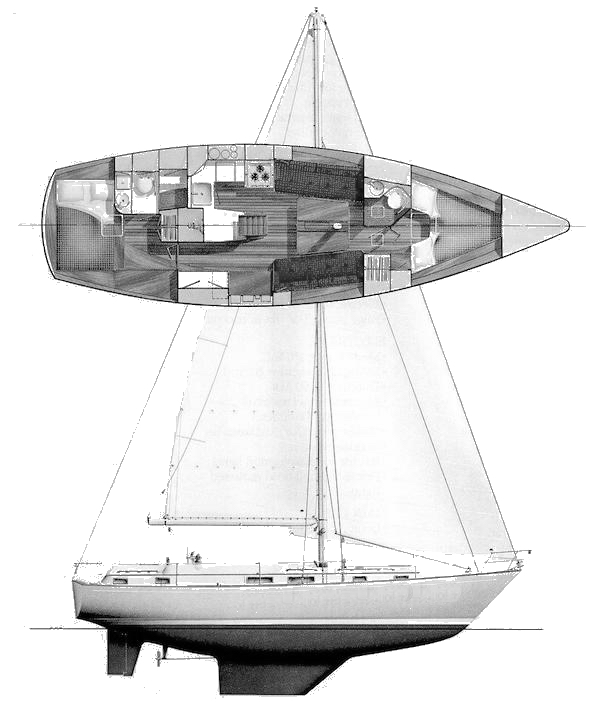
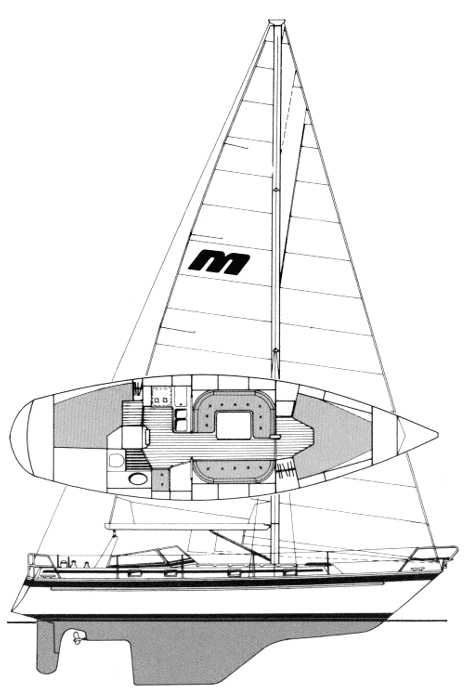
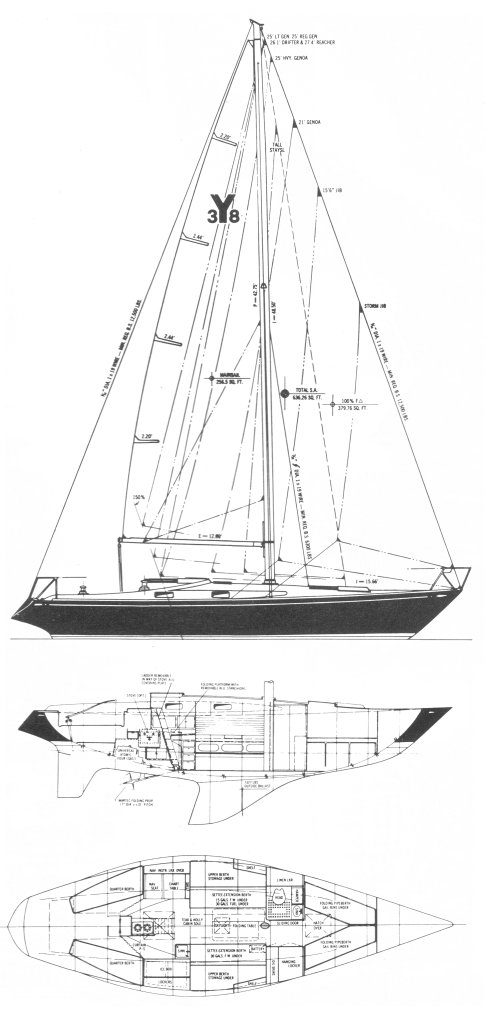
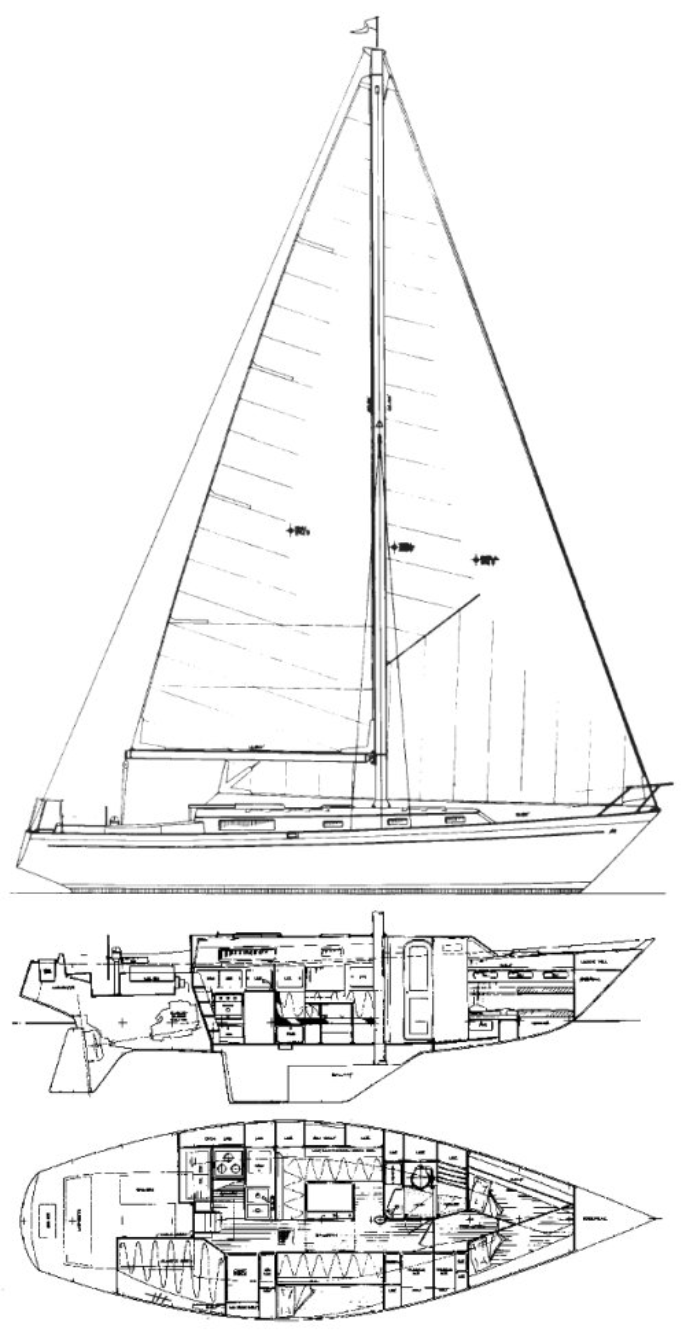
The Morgan 382 is the first version of the Ted Brewer and Jack Corey Morgan 38 design introduced in 1977. It is distinct from Charlie Morgan’s earlier centerboard 38. The newer boat has a cruising fin keel, skeg-mounted rudder, 30-foot-6-inch waterline, 12-foot beam, and 17,000-pound displacement. Practical Sailor says the 382’s fin is a NACA 64 012 foil, and Ted Brewer writes in Good Old Boat that the draft of 5 feet was a client requirement for Florida and the Bahamas, which led to a fat NACA section to get the ballast as low as possible. Brewer says Morgan tank-tested the hull with both his NACA fin and a super-shoal keel shape patented by Henry Scheel, and the NACA fin proved superior in every respect. He also persuaded Morgan to offer the 6-foot-draft version for skippers who wanted more performance.
Morgan renamed the taller-rig 1980 version the 383. The 384 followed around 1983 with a larger rudder and interior changes. About 500 boats were built across the three versions. This page uses the 382 specifications and treats the 383 and 384 as related variants.
Construction and layout
Practical Sailor reports that some 382 hulls are cored and others are solid, with Airex used in many cored hulls. Internal lead ballast is sealed beneath fiberglass. Because the laminate can vary, a surveyor should establish the construction of the actual hull instead of relying on a model-wide assumption. About half of the 382 owners who answered Practical Sailor’s surveys reported some blistering, none serious, and owners of all the Morgan 38s noted the strength of the boat and were nearly unanimous in praising Morgan’s customer service. The magazine says owners wanted real wood and got it in the 382, with a separate shower enclosure in the head. Some 382s had the first-generation Yanmar 3QM30, which Practical Sailor says tends to be noisy and vibrate a great deal, and Brewer’s Good Old Boat article adds that later boats came with the Perkins 4-108.
The conventional interior has a V-berth, enclosed head with shower, saloon settees, galley aft to port, and a navigation station with quarter berth to starboard. Later variants changed details rather than the basic arrangement.
Under sail
The standard keel draws 5 feet, with a 6-foot deep option. Practical Sailor’s owner responses liked the boat’s performance but were less positive about tracking off the wind. Some owners changed mast rake to improve balance, and the 384 received a larger rudder. Those differences should be checked against the hull number and actual rudder. Lenny Reich of the Morgan 38 Owners’ Group, quoted in Good Old Boat, says tank tests of Brewer’s hull at the Stephens Institute revealed a surprisingly fast shape, and that the boat has competed successfully around the buoys and offshore since its introduction. Practical Sailor quotes Brewer as saying a 382 that passes survey is capable of cruising just about anywhere.
Buyers notes
The early bulkhead recall is the first structural check. Confirm that the aft head bulkhead is properly bonded and that mast compression has not distorted the keel area. Then identify whether the hull is solid or cored, inspect for blister repairs, and examine the skeg and rudder after haulout.
Do not mix 382, 383, and 384 specifications when comparing a listing. The rig, rudder, and interior details changed. The owners group is useful for hull-specific questions and factory documentation.