Overview
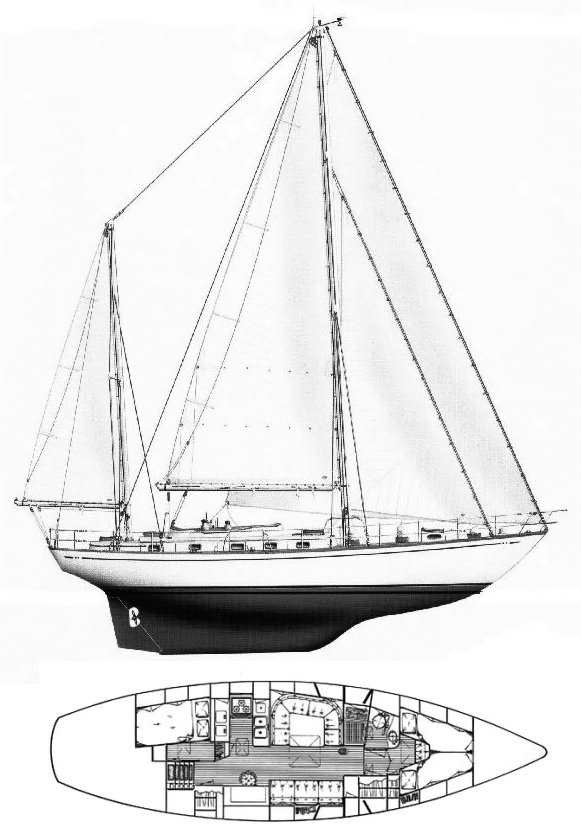
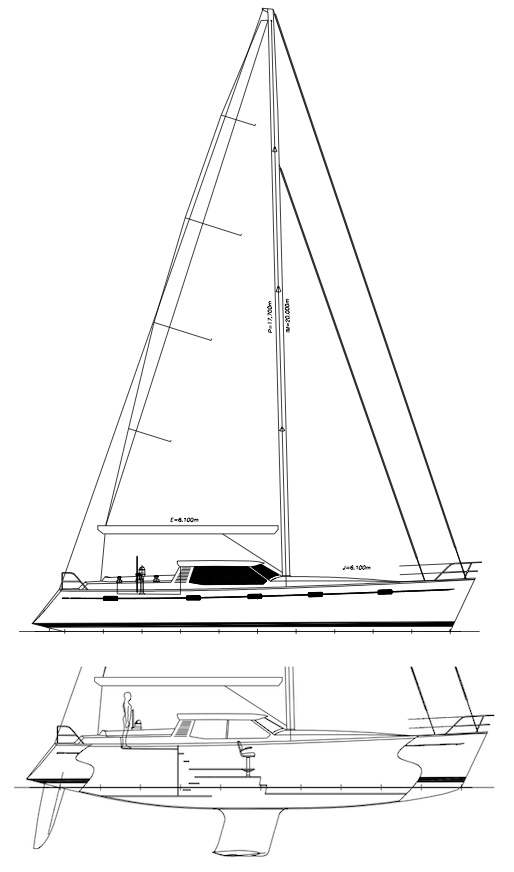
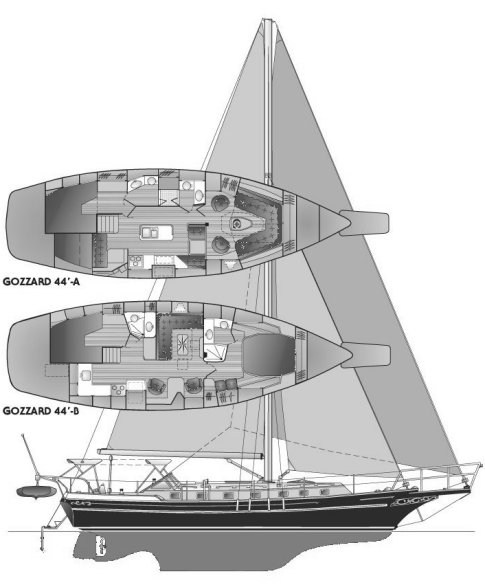
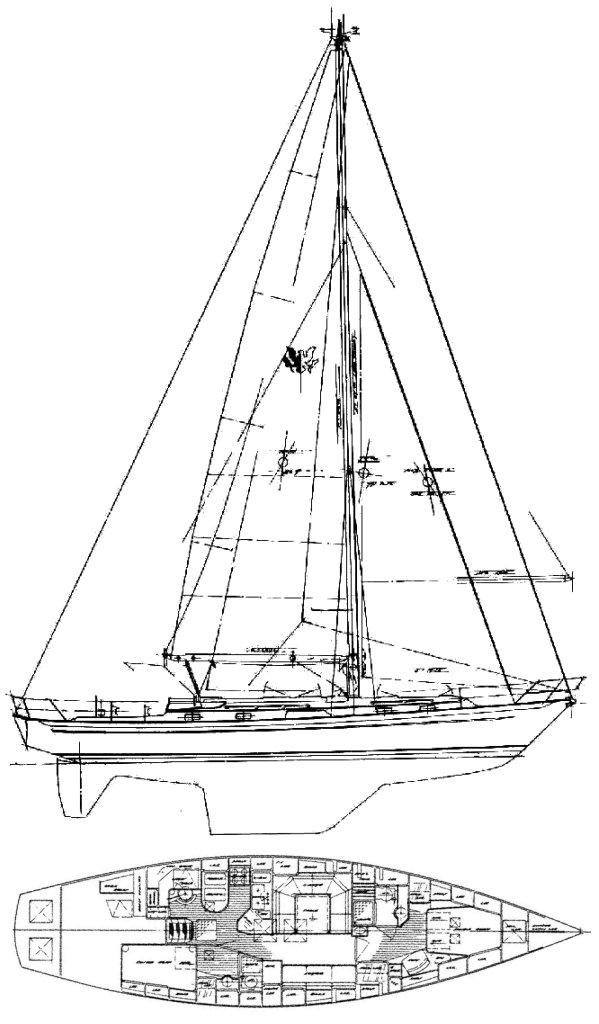
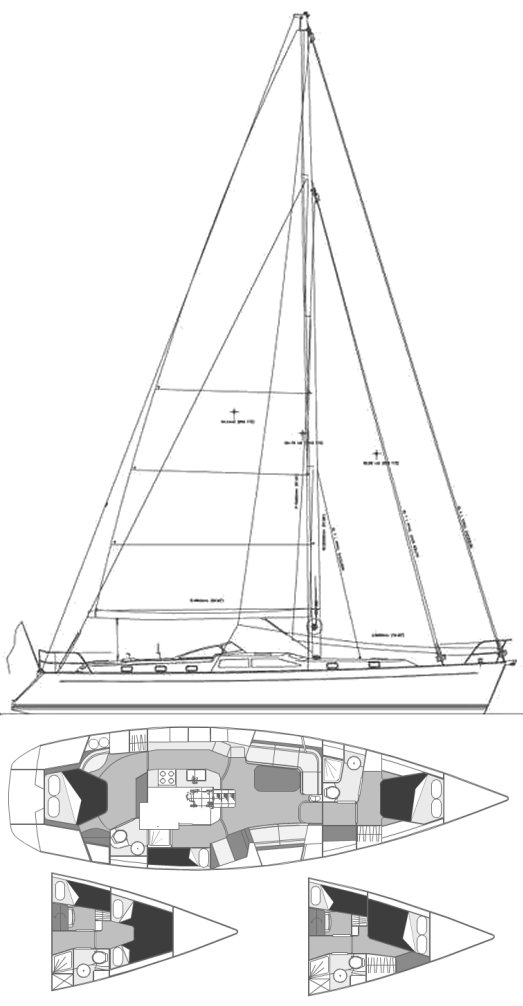
The Outbound 52 is a Tim Kernan center-cockpit cutter from Outbound Yachts, introduced in 2008 as a bigger sister to the Outbound 44 and 46.
Design and Construction
The solid hull is hand-laid with vinylester resin, with a foam and fiberglass grid and bulkheads bonded to hull and deck. The external lead keel has a long, flat bulb, and Kernan chose a high-aspect spade rudder over a skeg, arguing that a well-built spade is stronger. sailboatdata.com lists 52 ft overall on a 47.83 ft waterline, 15.33 ft of beam and 7.5 ft of draft (6.5 ft shoal), with about 40,000 lb displacement and 1,312 sq ft of sail. There are watertight bulkheads fore and aft. The deck is vacuum-bagged over Divinycell foam and through-bolted to the hull on four-inch centers, and the keel bolts to the bottom of a deep sump. Sail’s reviewer notes that the hull-deck joint is through-bolted on an inward flange and sealed with 3M 5200, and that all furniture is bonded in place with no liners anywhere. The boat was built in Xiamen, China, by Han Sheng. Sail also lists the 14,000-pound lead bulb keel and 475 gallons of tankage carried below the cabin sole, which keeps that weight low and frees interior stowage.
Under Sail
Cruising World’s tester sailed it fast through choppy Gulf Stream water with no crashing or banging, little noise, and a seakindly motion, and found the rig easy to handle. Cruising World credits the V-shaped sections, fine entry and considerable rocker for the lack of pounding, and found the boat tracked well in 15 to 20 knots, even on a broad reach in quartering seas. In a 20-knot northwesterly Sail’s reviewer made 7 knots close-hauled at an apparent wind angle of 40 degrees under reefed main and staysail, and 10 knots after unrolling the genoa off the wind. He steered with one hand on the Lewmar Mamba system, though Cruising World called three turns lock-to-lock overkill for the balanced rig and the builder had a two-turn system on order. Kernan designed the tall rig to sail better with a reef once the breeze tops 16 knots.
Buyers Notes
John Neal rates it 5 of 5 for speed, build quality and the builder’s customer service, though he notes the company has new owners.
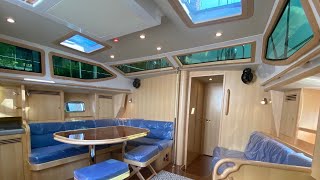
The cockpit is narrow and deep, unlike the wide, shallow cockpits of most center-cockpit boats. Sail’s reviewer could reach the primary winches on the coamings without stooping, and seated crew brace against 16-inch seatbacks when heeled. The saloon is semi-raised, only three steps below the cockpit, and the standard layout has two staterooms, each with its own head and shower. Sail found the starboard saloon settee too short for tall sailors as a sea berth, but the layout includes a skipper’s berth behind the navigation station.