What sailing channels say about the Pegasus 50, quoted from video transcripts with a link to the exact moment. Opinions belong to the speakers; the written review above stays independent of them.
discusses
The co-founder and designer says the Pegasus 50 is intended to sail short-handed on longer ocean passages, with hydraulic steering, two autopilots, and four electric deck winches.
discusses
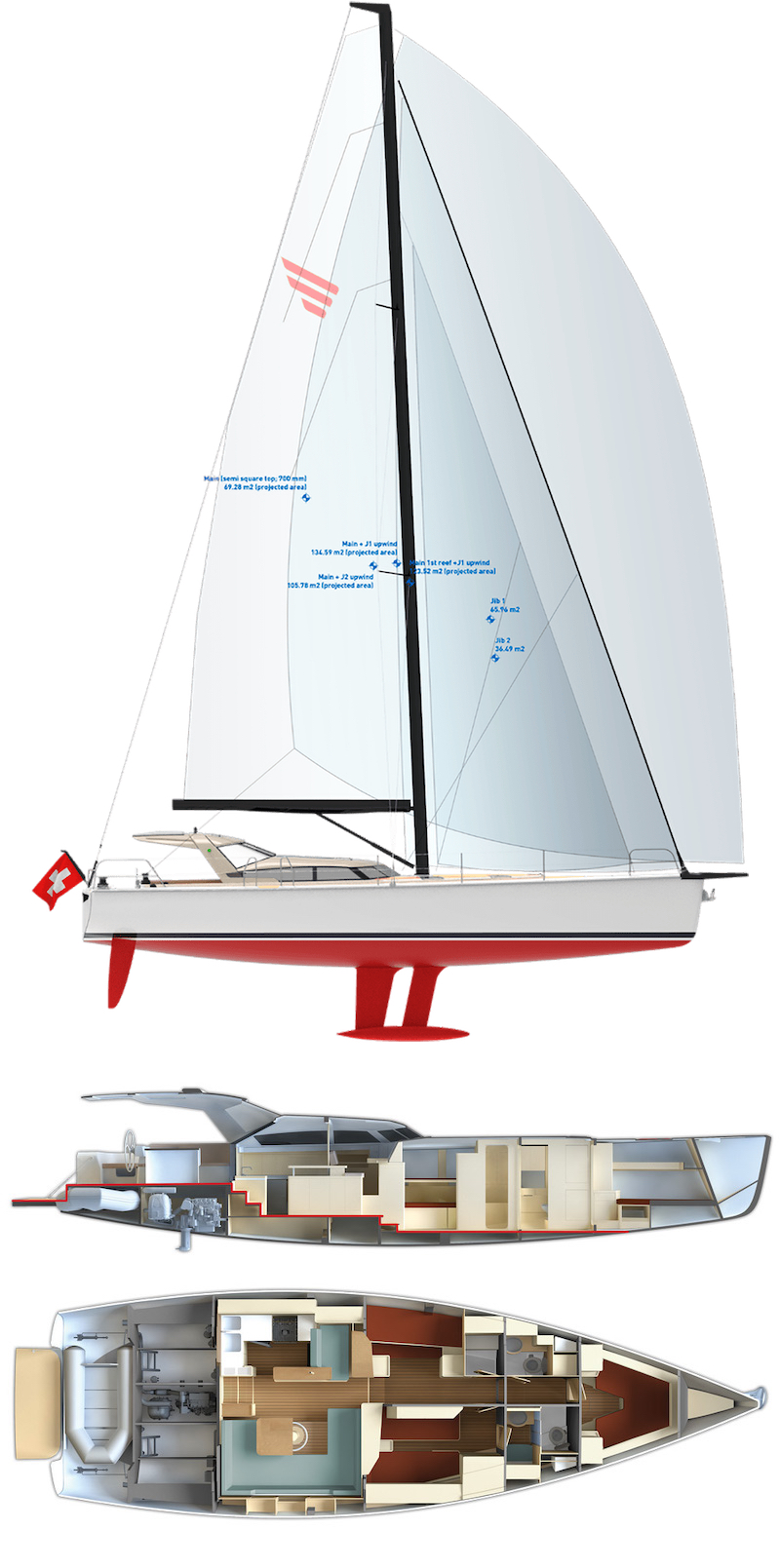
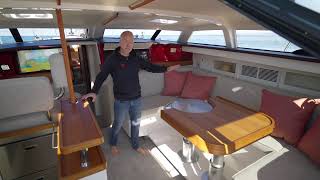
The designer describes a gimbal salon that gimbals 10 degrees port and starboard to compensate for heel, which he says proved very practical on longer passages for preparing food, eating and sleeping.
discusses
The designer says more than half the structure is carbon, for weight and for a sound, strong build. Rig is carbon with an aluminium boom, and he gives a ballast ratio of 40 percent of the total 12.3 tons, in the bulb and keel.
discusses
Engine room access is through a hatch that folds off with the salon table, giving access to the engine and generator from both sides and from the top, which the designer says service people love.
discusses
The anchor locker holds 75 meters of chain with an oversized Lewmar windlass and chain stopper, and a 25 kilo anchor is stored under the carbon bowsprit.
discusses
The builder says the Pegasus 50 has a gimbaled settee and table that swing about 10 degrees to port and starboard, and a navigation seat facing forward with 360 degree visibility. The builder's claim is that staying level reduces muscle tension and fatigue.
discusses
The builder describes cockpit protection as a fixed spray hood of tempered glass with sliding central parts, extending to a fixed T-top with a removable central part. It also has grab handles all around the cockpit, and the halyards, sheets and reefing lines lead aft to electric winches for short-handed sailing.
discusses
The builder shows large technical rooms to port and starboard holding the electronics, water systems and refrigeration compressors, with the engine room between them. Easy access to the engine and generator is a stated design goal.
discusses
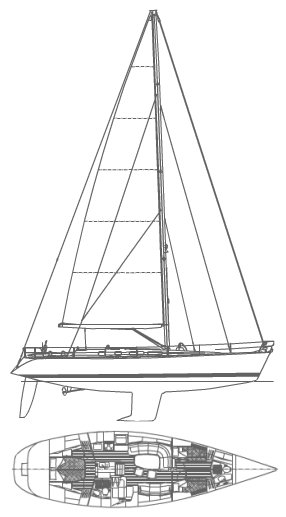
The presenter describes the Pegasus 50 as a production boat with a standard glass hull and carbon fiber deck, bulkheads, coachroof and mast. It is a lightweight 50-footer at 26,000 lb, 40% of it ballast, 16 ft wide at 49 ft, with a 7 ft 7 in wing keel. Pegasus's claim that the boat will touch 12 knots in 20 knots of true wind while surfing waves is passed on as the builder's.
discusses
The presenter says the cockpit and mechanical spaces are the strength: twin helms, twin rudders, large walk-in lazarets for electrics and plumbing, and engine access from under the cockpit table and both sides, "maybe the easiest boat to work on". Power is Volvo 75 or Yanmar 80 with a saildrive and an 11 kW generator.
warns
The presenter says the big compromise is in the cabins. The standard layout has three cabins, two heads and three beds, with a crew-quarters style cabin to port, a true V-berth and a private cabin to starboard, and "not really an owner's stateroom to speak of". The alternate layout puts the owner's stateroom at the foot of the stairs, so you walk through it to reach the other cabins.
discusses
The presenter compares the Pegasus 50 with the Moody by Hanse as the only real competitor for this layout. He says the Moody wins on bedrooms and keel options, and prices are close at a bit over a million. He frames it as performance sailors versus power boaters who want sails.
discusses
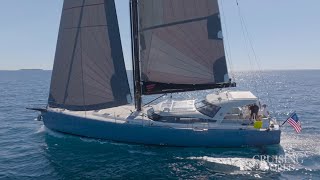
The presenter calls it not a typical 50-foot bluewater cruiser: a relatively lightweight 12 and a half ton composite boat with a large, deep cockpit and a shallow step down into the saloon. He sees 7.8 knots at about 55 degrees to the wind in light breeze, and later says you rarely need more than a finger on the wheel.
discusses
The saloon berth can gimbal about 10 degrees either way at the push of a button. The presenter first expected a gimmick but concludes it has value for heeling or rough water, noting the main downside might be replacing an electric actuator.
discusses
Steering has twin quadrants, each able to carry an autopilot, linked with a tie bar so steering remains if one is lost. The presenter notes deck, coach roof and bimini are carbon.
discusses
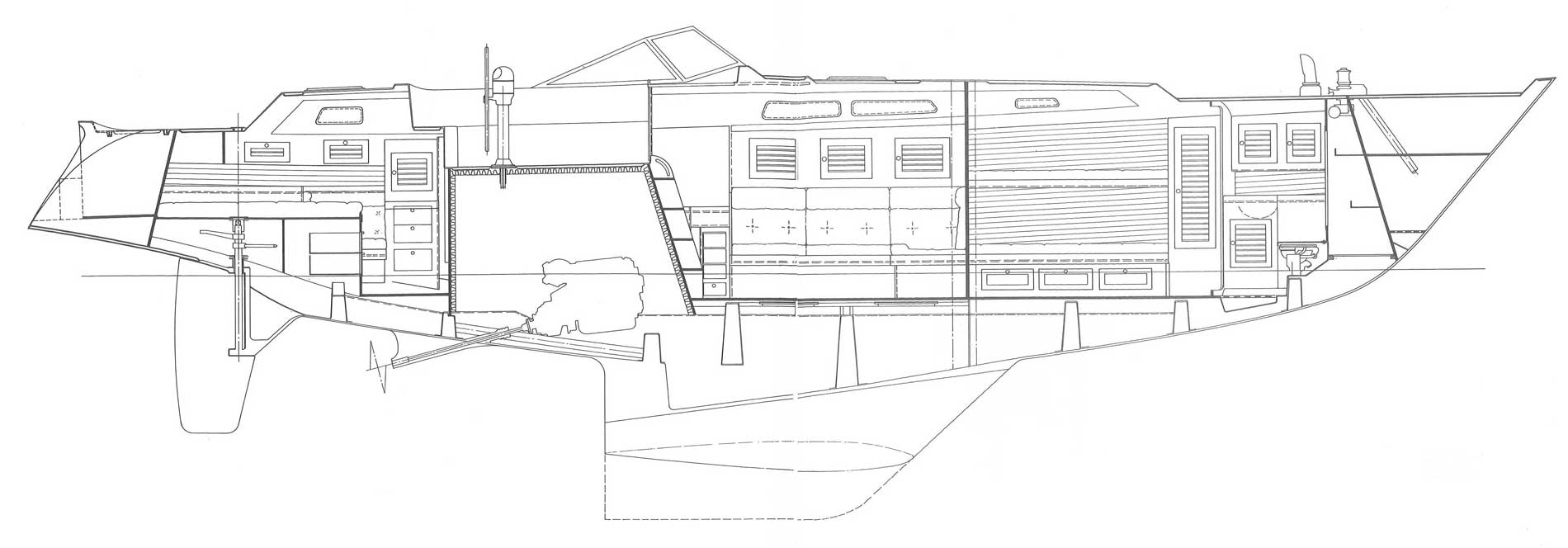
Technical lockers aft are laid out methodically with electrics on one side and plumbing on the other, with fuel filters raised on a bulkhead; engine access is through a panel under the table plus side panels, which the presenter says is meant to make maintenance easy.
warns
The presenter's main drawback is accommodation: the space given to cockpit, saloon and galley means a comparatively small two or three cabin boat, and one interior area forward feels comparatively dark with no hatch.
discusses
Nico, who runs Pegasus Yachts North America, says the tandem keel has two wings with a bulb, which lets the boat point higher with much less leeway and drag, and that over an ocean crossing it can gain a couple of days (the dealer's claim).
discusses
The dealer says the hull and deck use infused epoxy with a lot of carbon, giving about 20 to 30% less weight, so the boat sails well in light wind. He describes twin helms and twin rudders with all lines led aft to the cockpit and a hard top protecting the cockpit.
discusses
Engine and systems access: the dealer shows technical lockers on each side and says the central table lifts for engine maintenance from the top. The engine is a Volvo 75 horsepower, with a full electric option. The swim platform opens as a dinghy garage, and he says the sails, including a 104% J1, a storm jib and an asymmetric, come in the package.
discusses
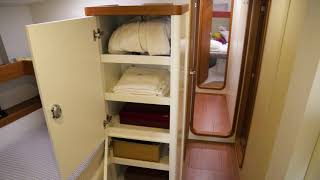
Builder walkthrough: all cabins are in the forward part of the boat. The main corridor has an open berth that serves as a night-watch berth and can convert to a double, with tool and spare-parts storage around it. The front cabin has a big V-berth that can become two separate berths, and the owner's cabin can have a central double or two separate beds.