Overview
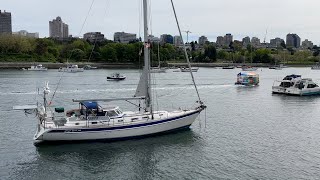
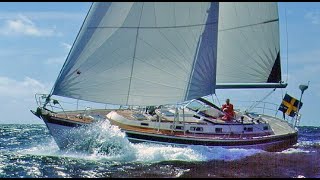
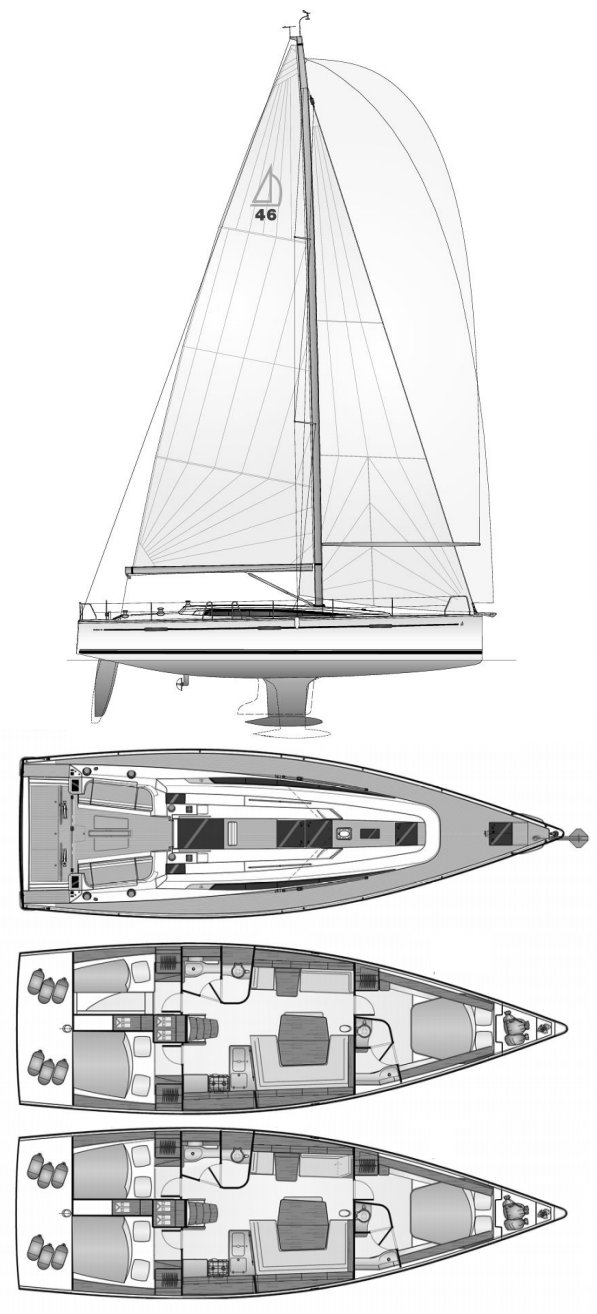
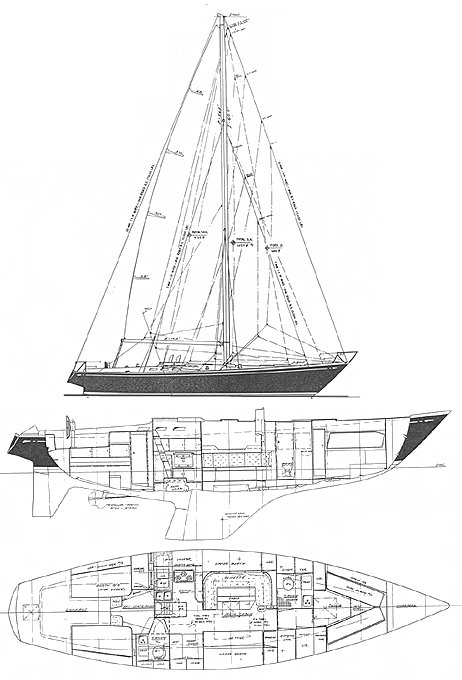
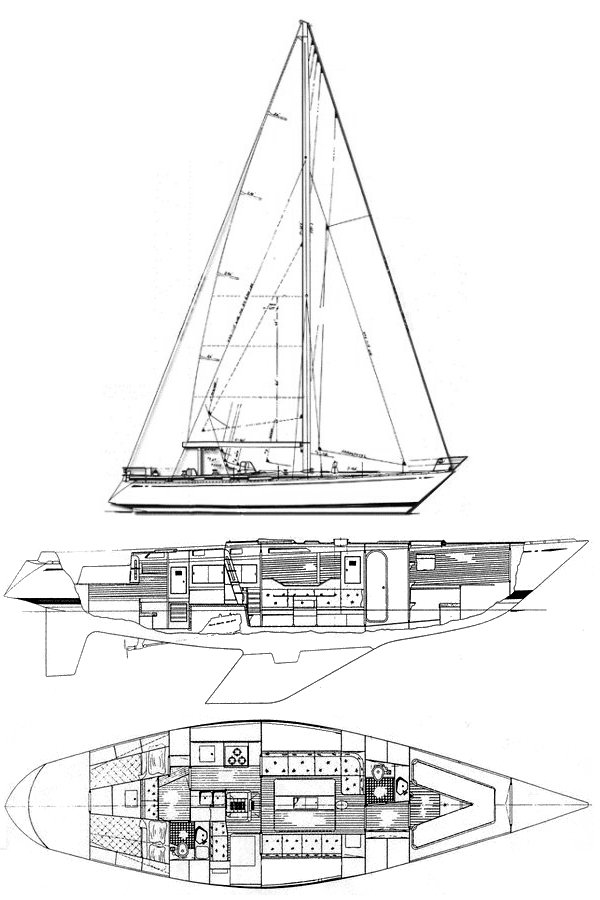
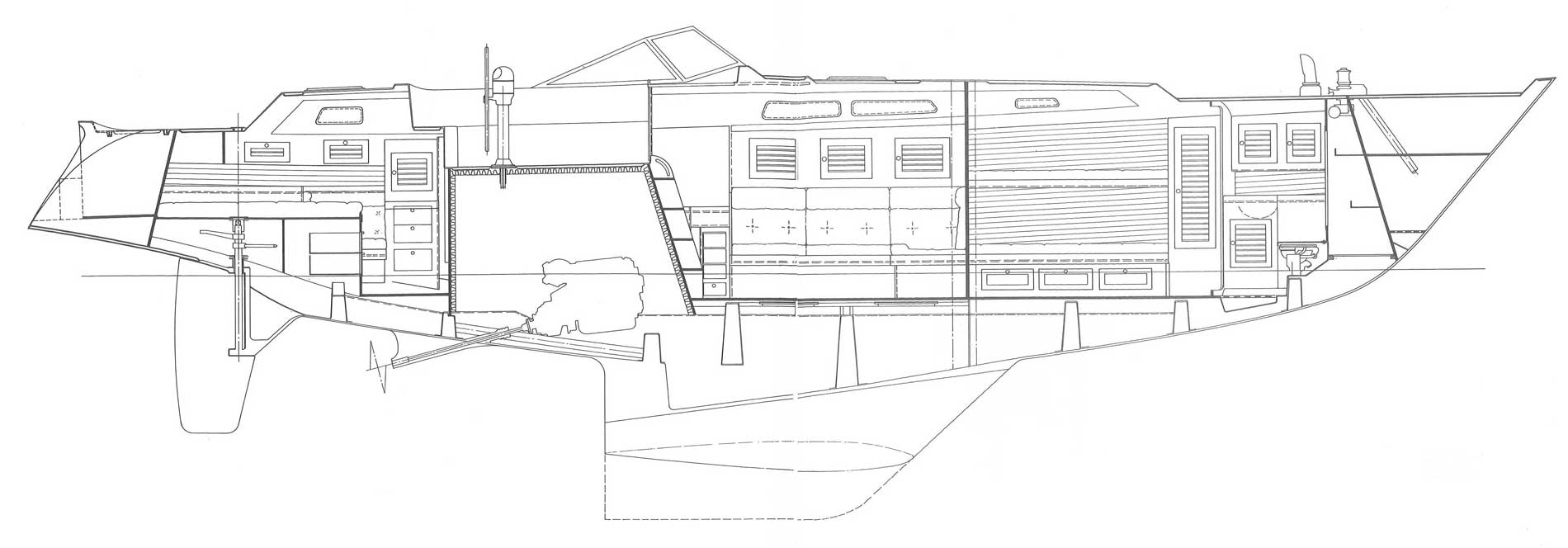
The Hallberg-Rassy 46 is a German Frers center-cockpit cruiser built in Sweden from 1995 to 2005, 132 hulls in all. Despite the name it is 48 ft 6 in on deck, with a fin keel carrying all of its lead low in the fin and a rudder hung behind a partial skeg. It was developed from the Hallberg-Rassy 45 with new hull and deck moulds, 44 cm wider at the transom and 10 cm higher in freeboard there. The standard rig is a masthead sloop, with a cutter stay offered as an option.
The best-known example is Mahina Tiare III, which John Neal ran on sail-training expeditions for 160,000 miles, from Antarctica and Patagonia to Spitsbergen and Alaska.
Design and Construction
The hull is hand-laid with isophthalic resin, stiffened by a full grid under the sole and insulated with PVC foam above the waterline, and each boat was Lloyds-inspected during construction. The rudder turns on ball bearings, with an emergency tiller and rack-and-pinion steering. Tankage is 175 gallons of fuel and 243 of water. Ted Brewer notes the 46 has 12-volt engine starting and a separate 24-volt ship’s power system with a 55-amp alternator. It gains an extra cabin forward of the saloon over the 42, and its forward head has a stall shower. Brewer found the bow locker bigger than the 42’s and the lazarette huge. He also found the hard dodger on the 46 sits close to the pedestal, which made it awkward to get quickly from the deck to the companionway.
Under Sail
Ted Brewer reports that in a 14 knot breeze the 46 points slightly under 45 degrees and makes 6.9 knots. Hallberg-Rassys of this period power well, turn in their own length and steer positively in reverse.
Buyers Notes
Neal’s list of wear items after 160,000 miles is a useful survey checklist for any older 46: opening hatches that leaked and were replaced, a cast aluminum gooseneck worn sloppy, the windlass, and standing rigging, which he replaced at 100,000 miles. A deep-draft keel (2.35 m) was offered alongside the standard 1.88 m keel, so confirm which one a given boat carries. Brewer’s criticisms of the 42 and 46 together were a deck-stepped mast, which he considers weaker than a keel-stepped one on a bluewater cruiser, and stainless steel bolts in the lead keel. He adds that thousands of boats with such masts and keel bolts have made extensive voyages without problems.