Overview
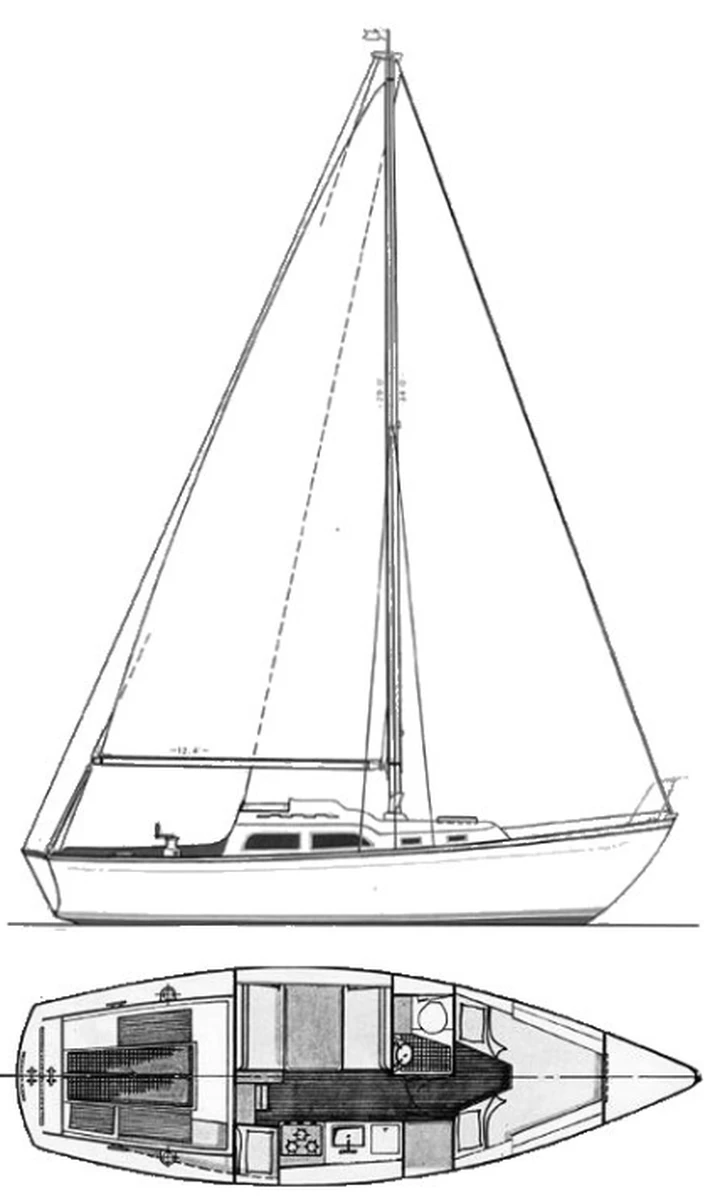
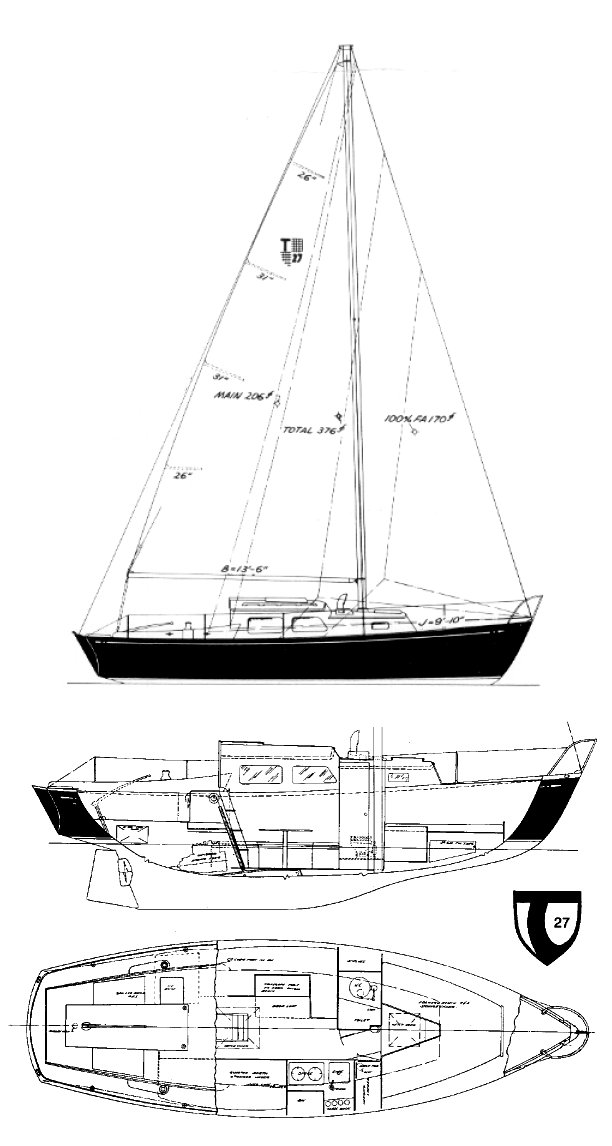
The Tartan 27 is Sparkman & Stephens design #1617, a keel/centerboard masthead sloop built from 1961 to 1980 in one of the longer continuous production runs of the era, 712 hulls across nineteen years. It was the first boat Tartan Marine built and the one that established the yard, a small pocket cruiser with real accommodation and enough centerboard-up shoal draft to gunkhole while still carrying enough ballast down low to sail well offshore.
History
Douglass & McLeod Plastics built the earliest Tartan 27s starting in 1961; W.D. Schock Corp built a further 24 hulls for the West Coast market between 1964 and 1968; and Tartan Marine, the company that grew out of the original partnership, carried production through to 1980. Later boats picked up 350 lb more ballast, a longer cockpit, more bridge deck clearance, and added interior teak, changes production notes describe as running changes rather than a formal model break. The boat’s best-known owner was Robert Manry, who completed a celebrated 1967-68 circuit of the Great Loop, the inland waterway route around the eastern half of North America, aboard his Tartan 27 yawl Curlew.
Construction
Practical Sailor called the basic construction “superb,” with a solid hand-laid fiberglass hull and an outward-turned hull-to-deck flange that keeps the deck drier at the cost of being awkward to repair if it lets go. The known weak points on older boats are balsa-cored deck delamination near the chainplates, wood rot at the mast step from water finding its way in, and a teak rubrail prone to breaking loose. The centerboard pivot pin and its housing wear over time and are worth checking on a survey, along with the tiller head fitting and the rudder post fit in its tube. Most boats carry the Atomic 4 gasoline engine (about 85 percent of the fleet); the balance have Farymann diesels, more expensive to service but generally reliable.
Under Sail
James Baldwin’s list credits the Tartan 27 with a 3’2” shoal draft, board up, and nearly six feet of headroom for a 27-footer, both real advantages for a boat this size. Practical Sailor’s review found the boat balanced and capable of holding a course with the helm unattended in moderate air, though it wants to be sailed “on her feet” for best windward performance and heels quickly before stiffening up around 20 degrees. Her PHRF rating of roughly 235 puts her on par with contemporary full-keel 27-footers like the Cape Dory 27. Baldwin flagged the one real tradeoff of the centerboard-up configuration: reduced ability to recover from a knockdown much past 90 degrees in extreme conditions, though he also noted the long keel that remains even with the board retracted limits how much that matters in practice.
Buyers Notes
Because the centerboard pivot, pennant, and housing all take real wear over decades, a survey should specifically test the board’s operation, not just look at it retracted. Fuel tank leaks are a recurring complaint on gasoline-engine boats, and rudder post play from tube wear shows up often enough to be worth checking by hand. Buyers should also confirm which of the two builders and which production era a given hull came from, since the ballast increase and cockpit changes mean an early boat and a late boat are not quite identical machines. A strong, active owner base, three regional class associations on Lake Erie, the Chesapeake, and Long Island Sound, plus continued parts support from Tartan itself, are real assets for anyone taking one of these on as a project.