Overview
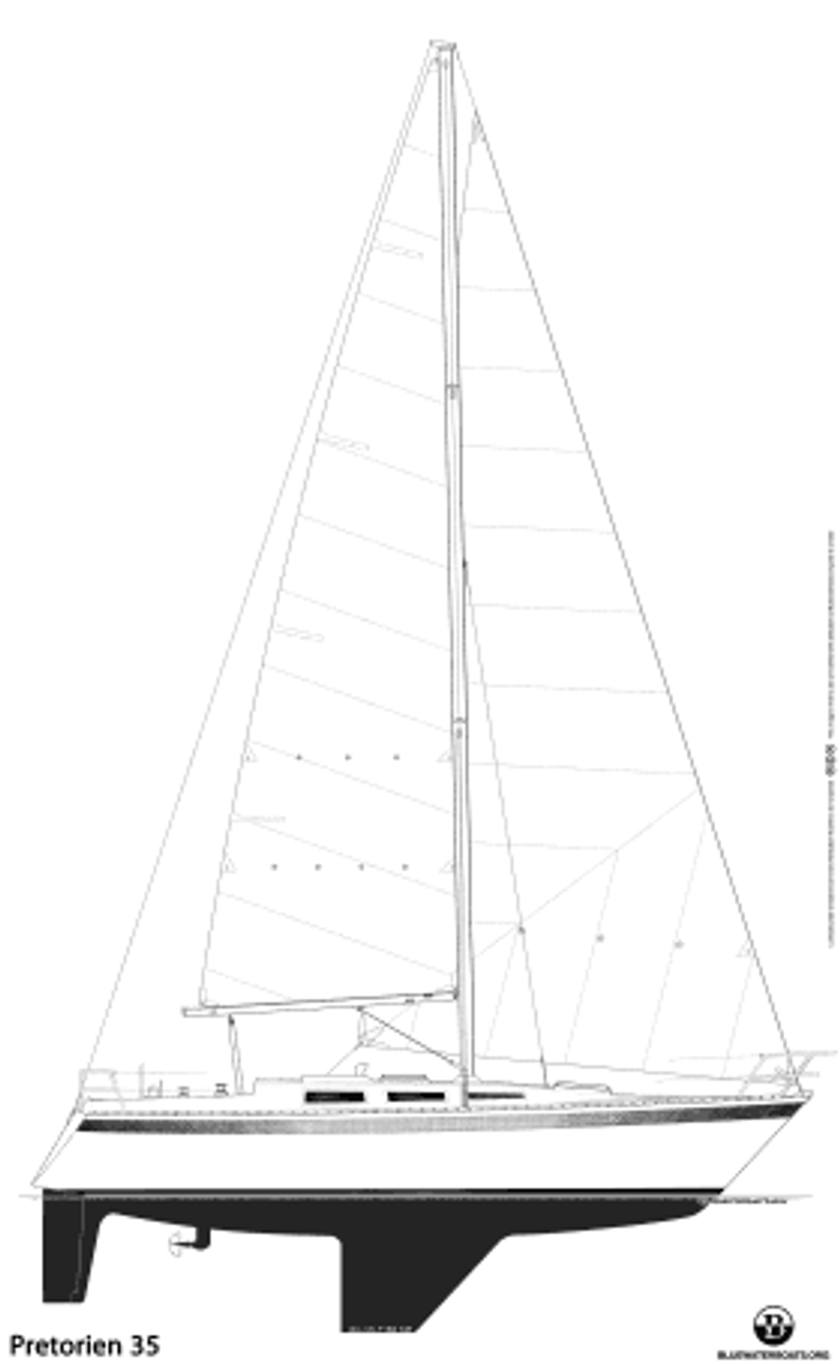
The Pretorien 35 is a Holman and Pye cruiser-racer built by Chantier Henri Wauquiez in France. It entered production in 1979. Wauquiez’s own history names the design and its 10.80-meter length, while Practical Sailor places the run from 1979 through 1986. Other databases extend the final year to 1987 and report about 212 boats. The difference is small, but the available sources do not provide a hull register that settles it.
The boat combines a 30.33-foot waterline with moderate overhangs, an 11.81-foot beam, a six-foot fin keel, and a skeg-hung rudder. Its proportions reflect the cruiser-racer thinking of the period without requiring every IOR-era stereotype to describe how it sails. Practical Sailor gathered notably consistent reports from owners: the boat is slow to gather pace in very light air, becomes lively as wind builds, and remains controllable when pressed.
Construction
Practical Sailor describes a hand-laid solid fiberglass hull stiffened by six longitudinal members and transverse beams. Bulkheads are bonded into that grid. The deck uses balsa core except at intended hardware locations, and the flanged hull-to-deck joint is both glassed and mechanically fastened. The lead fin keel is bolted to a molded stub with stainless fasteners. The rudder sits on a skeg and has an emergency-tiller connection accessible at the stern.
Published ballast values conflict. Practical Sailor gives 6,000 pounds, while specification databases commonly give about 6,614 pounds. With a 13,000-pound displacement, the latter yields the 50.9 percent ratio shown here. A surveyor can identify what is actually installed, but cannot infer original ballast weight by looking at a ratio table.
The hull predates vinylester skin coats. Practical Sailor found only a limited owner report of blistering, yet still recommends a careful bottom inspection. That is a better position than calling all blisters harmless or assuming every boat has them. Moisture findings, laminate condition, and any previous peel or barrier-coat work should be judged on the individual hull.
Under Sail
The masthead sloop uses a large foretriangle and comparatively smaller main. The 616-square-foot working sail figure is based on the main and 100-percent foretriangle. Practical Sailor’s owner group reported that useful performance starts around six to eight knots of wind, depending on inventory, and that the boat tracks well with the rudder mounted far aft. The same review found that owners could carry sail as conditions strengthened, but trim and reefing still depend on the actual sails and crew.
An older account associated Hal and Margaret Roth’s Whisper with this model. PassageBoats does not use it. More specific bibliographic evidence in this catalog identifies Whisper as a Spencer 35. The Pretorien therefore keeps an offshore assessment based on construction and independent review, not a borrowed circumnavigation claim.
Buyers Notes
Optional teak decks deserve a close moisture and fastening inspection. Repeated sanding can leave fasteners near the surface, and a worn deck can turn a cosmetic preference into a major refit. Boats without teak avoid that particular job but still need their cored decks checked around hardware.
Many boats used a saildrive. Practical Sailor records owner concerns about electrolysis, bonding, and the underwater aluminum unit. It also notes that some boats had a conventional shaft with a steep angle. The drive type should be identified before purchase, followed by inspection of corrosion protection, seals, bonding, mounts, and service records. Original engines were commonly 23 or 28 hp Volvos; many examples have since been repowered.
Other practical checks include the headstay support, steering hardware, deck core, keel fasteners, standing rigging, and any wiring chafe at bulkhead penetrations. Practical Sailor found one headstay fitting backed only by washers and found a chafed wiring loom on the inspected boat. Those observations justify targeted inspection, not a claim that every Pretorien has the same defects.
Layout and Interior
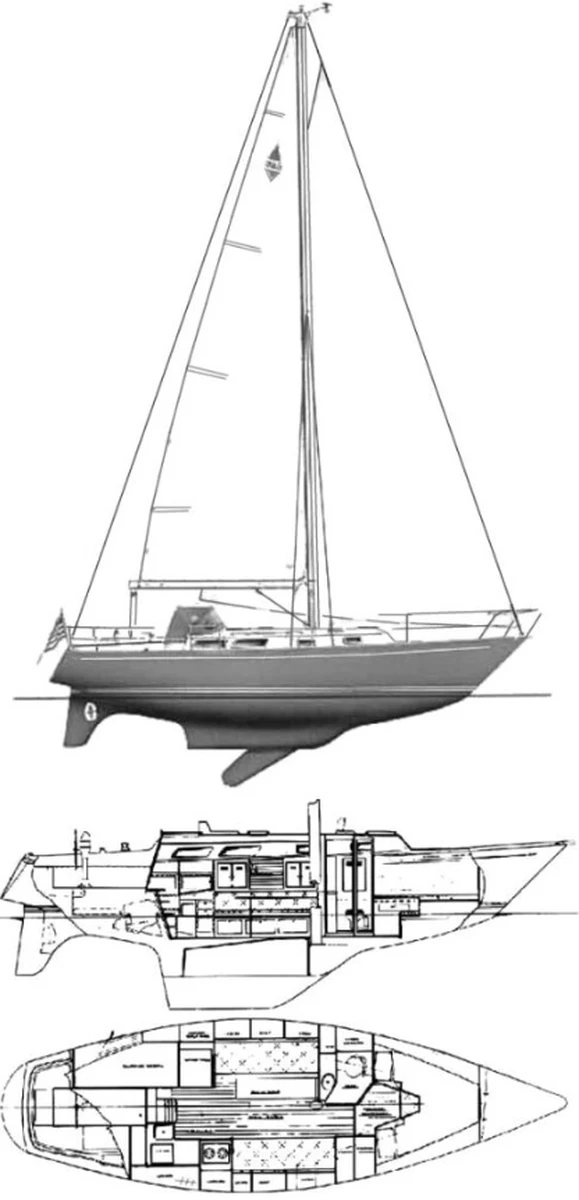
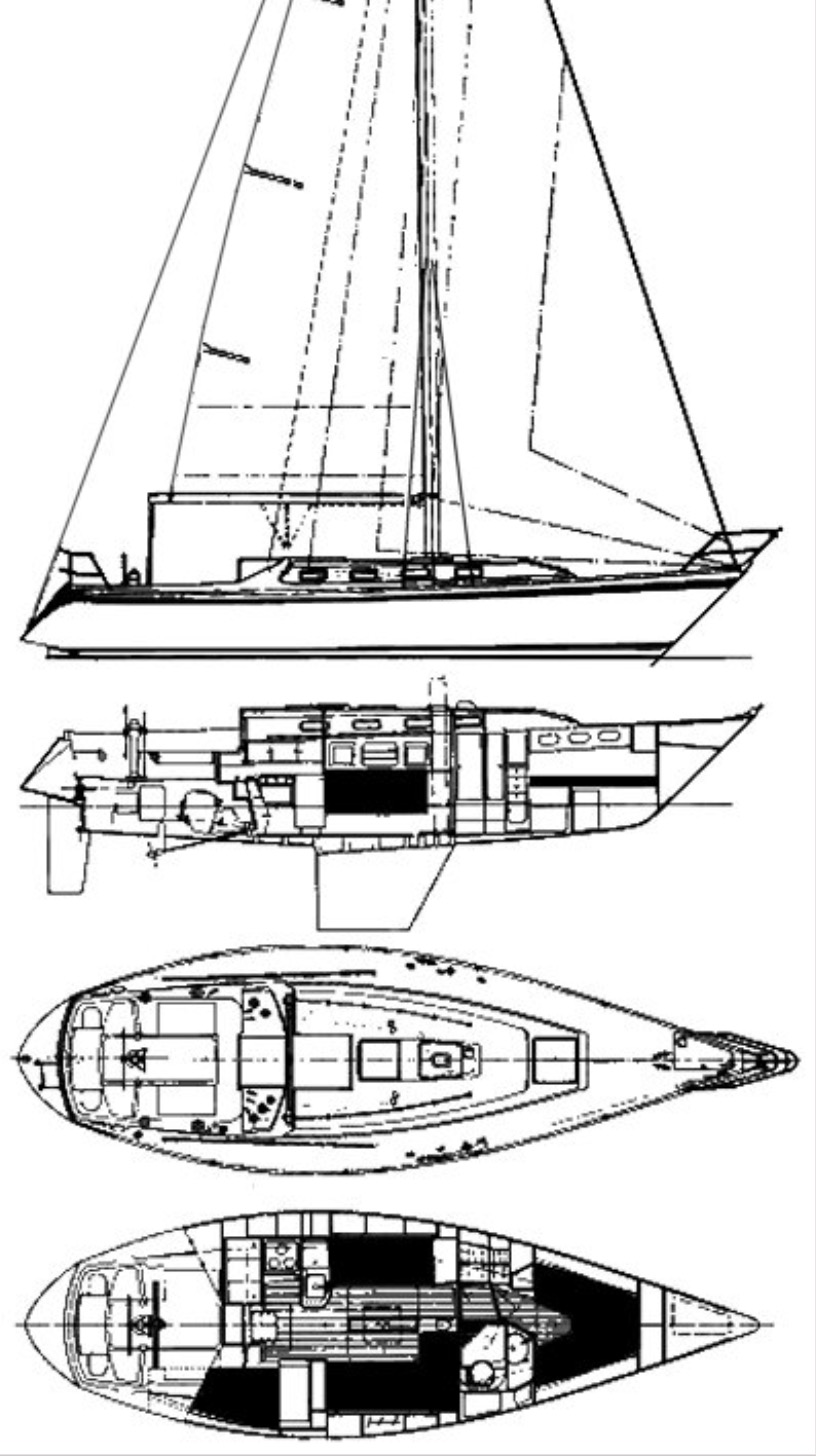
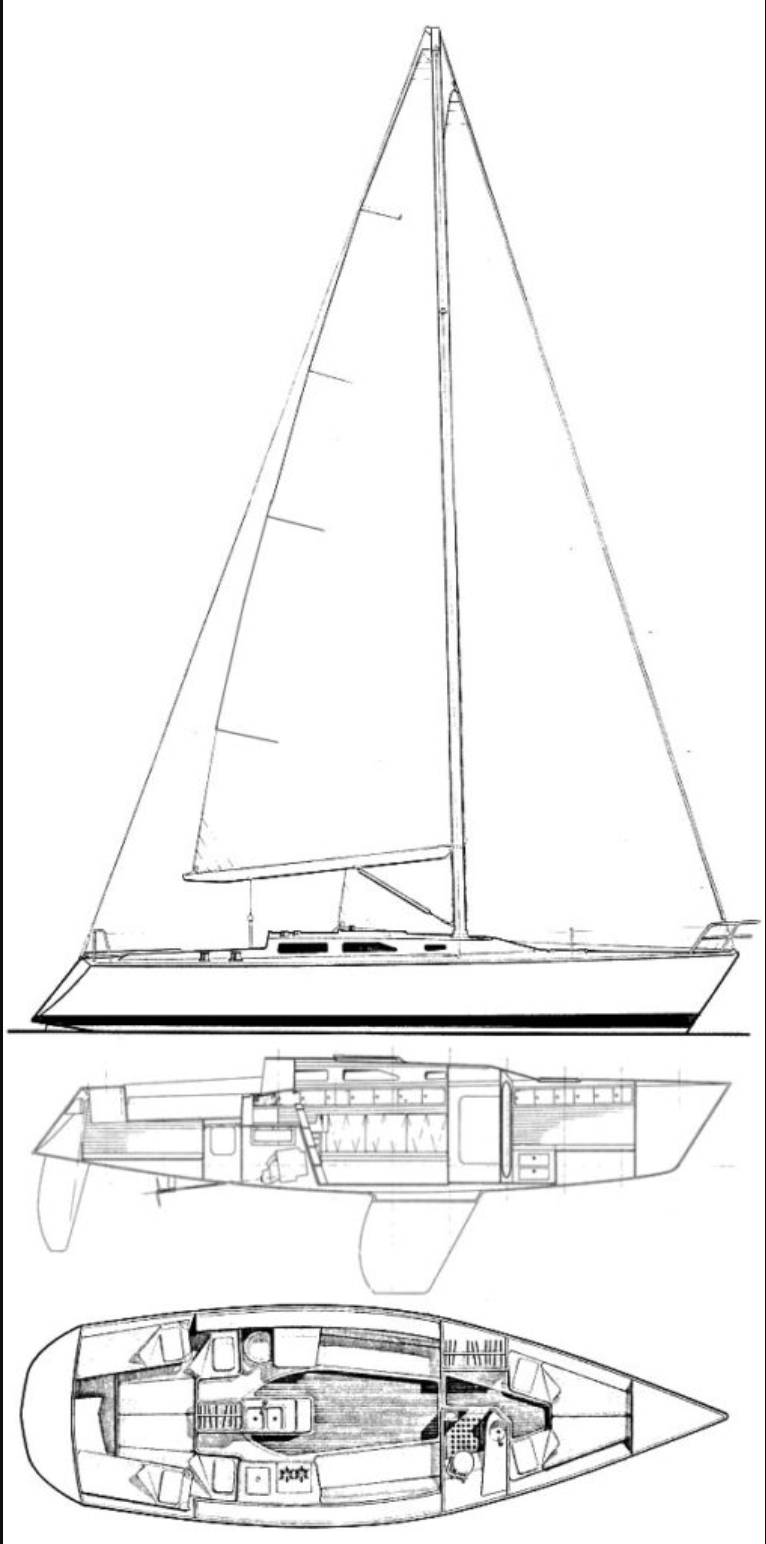
The plan has a forward V-berth, head and locker area, opposing saloon settees, a galley to starboard, and navigation station to port. A compact aft cabin occupies the port side. Practical Sailor measured 6 feet 3 inches of saloon headroom and praised the joinery and systems access, while owners in colder climates wanted more ventilation. The wide saloon has few low handholds, which is worth checking from the perspective of moving below while the boat is working at sea.
Storage and finish are real attractions, but this remains an older systems boat. A good survey should separate durable original structure from tanks, wiring, plumbing, machinery, and deck equipment that may be at or beyond a normal service life.