Overview
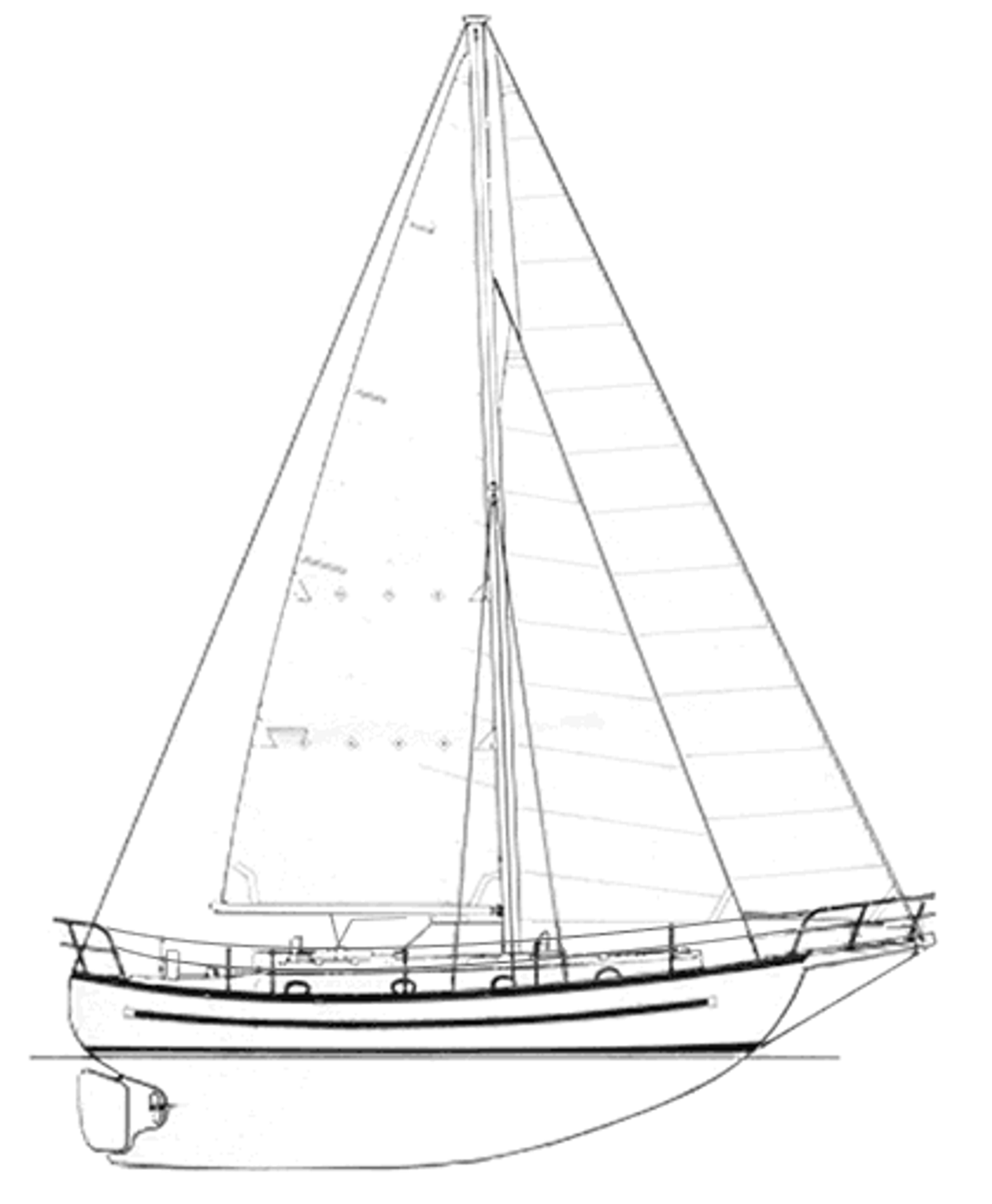
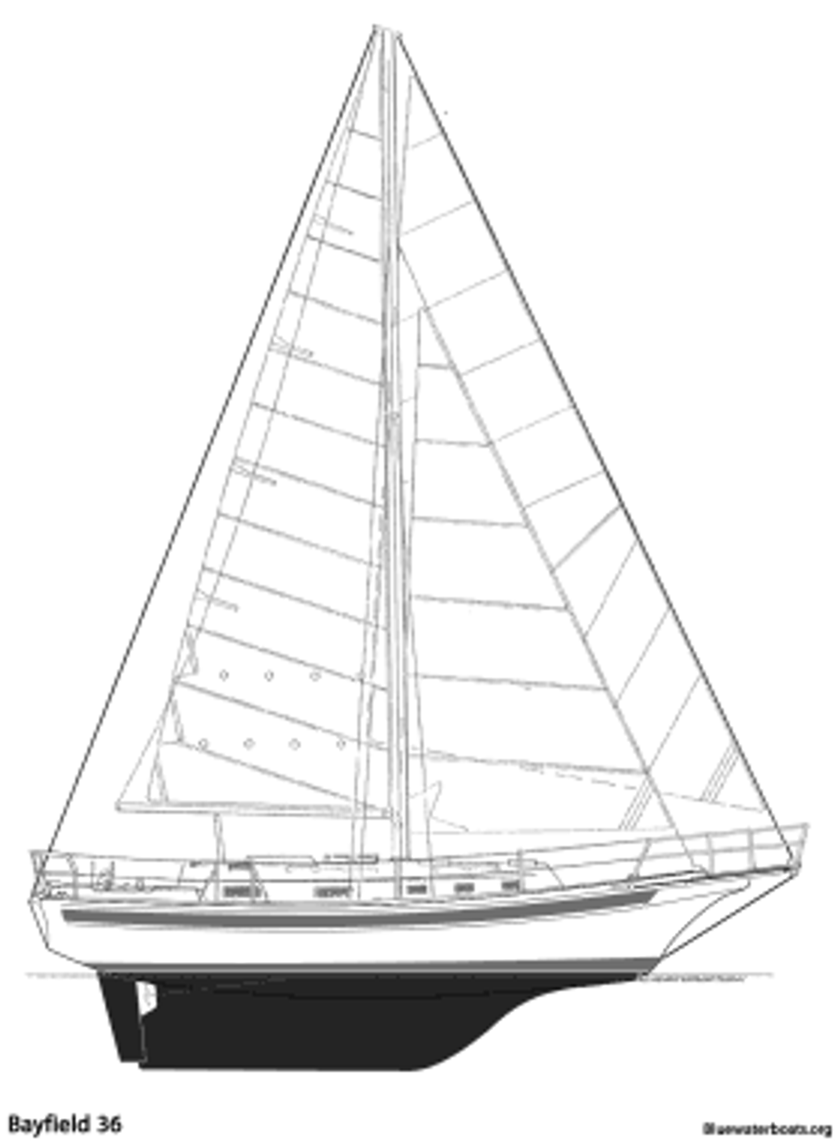
The Bayfield 36 is the final production design from Bayfield Boat Yard of Clinton, Ontario, drawn by Haydn Gozzard - the brother of company founder Ted Gozzard, who designed the larger Bayfield 40. Introduced in 1984 and built for just four years before a factory fire ended production in 1988, the 36 is rare: a conservative, heavily-built full-keel cutter with a clipper bow, bowsprit, raised counter transom, and hand-finished teak trim, produced in small numbers to a quality standard closer to a custom boat than a production yacht. Surveyors and owners consistently describe the accommodations as improbably spacious for a 36-footer - a Canadian Yachting review noted it is a “big” 36, with a layout that packs what would typically be found on a 40-footer.
The LOA of 41 feet 3 inches includes the bowsprit, which carries the yankee jib outboard of the staysail stay, giving the cutter rig its characteristic flexibility. Working sail combinations include staysail plus main for heavy air, the full rig for moderate conditions, and a poled-out yankee when running square. These options make the Bayfield 36 a capable short-handed offshore boat despite its modest performance numbers.
Construction
The hull is solid hand-laid fiberglass with moulded internal reinforcement to create the interior substructure. The deck is balsa-cored. Chainplates are tied into bulkheads or special structural stubs bonded to the hull - a detail that matters for long-term integrity. The mast is keel-stepped. Internal ballast is 6,500 lbs of encapsulated lead, yielding a 35.1% ballast ratio that is adequate for offshore work and consistent with other full-keel designs of the era. The engine is a Yanmar 4JHE 44 hp diesel, accessed beneath the companionway and through the starboard cockpit bench.
The cited Canadian Yachting review describes stainless steel fuel and water tanks in a large sump above the ballast. It does not establish a tank capacity or a corrosion pattern, so this review makes no fuel-tank reliability claim.
Under Sail
Performance is deliberate. The full keel and bowsprit geometry make tacking through close angles slower than a fin-keel boat, but the 36 rewards patient, angle-conscious sailing with good boat speed on a reach. The heavy displacement absorbs chop and delivers a comfortable, predictable motion offshore. The 1987 review in Canadian Yachting noted it “will surprise a few sailors with its legs” when the breeze fills in from the beam - and this is the correct mental model for the boat: a comfortable passagemaker that performs best once off the wind.
Buyers Notes
The cited review does not establish a recurring fuel-tank defect, so an inspection should cover the tank system as part of a normal survey rather than assume replacement is necessary. The original stove was fitted for butane gas, which is difficult to source in North America; most owners have converted to propane. Nominal specification draft is 4 ft 11 in, but actual waterline drafts of 5 ft 6 in to 5 ft 9 in are common due to overbuilding and typical cruising weight. Exterior stowage is minimal - no lazarettes or anchor locker beyond the bow roller. The teak deck and trim, while beautiful, requires committed maintenance or a willingness to glass over the deck and refinish bare brightwork on a schedule. With only four years of production and a small total build number, finding parts requires working within the owner community.
Sources and Further Reading
» Bayfield 36 Review, Richard Jordan, Waves Magazine
» Contemporary Classic, Sven Donaldson, Canadian Yachting