offshore

Panda 40

Ta Shing · 1983 · Cutter rig

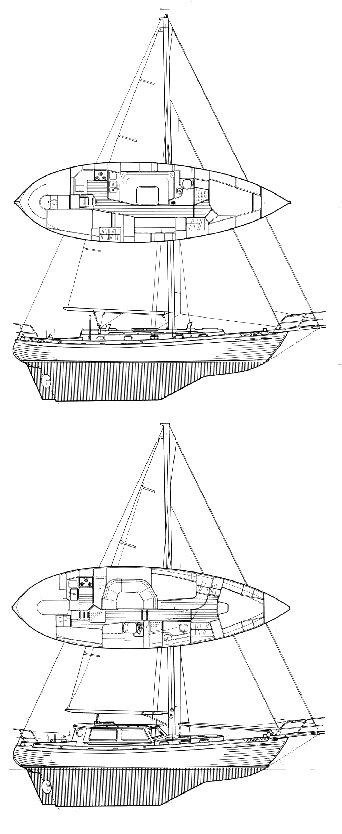
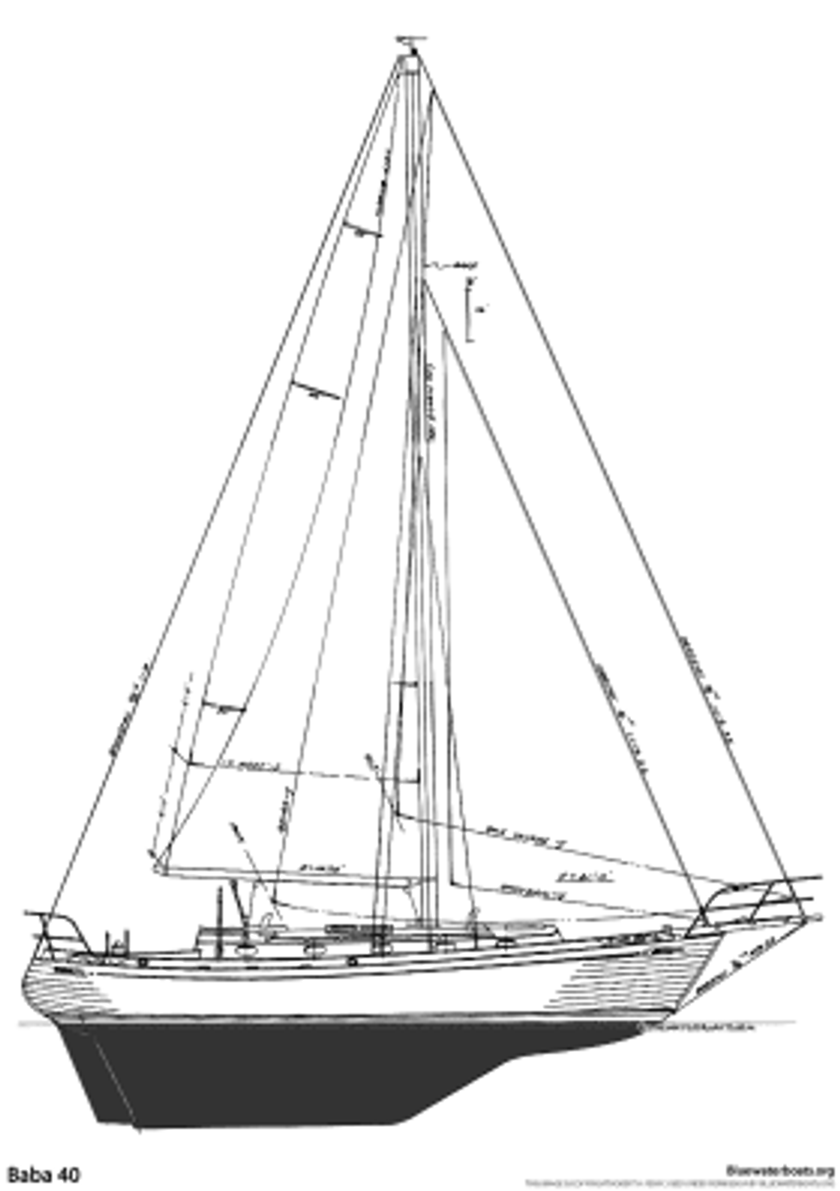
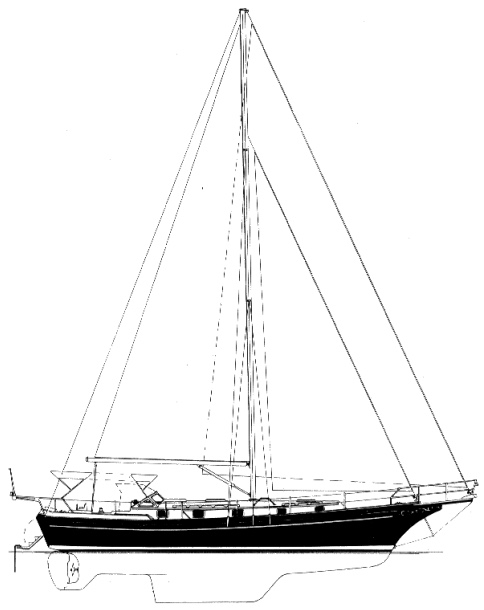
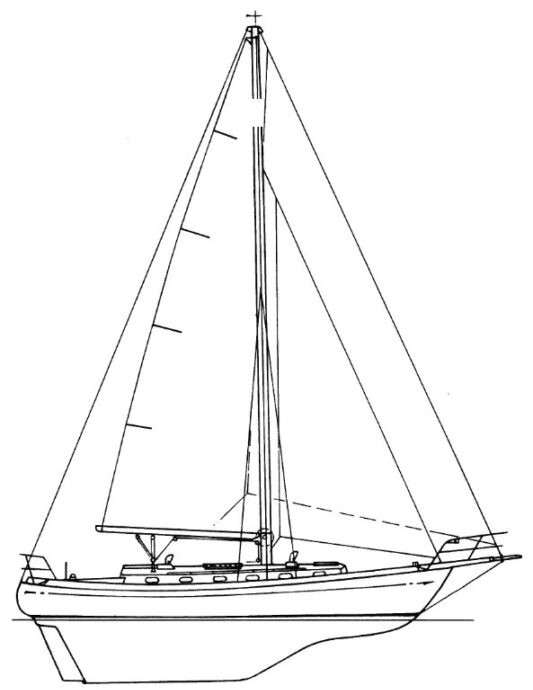
Panda 40 profile drawing
LOA39.89'
Beam12.83'
Draft6'
Displ.14.5t
Rigcutter
HullFiberglass

Bluewater Evidence · Ocean Proven

88% confidence

Mandolin finished the Pacific Puddle Jump in 2009. Stochastic finished the Baja Ha-Ha in 2014. Taka Ko finished the Baja Ha-Ha in 1999. One boat has finished an ocean-crossing event with this model in the official results, and 2 more have finished offshore races or rallies.

Overview

The Panda 40 is a long-keel cruising cutter designed by Robert H. Perry and built by Ta Shing, first built in 1983.

Design and Construction

She is 39.89 ft overall on a 34.5 ft waterline with 12.83 ft of beam and a draft of 6 ft. Displacement is 29,000 lb with 12,000 lb of ballast. The cutter carries 859 sq ft of sail. The keel is a full keel. The hull is fiberglass.

Buyers Notes

In the race and rally results transcribed for this site, one Panda 40, Mandolin (Pacific Puddle Jump 2009), has finished an ocean-crossing event, and 2 others have finished offshore races or rallies, among them Stochastic (Baja Ha-Ha 2014) and Taka Ko (Baja Ha-Ha 1999). She draws 6.0 ft.
Passage records

Mandolin2009

Pacific Puddle Jump (2009)

Finished in the official results.

Source: Pacific Puddle Jump 2009 results

Stochastic2014

Baja Ha-Ha (2014)

Finished in the official results.

Source: Baja Ha-Ha 2014 results

Taka Ko1999

Baja Ha-Ha (1999)

Finished in the official results.

Source: Baja Ha-Ha 1999 results

Documented repairs and system-specific fixes reported for the Panda 40, drawn from known-issue write-ups and video transcripts.

Repairs Documented on Video

⚙ mast⚙ deck seal

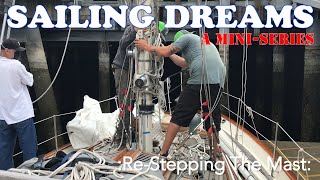
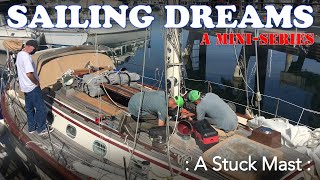
The purple blue material around the mast is a polymer called Spartite. It seals the mast to the deck to keep water out, but once it has set it makes the mast hard to pull. During the pull the crane was trying to lift the whole boat by the mast, so they had to slack off and solve that.

Sailing Triteia

Freeing A Stuck Mast on a 1981 Panda 40 at Seaview Boatyard in Seattle, Washington

▶ watch at 5:33
⚙ mast step

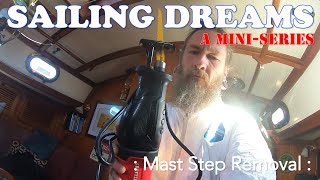
The mast shoe was held down by lag bolts about three inches long, and it lifted off easily. There was no coin under the mast, which they joke is why the mast step crushed.

Sailing Triteia

Cutting Out the Failed Mast Step of a Panda 40 in Seattle, Washington

▶ watch at 1:12
⚙ mast step

The new mast step is cut from marine plywood and encapsulated in epoxy. The lower step is two and a quarter inches thick of wood with a quarter inch of fiberglass on the top, bottom and sides, plus side reinforcements.

Sailing Triteia

Cutting Out the Failed Mast Step of a Panda 40 in Seattle, Washington

▶ watch at 9:07
⚙ mast⚙ deck seal

While restepping the mast the Spartite was giving them grief. They lubricated it with dish soap and water put on at the top.

Sailing Triteia

Stepping the mast on A 1981 Panda 40 at Seaview West Boatyard in Seattle

▶ watch at 9:15
⚙ rig⚙ mast step

They tuned the rig close to where it was, a little extra because the mast step had been raised after it was crushed. The plan was to sail the boat and then tune as they go.

Sailing Triteia

Stepping the mast on A 1981 Panda 40 at Seaview West Boatyard in Seattle

▶ watch at 16:11
⚙ mast step

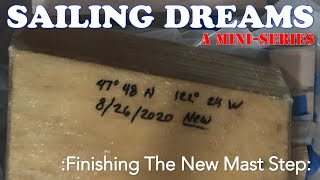
The new mast step has three layers of 24 ounce woven roving plus a top layer of three quarter ounce mat. The bottom has two layers of glass mat. He says it is beefier than the one they took out.

Sailing Triteia

Finishing the New Mast Step on SV Decatur, A 1981 Panda 40

▶ watch at 7:07
⚙ mast step

He believes the water came in at the lag bolts. They drilled oversized holes where the mast foot bolts on and filled them with thickened epoxy, so the lag bolts go into epoxy rather than wood and any water that gets in has nowhere to rot the step.

Sailing Triteia

Finishing the New Mast Step on SV Decatur, A 1981 Panda 40

▶ watch at 7:57

What sailing channels say about the Panda 40, quoted from video transcripts with a link to the exact moment. Opinions belong to the speakers; the written review above stays independent of them.

repairs⚙ mast⚙ deck seal

The purple blue material around the mast is a polymer called Spartite. It seals the mast to the deck to keep water out, but once it has set it makes the mast hard to pull. During the pull the crane was trying to lift the whole boat by the mast, so they had to slack off and solve that.

Sailing Triteia

Freeing A Stuck Mast on a 1981 Panda 40 at Seaview Boatyard in Seattle, Washington

▶ watch at 5:33
repairs⚙ mast step

The mast shoe was held down by lag bolts about three inches long, and it lifted off easily. There was no coin under the mast, which they joke is why the mast step crushed.

Sailing Triteia

Cutting Out the Failed Mast Step of a Panda 40 in Seattle, Washington

▶ watch at 1:12
warns⚙ mast step

The worker believes the water intrusion happened at the lag bolts, slowly making its way along them into the wood of the step.

Sailing Triteia

Cutting Out the Failed Mast Step of a Panda 40 in Seattle, Washington

▶ watch at 5:50
warns⚙ mast step

All the deflection was in the three inches of wood under the mast, which turned to mud. The wood broke down and pushed out to the sides, and that is why the step sank.

Sailing Triteia

Cutting Out the Failed Mast Step of a Panda 40 in Seattle, Washington

▶ watch at 7:04
repairs⚙ mast step

The new mast step is cut from marine plywood and encapsulated in epoxy. The lower step is two and a quarter inches thick of wood with a quarter inch of fiberglass on the top, bottom and sides, plus side reinforcements.

Sailing Triteia

Cutting Out the Failed Mast Step of a Panda 40 in Seattle, Washington

▶ watch at 9:07
discusses

Exploratory holes drilled in the step showed no moisture, and everything pulled out of it was dry. The center beam did not deform and shows no sign of water penetration.

Sailing Triteia

Cutting Out the Failed Mast Step of a Panda 40 in Seattle, Washington

▶ watch at 9:32
repairs⚙ mast⚙ deck seal

While restepping the mast the Spartite was giving them grief. They lubricated it with dish soap and water put on at the top.

Sailing Triteia

Stepping the mast on A 1981 Panda 40 at Seaview West Boatyard in Seattle

▶ watch at 9:15
repairs⚙ rig⚙ mast step

They tuned the rig close to where it was, a little extra because the mast step had been raised after it was crushed. The plan was to sail the boat and then tune as they go.

Sailing Triteia

Stepping the mast on A 1981 Panda 40 at Seaview West Boatyard in Seattle

▶ watch at 16:11
discusses

Even though the mast step is under the cabin sole, there was quite a bit of access on this boat. The new step could be fitted from enough angles without ripping out any furniture or the floor.

Sailing Triteia

Finishing the New Mast Step on SV Decatur, A 1981 Panda 40

▶ watch at 5:32
repairs⚙ mast step

The new mast step has three layers of 24 ounce woven roving plus a top layer of three quarter ounce mat. The bottom has two layers of glass mat. He says it is beefier than the one they took out.

Sailing Triteia

Finishing the New Mast Step on SV Decatur, A 1981 Panda 40

▶ watch at 7:07
repairs⚙ mast step

He believes the water came in at the lag bolts. They drilled oversized holes where the mast foot bolts on and filled them with thickened epoxy, so the lag bolts go into epoxy rather than wood and any water that gets in has nowhere to rot the step.

Sailing Triteia

Finishing the New Mast Step on SV Decatur, A 1981 Panda 40

▶ watch at 7:57
warns⚙ mast step⚙ deck seal

The sealant failed and let water into the step. He says the boat is from 1981, and after 40 years the sealant and the boat flexing finally broke it down.

Sailing Triteia

Finishing the New Mast Step on SV Decatur, A 1981 Panda 40

▶ watch at 8:44
  1. [1]SpecificationsPANDA 40 - sailboatdata- Dimensions, displacement, hull type, rig, construction, engine, tankage, designer and builder.
See something wrong? Suggest a correction

Corrections need evidence: a link or citation we can check. Sourced suggestions get reviewed and credited in the entry's change notes if applied.

Owner knowledge counts: name the boat and year so we can attribute it.