full-keelencapsulated-keel

Baba 40

Ta Shing · 1980–1996 · Cutter rig

Baba 40
Baba 40
LOA39.92'
Beam12.83'
Draft5.5'
Displ.14.5t
Rigcutter
Hullfiberglass

Bluewater Evidence · Ocean Proven

78% confidence

Jeff Hartjoy sailed a Baba 40 singlehanded from Peru to Buenos Aires via Cape Horn in 2009, reporting heavy weather and gear breakages but a sound hull throughout. Michael and Elizabeth Kramer's S.V. Cambria logged 396 miles in 46 hours broad reaching in 35 knots down the Sea of Cortez.

Overview

The Baba 40, also known as the Panda 40 and later the Tashiba 40, is the third of the Baba lineup of boats involving developer Bob Berg, designer Bob Perry, and the Ta Shing boatyard. One can arguably consider the Baba 40 a full keel reincarnation of the Valiant 40, the boat that put the word “performance” next to “cruiser”. Knowing that I guess it’s not so surprising to find the Baba 40 inherits a good turn of speed - owners even trumpet around-the-buoys racing victories in these serious blue water cruisers. They are beautifully balanced with a wonderful feel at the helm, and what’s more, they have some of the best interiors to be seen in production cruising yachts.

History

The story of the Baba 40 really starts with the Baba 30 which brought together a winning combination of talents - developer Bob Berg, designer Bob Perry, and what was then a little known Taiwanese boatyard called Shing Sheng. Through the success of the little Baba 30 and the Baba 35, Shing Sheng started on the road to become a force in the boatbuilding world. By 1979 they had changed their name to Ta Shing and had moved to a new purpose built factory. It was in this year that Berg commissioned Perry to design a new 40-foot model to fill out the line.

Perry was not happy with merely evolving his earlier Baba 35 design, which in itself was a stretched version of the 30. Instead, in search of more boat speed, Perry dusted off the lines of his famous Valiant 40 with its radical fin keel and separate skeg-hung rudder had defined the “performance cruiser” category only five years earlier. From the Valiant 40 hull form he derived an all-new full keel design which was to be the Baba 40. It proved to be a huge step forward over earlier Babas with Perry describing the Baba 40 having an entirely different stability personality. It was stiffer initially, beautifully balanced and much faster.

Tim Ellis who oversaw construction fondly remembers the symbiotic partnering of Berg’s development and management, Perry’s design, and Ta Shing’s undisputed capabilities as builder. He recalls the exacting attention fostered by Berg.

The Baba 40 was introduced to the public in 1980. In 1983, when Berg left his association with the Flying Dutchman dealership who owned the Baba trademark, he marketed the boat as the Panda 40. This name did not last long and by 1984, with Ta Shing now a contender in Taiwanese boat-building, marketed the boat by themselves using the name Tashiba 40. It’s been speculated this was a play on the words names “Ta Shing” and “Baba”.

Production ended in 1996 with a total of 115 boats being built, although hull numbers can be found that run up to #182, there is a gap between #33 and #101.

Ta Shing eventually formed an exclusive relationship with the Californian based company PAEI who had Al Mason as their in-house designer. Sadly, years later when PAEI shifted focus to power boats, many of Ta Shing’s molds including the Baba 40 were cut up.

Construction

The Baba 40 hull is solidly built in hand-laid GRP, with hull thickness growing from 0.41“ thick at the topsides to 0.57“ at the waterline, and 0.90“ at the keel. The deck is cored with end-grained balsa, as well as high density closed-cell foam in the deck and cabin trunk. The ballast is cast iron and is encapsulated in GRP, though one boat at least was built with lead ballast.

Under Sail

The boat has a wonderful feel at the helm and is a fun to sail, especially as the breeze picks up. Some owners have even raced their Baba 40s against modern fin keel competitors successfully. As a testament to the boat’s speed, Michael and Elizabeth Kramer in S.V. Cambria covered 396 miles in a 46 hour passage down the Sea of Cortez broad reaching in 35 knots of wind; an impressive average of 8.6 knots.

Owners often describe their Baba’s to have a feel of solidity. In heavy weather conditions the Baba 40 has the capacity to keep sailing when many other boats are heaving-to. Of note is Jeff Hartjoy’s solo passage from Peru to Buenos Aires via Cape Horn in 2009 where he experienced an immense amount of bad weather. On that passage he reported a lot of breakages but commented about the soundness of his boat.

Buyers Notes

As with many boats older than 25 years, have your surveyor check items such as chainplates and areas of balsa coring for rot. The original mild steel fuel tanks have proven to be susceptible to corrosion and on most boats, these have been replaced.

Overall, the Baba 40 has aged well, a testament to its build quality. Individual examples still need close inspection for age, maintenance, and refit quality.

» Yacht Design According to Perry: My Boats and What Shaped Them, by Robert H. Perry (p89-p95)» Baba, Panda, Tashiba sailboat Yahoo Group, information and owner discussions

Configuration

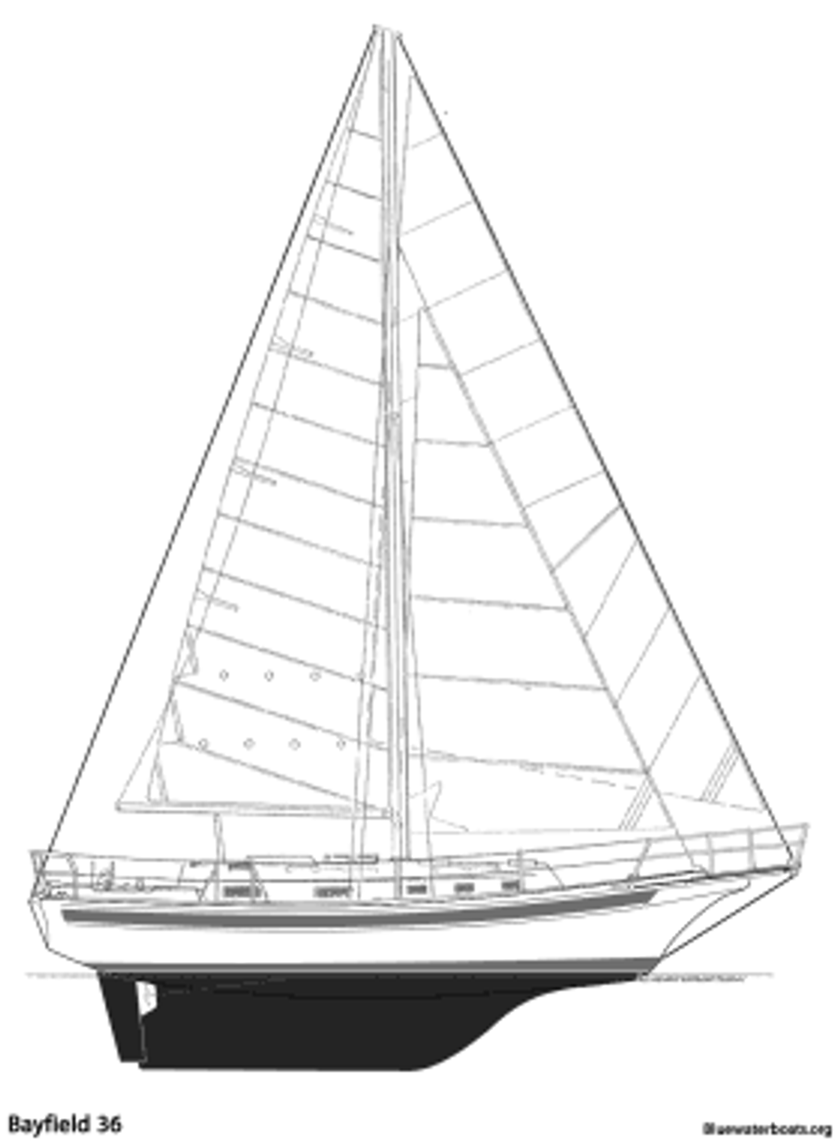
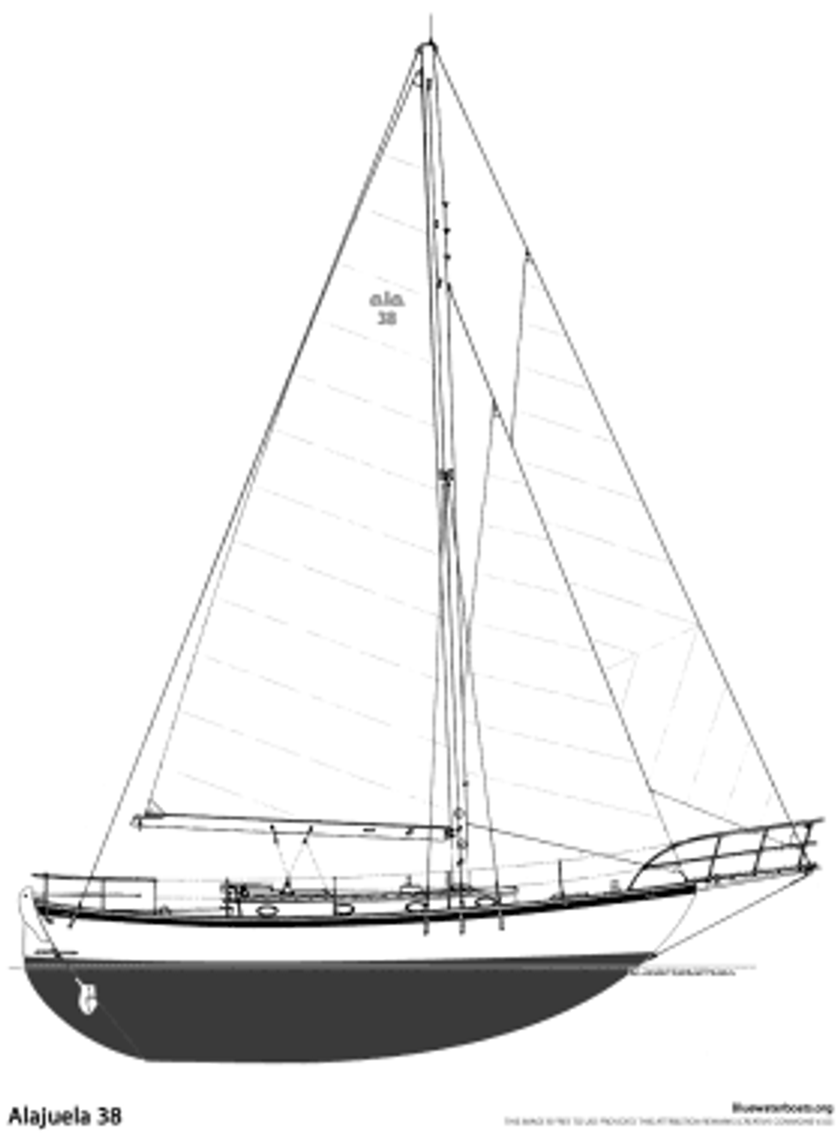
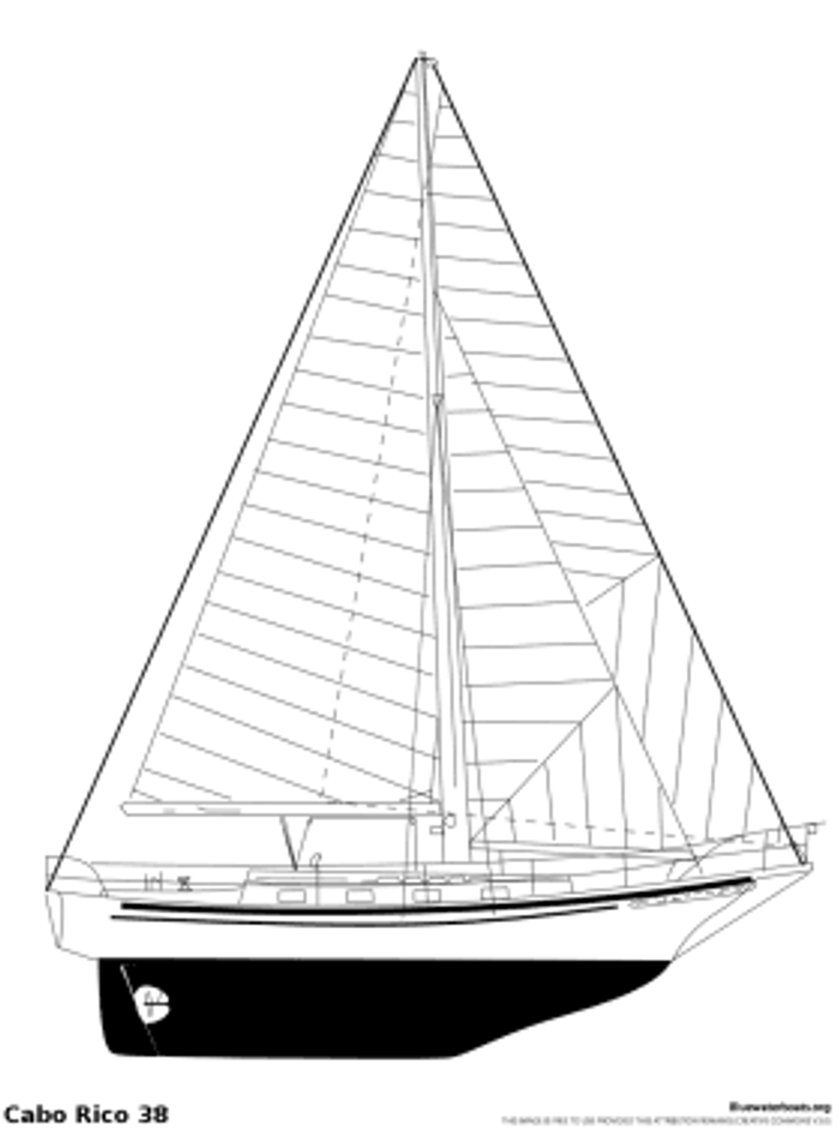
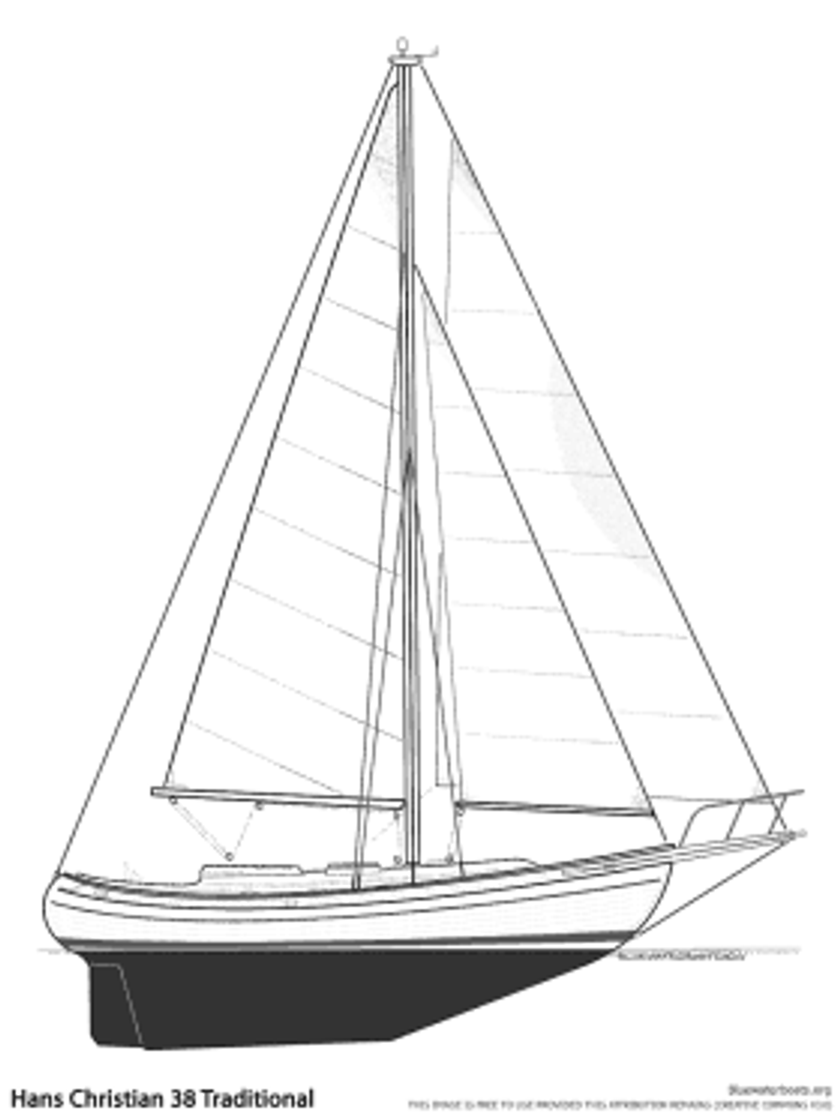
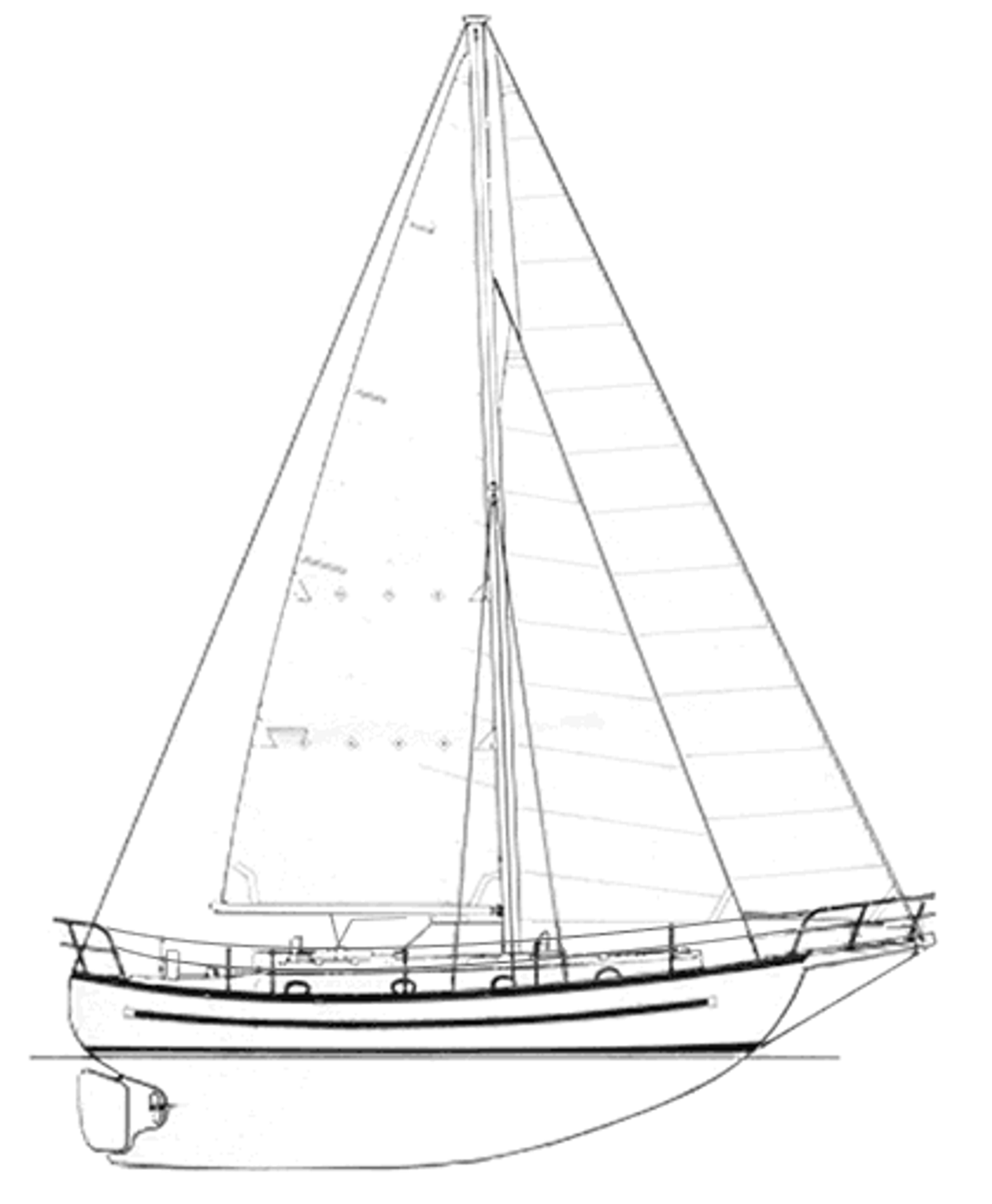
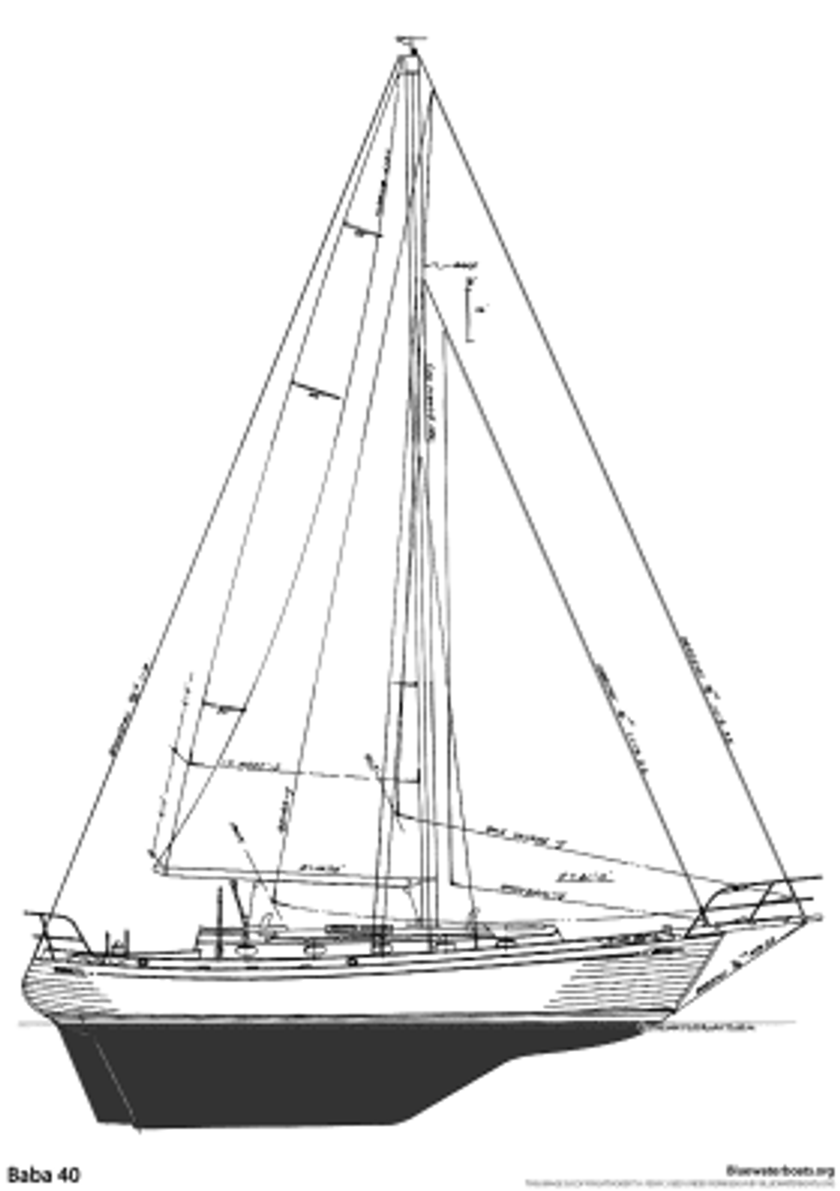
The lines of the Baba 40 follows its ancestry back to traditional Scandinavian double-enders. Under the waterline is a full keel with a cutaway forefoot and as with many of the Perry full keel designs, the keel meets the bilge of the hull without the traditional “wine glass” section blend. Both features reduce wetted area. The hull shape is relatively beamy offering good interior volume. A cutter rig plus bowsprit combo is employed on most boats though it is believed two boats were optionally built as ketches. Another major variation was a pilothouse model with its two comfortable staterooms; about eleven pilothouses were built.

Layout and Interior

Belowdecks the quality of workmanship is superb, many Taiwanese man-hours were used in detailing the interiors with the close guidance of Berg who was known for his ability to squeeze function into every square inch of a boat. Perry also considered it one of his best, noting that it feels “right” with near perfect detailing and a layout with no apparent compromise.

On the starboard quarter, there’s a cabin with a double seagoing quarter-berth. To port there’s a well laid out U-shaped galley. In the saloon, a two-settee berth layout with pilot berth to port was offered as an option to provide extra sea-going berths. In the forward cabin, there’s a double berth offset to port. Headroom is a generous 6’ 5“.

The Tashiba 40 boats had less detailing which has been attributed cost cutting measures by Ta Shing - less teak trim, less portlights, and gone are the butterfly hatches in the Baba 40.

Credits

For their assistance in the writing of this article, thanks goes out to Tim Ellis who supervised the Baba line of yachts built at Shing Sheng / Ta Sheng during 1977-1987 as well as owners from the Baba Association.

What sailing channels say about the Baba 40, quoted from video transcripts with a link to the exact moment. Opinions belong to the speakers; the written review above stays independent of them.

discusses

On the Baba 40's hull shape: "It says long keel here, but it's not quite a long keel, is it? Yeah, they call this a cutaway forefoot, but yeah, it's a full keel boat. It'll track really well, and they do that because they cut away the front of it, because it'll tack through the wind better and it'll go up wind a couple degrees more. This boat is obviously built to withstand grounding, but they still wanted the sailing characteristics to be there." Earlier, framed as a heavy displacement cruiser, good sailor.

Sailing Zingaro

MUST-HAVE Knowledge for SAILORS (What sailboat data numbers mean) | Sailing Truth Show

▶ watch at 9:40
See something wrong? Suggest a correction

Corrections need evidence: a link or citation we can check. Sourced suggestions get reviewed and credited in the entry's change notes if applied.

Owner knowledge counts: name the boat and year so we can attribute it.