Overview
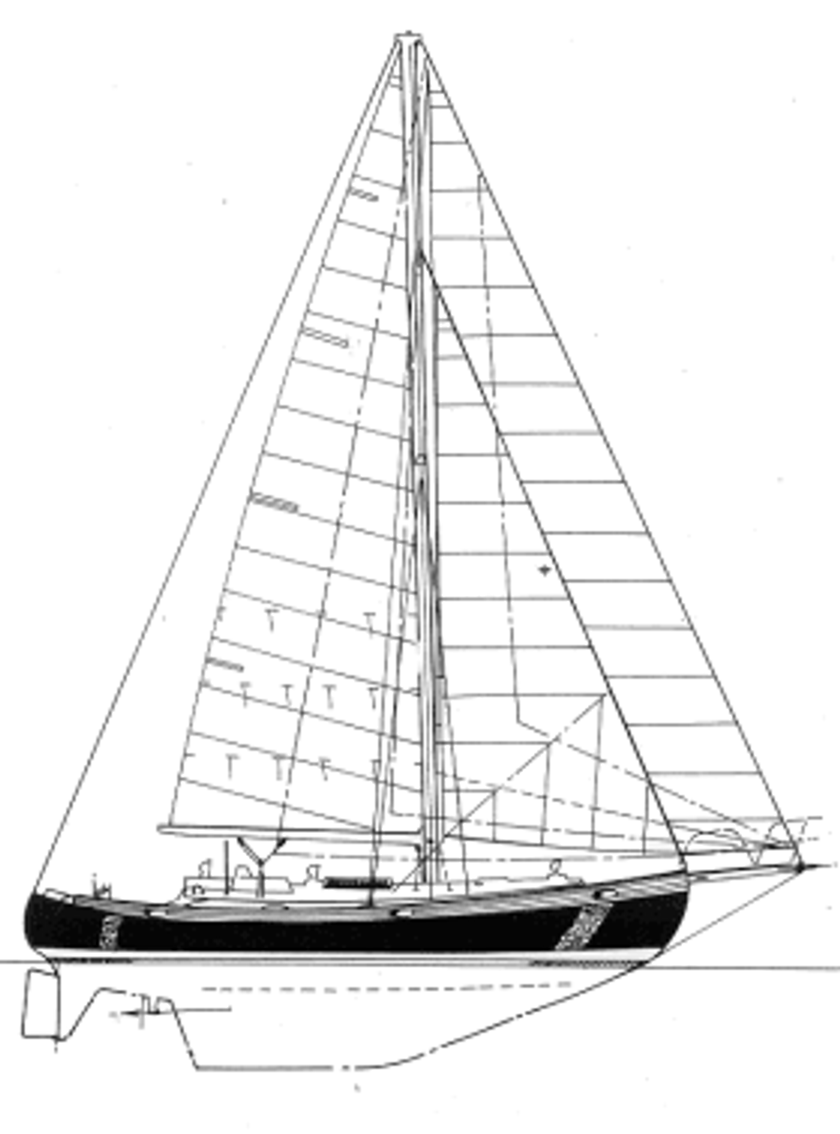
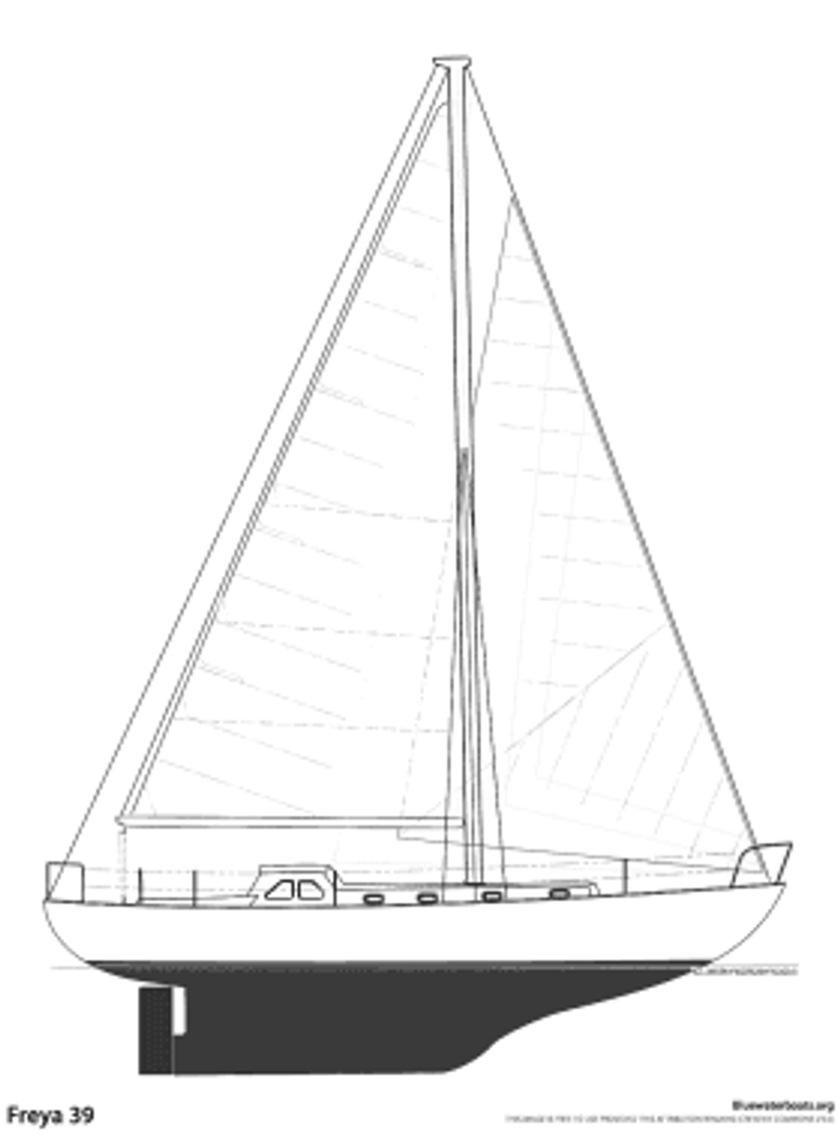
Trygve Halvorsen, from Australia’s well-known Halvorsen sailing and boatbuilding family, drew the Freya 39 as a double-ended offshore cruiser, and her pedigree runs deep: the original wooden Freya she’s modeled on won the notoriously tough Sydney-Hobart Race three years running (1963-1965), a feat no other yacht managed until decades later. The 39 has since made a number of circumnavigations of her own.
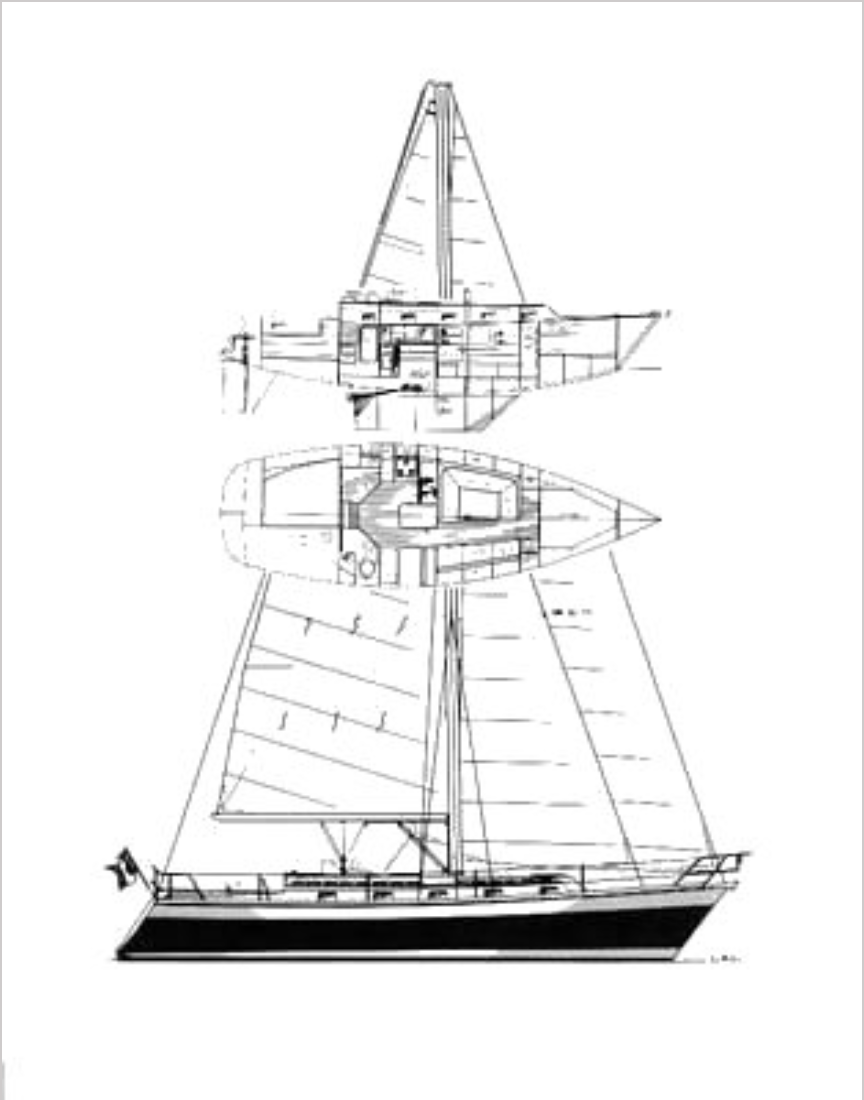
She carries a proud bow and a flush foredeck, with a compact trunk cabin set well aft, drawn as a cutter with generous sail area and a mast stepped straight to the hull. Construction is heavy: thick, uncored fiberglass hulls and a fiberglass deck over plywood coring, adding up to a displacement of 26,000 pounds. True to the Halvorsens’ distaste for both light racing hulls and crew-as-ballast tactics, she carries a long fin keel, flat along the bottom, with a deeply cut-away forefoot and a rudder hung directly off the keel. The cockpit is small and the boat stays dry offshore; most examples carry a wheel rather than a tiller.
An 11-foot beam gives her a genuinely roomy interior below, though quality varies boat to boat since Gannon also sold her as an owner-finished kit. The typical layout runs an enclosed V-berth forward off the main saloon, a double berth in the starboard quarter, and a single berth or workspace opposite in the port quarter, with a U-shaped galley to port under the trunk cabin facing the nav station across the way.
She backs up her seaworthy reputation with real speed: owners report 200-mile days and steady 8-knot passages, consistent with the original Freya’s own racing record. In Randi Svensen’s Wooden Boats, Iron Men: The Halvorsen Story, Magnus Halvorsen recalled that Freya sailed like a much bigger boat with an unusually responsive helm, carrying a shy spinnaker longer than any competitor and holding full sail up to 30 knots.
History
Norwegian immigrants with real sailing skill, the Halvorsen family built a long run of fast, seaworthy double-enders that dominated Australian racing for years. Freya, their three-time Sydney-Hobart winner, stands as the family’s signature success. The original hull was wood, later versions moved to steel, and by the 1970s and ’80s Gannon Yachts in Petaluma, California was building the Freya 39 in fiberglass. Jim Gannon, the yard’s owner, had crewed on the original racing Freya himself and later took his own Freya 39, Golden Egg, to second overall and first in the large-boat division of the singlehanded Transpac. The design kept racing offshore well beyond that: the Pacific Cup’s official results show the same boat, Gypsy Warrior, completing the San Francisco-to-Hawaii run three separate times across 18 years, 1982, 1996, and 2000. Total production numbers are hard to pin down, and the model hasn’t been built in decades; the original Freya’s line drawings are held by the Australian National Maritime Museum, which has them viewable online.
Buyers Notes
Used Freya 39s rarely come up for sale, and given the kit-boat variability in fit-out quality, compare condition and equipment closely across any boats you’re considering.
Links, References and Further Reading
» Through the Cracks by John Kretschmer» Freya 39 Owner’s blog Hot Shot Kaskelot» Freya 39 Owner’s Blog The Voyage of Foxglove