Overview
The Catalina 27 launched in 1971 and went on to one of the longest, largest production runs of its era: 22 years, roughly 6,600 hulls. Frank Butler built her from the start as an affordable weekend racer and coastal cruiser, offshore work was never part of the brief, and she still found her way onto blue water at least once: Patrick Childress’s documented 1980s circumnavigation shows what the design can do in the right hands with the right preparation, even though bluewaterboats.org’s own assessment (and this page’s) still rates her a capable coastal boat rather than a proven offshore one. She earns a place in this catalog mainly for her sheer popularity and the genuine data point that circumnavigation provides, not for being inherently built for the job.
History
Robert Finch and Catalina Yachts founder Frank Butler partnered on the design in 1970, and Butler put her into production at his Southern California yard using build methods not far removed from what the company still uses today. A roomy interior and an affordable price tag hit the market at exactly the right moment: the first three years alone saw 1,500 boats leave the line, about ten a week.
Early boats came outboard-only; an Atomic 4 inboard option arrived in 1973 and expanded to other engines in later years, with the outboard option finally phased out in 1989. A shoal-draft, winged-keel version followed in 1979 for thinner water, and racers could opt for a taller, higher-aspect rig that added 24 square feet of sail.
Production spread well beyond California. Cooper Enterprises, one of the larger Canadian builders of the era, built well over a thousand under license in British Columbia for the domestic market, boats still a common sight on BC waters today. Across the Atlantic, UK and European buyers got the same hull under the Jaguar name starting as early as 1971, built in Essex first by Eric Birch Yachts and then, from 1975, by Russell Marine, with hulls molded by Seamaster Boats.
The boat’s best-known voyage came out of that same stock design. In the early 1980s, Patrick Childress, then 28, sailed his shoal-draft Catalina 27 Juggernaut solo around the world over three years, including a 6,400-mile, 53-day Indian Ocean passage. What stands out about the account is how little the boat was changed for the trip: Vigor’s own appendix on the voyage’s preparation lists mostly detail work, enlarged cockpit drains and upgraded rigging chief among them, not a structural rebuild, meaning the boat that circumnavigated was close to what came off Butler’s line.
Production wound down in 1991 after 22 years and 6,600 hulls, and Catalina replaced her with an entirely different concept: the water-ballasted, trailerable Catalina 270.
Construction
Build quality runs light by offshore standards. The solid fiberglass hull, especially above the waterline, is noticeably thinner than a boat built for open water, thin enough that a minor impact that would just scuff a heavier hull can crack this one. Early boats cut costs by skipping proper backing plates under deck hardware, stanchions, and rails, a decision that shows up later as cracked gelcoat and, in some cases, delamination; later production years corrected it.
Under Sail
She’s light on the helm and responsive, prompting John Vigor’s memorable line in Twenty Small Sailboats to Take You Anywhere that she “handles like a dinghy, which is hardly surprising since that’s what she basically is, a dinghy with grandeur.” Reasonably stiff and willing to carry sail in a breeze, she’s quick and easy to control, though Vigor’s practical advice for anyone taking her further offshore is to keep cruising weight down, since added weight adds stress to both rig and hull at sea.
Her beam brings the usual tradeoff: weather helm builds at higher heel angles, manageable with a timely reef in the main.
Buyers Notes
With over 6,600 built, supply is never the problem. For protected coastal sailing at a reasonable price, she’s a strong choice as-is. Anyone considering her for offshore work should study the same modifications Childress made before trusting her further out: bigger cockpit drains, a reworked companionway to keep water out of the boat, and upgraded rigging, particularly the chainplates carrying the aft lower shrouds.
A few specific weaknesses are worth knowing before buying:
Early hulls’ missing backing plates show up as gelcoat cracking and occasionally GRP delamination around hardware.
Through-hull fittings were sometimes poorly installed, with weak secondary bonding on some attachments.
Chainplate leaks have degraded bulkheads on some boats, raising rig-failure risk if left unaddressed.
Early inboard models had fuel tank installations that weren’t done well.
Original spreader sockets were cast aluminum and prone to cracking under overload.
Early through-hulls were simple pipe nipples glassed directly into the hull; swapping these for proper flanged, bolt-through bronze fittings is a worthwhile upgrade.
Some owners report seawater backing up into the icebox through its drain while heeled; a proper seacock on that through-hull fixes it.
Links, References and Further Reading
» The Catalina 27/270 Owners Association» Twenty Small Sailboats to Take You Anywhere by John Vigor, (Ch8, p45-52) an in depth look at the Catalina 27. ISBN:978-0939837328» Used Boat Notebook, Catalina 27, review by John Kretschmer, SAILING Magazine, Nov 2002, volume 37, no. 3» Jaguar Owners Association for European Catalinas under the brand name Jaguar» A biography of Forbes Cooper of Cooper Yachts who built the Canadian Catalina 27s» Cruising World Magazine’s article on Patrick Childress’ two circumnavigations, first in his Catalina 27 and then in his Valiant 40 two decades later.
Configuration
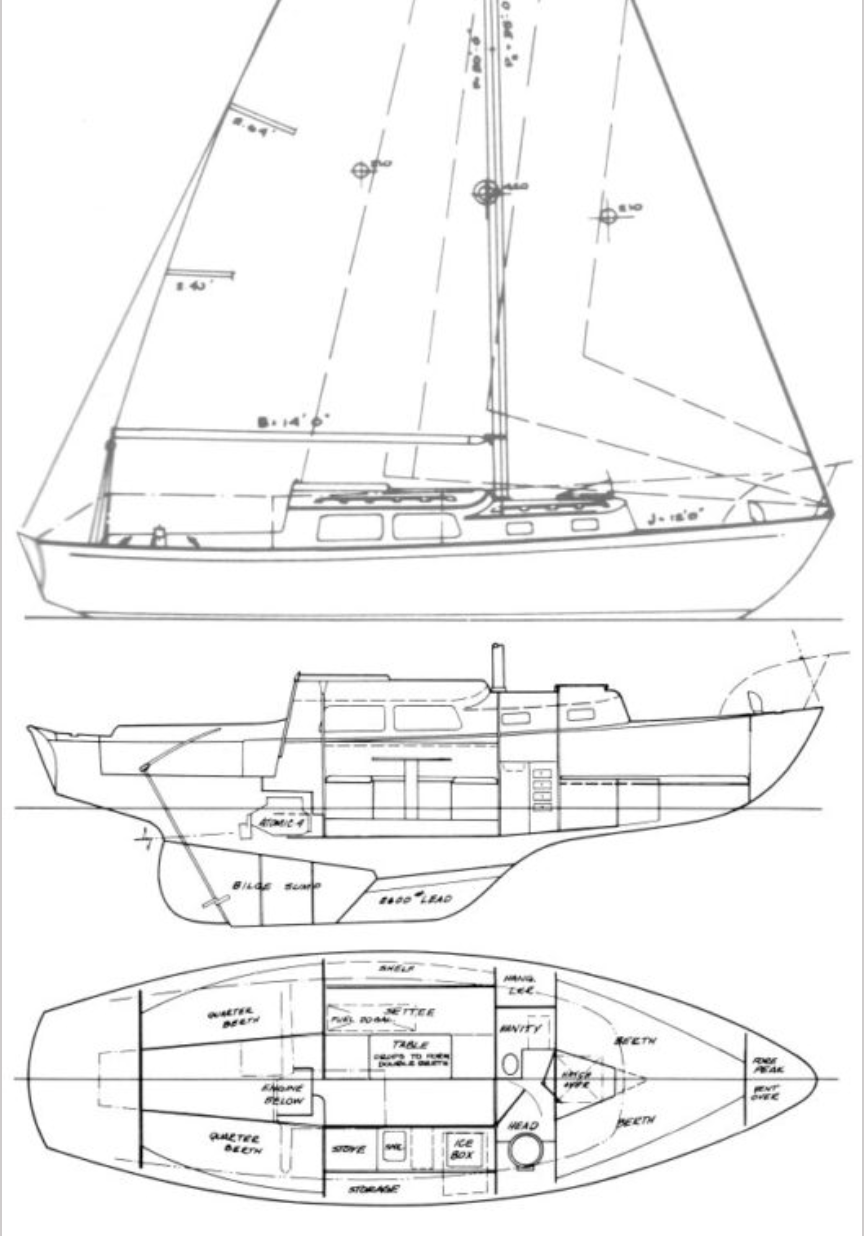
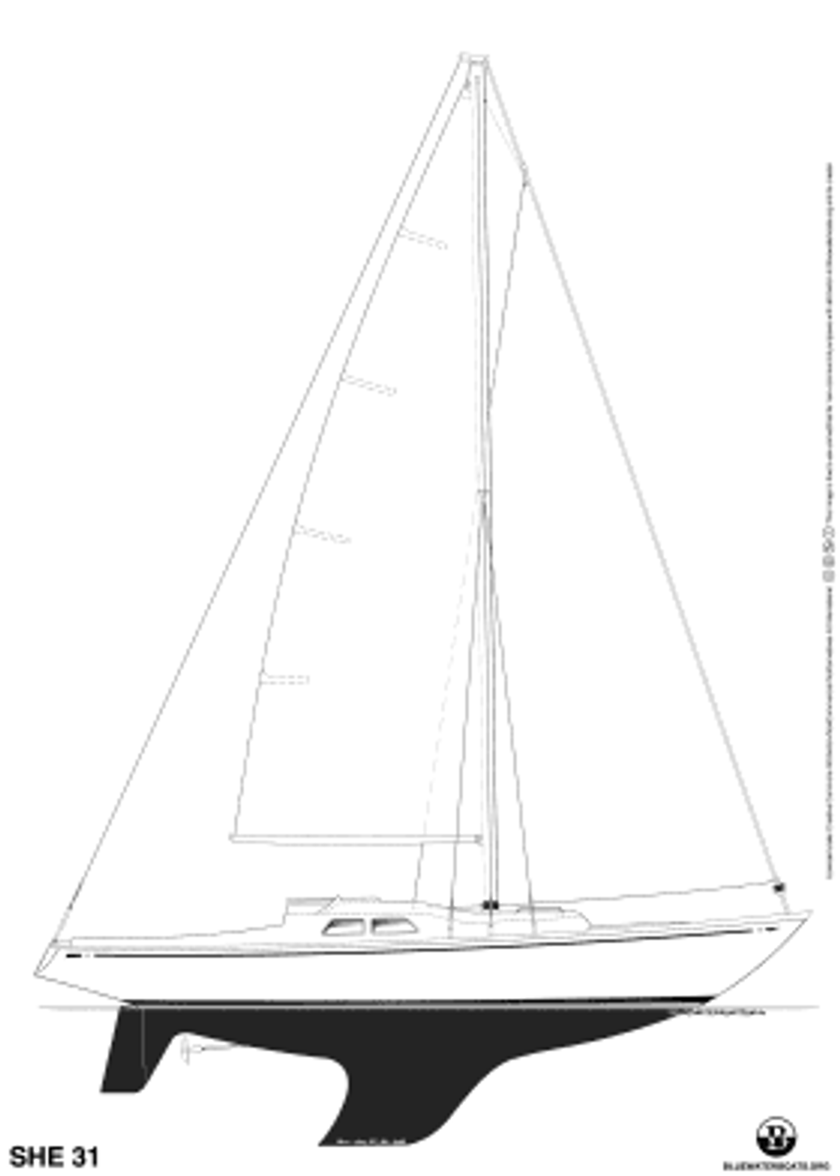
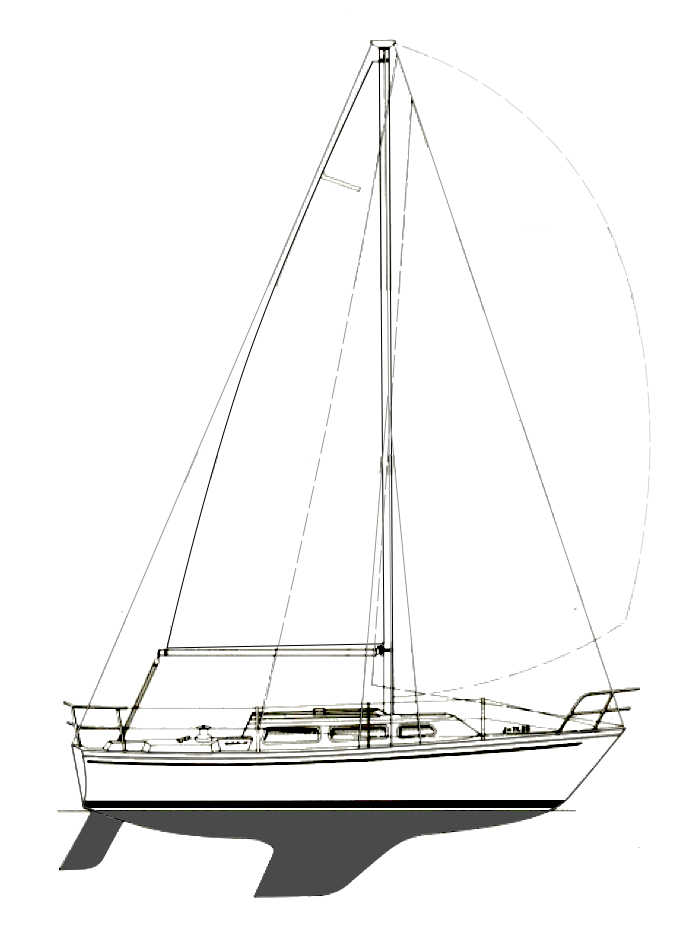
Underwater she carries a fin keel and a raked spade rudder mounted as far aft as the hull allows, with a tall, efficient masthead sloop rig pushing her along. That shallow, beamy hull shape trades away some livable volume below the waterline in exchange for good initial stiffness; Butler answered the tradeoff with deep topsides and a high, sleekly integrated cabin top, giving this 27-footer headroom and interior space well ahead of most boats her size.
Layout and Interior
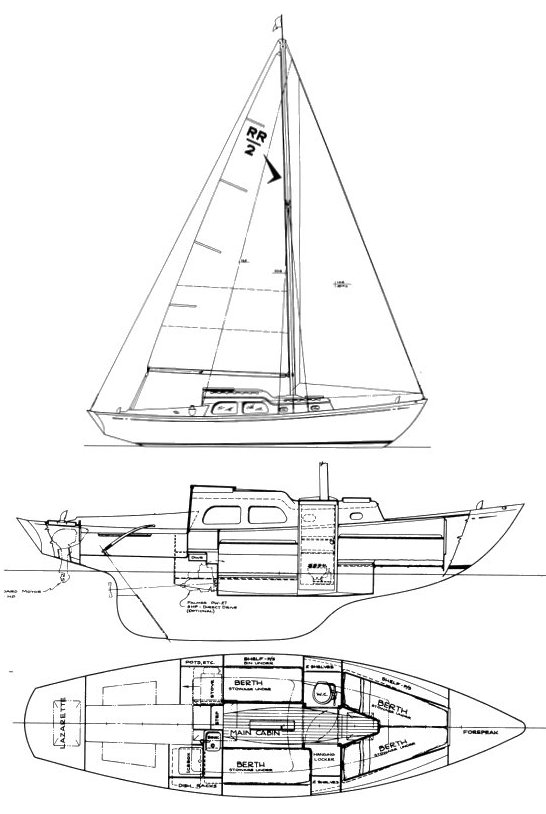
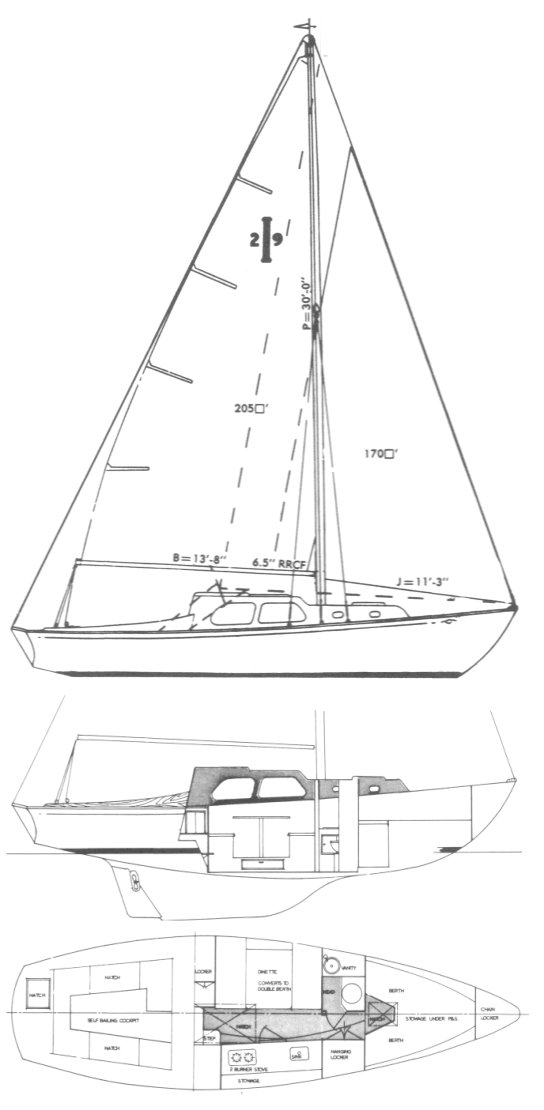
The cabin feels light and open, generous enough that owners tend to overlook her other compromises for it. That same wide companionway and hatch that make her feel roomy at anchor are also her weak point for water ingress underway. Nominal capacity in the standard aft-galley layout runs to six: two forward berths, a port settee that really only suits kids or a short adult, a starboard settee that folds into a proper double, and a seagoing quarter berth to starboard. A two-burner galley sits to port under the companionway steps, and the head, just aft of the forward berths on the starboard side, is a decent size; the locker across from it is close to the only real stowage she has, tight by the standard of boats this length.