Overview
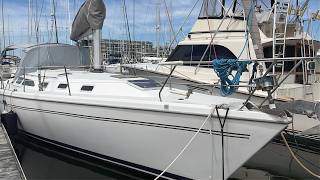
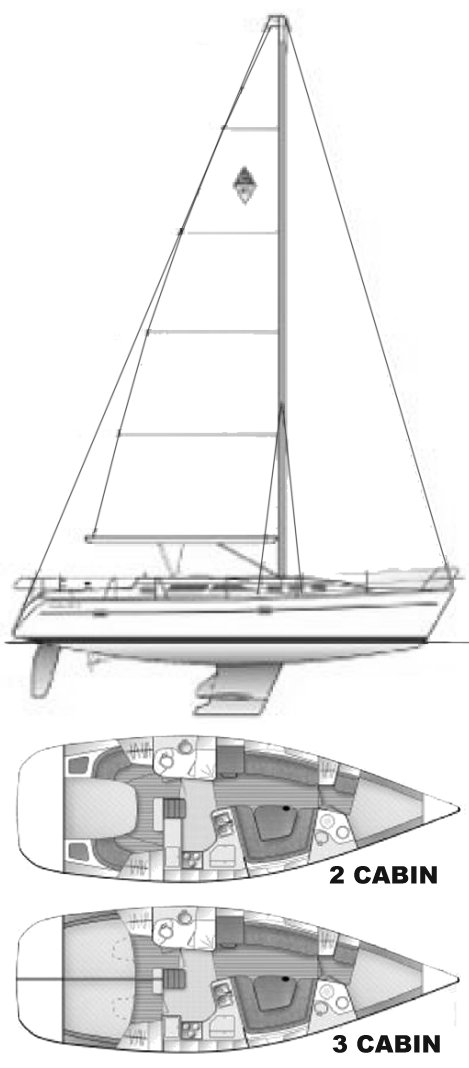
The Catalina 42 MkII is a Gerry Douglas design built by Catalina Yachts from 1995, when it replaced the Mark I, until 2011. It kept the Mark I hull, deck, engine and rig but added a rounded stern and a reworked cockpit.
Design and Construction
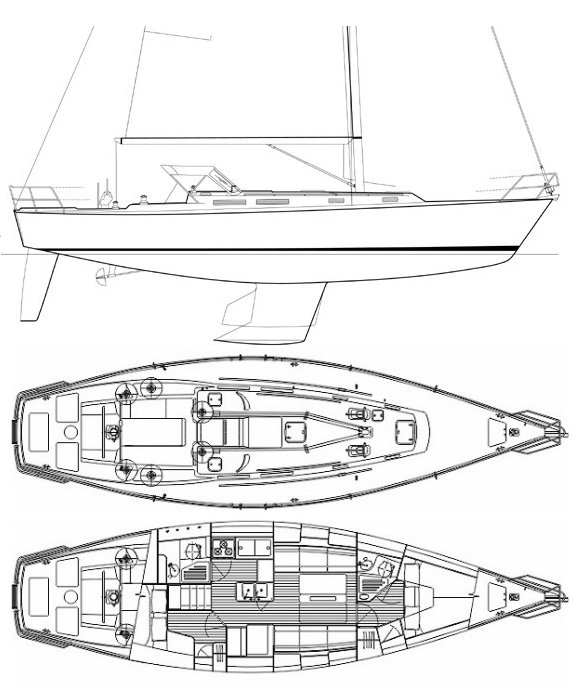
The hull is solid fiberglass, with vinylester resin in the barrier coat from 1995 to resist blisters, and the hull-deck joint is an external flange bonded with fiberglass. sailboatdata.com lists a fin keel with a spade rudder, 41.86 ft overall on a 36 ft waterline, 13.83 ft of beam and 6.67 ft of draft, with 8,300 lb of ballast in a 20,500 lb displacement and about 797 sq ft of sail. A shoal wing keel drawing about 4 ft 10 in was offered. Practical Sailor reports a deck cored with a mix of half-inch marine plywood where hardware is installed and three-quarter-inch end-grain balsa. Hull rigidity comes from a fiberglass pan bonded to the hull at the sheer, and the hull-deck joint is through-bolted on 8-inch centers and covered by an aluminum rubrail. Hull thickness is 1-3/8 to 1-1/2 inches at the keel and 1/2 to 9/16 inch at the sheer. The Mark II also got a deeper, high-aspect semi-elliptical rudder, and owners who retrofitted it to earlier boats reported better handling and less helm pressure.
Ocean Racing Record
Scappare finished the Marion-Bermuda Race in 2019.
Buyers Notes
Practical Sailor found most owners satisfied with construction; the main complaint was too little stowage for the interior volume. John Neal rates post-2000 Catalinas 3 of 5, adequate for low to mid-latitude cruising. Its capsize screen value is 2.03, just over the usual offshore guideline.
Practical Sailor says the Mark I ran from hull number 1 to 477 until February 1995, and more than 1,000 Catalina 42s were built, split evenly between two- and three-stateroom layouts. Under sail, most owners the magazine surveyed rated upwind and downwind performance above average to excellent for the size, tucked in a reef above 18 knots to balance the boat and ease the helm, and said she stiffens at 10 to 15 degrees of heel. A singlehander who won the Singlehanded Farallones race said she does well on reaches and in heavy air but is not good in light air, and a stock boat rates about 105 PHRF. Gerry Douglas told the magazine the rig was not designed to be tuned underway and that adding an adjustable backstay could overload the shrouds; several owners had added inner forestays for offshore use. Halyards lead aft through sheet stoppers to the bridge deck, which keeps the crew off the deck at night.
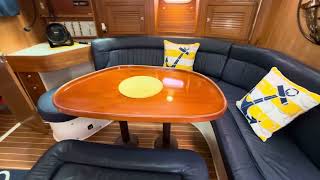
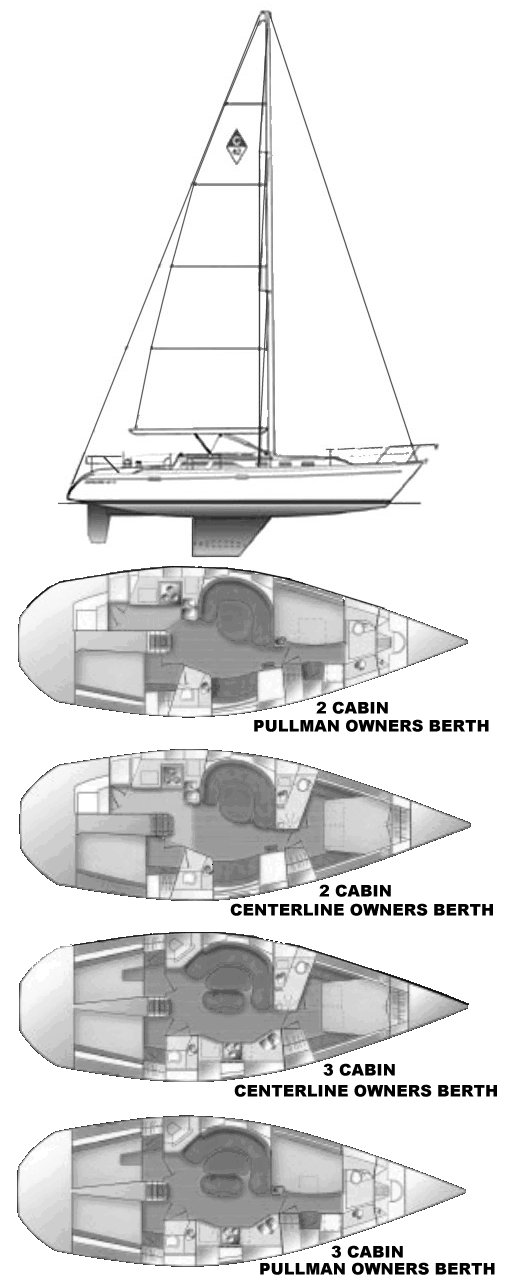
The Mark II cockpit has better lounging and stowage than the Mark I, with a drop-leaf table forward of the binnacle, observation seats in the stern pulpit corners and a removable transom seat in place of the Mark I cutout. Practical Sailor would rather have a removable table and an open cockpit when jibing a spinnaker. The side decks are 24 inches wide, and the windlass sits in a locker. Below, the two-stateroom version puts the galley aft in the port quarter, with storage space behind it that can take a heater, inverter or refrigeration and gives good access to the steering system. The three-cabin layout puts the galley amidships and shrinks the navigator’s table, and a reviewer noted the nav station sits well forward to starboard, away from the companionway and helm.