Overview
The name Hardin 45 covers a design family that began as the Bounty 44. R. W. “Bill” Hardin designed and built the boats at Hardin International in Kaohsiung, Taiwan. SailboatData dates the first hull to 1977 and records a redesign around 1980, after which the names Hardin 44/45 and Hardin Voyager 45 came into use. It counts about 130 hulls across the family.
This record previously mixed measurements from several versions. SailboatData’s class entry gives 44 feet 6 inches on deck, 32 feet 4 inches on the waterline, 13 feet 4 inches of beam, and 5 feet 11 inches of draft. It lists 32,000 pounds of displacement, 8,500 pounds of iron ballast, and 809 square feet of reported sail area. Individual Bounty 44 and later Voyager paperwork may differ, so the builder’s plate and original documents should decide which specification applies to a boat under survey.
Design and Accommodation
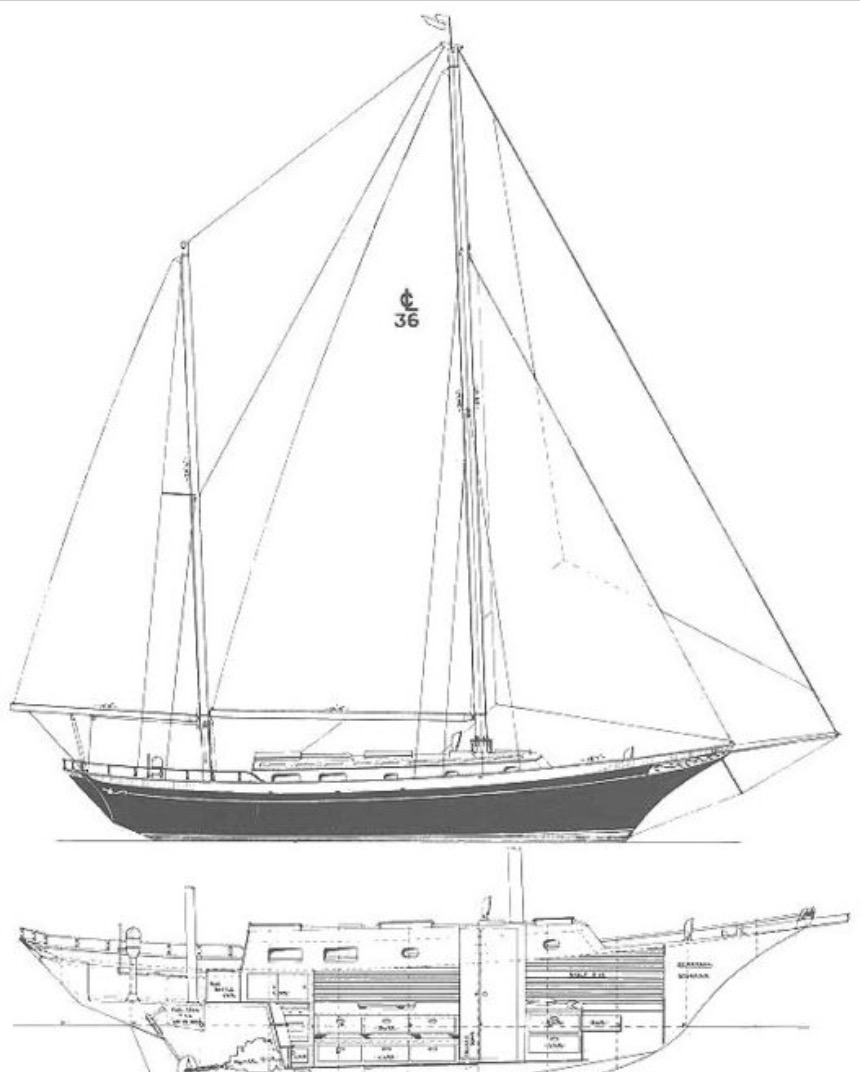
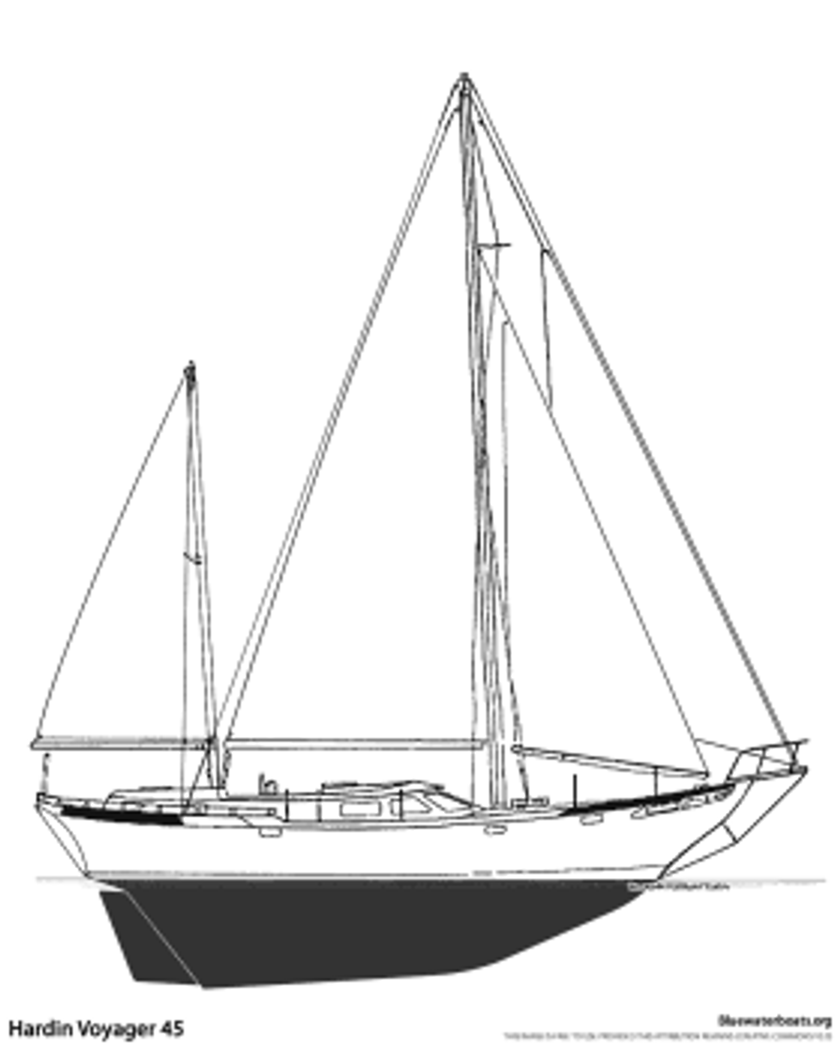
The Hardin is a center-cockpit, staysail-ketch cruiser with a long keel and attached rudder. Its proportions favor carrying capacity and interior volume. The split rig divides the sail area into smaller pieces, while the long keel provides tracking and protects the rudder. The same features bring considerable wetted surface and make close-quarters handling less nimble than on a fin-keel boat.
Below deck, the raised saloon and center cockpit make room for an aft cabin connected by a passageway. Surviving interiors vary, but generous tankage, abundant teak joinery, and separate sleeping areas are common. SailboatData lists 200 gallons each for fuel and water. Those figures are class data, not a promise about tanks that may have been replaced or divided during refits.
The large saloon windows admit plenty of light. For offshore work they also deserve a close look at glazing, frames, fasteners, and the means of fitting storm covers. The archived review says factory storm shutters were offered, though that detail has not yet been confirmed in original Hardin literature.
Under Sail
With a displacement-to-length ratio above 400 and a modest sail-area ratio, this is an ultra-heavy cruiser. Expect slow acceleration and frequent engine use in light air. Once moving, the mass and long keel should provide steady tracking and a slower motion than many lighter boats of similar length. The ketch and staysail give a crew several ways to reduce and balance sail without relying on one large headsail.
The archived review includes an unnamed owner’s account of 10,000 single-handed miles and a severe gale. No independent record for that sailor has been found, so this rewrite does not treat the account as established evidence.
Documented Passage
The strongest offshore evidence is specific. Gordon and Joan Mery wrote to Latitude 38 after completing a circumnavigation aboard their Hardin 45, Alegre. They reported about 38,000 miles, 37 countries, and just over nine years around the world. Their route included an Atlantic crossing to Trinidad and Tobago, the Panama Canal, and a return up the eastern Pacific. Latitude 38 also lists Alegre in its circumnavigators register for 1988–1997.
One successful voyage does not certify every boat in a variable, aging fleet. It does establish that a Hardin 45 completed a long circumnavigation with a cruising couple aboard.
What to Inspect
Separate the exact model before comparing specifications or ordering rigging. Examine chainplates and their hidden ends, standing-rig attachments, the long-keel and rudder structure, tanks, steering, and every opening in the raised saloon. Teak decks, if still fitted, require careful moisture checks around fasteners and deck hardware.
Construction quality from Taiwanese yards of this period can vary between hulls and commissioning yards. Survey tabbing, bulkhead bonds, deck core, wiring, plumbing, and heavy equipment restraints rather than relying on the boat’s weight. Also check whether any large tanks can be removed without dismantling major joinery. The circumnavigation record is real; the condition of a particular Hardin 45 remains the deciding offshore fact.