Overview
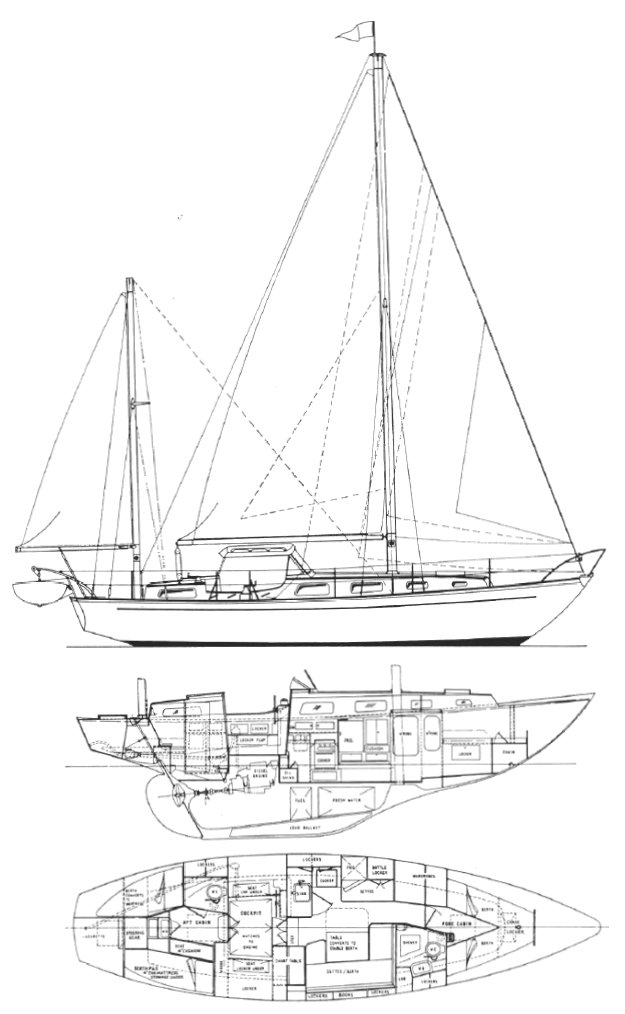
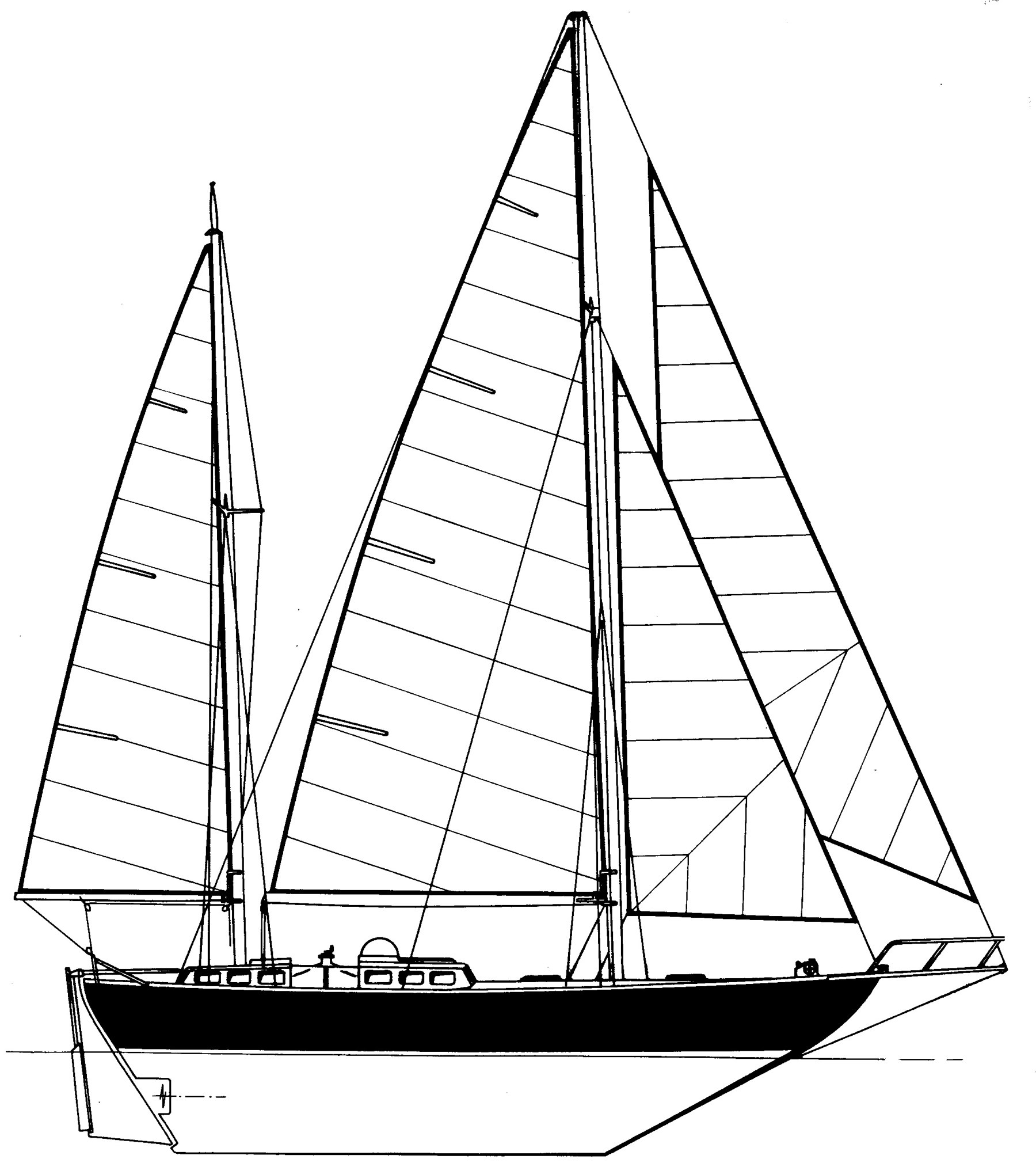
Joshua is the steel ketch Bernard Moitessier commissioned in 1961 and named after Joshua Slocum, the first person to sail around the world alone. Naval architect Jean Knocker spent fourteen months turning Moitessier’s own detailed sketches into a working plan, producing a double-ended hull with a pointed stern that Moitessier specified deliberately, reasoning that it would divide and ease a breaking sea’s push when running before it. The influence of Colin Archer’s Norwegian rescue-boat designs is visible throughout the hull.
The first boat was built in 1961-62 at Jean Fricaud’s yard in Chauffailles. The following year, Fricaud’s son Joseph founded the Meta shipyard at Tarare specifically to build more hulls to the same lines, and went on to construct more than 70 of them before the yard moved entirely to its own thick-aluminum “Strongall” construction technique after 1977. Joshua the boat and Joshua the production design are, in that sense, the same thing: one of the more unusual cases in this catalog where a single owner’s personal commission became a real production run.
Design and Construction
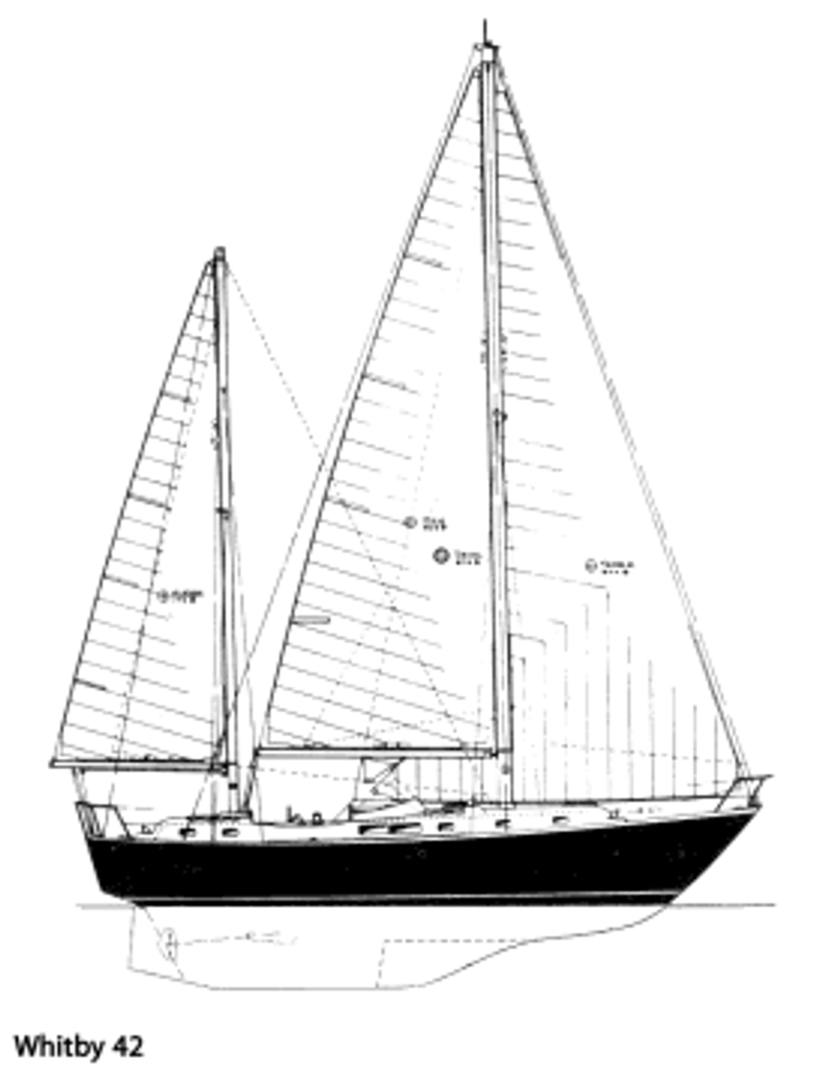
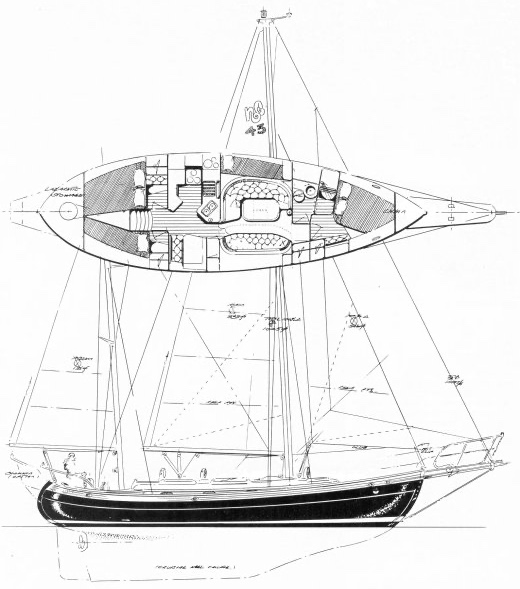
The hull is welded steel plate with minimal internal framing, a construction approach chosen for strength and simplicity rather than light weight. At just under 40 feet of hull length and over 30,000 pounds of displacement, Joshua is a heavy, powerful hull built for the Southern Ocean rather than for speed. The rig is a Bermudan ketch, and the production boats carried a bowsprit that extends the spar-to-spar length to roughly 46 feet, about six feet longer than the hull itself.
Under Sail and Passage History
Moitessier and his wife Francoise sailed Joshua from Marseille in October 1963, working through the Canaries, Trinidad, the Panama Canal, and the Galapagos before reaching Tahiti two years later. Running short on time to return to her children in France, they chose the fast way home rather than retrace their route: east via the Indian Ocean and Cape Horn. They arrived at Easter 1966 having sailed 14,216 nautical miles nonstop, the longest nonstop passage by a yacht on record at the time, without setting out to break any record at all.
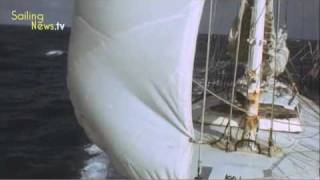
Two years later, Moitessier entered Joshua in the 1968-69 Sunday Times Golden Globe Race, the first nonstop singlehanded round-the-world race. He rounded Cape Horn on 5 February 1969 in a leading position, well ahead of the pace needed to win. Rather than finish, he chose to keep sailing, famously firing a slingshot message to a passing ship explaining that he was continuing “because I am happy at sea, and perhaps to save my soul.” He went on to complete a second partial circumnavigation, covering 37,455 nautical miles nonstop over ten months before landing in Tahiti. Robin Knox-Johnston went on to win the race outright, but Moitessier’s decision to walk away from a likely victory, and the account of it in his book The Long Way, made Joshua one of the most famous boats in sailing history.
Later History
Moitessier sailed Joshua for years afterward, including a long stay in French Polynesia. In December 1982 the boat was wrecked in a storm off Cabo San Lucas, Mexico, driven ashore and half-buried in sand. Moitessier sold the wreck for a token sum to two young sailors who had helped try to save her; she was eventually recovered, restored, and in 1990 returned to France, where the Musee Maritime de La Rochelle acquired and fully restored her. She has been a registered Monument Historique since 1993 and remains on display, and occasionally under sail, at La Rochelle today.
Buyers Notes
Surviving hulls from Meta’s production run are rare and would need a steel-specific survey (plate thickness, coating condition, and welds throughout) rather than a generic fiberglass one, the same caveat that applies to any older steel boat in this catalog. No production-run-specific ownership or resale information was found during this research pass; treat this design as a historically significant one to evaluate on its individual hull’s condition rather than as an active used-boat market with readily available comparables.