Overview
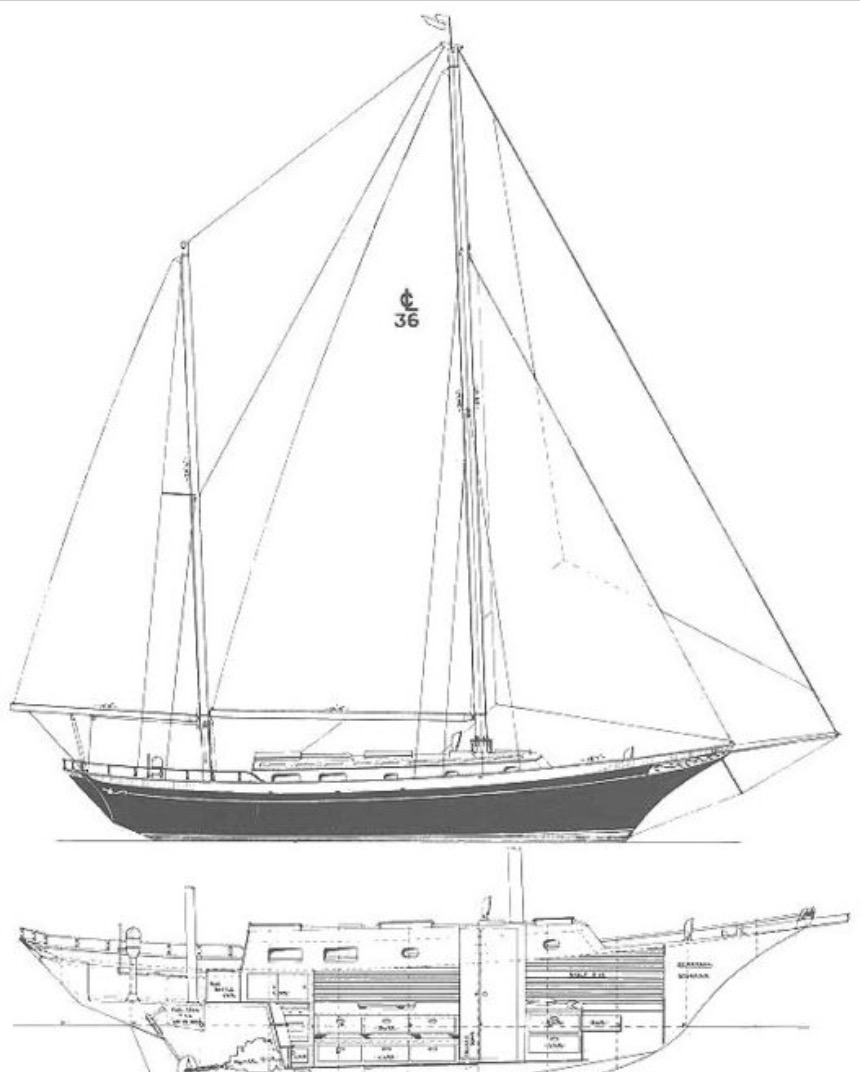
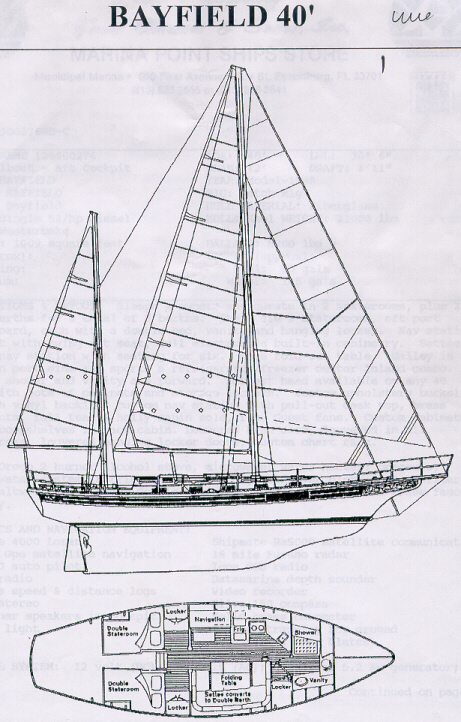
The Bayfield 40 is the signature bluewater design from Ted Gozzard, the founder of Bayfield Boat Yard of Clinton, Ontario. Where the company’s Bayfield 36 was drawn by his brother Haydn Gozzard as a cutter for coastal and offshore work, the 40 is Ted’s own design - a staysail ketch conceived explicitly for long-distance passagemaking by short-handed crews. With a Capsize Screening Formula of 1.74 and a Brewer Motion Comfort Ratio of 35.72, it rates comfortably within offshore-capable parameters and has accumulated a creditable record of circumnavigations and ocean passages among its owners.
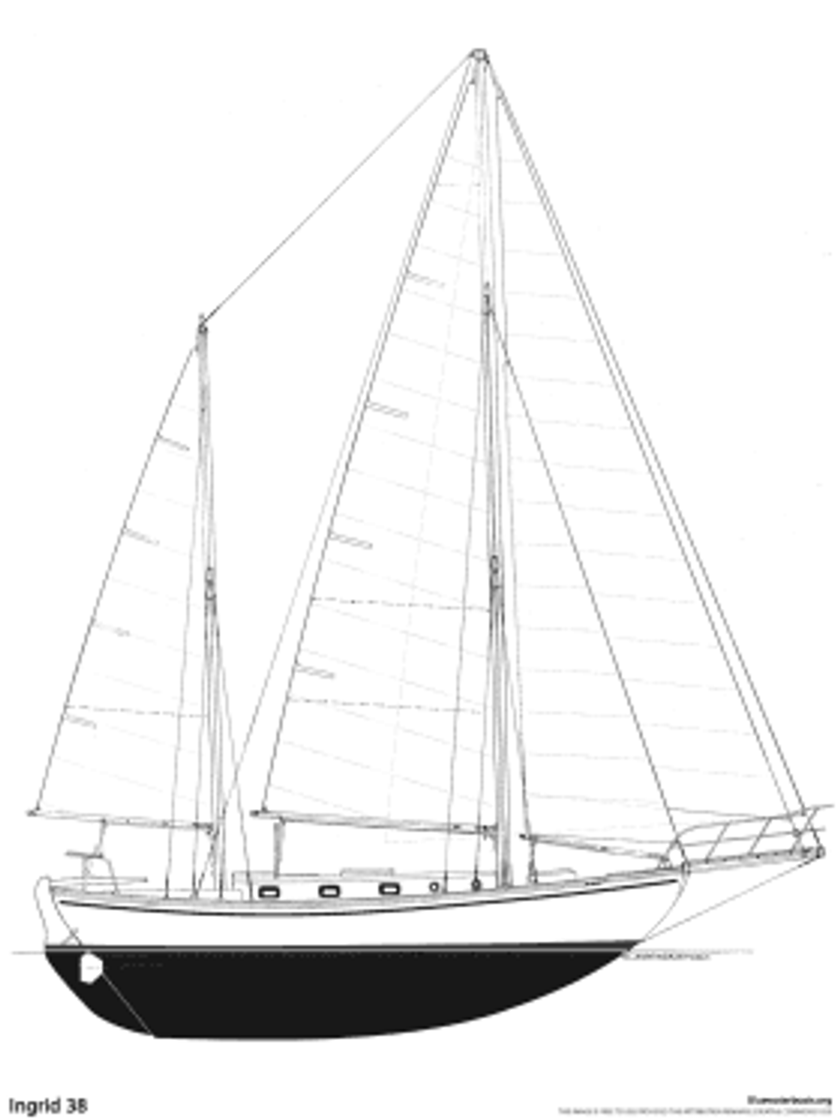
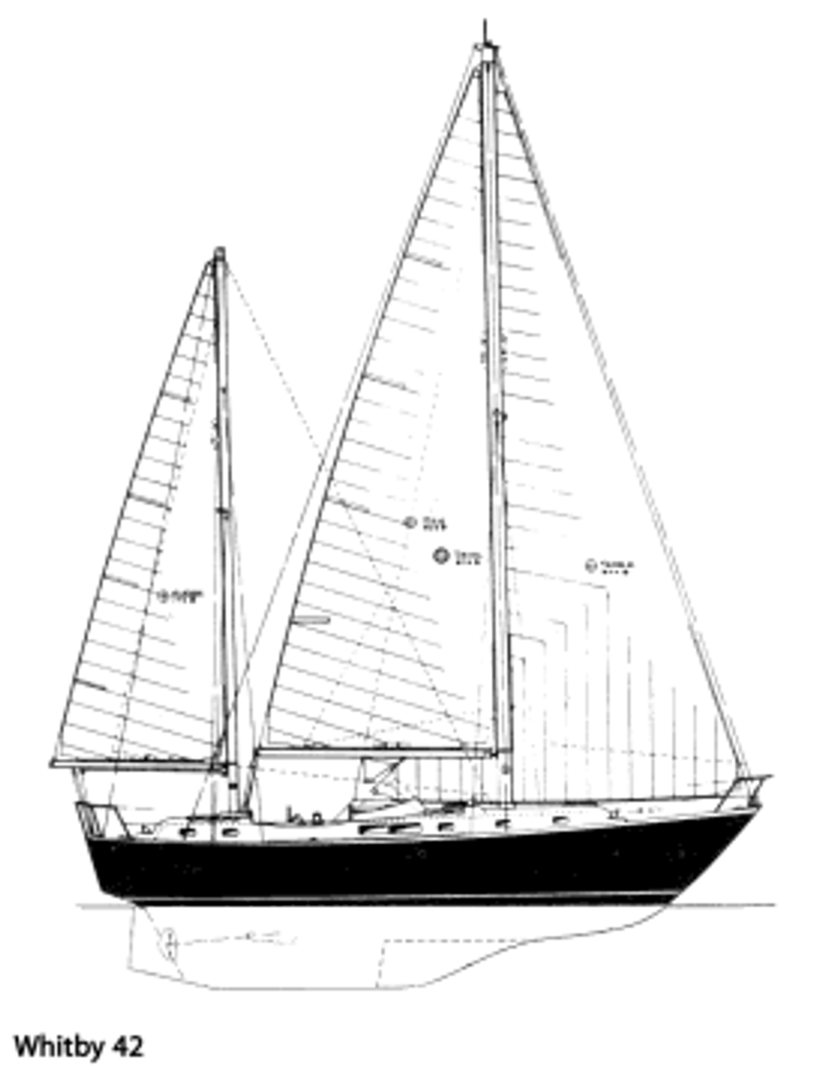
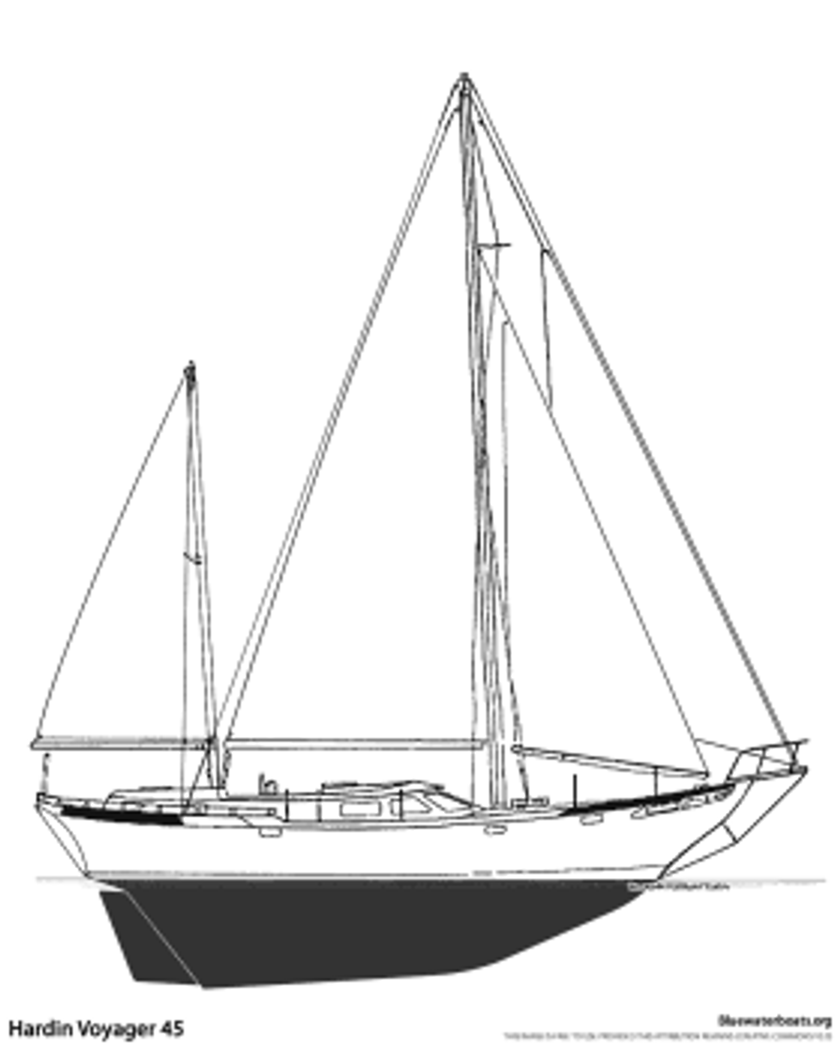
The staysail ketch rig divides the sail plan into manageable panels (main, staysail, mizzen, and a yankee or furling jib), allowing a couple to manage sail area methodically in deteriorating conditions without going forward unnecessarily. The mizzen steadies the boat at anchor and enables a balanced reaching configuration that is nearly self-steering on trade-wind runs. It is an unfashionable rig choice by modern racing standards but a sound one for the intended purpose.
History
Bayfield Boat Yard was founded in Clinton, Ontario by Ted Gozzard in the late 1970s, building a succession of conservative, well-finished cruising yachts with clipper bows, teak trim, and traditional aesthetics that set them apart from the Taiwanese production boats then flooding the market. The 40 was introduced around 1982 and produced alongside the 36 until the factory burned in 1988, ending production of both models. Fewer than 100 Bayfield 40s are believed to have been built, making good examples rare but sought after.
Construction
The hull is balsa-cored fiberglass, giving a good stiffness-to-weight ratio while keeping displacement slightly more moderate than a fully solid laminate of the same size. The deck is finished in traditional teak, and below decks the joinery is in teak and teak-faced plywood - workmanship of a quality that has held up well across four decades. The long keel with keel-mounted rudder and wheel steering gives excellent directional stability and is essentially unaffected by weed or light groundings. Ballast is lead at 8,200 lbs, yielding a 39% ballast ratio that gives good initial and ultimate stability.
The engine is a Yanmar 4JHE 44 hp or Westerbeke 52 hp diesel depending on the year of build. The aluminium fuel tank, a common Bayfield trait shared with the 36, is prone to electrolytic corrosion in salt water environments and should be inspected or replaced on any boat not recently surveyed.
Under Sail
Performance is deliberate rather than exciting. The Bayfield 40 will not impress on a beat but comes into its own on reaching and running angles where the ketch rig and long keel deliver comfortable, predictable motion. Owners consistently report good directional stability that reduces helm fatigue on long passages, and the boat heaves-to easily and reliably in heavy weather - a characteristic directly linked to the full-keel underbody. Light-air performance is the main limitation: the conservative SA/D ratio means patience is required below 8 knots of breeze.
Buyers Notes
Inspect the aluminium fuel tanks carefully - corrosion is endemic to this era of Bayfield construction. The teak deck, while beautiful, is now 35–45 years old and should be evaluated for moisture intrusion into the balsa core beneath; seam compounds shrink and crack with age. Chainplate inspection is important: the keel-stepped mast loads the chainplates significantly and the bronze or stainless hardware should be pulled and inspected for crevice corrosion. The engine compartment access is adequate; spares for the Yanmar 4JHE are still available. With fewer than 100 hulls built, finding a class-specific surveyor can be difficult - a general bluewater surveyor familiar with Canadian production boats of this era is the next best option.