Overview
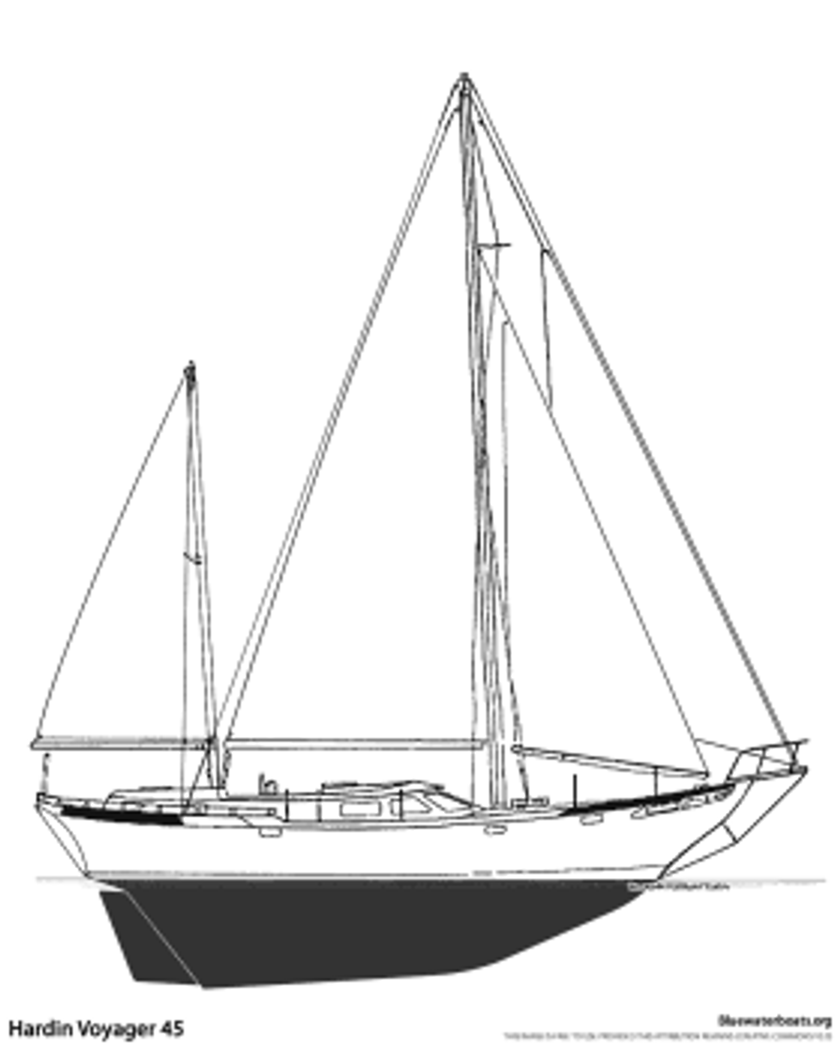
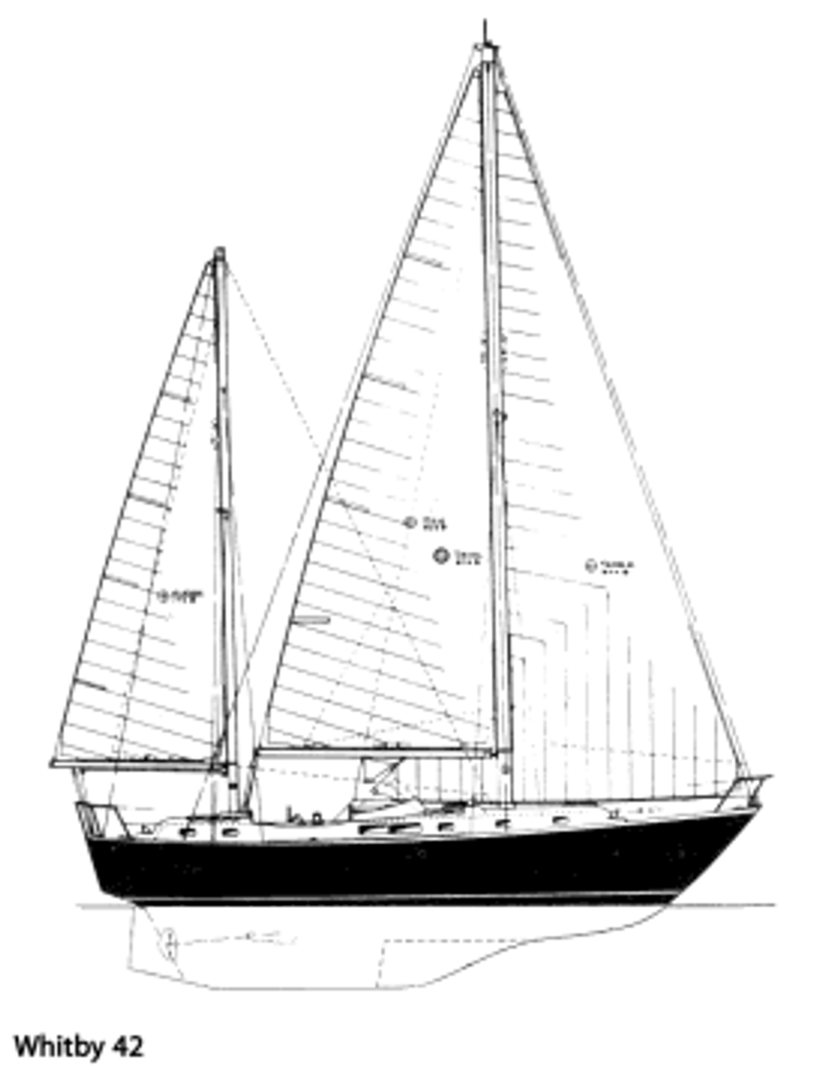
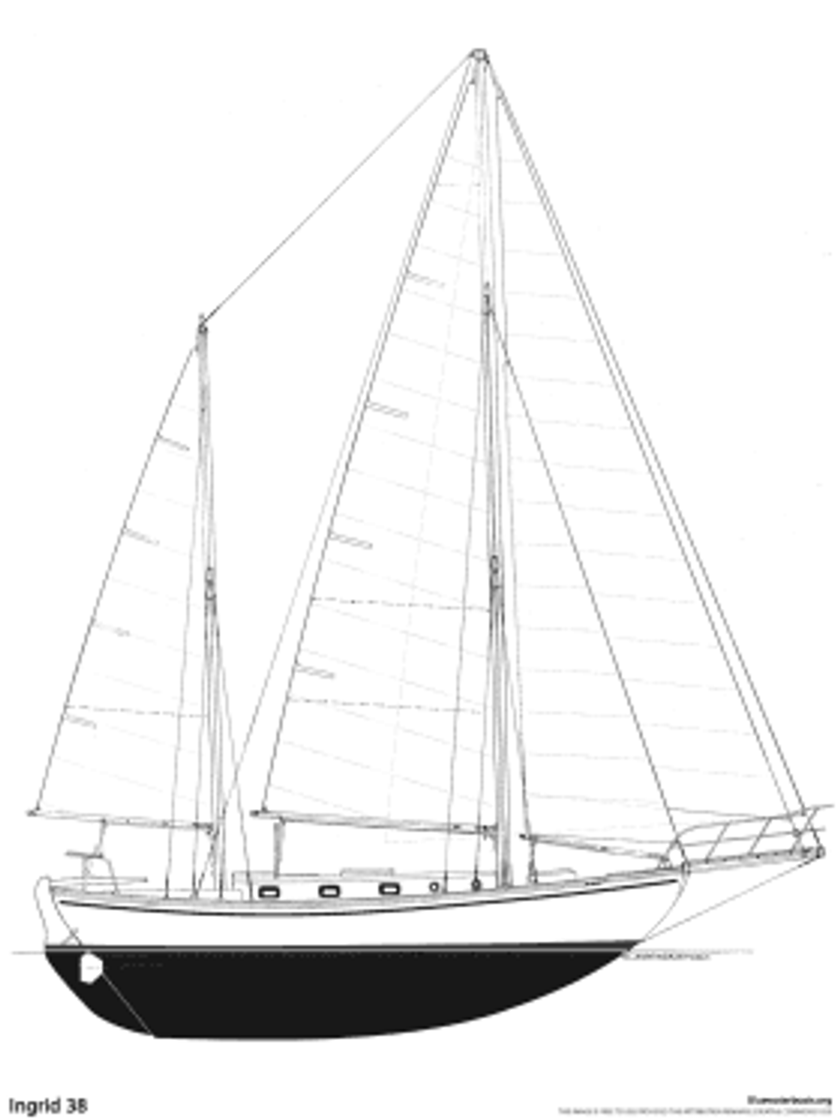
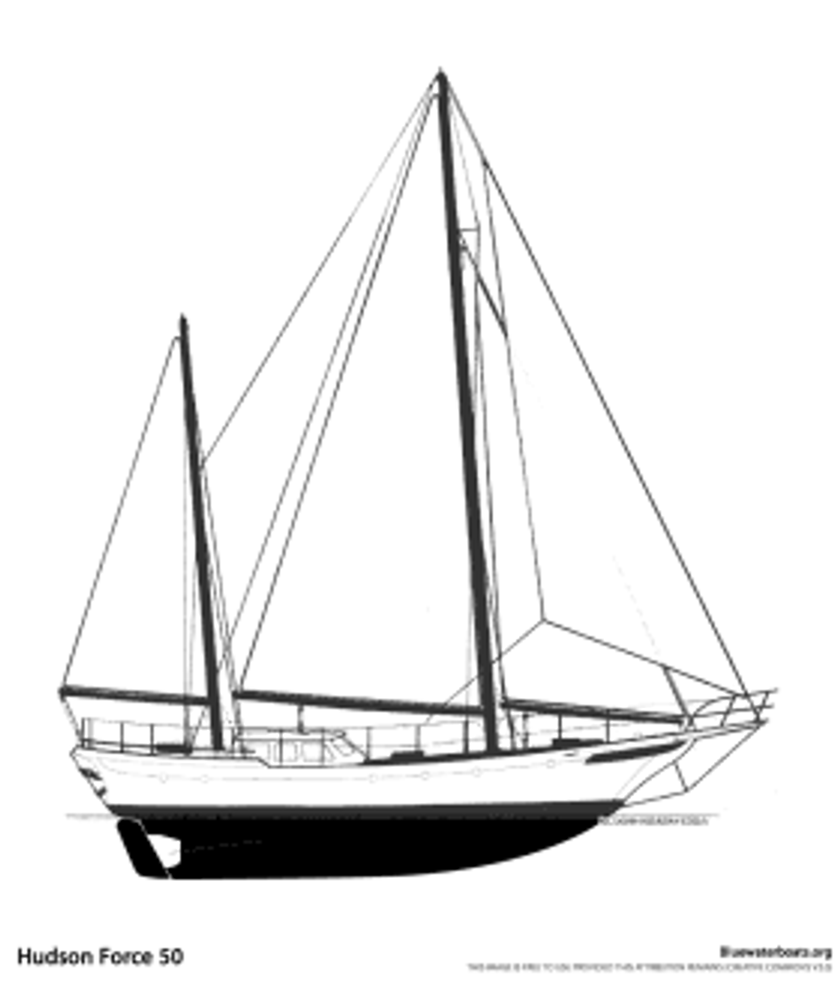
The Hudson Force 50 is a full-keeled pilothouse ketch designed by William Garden, a US- and Canadian-trained naval architect, and built in Taiwan from 1973 at a rate of roughly 12-15 hulls a year until the yard burned down in 1984. The design shares its hull plug with the Formosa 51, reportedly the result of a private-label arrangement between Garden and Formosa; owners generally consider the Force 50 the more seaworthy-feeling of the two, with somewhat less interior volume due to lower freeboard.
A long bowsprit, and on some hulls wooden spars, give the boat a traditional look to match its traditional brief, with teak trim throughout above and below decks.
Under Sail
Owner Tom Allen, writing about a singlehanded passage from Los Angeles to Monterey, recounted losing the mainsail rounding Point Lobos in 55-60 knot winds and 25 ft breaking seas, “popping out of 25 foot seas with half the boat coming out of the swell and then slamming onto the bottom of the wave… when I arrived in Monterey I kissed the ground realizing that this is a very sturdy 30 year old boat that I would definitely trust my life in.” That passage was coastal rather than a documented ocean crossing, so while it speaks directly to the boat’s structural toughness in genuinely severe conditions, it stops short of this catalog’s proven tier for offshore passage evidence.
Buyers Notes
Condition varies enormously across surviving hulls, from well-maintained to in need of a full refit, and repair costs on a boat this size run three to five times what a comparable 30-footer would cost, worth budgeting for accordingly rather than being drawn in by a low asking price alone. A survey should cover the hull at haulout, the numerous through-hull fittings, bulkheads, chainplates, rigging, engine and drivetrain, electrical systems, and particularly the metal fuel tanks. Water intrusion around the deck and pilothouse area is a recurring issue worth checking closely, as is the base of the mast and booms on hulls fitted with wooden spars.
Layout and Interior
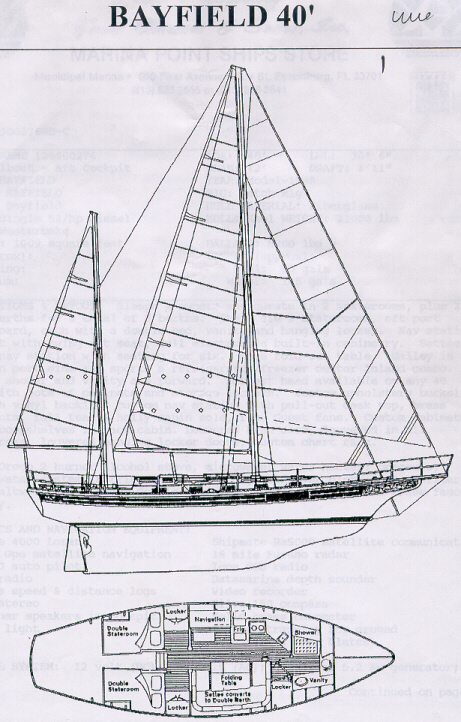
Three staterooms: an aft master with its own head, and two double guest cabins forward sharing a second head with a step-in shower. The pilothouse has an inside helm station, with a lower saloon and desk area below. Forward of the saloon, an L-shaped settee leads to a double guest cabin to starboard and the head and shower to port, with additional berths and a workbench further forward.