Overview
The Lord Nelson 35 is a Taiwanese-built double-ended cutter introduced in 1984. Loren and Lani Hart’s Admiralty Ltd. developed the Lord Nelson sailboat line and contracted production in Taiwan. Sailboatdata credits the design to Loren Hart and Tommy Chen and says Chen’s Ocean Eagle Yacht Building Corporation built the 35 and 41. Its model record also uses the name Hai O Yachts, a naming conflict that the surviving online sources do not resolve.
The “35” refers to hull length more closely than overall length. With the bowsprit included, the published LOA is 43 feet. The boat has a 31.33-foot waterline, 11.83-foot beam, 5.33-foot draft, and reported displacement of 20,500 pounds. A 7,000-pound ballast figure yields a ballast ratio near 34 percent. Those numbers place it among heavy cruising boats rather than contemporary performance 35-footers.
Hull and sail plan
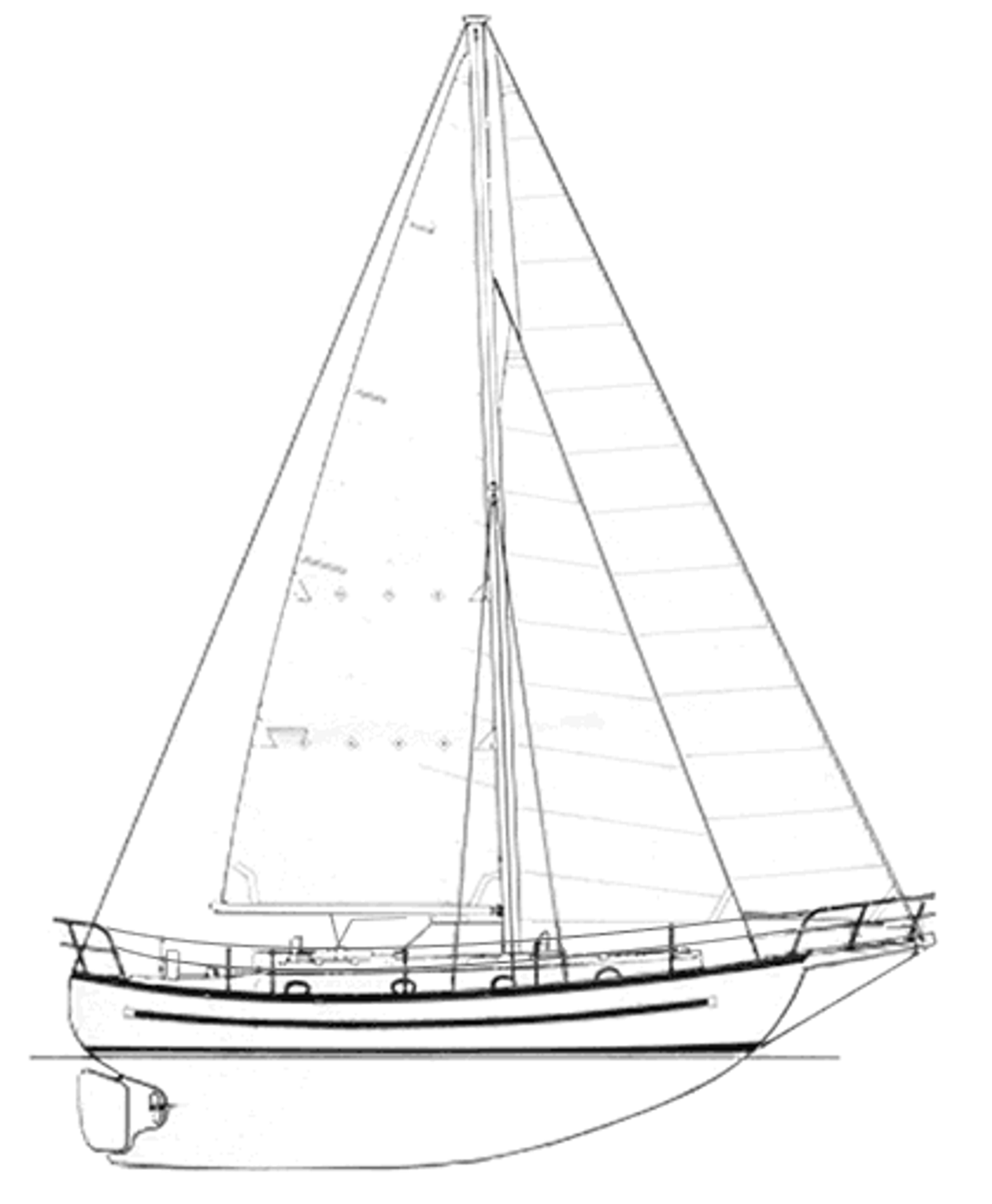
A long keel, protected rudder, canoe stern, and bowsprit define the profile. The cutter rig breaks the working sail plan into a main, staysail, and headsail. That arrangement gives a short-handed crew several combinations as wind increases, but it also brings more standing rigging and more deck fittings to inspect.
The published sail area is 780 square feet. With its displacement and waterline, the resulting ratios suggest that the boat needs useful wind before the sail plan comes alive. The long keel should favor directional stability, while its wetted surface and turning radius impose costs in light air and tight marinas. These are design inferences, not a substitute for a measured sailing trial on the individual boat.
Production record
The small production run is poorly documented. Sailboatdata reports 35 hulls but does not give an ending year. A February 2006 Latitude 38 classified described a 1988 example as the final boat and called it hull 27. Both statements cannot be a complete hull register. This catalog therefore uses 1988 as the latest documented model year and keeps the count conflict visible.
The old Lord Nelson sailboat story is also easy to mix with the company’s Victory Tug line. Sources that discuss the later tug business do not necessarily establish when the last 35-foot cutter left the yard. Hull identification, builder plates, and original papers carry more weight than a generic model history.
Interior and systems
The beam and long overhangs create a different interior balance from a modern 35-footer. Much of the apparent overall length is outside the accommodation, yet the published 120-gallon water capacity points to extended cruising intent. The traditional joinery and exterior wood that attract many buyers also create a large maintenance surface. Condition matters more than the original finish standard after nearly four decades.
Tank capacity deserves verification. The model page lists 30 gallons of fuel, while other secondary records give much larger figures. Replacement tanks and owner changes are common on boats of this age, so a survey should document actual materials, access, capacity, and plumbing rather than copying a database value.
Passage evidence and buying notes
Latitude 38’s 2018 Baja Ha-Ha fleet profile identifies Jeanne Anne as a Lord Nelson 35 and says the boat had completed a circumnavigation before its then-current owners bought it. The item does not identify the earlier crew, dates, or route. It is evidence that at least one hull went around, but it is not a detailed passage record.
For a purchase, inspect the bowsprit and its supports, chainplates, deck core and teak fastening areas, rudder hardware, tanks, steering, rig age, and engine access. The 43-foot overall footprint should also be used when checking berth charges and yard space. The model is rare enough that owner records and a careful hull-specific survey will answer questions that the incomplete production history cannot.