Overview
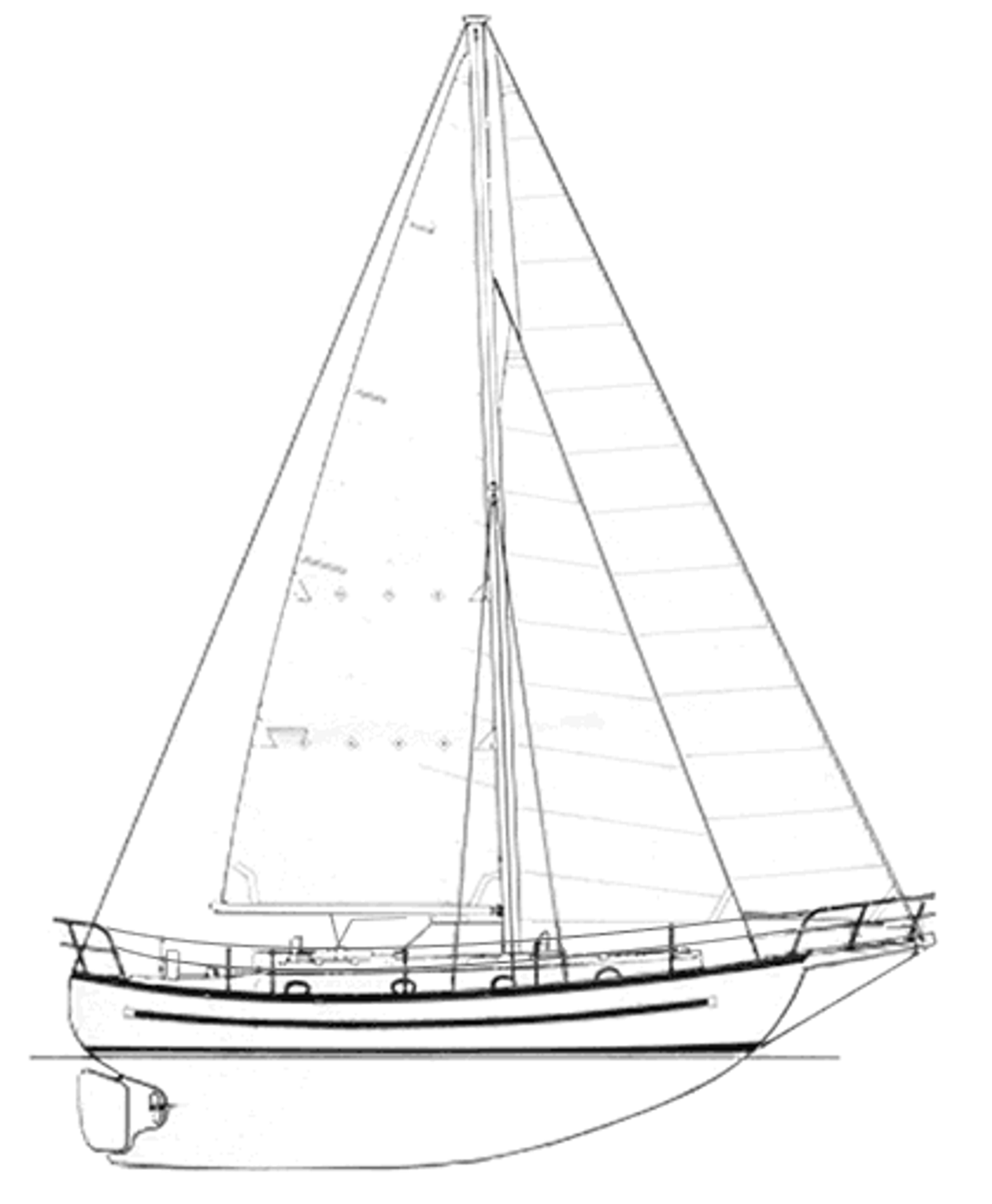
The Westsail 42 is the center-cockpit member of a two-boat family drawn by William Crealock. The Westsail 43 uses the same hull with an aft cockpit and long trunk cabin. Former Westsail manager Bud Taplin records that prospective buyers chose the center-cockpit arrangement first at a 1974 sales meeting, so the company assigned it the 42 name and began tooling that spring.
Westsail and Westsail International produced hulls 1 through 116. Jomarco bought the molds after the company closed in 1979 and built three more, bringing the known total to 119. Boats were sold both complete and in kit form, so finish quality and system layouts vary across the fleet.
Hull and Rig
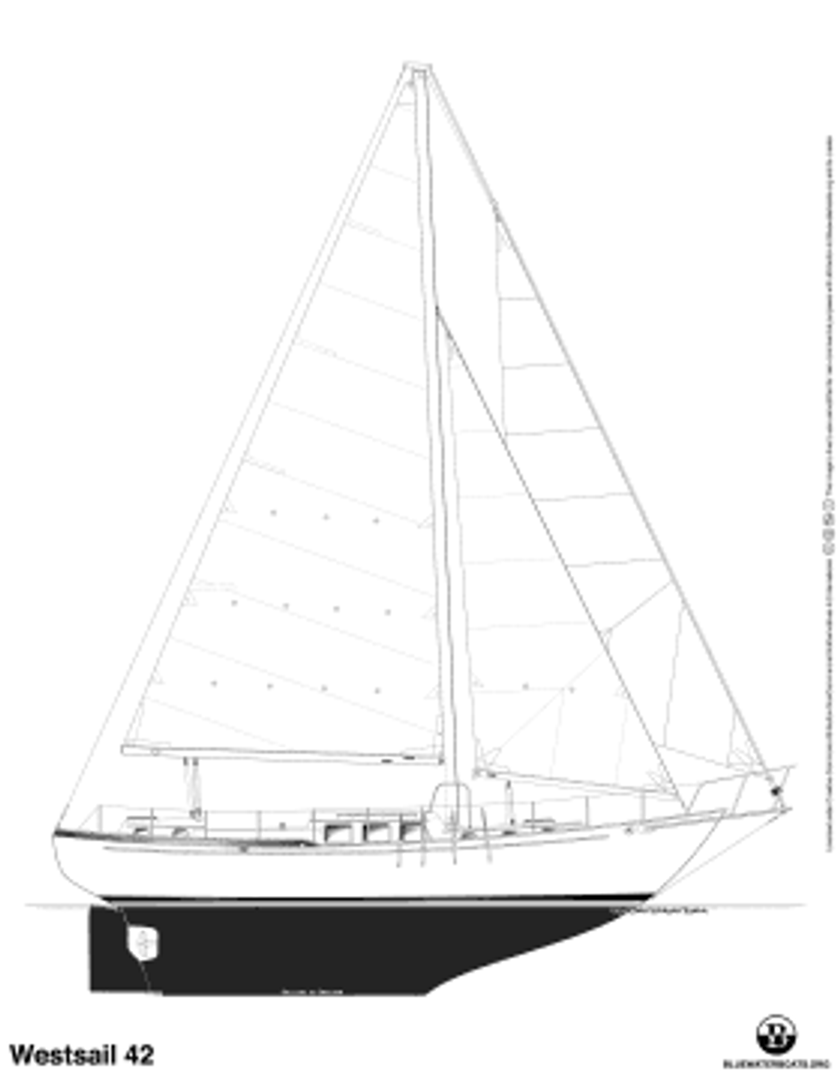
The hull is 42 feet 11 inches on deck with a 33-foot 4-inch waterline, 13-foot beam, and 5-foot 8-inch listed draft. SailboatData uses 31,500 pounds of displacement and 12,000 pounds of ballast. Taplin’s historical account describes the original design as 32,000 pounds, while surviving boat records sometimes list 11,000 pounds of ballast. These differences may reflect design, build, and loading variations. The page uses the SailboatData class figures for consistency.
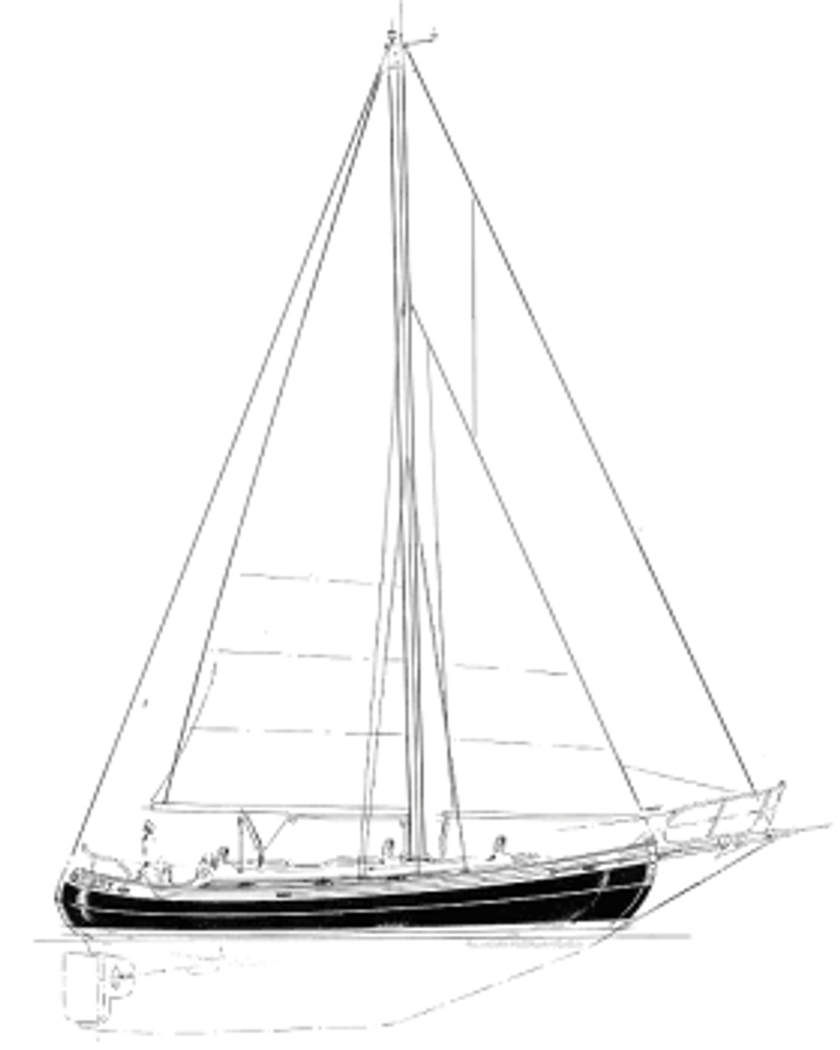
The long keel and attached rudder favor directional stability and protection over quick turning. Crealock gave the stern a fuller canoe shape rather than copying the Westsail 32’s double-ended hull. The center cockpit creates a separate aft cabin and a protected passage between the main living spaces.
SailboatData treats the cutter as the standard rig and reports 948 square feet. Ketch and yawl rigs were also offered, and surviving examples can carry different spar and sail dimensions. A buyer should identify the actual rig rather than rely on the model name or a generic sail plan.
Under Sail
The class numbers put the 42 firmly in heavy-displacement territory. The long waterline gives it more pace than the smaller Westsails once it has wind, but the weight and wetted area still work against acceleration in light conditions. The long keel should hold a course well offshore and ask for planning when turning or backing under power.
The cutter breaks the working area into a main, staysail, and headsail. A ketch adds more combinations and smaller individual sails, useful to a short-handed crew if the deck layout and reefing systems are kept simple. The archived review calls the boat spirited and sea-kindly, but it gives no measured test or named passage. Those descriptions should not substitute for a trial sail in the conditions a buyer expects to use.
Construction and Accommodation
The archived account describes a heavily laminated fiberglass hull, a plywood-cored deck, encapsulated ballast, and a flanged hull-to-deck joint under the caprail. That construction description has not yet been matched to an original manual in the source list. A survey should establish how each boat was built and finished, especially if it left the factory as a kit.
The raised saloon, center cockpit, and aft cabin provide unusual separation for a cruising couple and guests. Tankage figures vary considerably among surviving boats. SailboatData lists 200 gallons of fuel and 300 gallons of water, while individual listings show other capacities. Measure the installed tanks and inspect their supports, access, and condition.
What to Inspect
John Neal’s Mahina list calls traditional Westsails sturdy but rates the line 2/5 and warns about leaking aluminum fuel tanks. Because the list groups several Westsail models, treat that as a focused inspection item rather than a class-wide finding for the 42.
Check the deck core around teak fasteners and deck hardware, the hull-to-deck joint beneath the caprail, chainplates, rudder structure, ballast encapsulation, and every owner-completed structural detail. Confirm the rig, displacement paperwork, and tank material on the individual hull. No named ocean crossing by a Westsail 42 is yet attached to this record, so its current offshore assessment rests more on design and construction than documented voyage evidence.