Overview
The Najad 390 is a Thorwald Karlsson design built by Najad Varvet on Orust, Sweden, between 1984 and 1995. Najad itself was founded in 1967 by Berndt Arvidsson and Karlsson, launching its first yacht, a 34-footer, in 1971. By the mid-1980s the yard had settled into a house style: solid, conservatively engineered cruisers finished to a high standard, built on an island with a boatbuilding tradition that predates fiberglass by centuries.
Design and Construction
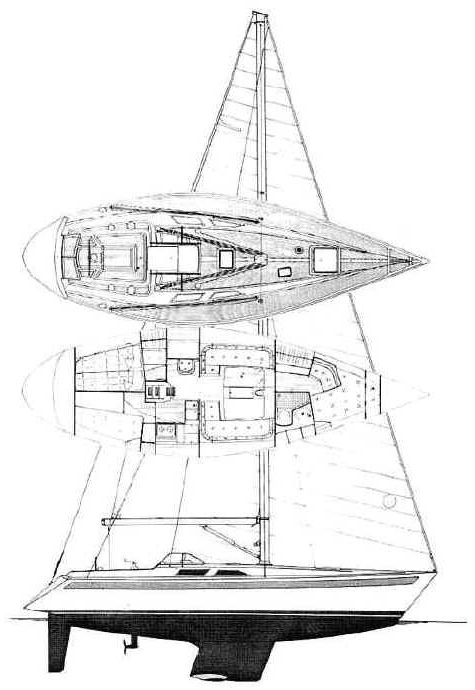
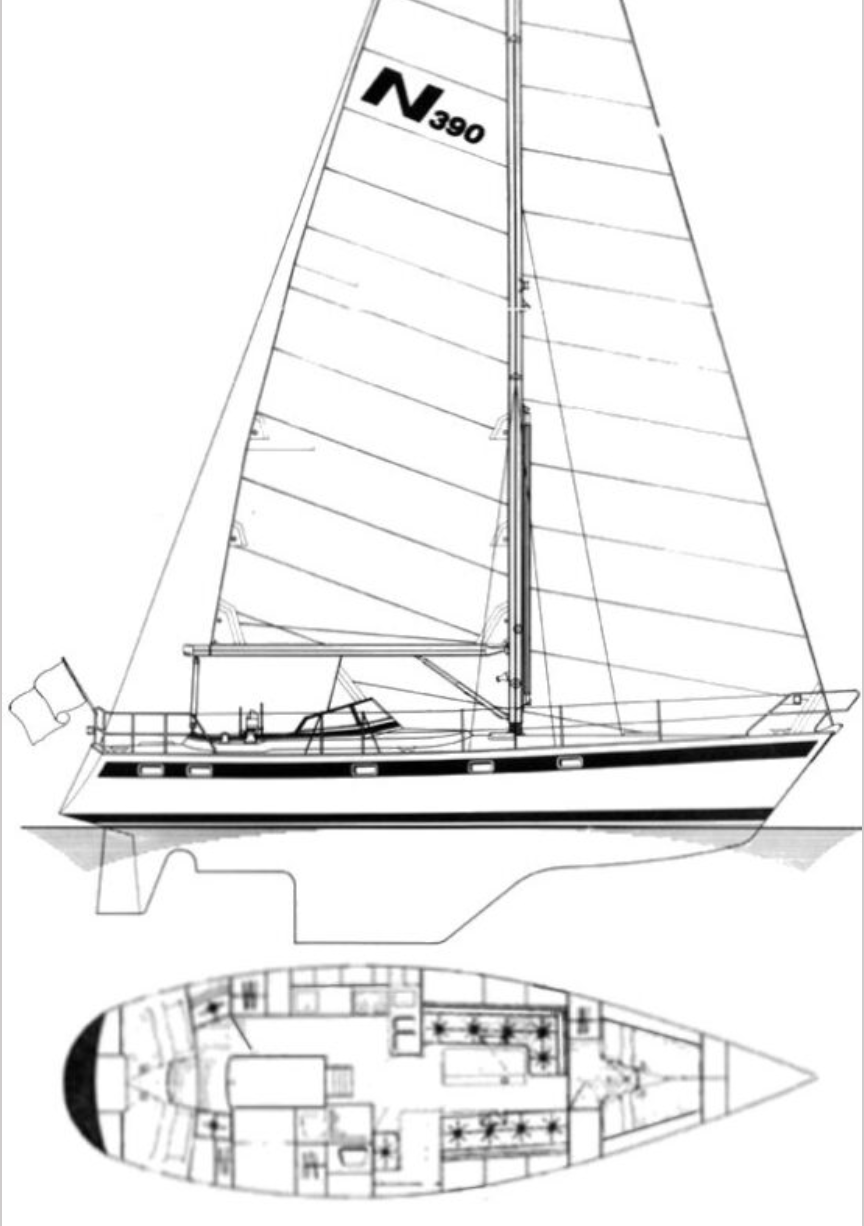
At just under 21,000 lb displacement and a beam of 11 ft 6 in, the 390 is a heavier, more voluminous boat than its 38.5 ft LOA might suggest, with a fin keel, skeg-hung rudder, and 6 ft draft. Ballast comes in at 42 percent of displacement, in line with a boat meant to carry a full offshore rig and stand up to it. The build reflects Najad’s general approach of the period: hand-laid fiberglass, a molded structural grid, and the wood joinery the yard is known for. Yachting Monthly’s reviewer found a Lloyds-approved single-skin hull with no foam sandwich for water to infiltrate, an encapsulated long fin keel, a rudder protected by a skeg, and a deep forefoot that keeps the boat from pounding to windward. The 390 is a centre-cockpit boat with flush decks, high coamings and granny bars at the mast, and all lines are led to the mast. That keeps the cockpit clear, but the reviewer notes you must leave it to adjust anything except the sheets.
Under Sail
An SA/D of about 17 and a capsize screening figure of 1.67 put the 390 solidly in offshore-cruiser territory rather than performance-cruiser: powerful enough to keep moving in a seaway, conservative enough to stay controllable when it breezes up. John Neal’s Mahina list rates the marque 5 out of 5, specifically praising “excellent sailing performance” alongside “good tankage, storage and high level of craftsmanship,” a combination consistent with what the boat’s numbers suggest. On Yachting Monthly’s test the 390 made 6 knots close-hauled in 15 knots of apparent wind and 5.3 knots close-hauled in 10 knots. The reviewer found the large rudder nicely balanced and said the boat will not match the downwind speed of a flat-bottomed modern cruiser but keeps up 6 knots whatever the weather.
Buyers Notes
As with any 1980s-era production boat, have a surveyor check deck coring around hardware and chainplates for moisture intrusion, and verify the condition of the original Volvo Penta MD30 or any replacement engine and its mounts. Najad’s reputation for craftsmanship generally holds up on brokerage boats of this vintage, but confirm maintenance records for the standing rigging and any tankage upgrades, since the 390 predates Najad’s later production runs by a decade or more. Yachting Monthly found 6 ft 2 in of headroom in the saloon, both saloon settees converting to doubles, and less light below than a coachroof boat because of the flush decks. The cockpit sole has a soft patch so the engine can be craned straight out. The reviewer flagged one problem in the aft cabin: access to the top of the rudder stock is under the bunk.