Overview
The Oyster 45 is a Holman and Pye center-cockpit deck-saloon cruiser that replaced the Oyster 435. Oyster delivered 23 of them between 1996 and 2004.
Design and Construction
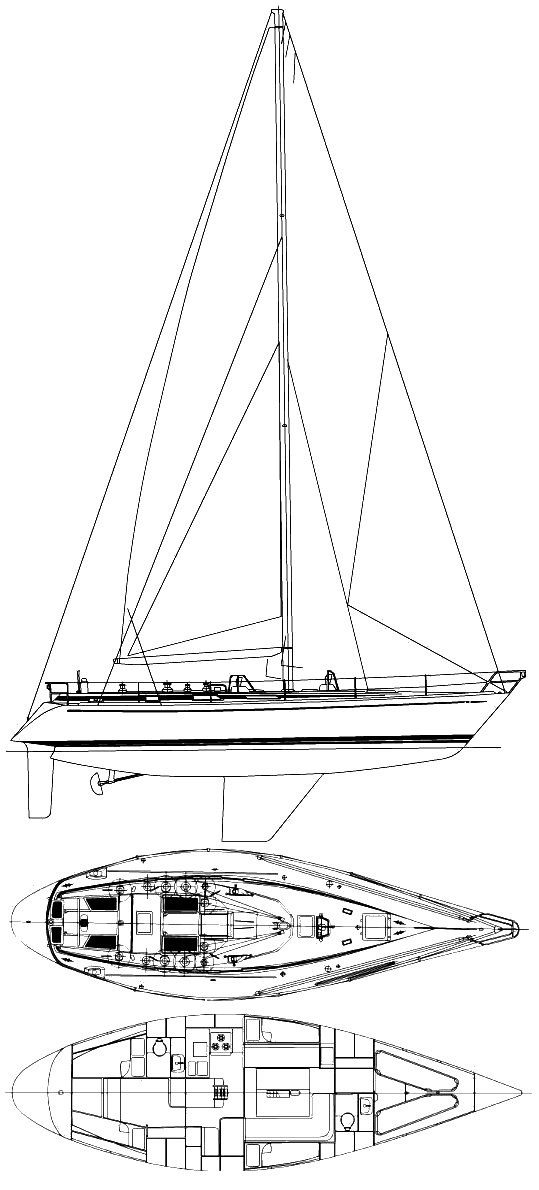
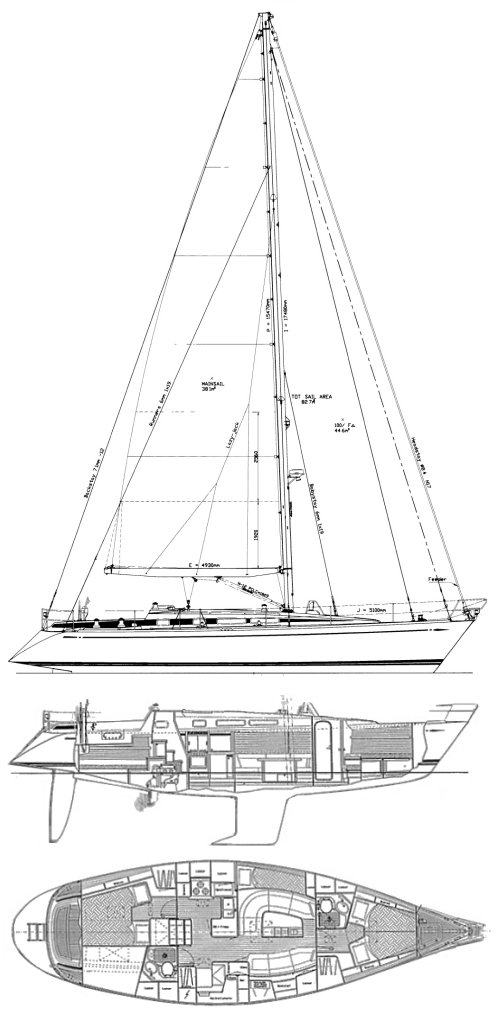
Holman and Pye increased the hull volume over the 435 to give three proper cabins and a saloon that runs the full beam of the boat. The keel moved to an external lead bulb, which Oyster says made the 45 stiffer and more responsive, and the foam-filled rudder hangs on a solid stainless stock behind a stainless-reinforced skeg. The hull is solid fiberglass, hand-laid and stringer-reinforced to Lloyds-approved specifications. Draft is 6 ft 6 in. Cruising World’s 2002 review says the 45 was developed to succeed the 435, of which more than 60 had been built, with a brief to raise both the accommodation and the performance of the older boat. The deck is balsa-cored, sealed with Sikaflex along an in-turned flange and fastened with 6mm stainless bolts, and the keel is antimony-hardened lead fastened externally to a heavily reinforced keel stub.
Under Sail
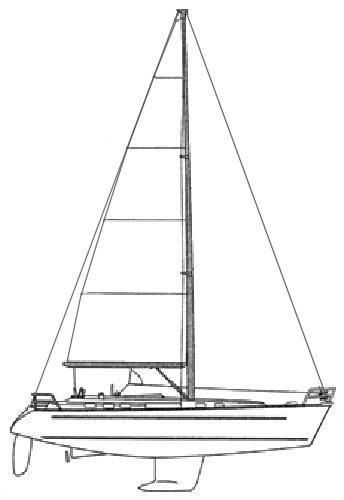
The masthead sloop carries about 886 sq ft. On Cruising World’s 24-hour trial off south Florida in 11 to 15 knots true, she held 6 to 7.3 knots to windward and sailed within 30 degrees of the apparent wind. The tester found a steady, loping motion through swells, responsive steering, and a strong boat that is well behaved in ocean conditions. The rig is a two-spreader Selden masthead sloop with a Hood Seafurl jib furler and a full-batten main. The standard 59-horsepower Volvo drives a saildrive unit amidships behind the companionway, reached from the galley or from the workshop and wetlocker to starboard. Fiberglass fuel and water tanks (120 and 168 gallons) sit under the saloon sole.
Buyers Notes
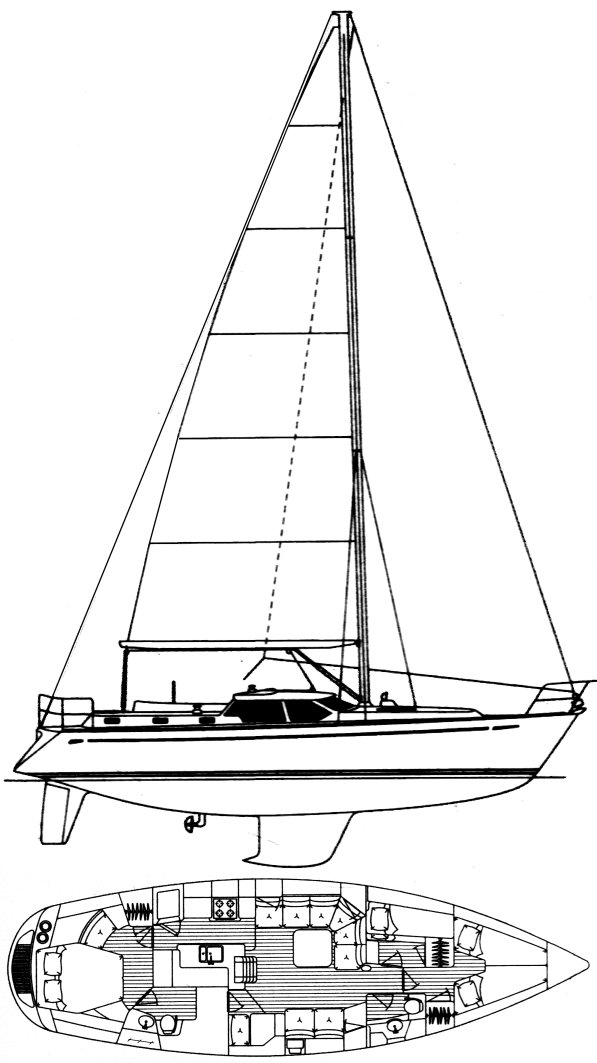
Neal notes that Oysters lose value on resale, which makes the larger models good used buys. With only 23 built, check each boat’s equipment and maintenance record individually. Below, the interior is finished in the owner’s choice of teak, cherry or American white oak, with a master stateroom aft, a V-berth double forward and a guest cabin with upper and lower bunks; Cruising World counted sleeping for eight with cabins for six.