Overview
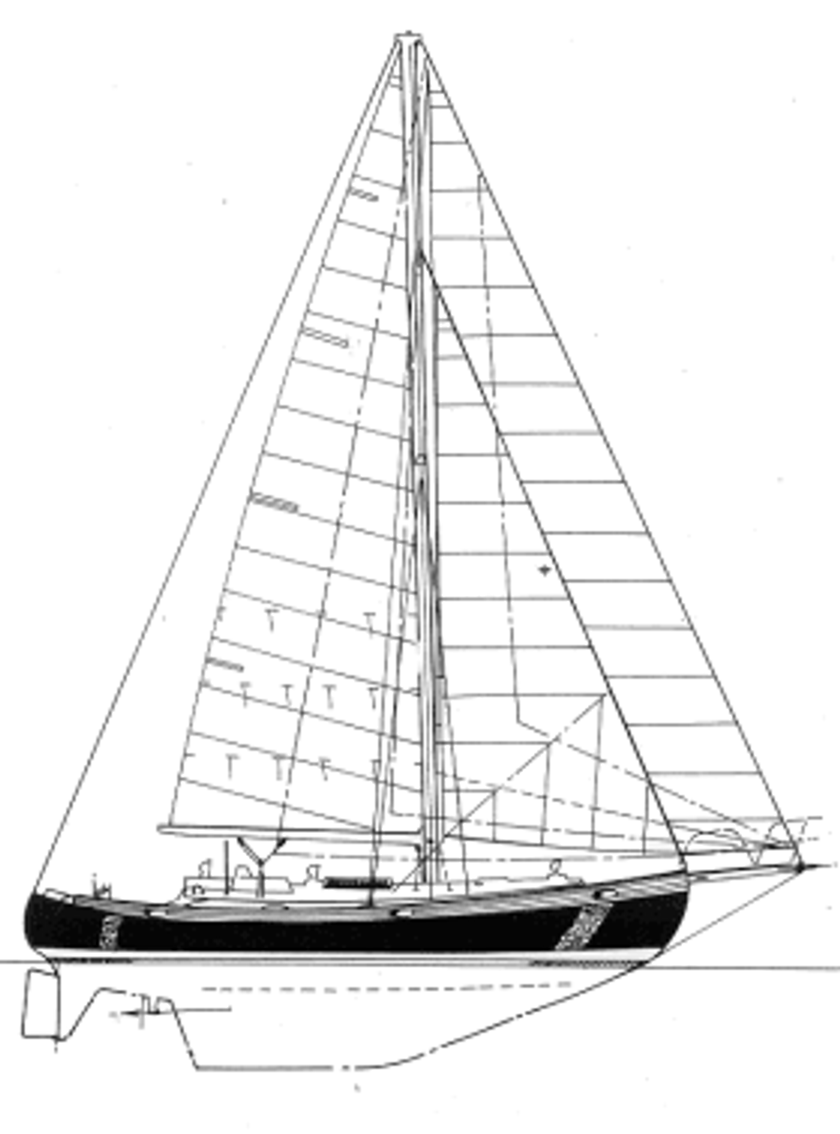
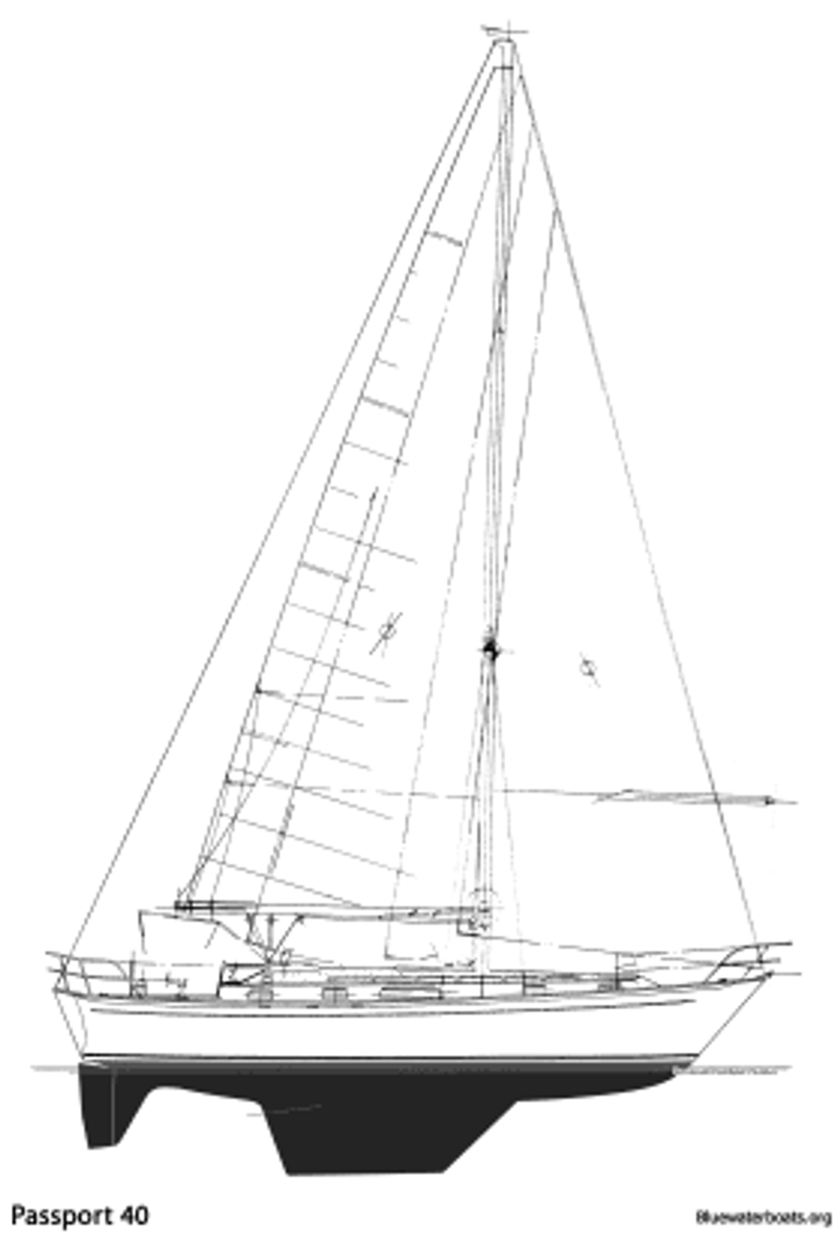
Robert Perry drew the Passport 40 not long after his groundbreaking Valiant 40, and the family resemblance below the waterline is close. Above it, the most obvious departure is a standard transom in place of Perry’s usual double-ended canoe stern. Introduced in 1980, it became one of his more successful 40-footers, combining a sensible interior, solid Taiwanese construction, and sailing manners described as nimble, fast, and sea-kindly.
History
The project began in 1978 when Wendell Renken of Passport Yachts wrote to Perry from Taiwan commissioning a 40-footer, asking for an interior in the spirit of Perry’s earlier Freeport 36 collaboration with Islander Yachts. Perry, unconvinced by the letterhead (which advertised “Yacht Builders, Frozen Foods, and Eel Farms” in the same breath), asked for a substantial upfront fee rather than his usual commission arrangement, and got it. The boat was built by the King Dragon yard in Taiwan during the boom years of Taiwanese boatbuilding, when exchange rates and skilled but inexpensive labor favored the trade. Production ran from 1980 to 1991, totaling 148 boats, before Perry stretched the design a foot into the Passport 41 (adding a reverse transom and swim platform) and later into the Passport 43 (a further-extended stern, five more feet of rig, and a two-spreader rig revision). Passport 41 and 43 production together add another 163 boats to the wider family.
Design and Construction
Like most Taiwanese-built GRP boats of its era, the hull is heavy and strongly built, with Renken reportedly specifying a thicker layup than Perry’s own design called for, on the theory that solidity is what buyers wanted. Ballast is iron encapsulated in GRP. Decks were originally marine-ply cored with resin barriers against rot, later switching to Airex foam; the hull-to-deck joint is through-bolted on an inward flange with an embedded steel stanchion-mounting strip that has since made some refits more difficult. The mast is keel-stepped on most boats, and bulkheads and furniture are glassed directly into the hull. The boat left the factory as a masthead sloop, but the great majority of surviving boats have since been fitted with a removable inner forestay, producing a double-headsail cutter rig better suited to ocean work.
Under Sail
Owners and reviewers describe the Passport 40 as well balanced, quick, and easy on the crew thanks to a soft, sea-kindly motion, performing respectably in light air and coming alive as the wind builds, especially on a reach. It tracks well enough downwind for confident spinnaker flying under self-steering. Trade-wind routine runs of 130 to 140 miles a day are commonly reported, with owners hand-steering in favorable conditions describing days as high as 190 to 200 miles. Beyond Due West’s own two Victoria-to-Maui finishes, the design shows up repeatedly in the Pacific Cup’s official results, 10 entries across 8 editions between 1990 and 2010, with the same two named hulls, Cayenne and Trial Run, returning across multiple editions each.
Buyers Notes
The design has held its value well, and most examples on the market have been kept up. Worth checking on any Passport 40: teak deck fastenings as a common source of leaks and core rot; standing rigging for age and wear; the original stainless chainplates, a known weak point for leaks and corrosion; the black-iron fuel tanks, externally glassed over at the factory to slow corrosion but still worth inspecting (later boats switched to aluminum); and mild steel in the rudder cage and mast step, both reported corrosion points. Some boats show joinery creep, plausibly linked to over-tensioned standing rigging in the past, worth a close look during survey. The Passport 40 owners’ email list on Google Groups is a useful resource for model-specific questions.