Overview
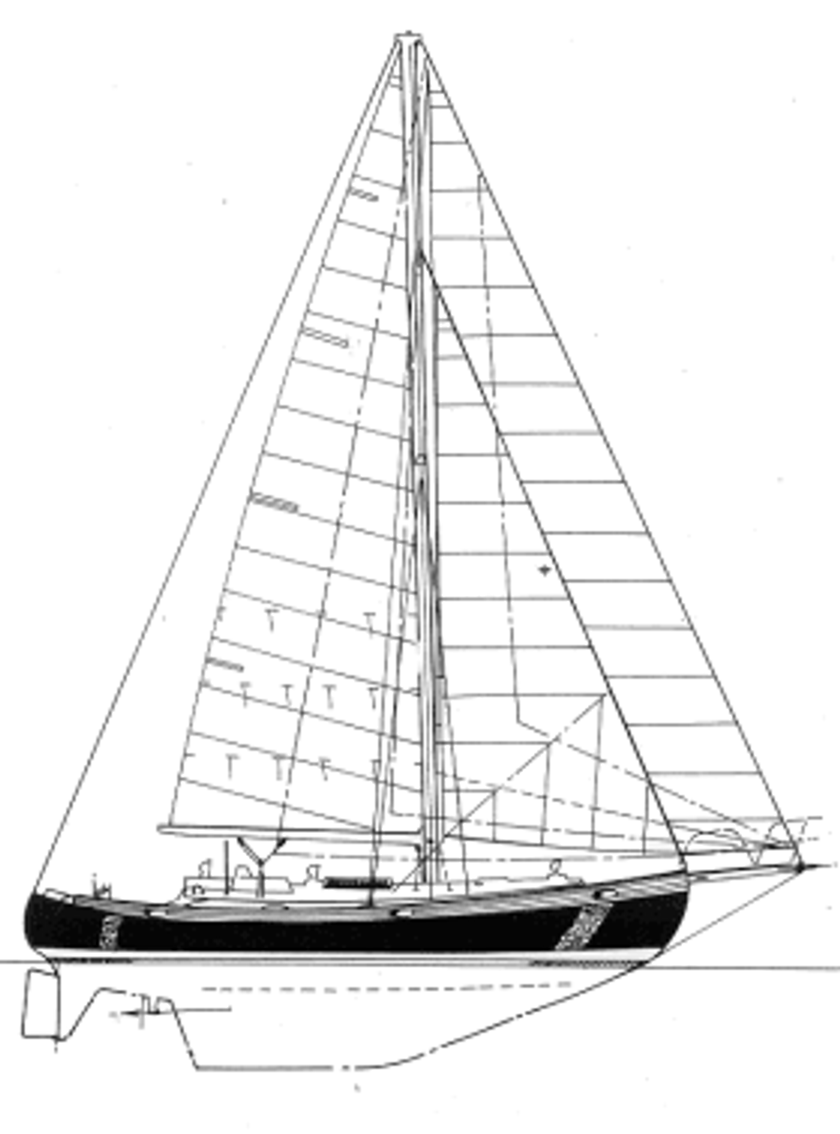
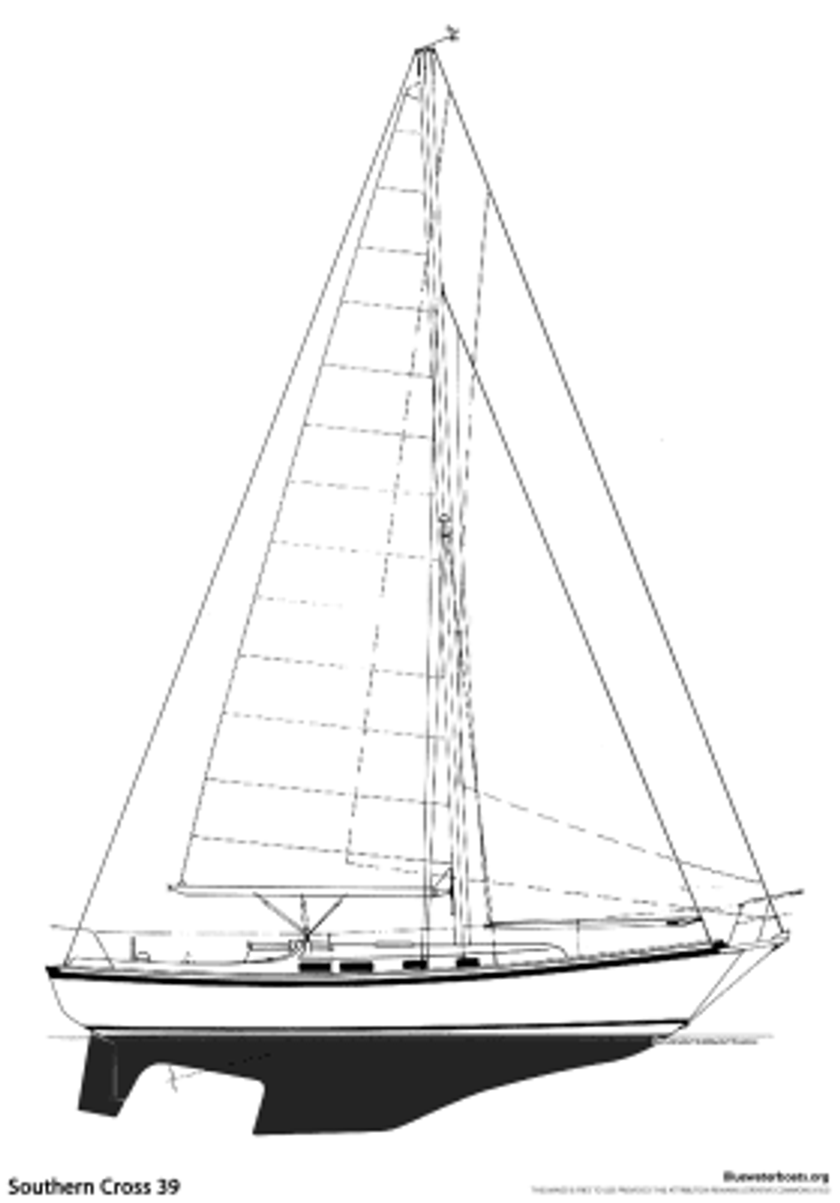
Thomas Gillmer drew the Southern Cross 39 as the largest of the Rhode Island-built Southern Cross line. It kept the raised sheer, canoe stern, and cutter rig associated with the smaller boats, but used a fin keel and skeg-hung rudder. SailboatData records a 31-foot waterline and 21,000-pound displacement, placing it firmly in the heavy cruiser range.
C. E. Ryder began production in 1981. The Southern Cross Owners Association says the first 13 hulls were factory finished. Later boats included kits completed outside the yard, and some were labeled Gillmer 39 from about 1985 to distinguish those finishes. Production ended when the Ryder yard closed in 1990.
Construction and Variants
The owners association describes an Airex-cored fiberglass hull and a balsa-cored deck and cabin. Internal ballast sits low in the hull. SailboatData lists 7,676 pounds of lead, while the association says most boats used lead. That wording leaves open the possibility of another ballast material in some hulls, so a buyer should identify the actual installation instead of relying on a model-wide assumption.
Kit completion is the largest source of variation. Bulkhead positions and interior joinery may differ, and workmanship outside the molded shell can range widely. Wiring, plumbing, tank supports, furniture tabbing, and deck penetrations need inspection as individual work even when the underlying hull came from the same mold.
The owners association also records a propulsion change. Early boats used a V-drive with an exposed propeller. Later construction moved the propeller into an aperture at the rudder. This affects machinery access, shaft arrangement, and underwater protection, so the hull number and actual installation matter.
Specification Conflicts
The owners association gives a beam of 12 feet 11 inches and a draft of 5 feet 4 inches. SailboatData gives 12 feet 1 inch and about 5 feet 4 inches. The beam difference is too large to hide as rounding. PassageBoats retains the association’s 12-foot 11-inch figure because it is the class source, but the boat should be measured before committing to a berth, travel lift, or transport plan.
Both current sources agree on 774 square feet of sail area and 21,000 pounds of displacement. SailboatData lists 50 gallons of fuel and 120 gallons of water. The association places water tanks in the keel area and the fuel tank beneath the aft berth, useful locations to confirm when checking access and corrosion.
Under Sail
The separated fin keel and skeg-hung rudder give the 39 a different underbody from the long-keel Southern Cross 31. Its reported sail-area-to-displacement ratio is about 16.3, while the displacement-to-length ratio is about 315. Those figures suggest a boat that should carry sail adequately once moving, but they do not replace a sea trial in light air, reefed conditions, and a following sea.
No named ocean passage by a Southern Cross 39 was verified in this pass. The design and construction sources support continued consideration for offshore preparation, while John Neal’s current Mahina list rates the Southern Cross range 2 out of 5 and warns about age, moderate build quality, and limited deck storage. That difference between design promise and fleet age belongs in the purchase decision.
Accommodation
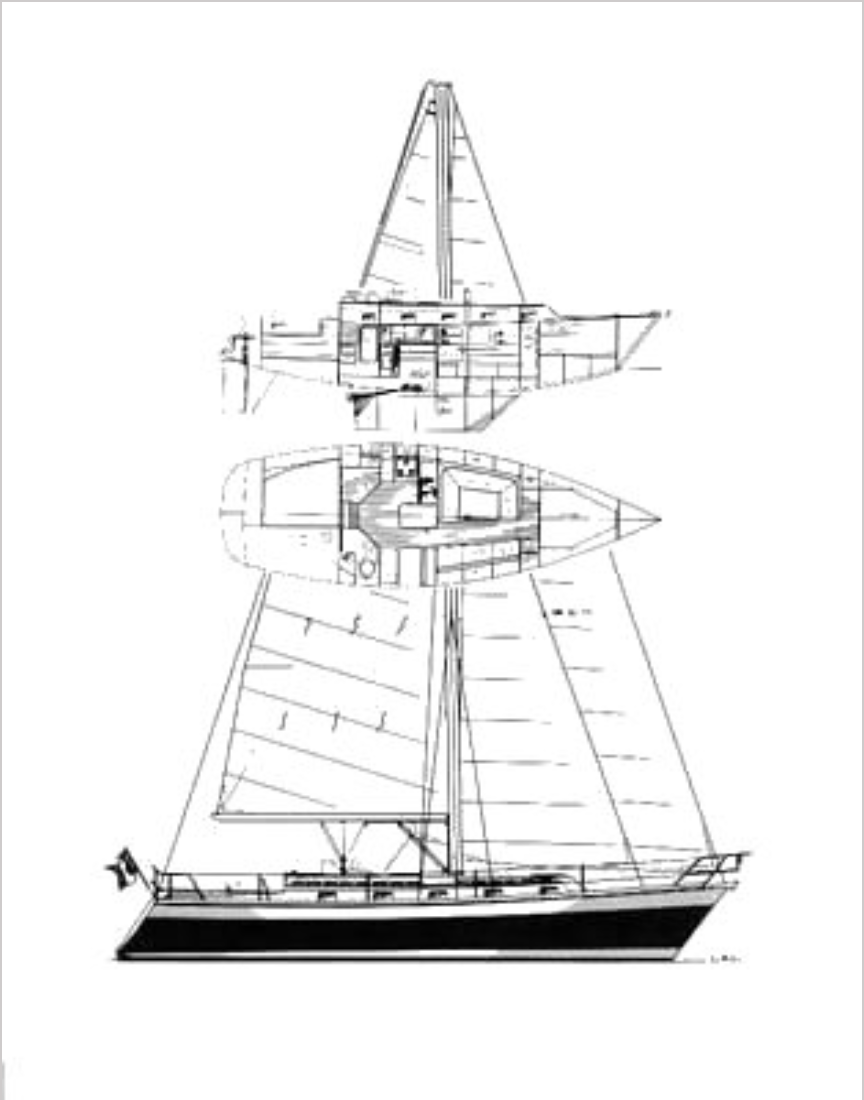
The common plan has a V-berth forward, a port quarter berth, and a U-shaped galley near the middle of the boat. The owners association notes that some midship bulkheads were moved for alternate layouts. A boat advertised with the standard plan may therefore have meaningful structural and accommodation differences.
Interior volume is generous compared with the 31, but stores and systems for passage work must still have secure locations. Kit-built lockers and furniture should be checked for positive latches, rounded edges, handholds, and sound attachment to the hull.
Buyers Notes
Determine whether the boat was factory or owner completed and identify the propulsion arrangement. Inspect the hull and deck core around penetrations, bulkhead tabbing, chainplates, mast support, ballast area, skeg, rudder bearings, and tank supports. Measure the beam and draft directly because the published beam figures conflict.
The Southern Cross 39 is uncommon enough that model reputation cannot substitute for records. A careful survey should separate the quality of the Ryder shell from later joinery, systems work, and decades of owner modifications.