offshorecircumnavigation-provenheavy-displacementshoal-draft

Shannon 37

Shannon Yachts, Rhode Island · 1985–1993 · Ketch rig

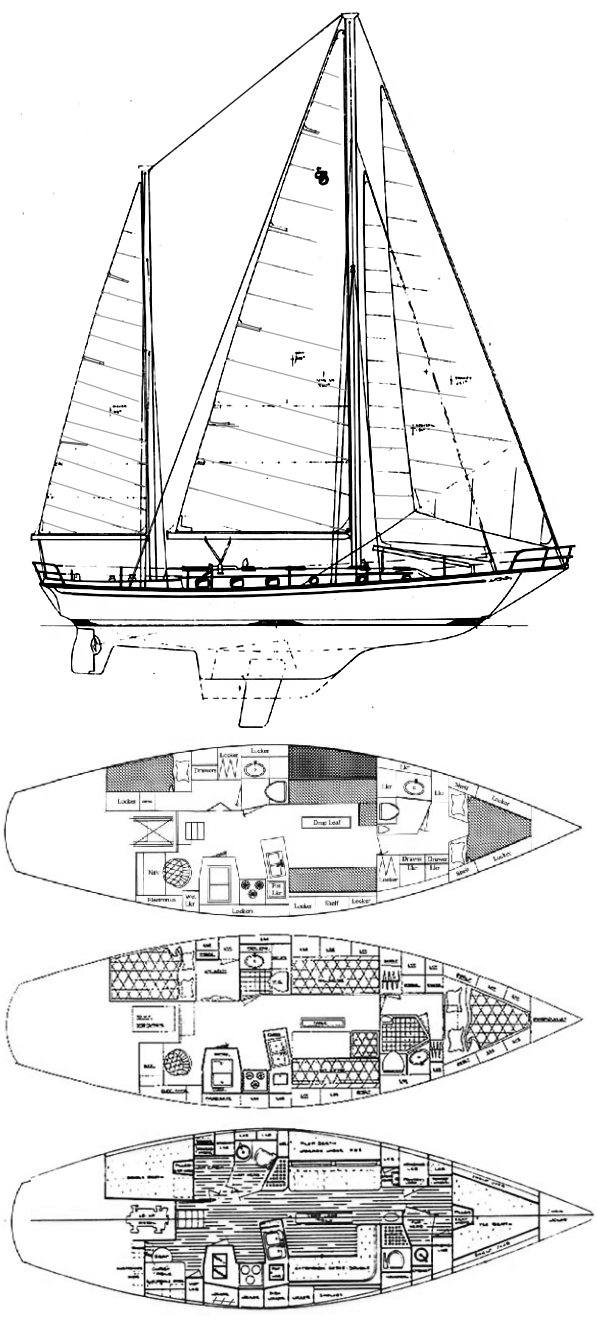
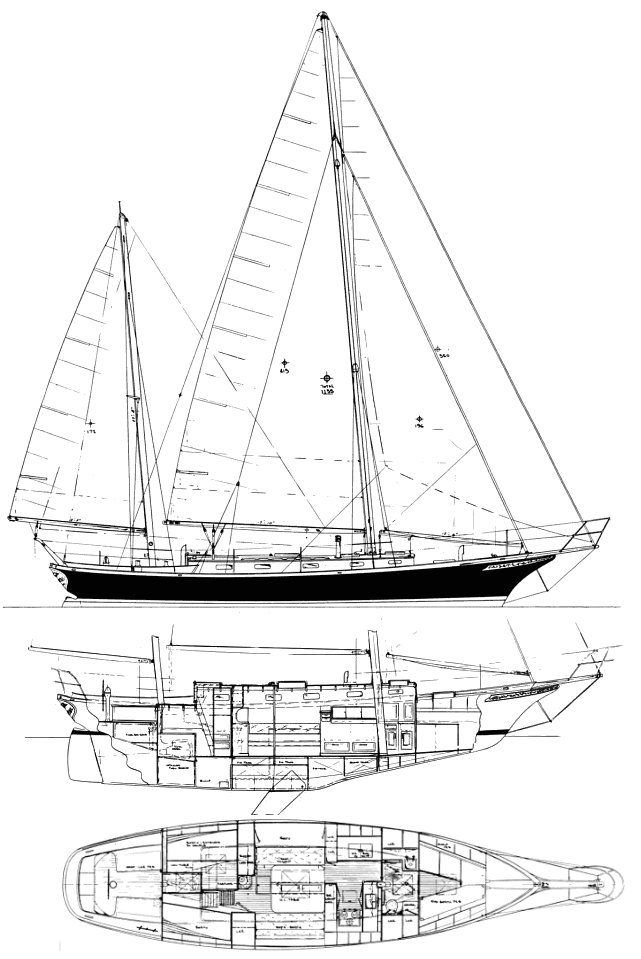
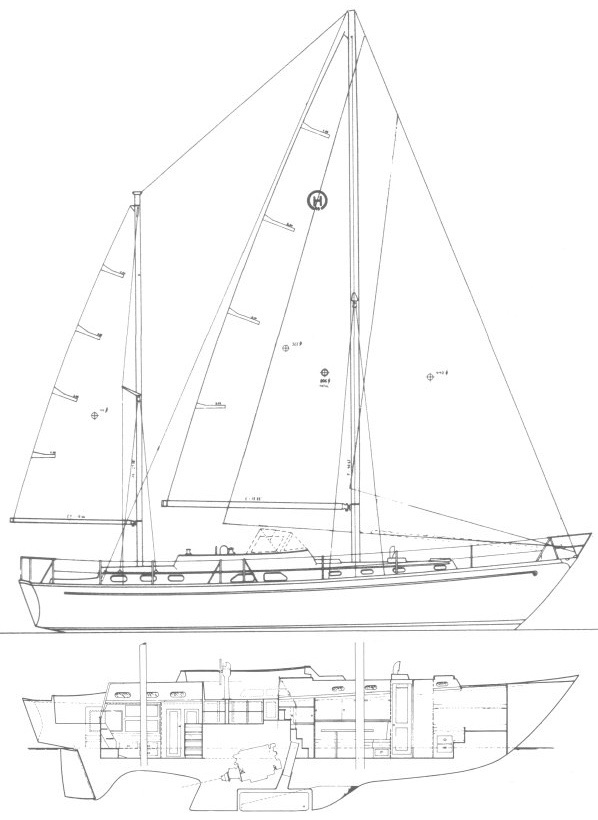
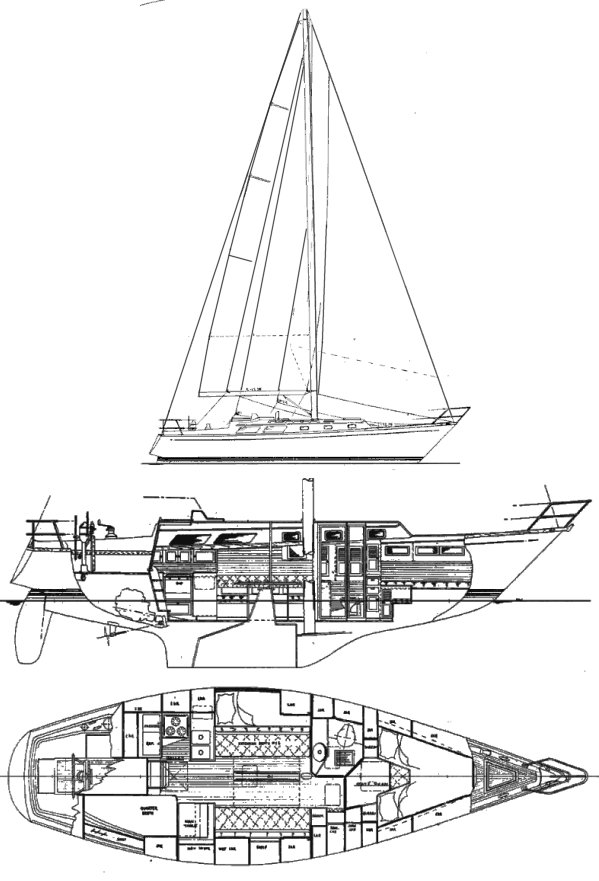
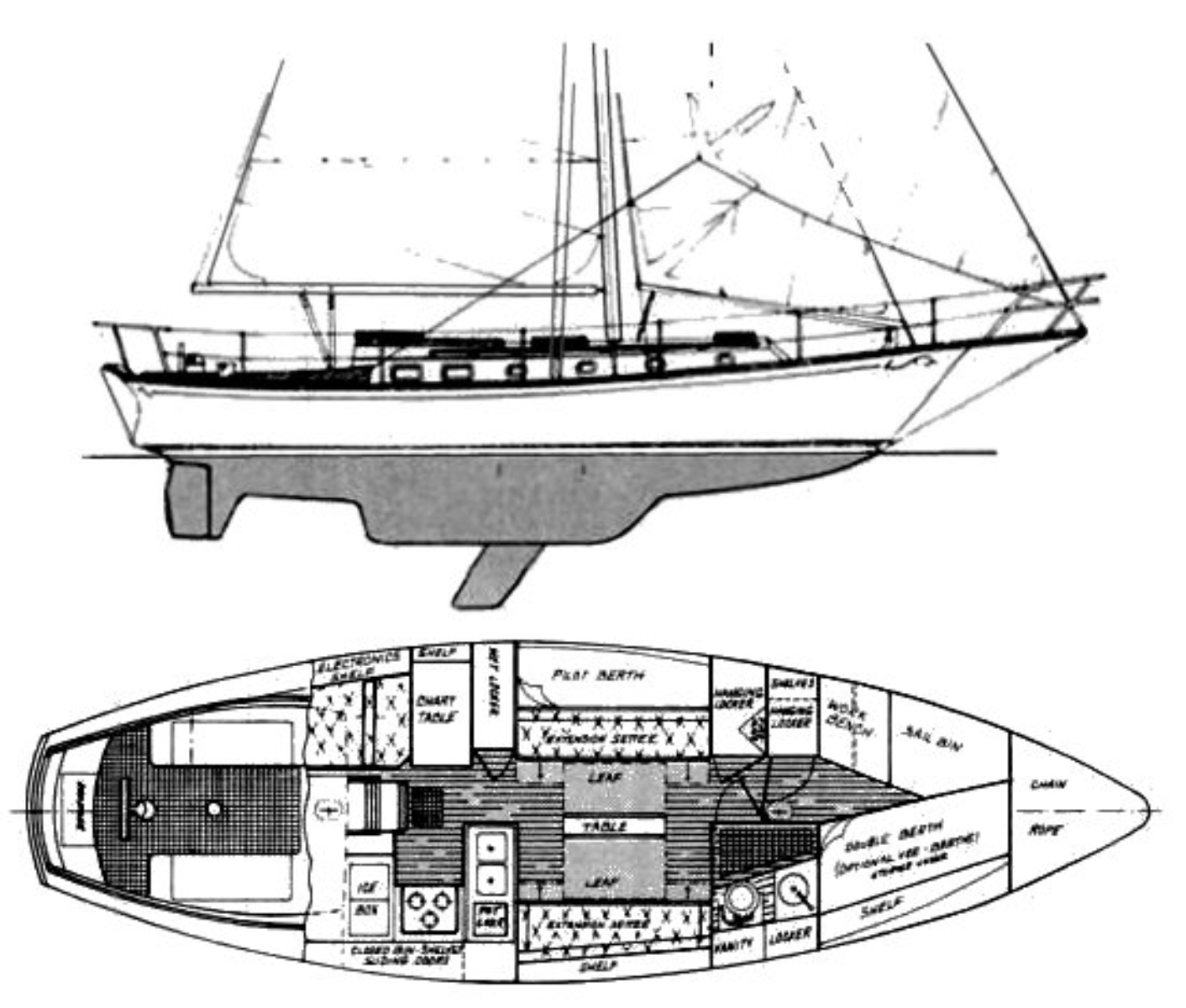
Shannon 37 profile drawing
LOA37.75'
Beam11.5'
Draft4.25'
Displ.8.8t
Rigketch
HullFiberglass

Bluewater Evidence · Ocean Proven

95% confidence

Beth Leonard and Evans Starzinger sailed their Shannon 37 ketch Silk around the world on a 40,000-mile tropical circumnavigation in the 1990s. Landfall, a Shannon 37 cutter, has logged about 50,000 nautical miles with her owners, including a rounding of Cape Horn, a 42-day passage from Chile to French Polynesia, a Pacific crossing to Australia, the Tasman Sea to New Zealand in February 2023, and a return to South America through the Roaring Forties. Practical Sailor's review calls the boat designed and built to be taken offshore.

Overview

The Shannon 37 is a heavy, shoal-draft cruising boat that Walter Schulz drew for his own yard, Shannon Yachts of Bristol, Rhode Island. It was a redesign of the earlier Shannon 38, and only 19 were built between 1985 and 1993. Most were rigged as ketches with a staysail on an inner forestay; the rest were cutters. Two of those few boats have documented long voyages: Silk, a ketch that went around the world, and Landfall, a cutter that has crossed the Pacific and rounded Cape Horn.

Design and Construction

The hull carries a modified fin keel with a centerboard that retracts into it. Board up, the boat draws 4 feet 3 inches, so it can anchor in water most 37-footers avoid; board down, it draws 7 feet 7 inches for windward work. Displacement is 17,500 pounds on a waterline of just under 31 feet, with 6,500 pounds of lead ballast, and the rudder hangs on a skeg.

Practical Sailor’s used-boat review praises the attention to detail below and the teak handgrips along the overhead, and notes that white panelling on the coachroof and headliner lightens what is otherwise a dark teak interior. The centerboard trunk takes up stowage space a fin-keel boat would keep.

Under Sail

Practical Sailor describes the boat as seakindly and as tracking well even dead downwind. It puts the average speed at about 5 knots across a wide range of conditions and says windward performance falls off as the apparent wind moves forward. The review prefers the cutter for going to windward and the ketch for the wider choice of downwind sail combinations.

Beth Leonard and Evans Starzinger, who sailed Silk around the world, liked the ketch offshore because it kept every sail small, and they report that she hove to well under mizzen alone. They averaged 130 to 135 miles a day on long passages, with a best of 178 miles in 24 hours. Silk carried twin headstays for running with two jibs, a 7-foot bowsprit, and after Madeira a Monitor windvane, which they say steered her for most of the next 25,000 miles.

Landfall, a Shannon 37 cutter, has sailed about 50,000 miles with her owners, by the account of Allison, the owner’s stepdaughter. The voyages include a rounding of Cape Horn, a 42-day passage from Chile to French Polynesia, and the Pacific to Australia. In February 2023 Allison and her partner James joined the boat for a 15-day crossing of the Tasman Sea from Western Port to Opua, and the boat later returned to South America through the Roaring Forties.

Buyers Notes

With only 19 built, a Shannon 37 rarely comes up for sale. Practical Sailor flags three things to check. The centerboard trunk was originally sealed and bolted shut, some boats had mixed metals inside it, and work on it needs a haul-out. The teak and Plexiglas hatches and the teak toerail let water in with age. On boats with two headstays, the masthead crane welds can crack under load. Batteries in the cockpit locker are harder to reach than on most boats.
Passage records

Silk· Beth Leonard and Evans Starzinger1995

Tropical circumnavigation from Newport, Rhode Island

Completed a 40,000-mile circumnavigation in the 1990s (year approximate).

Source: Beth Leonard and Evans Starzinger - S/V Silk (archived)

Landfall· Dennis and Barb, with Allison and James2023

Western Port, Australia to Opua, New Zealand across the Tasman Sea

Completed the crossing in 15 days, February 2023; the boat had earlier rounded Cape Horn and sailed from Chile to French Polynesia and on to Australia.

Source: Allison & James - Australia to New Zealand on a 37ft Shannon Sailboat

Sojourner2014

ARC (2014)

Finished.

Source: World Cruising Club: ARC 2014 results

Known Issues

Centerboard trunkmoderatePassageBoats editorialAll years, 1985-1993

Practical Sailor reports that the trunk top was originally fastened with permanent sealant and bolts, making it hard to open, that some boats had mixed metals inside the trunk causing electrolysis, and that the trunk sits below the waterline, so repairs need a haul-out.

Inspection: Ask whether the trunk has been opened and the pin and pennant renewed, and look for corrosion at the board hardware on a haul-out.

Deck hatches and toerailmoderatePassageBoats editorialAll years, 1985-1993

Practical Sailor reports that the teak and frosted Plexiglas hatches tend to leak with age and that the teak toerail traps water on deck.

Inspection: Check hatch frames and the deck along the toerail for leaks and soft spots.

Masthead craneseriousPassageBoats editorialBoats with twin headstays

Practical Sailor notes that the loads from two headstays can crack the masthead welds.

Inspection: Have a rigger inspect the masthead crane welds before an offshore passage.

What sailing channels say about the Shannon 37, quoted from video transcripts with a link to the exact moment. Opinions belong to the speakers; the written review above stays independent of them.

discusses

The owner says Shannon built his boat semi-custom, with twin headstays. He carries a 160 genoa on one and a Yankee on the other, plus a staysail that is self-tacking, runs almost to the mast and is controlled entirely from the cockpit.

Sailing Triteia

YARNS PODCAST: A Boat Tour of the Shannon 37 SV Landfall in New Zealand

▶ watch at 0:28
discusses

The owner says he uses the 160 genoa "not that often" and that his boat likes a 100 percent headsail. If he bought a new one he would choose maybe a 150 or even a 140, and in those situations he can usually run the spinnaker instead.

Sailing Triteia

YARNS PODCAST: A Boat Tour of the Shannon 37 SV Landfall in New Zealand

▶ watch at 2:40
discusses

The owner has single-line reefing, so he reefs the main from the cockpit, and says the boat is almost always in the second reef. He keeps most of the power in the headsail and finds the boat hard to balance with too much mainsail up.

Sailing Triteia

YARNS PODCAST: A Boat Tour of the Shannon 37 SV Landfall in New Zealand

▶ watch at 3:31
discusses

The owner says an electric windlass is a must with the heavy anchor. He changed his chain to quarter-inch in New Zealand because of the weight in the bow with the 85 lb CQR hanging out there, and he takes the anchor off the bow for passages. Another cruiser in the conversation says 5/16 HT works well for him.

Sailing Triteia

YARNS PODCAST: A Boat Tour of the Shannon 37 SV Landfall in New Zealand

▶ watch at 3:56
discusses

Fuel capacity is about 70 gallons in the tank, which the owner calls not a very big tank. On the passage to Chile he carried 16 cans on deck because no fuel was available.

Sailing Triteia

YARNS PODCAST: A Boat Tour of the Shannon 37 SV Landfall in New Zealand

▶ watch at 4:49
recommends

The owner says the hatches stay pretty dry in ocean sailing if dogged down well, and that the Dorade boxes give fresh air all the time. He says he has "never had any water come in" through them.

Sailing Triteia

YARNS PODCAST: A Boat Tour of the Shannon 37 SV Landfall in New Zealand

▶ watch at 5:14
discusses

Aboard the owners' Shannon 37 Landfall with four people: "four people on a small boat, so provisioning is a little bit challenging because we don't have enough places to store all the food." The crew stashes food in "every nook and cranny".

Allison and James Sailing

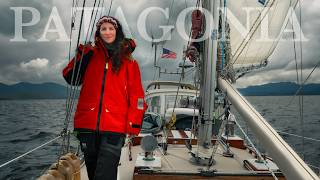
Sailing Patagonia, Ep.1 | 56days, Sailing 2000nm to the Southernmost Town in the World

▶ watch at 3:25
discusses

The narrator describes Landfall as "a cutter-rigged bluewater boat with a solid hull and rigging made to take a beating", with a diesel, a full set of nav instruments, an autopilot and a heater.

Allison and James Sailing

Sailing Patagonia, Ep.1 | 56days, Sailing 2000nm to the Southernmost Town in the World

▶ watch at 8:05
discusses

Sailing upwind in light air, 12 to 13 knots of wind, under the 160 genoa and full main at 4.5 to 5 knots, a crew member says they are slowly getting to know the boat. At the helm the same speaker says "I feel like I'm constantly over steering" while adjusting to Landfall.

Allison and James Sailing

Sailing Patagonia, Ep.1 | 56days, Sailing 2000nm to the Southernmost Town in the World

▶ watch at 12:20
discusses

In mild seas and 15 to 18 knots of wind, a crew member says they are "pretty much at the upper limit of the 160" genoa and would have it down by 20 knots.

Allison and James Sailing

Sailing Patagonia, Ep.1 | 56days, Sailing 2000nm to the Southernmost Town in the World

▶ watch at 13:17
  1. [1]SpecificationsSHANNON 37 - SailboatData.com- Dimensions, displacement, ballast, sail area, keel and centerboard, production 1985-1993 with 19 built, and the redesign-of-the-38 note.
  2. [2]ReviewPractical Sailor - Shannon 37 & 39 Vintage (Darrell Nicholson)- Independent used-boat review: rig options, centerboard and trunk, offshore suitability, sailing speeds, and known problems.
  3. [3]Owner ReportBeth Leonard and Evans Starzinger - S/V Silk (archived)- Owners' page for their Shannon 37 ketch Silk: specifications, sail plan and the 40,000-mile tropical circumnavigation.
  4. [4]Owner ReportAllison & James - Australia to New Zealand on a 37ft Shannon Sailboat- Allison's account of Landfall's earlier voyages and the 15-day Tasman crossing in February 2023.
  5. [5]Owner ReportAllison & James - Sailing Patagonia, Ep.1- Identifies Landfall as her mother and stepfather's Shannon 37 and recounts the Chile to French Polynesia and Roaring Forties passages.
See something wrong? Suggest a correction

Corrections need evidence: a link or citation we can check. Sourced suggestions get reviewed and credited in the entry's change notes if applied.

Owner knowledge counts: name the boat and year so we can attribute it.