Overview
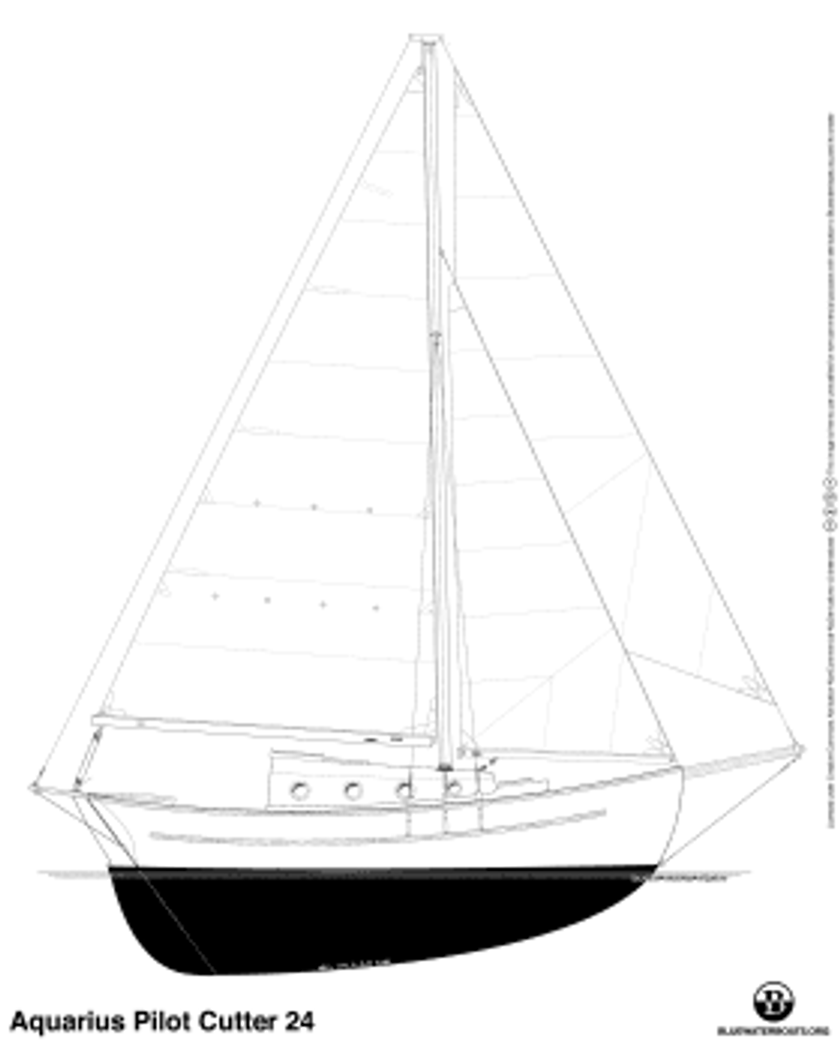
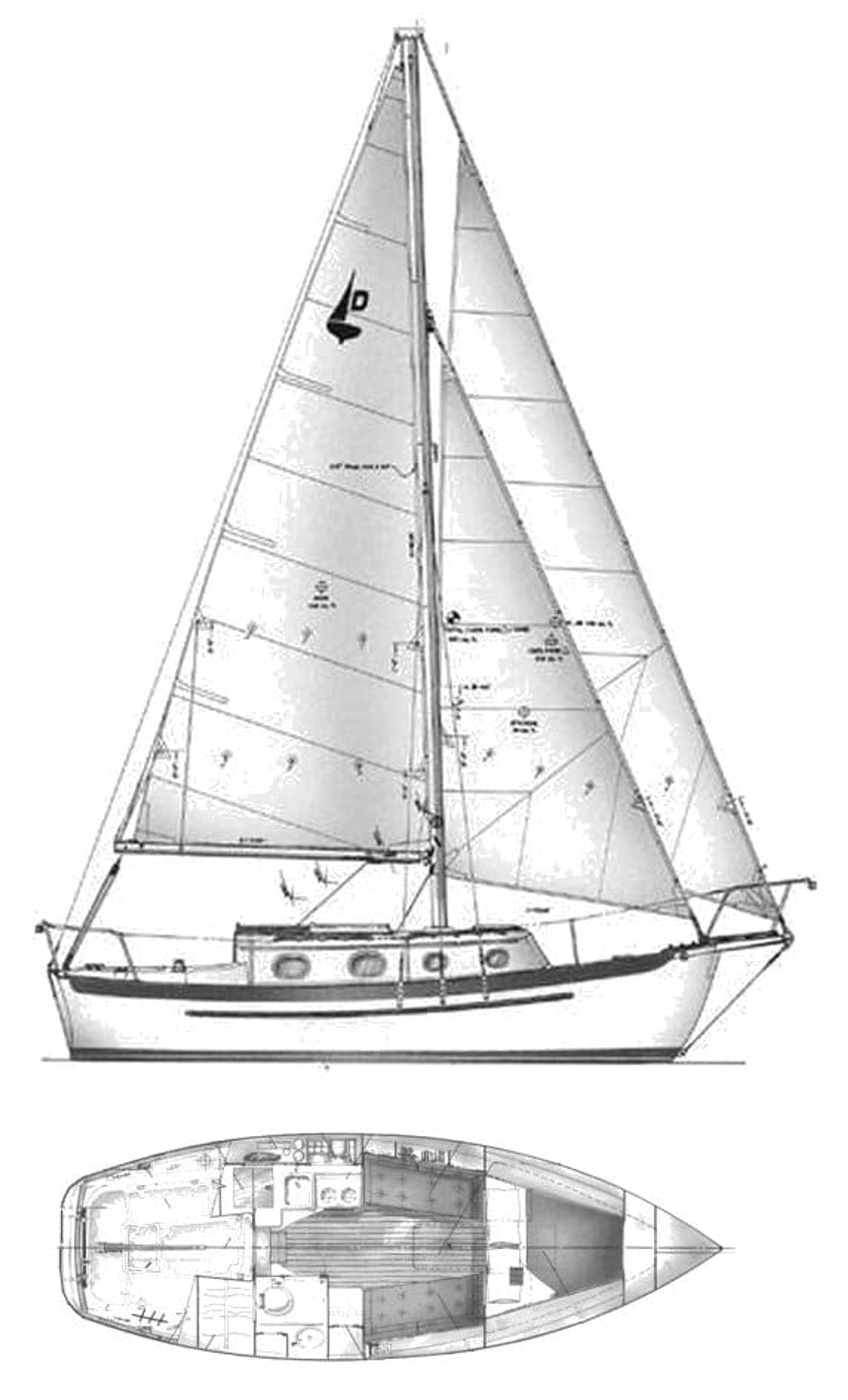
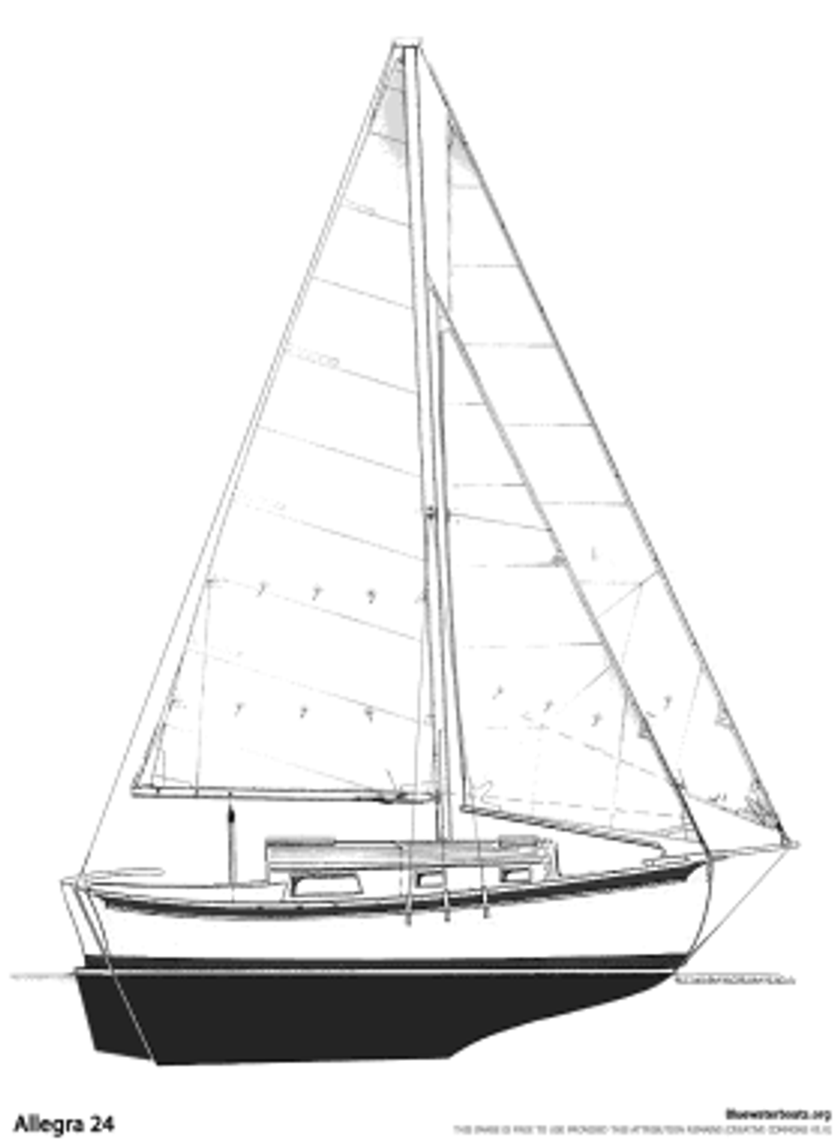
Fred Bingham and Lou Nagy built the Allegra 24 on the bones of the Flicka 20, and the family resemblance is more than skin deep: Bingham is the father of Bruce Bingham, the Flicka’s own designer. Bingham (a naval architect) and Nagy (a civil engineer) stretched the Flicka’s hull four feet without adding beam, and that extra length shows up mostly below deck, a separate head compartment and berths a minimum of 6’5” long. Above the waterline the family resemblance holds: full keel, transom-hung rudder, bowsprit, small cutter rig, and the same traditional profile that made the Flicka a favorite.
The changes run deeper than length, though. The bow carries a finer entry with more flare, freeboard is higher, beam is carried further aft, and the buttock sections kick up aft, directly addressing the Flicka’s low cockpit drains. Below the waterline, the Flicka’s deep full keel gives way to a forefoot cutaway, and a flatter run aft helps both speed and acceleration.
Construction uses biaxial glass reinforcing pre-impregnated with acrylic-epoxy resin, a technique that packs more glass and less resin into the layup for added rigidity and strength, and should make for a hull that resists osmosis well. The decks and cabin tops use PVC foam coring, and the structure overall is built to exceed Lloyd’s offshore specification. Notably, there are no through-hull fittings below the waterline, and cockpit drains were sized up to two inches.
Under sail she leaves the Flicka comparison behind entirely: one of the faster pocket cruisers in her class, capable of working past hull speed with relative ease and a strong light-air performer. She points higher than the Flicka, tacks more readily, and handles chop better. The added bow flare and freeboard keep her drier forward, and where the Flicka squats and needs more stern buoyancy running downwind, the Allegra lifts. On paper that comes down to three more feet of waterline and roughly 50 percent more sail area for a comparable displacement.
Bingham sold the Allegra as a kit, a bare hull, or coordinated custom completion through a network of independent builders scattered around the country, in Ventura, California; Riviera Beach, Florida; Noank, Connecticut; and likely other yards besides. The Bingham-Nagy partnership eventually dissolved, and total production numbers are not well documented.
One well-documented example is Roger Lautenbach’s Sara, built from a bare hull starting in 1985 and completed in eighteen months; he describes the finished boat as “a Flicka on steroids.” Lautenbach’s build used epoxy reinforcement, teak trim, and custom joinery good enough that other owners have reportedly offered to trade larger boats, a 40-foot steel hull and a 37-foot Tayana among them, straight across for her. He’s sailed and lived aboard Sara as his summer home on Ontario’s Blind River ever since, using her 3’6” draft to get into water bigger boats can’t reach.
Links, References and Further Reading
» Good Old Boat Magazine, Nov/Dec 2006 Allegra 24 by Karen Larson» Good Old Boat Magazine, Nov/Dec 2006 Four small bluewater cruisers: A comparison of Allegra and three rivals by Ted Brewer» The Sailor’s Book of Small Cruising Sailboats by Steve Henkel, p267