Overview
Robert Harris drew the Vancouver 27 for George and Eileen Hartley, a couple planning an ocean voyage from British Columbia to New Zealand. The first boat was completed in wood in 1972 and made the round trip. Fiberglass production followed in Canada, moving among several small builders before the Canadian molds were lost in a 1988 storm. Pheon Yachts licensed the design for British production in 1976, and Northshore Yachts later continued the line. Practical Sailor reports about 250 Vancouver 27s from the Canadian and British runs.
Published dates need a little care. Some records call 1972 the first build year because that is when the original wooden boat was completed. Sailboatdata uses 1973 for the production design, which is the date used in this catalog. Practical Sailor says the British run ended in 2007, while pages that follow Northshore as a company sometimes extend the date to 2011. The boats also changed by yard. British examples gained beam near the waterline, and the later 27F changed the cabin plan.
Hull and rig
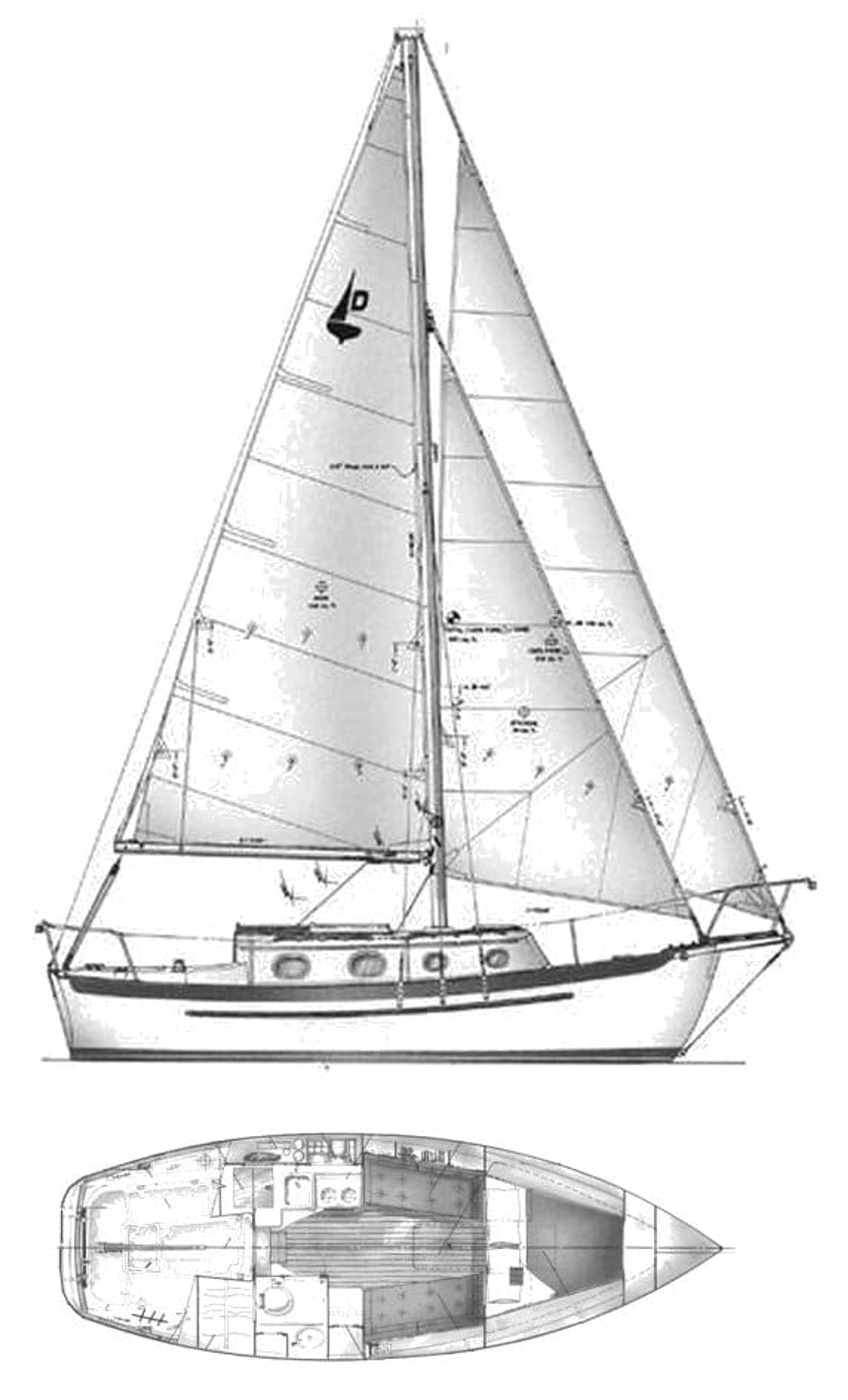
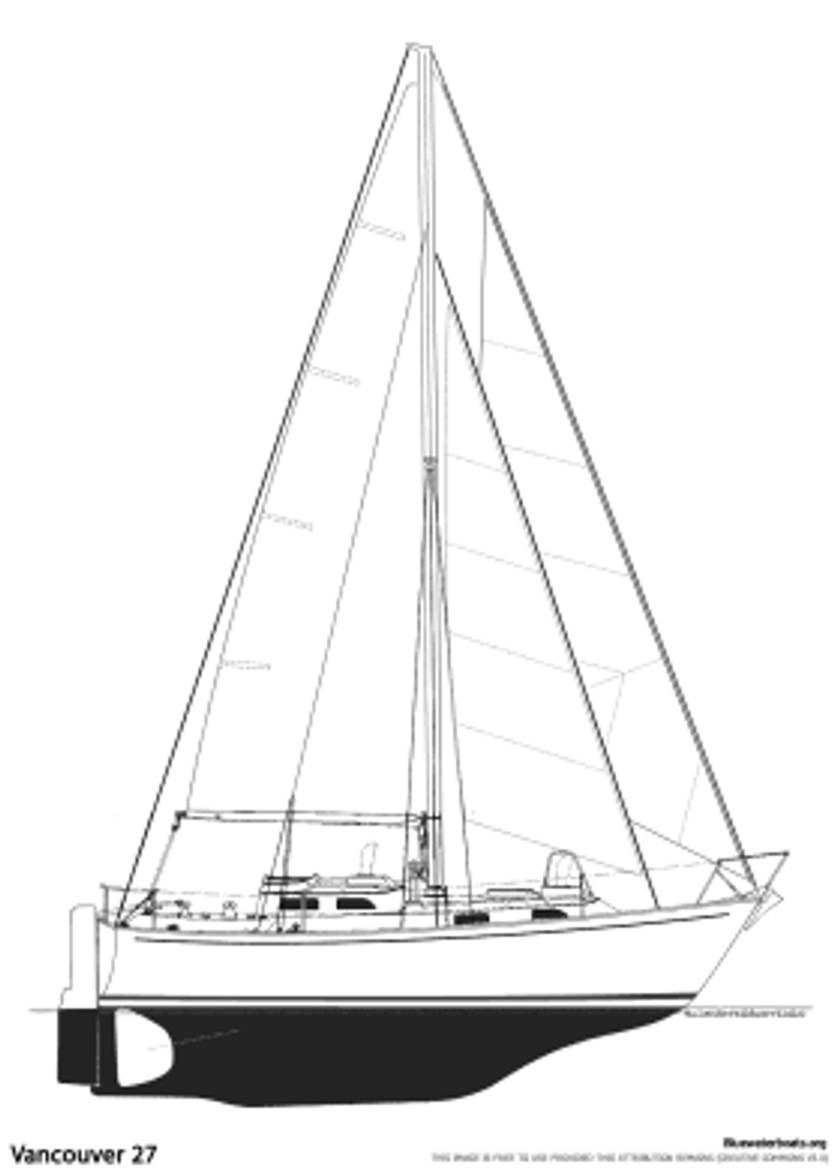
This is a narrow, heavy 27-footer with a long keel, cutaway forefoot, and transom-hung rudder. The published displacement of 8,960 pounds and 22.92-foot waterline put it firmly on the deliberate side of small-cruiser design. A cutter rig divides the working sail plan into manageable pieces. The external rudder is simple to inspect and leaves a straightforward route for fitting wind-vane steering.
The boat was shaped around a short-handed ocean crew, not a large cockpit party. The cockpit is small, with a bridge deck and large drains. That limited volume is useful if water comes aboard. High freeboard and the narrow beam help explain why the interior feels deeper and longer than the deck plan suggests. Practical Sailor’s test boat tracked comfortably on a reach but was slower to windward. The same review cautions against judging its close-quarters handling by modern fin-keel standards.
Construction and variations
Canadian production was carried out in small numbers by Tradewind Boats, Philbrooks, and Seair Marine. Practical Sailor describes a solid fiberglass hull, an encapsulated keel, and a deck whose core material can vary with builder and year. That variation matters during a survey. A buyer should identify the yard, build date, and deck structure of the particular hull instead of assuming every Vancouver 27 was laminated the same way.
The UK boats are not exact copies of the early Canadian boats. Besides the extra beam, the 27F arranged the interior for an additional berth. The Vancouver 28 used the same basic design with more length aft of the cockpit. Listings and owner records sometimes blur those names, so hull dimensions and accommodation plan are better identifiers than a sales description alone.
Below deck
Layouts usually favor three or four berths. The offshore priorities are evident: usable sea berths, substantial stowage, a working galley, and a chart table take precedence over an open saloon. The narrow hull limits floor width, but published owner accounts describe standing headroom that is unusual in this size range. Tankage, engines, and deck hardware changed over a long production life, so those items should be treated as hull-specific equipment rather than fixed model specs.
Buying notes
The Vancouver 27’s reputation does not replace an age-based survey. Deck moisture, chainplate penetrations, rudder fittings, rigging age, tanks, and repower work all deserve direct inspection. Builder differences make old invoices and yard records especially useful. The Vancouver Yachts Association remains an active place to compare details with owners before deciding whether an unusual fitting is original, a yard variation, or a later modification.