Overview
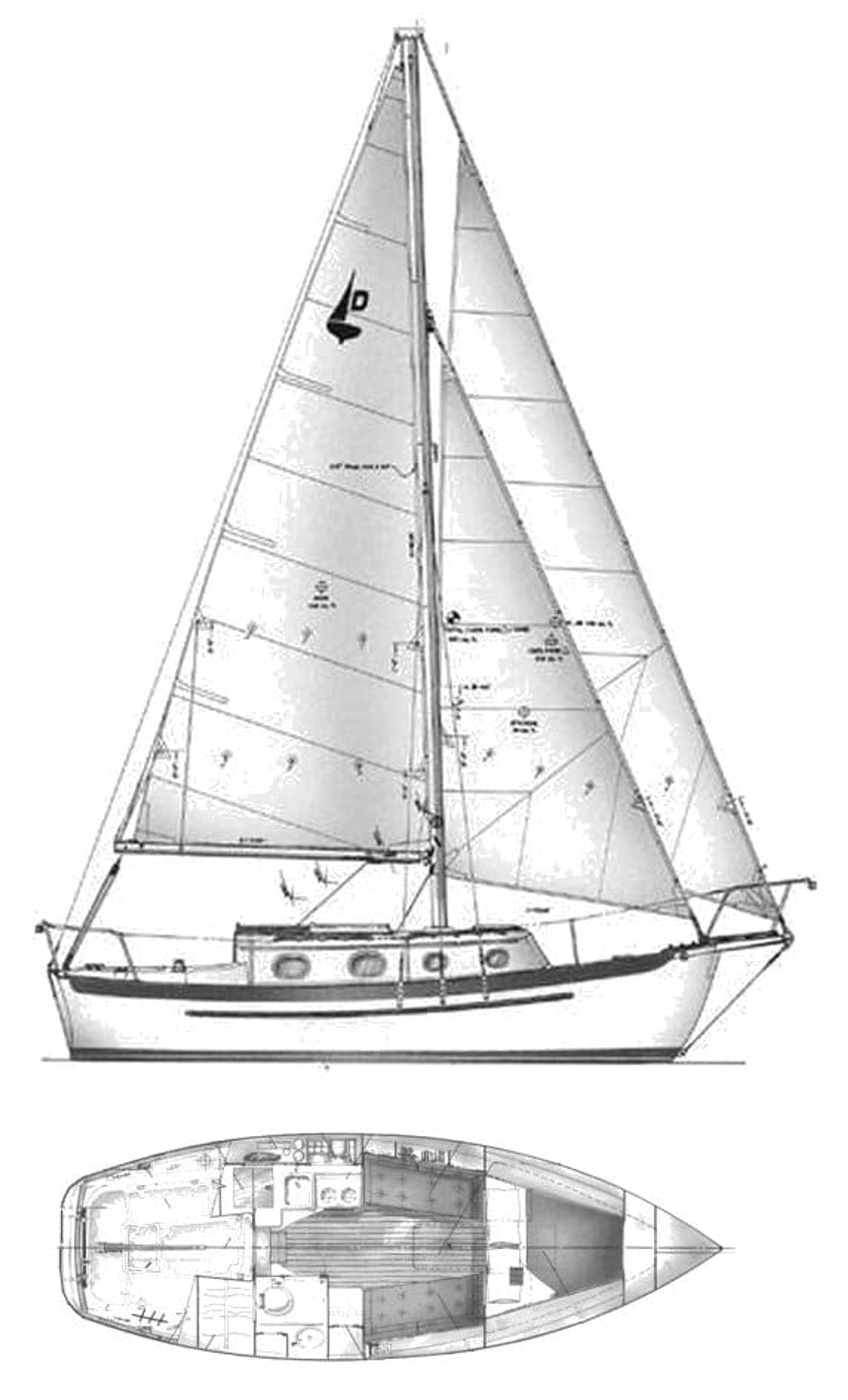
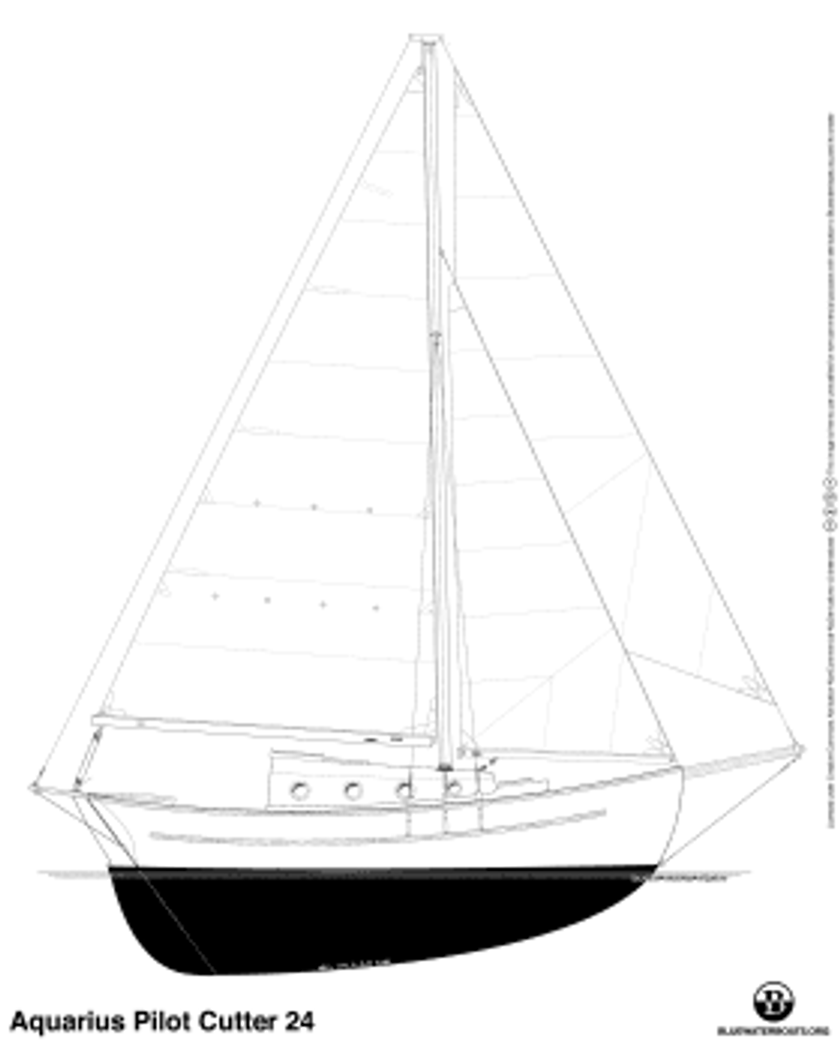
Frank Parish designed the Aquarius Pilot Cutter for his own cruising priorities, then Top Sail Yachts put it into limited production. SailboatData records 33 boats beginning in 1979. The archived review gives 1984 as the end of the run. The design is also called the Aquarius 24 Pilot Cutter, Topsail Pilot Cutter, and simply the Aquarius 24.
The 24-foot measurement is hull length. A bowsprit stretches the standard cutter to about 30 feet overall, and the optional gaff topsail version reaches about 32 feet. The earlier record used the spar-inclusive length in its main specification, which made comparison with other hull lengths misleading. This page now uses 24 feet on deck and explains the spars separately.
Hull and Rig
The hull has a long keel and a rudder hung at the stern. Published class figures are 20 feet on the waterline, 9 feet of beam, 4 feet of draft, 8,900 pounds of displacement, and 3,200 pounds of lead ballast. Reported sail area is 410 square feet. The combination makes this an unusually heavy and beamy 24-footer with a large working rig for its length.
Most boats used a Bermuda cutter rig. A gaff topsail cutter was optional and carried more sail on a longer bowsprit. The cutter divides the area into smaller sails, and the archived review says reefing controls led aft. Rig arrangements and deck hardware can differ because the boats were built to order.
SailboatData says the design drew inspiration from the George Stadel pilot cutter Indian. The archived article instead spends more time comparing the boat with Lyle Hess designs and the Pardeys’ Seraffyn. Similar appearance and layout do not establish shared design authorship. Parish remains the recorded designer.
Performance
Steve Henkel’s review in The Sailor’s Book of Small Cruising Sailboats treats the Aquarius as a traditional character boat and notes that its displacement exceeds the comparison boats in his group. The practical consequence is limited light-air performance. The 20-foot waterline and heavy displacement also cap speed, even with the generous sail plan.
The same weight, long keel, and attached rudder should encourage steady tracking and a less abrupt motion than a light 24-footer. A short-handed crew still has to manage a bowsprit, two headsails, and substantial loads on a compact deck. A trial sail should include tacking, reefing, heaving-to, and handling under power rather than assuming the traditional plan is automatically simple.
Construction and Interior
The archived review describes a solid hand-laid fiberglass hull with encapsulated lead ballast, plus a plywood-cored fiberglass deck and cabin. It gives detailed laminate thicknesses and a through-bolted overlapping hull-to-deck joint. Those details are plausible but currently trace only to that archived article, so a survey should verify them on the individual boat.
SailboatData lists 6 feet 3 inches of headroom and 40 gallons of water, generous figures for the hull length. Multiple interiors and custom finishes were offered. Original auxiliary power could be a 13-horsepower Volvo diesel or an outboard arrangement. Present boats may have been repowered or substantially rearranged.
What to Inspect
Inspect the bowsprit, boomkin, chainplates, and every through-deck rig fitting before putting offshore loads on the boat. Check the deck core around hardware and the hull-to-deck joint behind trim. Confirm ballast encapsulation, rudder attachments, mast support, seacock access, and the quality of any custom interior or engine work.
Weight is not proof of sound construction, and traditional looks are not passage evidence. No named ocean crossing by an Aquarius 24 Pilot Cutter is attached to this record. The design has several sensible offshore ingredients, but its current rating remains unverified until a reliable voyage record or independent assessment is found.