Overview
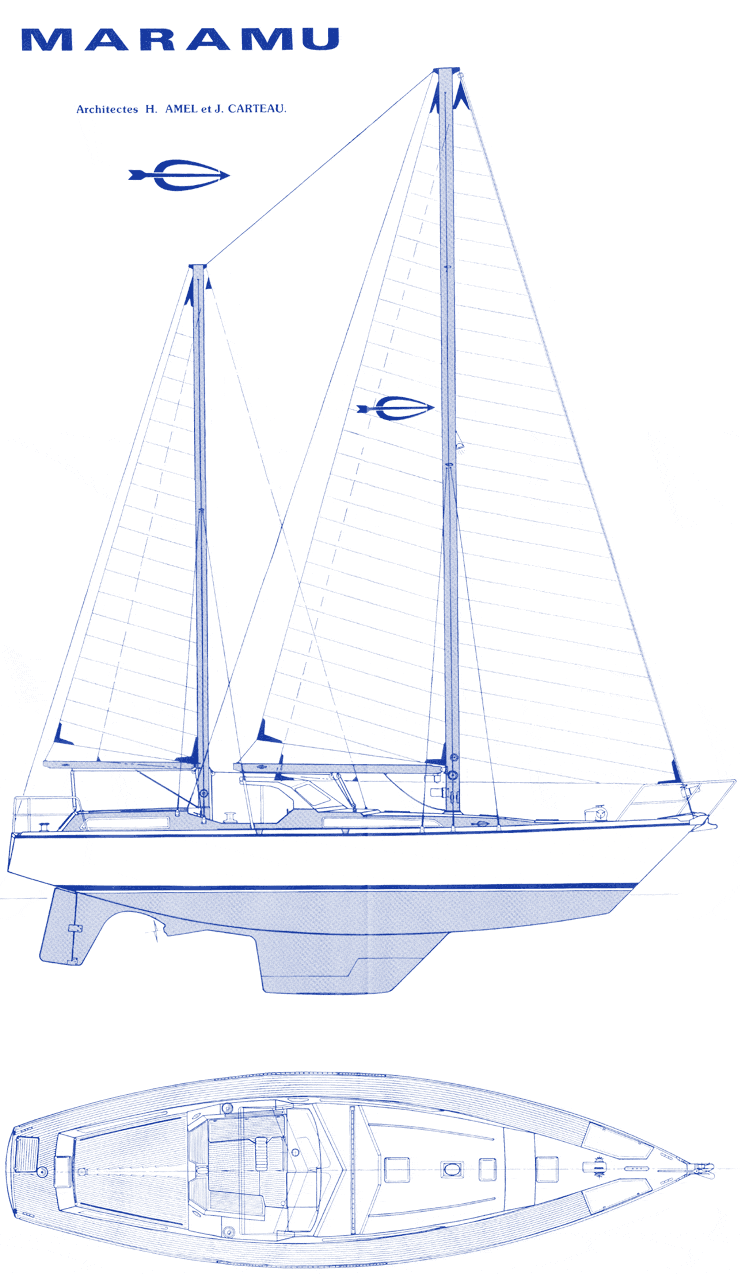
Henri Amel conceived the Maramu after nine months of his own cruising in 1975-76, drawing on what he’d learned from the smaller Euros 41 and the larger Meltem 53 to build a genuine go-anywhere yacht with a high standard of equipment and real offshore range. First launched in 1978, she predates the better-known Super Maramu by more than a decade and established the cruising-system approach, everything built around shorthanded, comfortable, serious offshore sailing, that would define every Amel design after her.
History
Chantiers Amel built the Maramu 46 in La Rochelle, France from 1978 to 1989, with roughly 288 hulls completed (an independent review gives a differing 1976-1989 span and 200-hull count, a discrepancy that couldn’t be resolved from available sources). One documented hull, Minerva, hull #135, commissioned in 1983, spent years cruising the US coast, Cuba, and the Bahamas, made multiple Atlantic crossings, and completed a 3-year circumnavigation from Maine via the Panama Canal, Tahiti, Sydney, Bali, and the Cape of Good Hope between 2010 and 2013, all documented on her own owner’s website.
Design and Construction
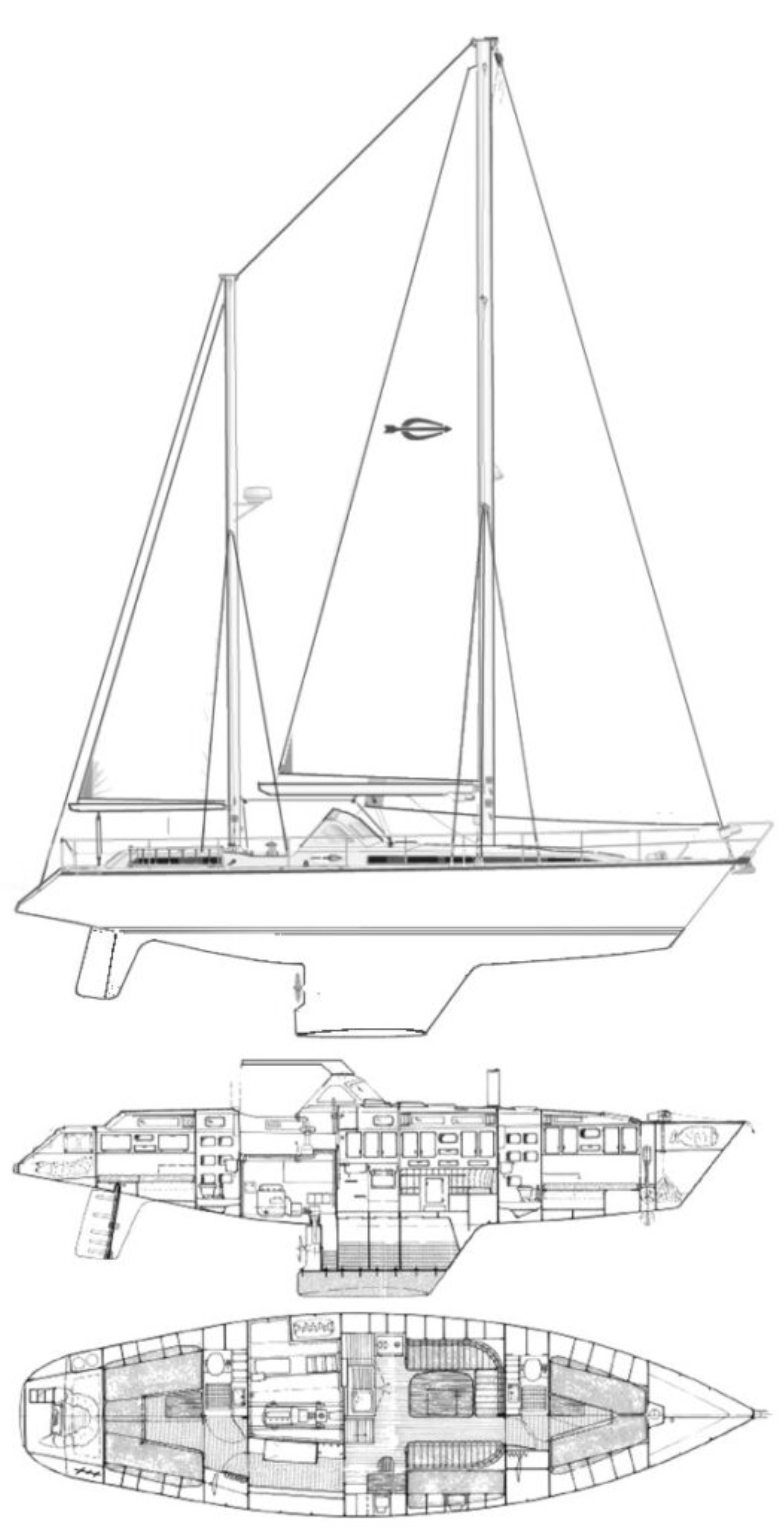
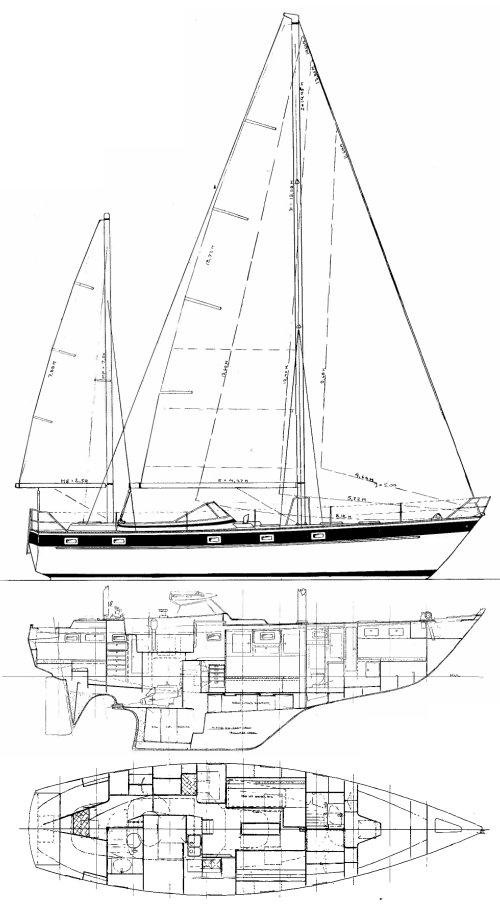
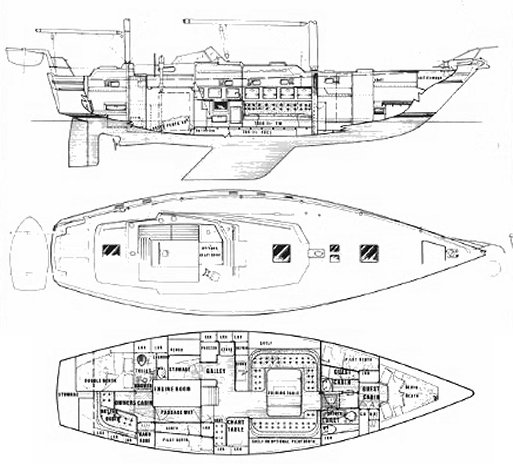
Amel’s construction approach on the Maramu is distinctive and carried through the rest of the builder’s line: biaxial fiberglass cloth throughout, laid up in non-spliced lengths running bulwark to bulwark and bow to stern, with the deck joined to the hull while both are still in the mold using six layers of the same biaxial cloth around the full length, producing a genuinely strong, leak-resistant hull-to-deck joint rather than a conventional bolted-and-bedded seam. Freshwater, up to 264 gallons across baffled tanks, is carried low and amidships in the stub keel rather than under the settees, keeping weight down where it helps stability instead of working against it. A long encapsulated fin keel and a massive full-length skeg-hung rudder are built to carry the boat’s own weight across a reef in a grounding without catastrophic damage. Ballast is cast iron rather than lead, consistent with the rest of the Amel line. The traditional ketch rig with slab-reefed, slide-mounted sails is generally preferred by owners over the in-mast furling units Amel introduced after 1985, which had real reliability problems in their early form before the builder’s later in-house redesign proved far more maintenance-free.
Under Sail
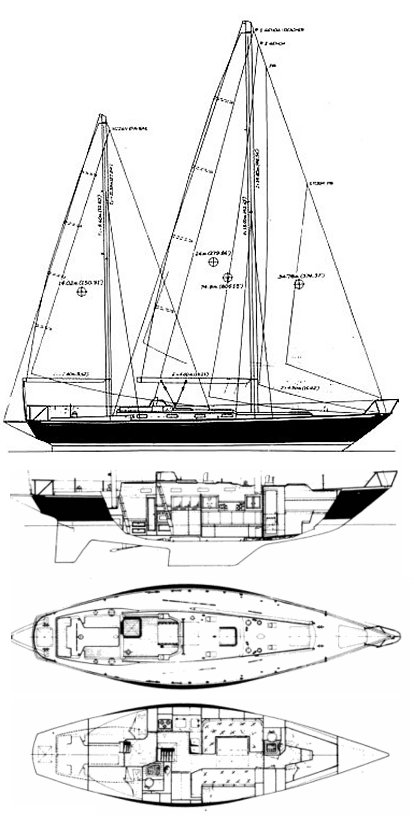
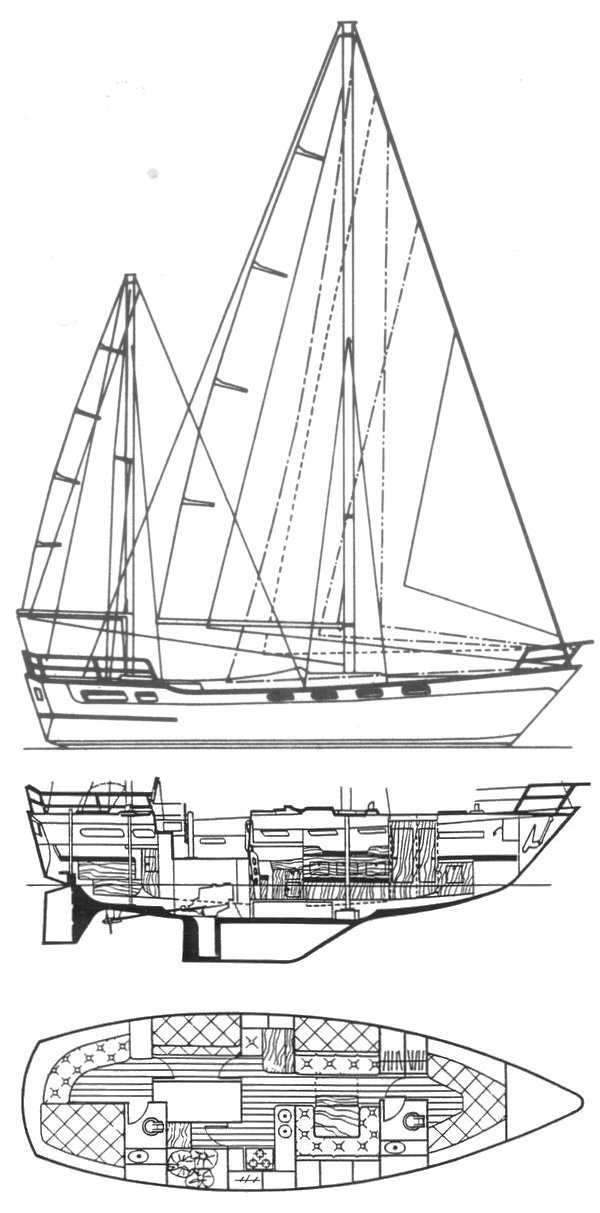
The ketch rig splits sail area between a double-spreader main and a shorter mizzen, manageable for a couple without needing a large working crew, and the traditional slab-reefed rig avoids the furling failures that plagued some contemporaries. Owners describe the type as a genuine passagemaker rather than a boat built for dockside looks, and Minerva’s owner calls her “not a dock queen,” a boat meant to be sailed short-handed or singlehanded in real comfort and safety. The stainless steel life rails running the full length of the deck, deep bulwarks, and a protected center cockpit with a hard windshield dodger all point the same direction: a design built around being at sea, not just leaving the dock.
Buyers Notes
Confirm whether a hull’s in-mast furling mainsail (if fitted, on boats from 1985 onward) is the original early unit or Amel’s later, more reliable in-house redesign, and check its service history either way. Sound any synthetic teak deck covering for voids or lifting, a known issue across the model. As with other Amel models, ballast is cast iron rather than lead, worth factoring into performance expectations against lead-ballasted competitors of similar size. Given the production-year and hull-count discrepancy between sources, confirm a specific hull’s build year and history directly with Amel’s owners association or the builder’s own records rather than relying on any single secondary source.