Overview
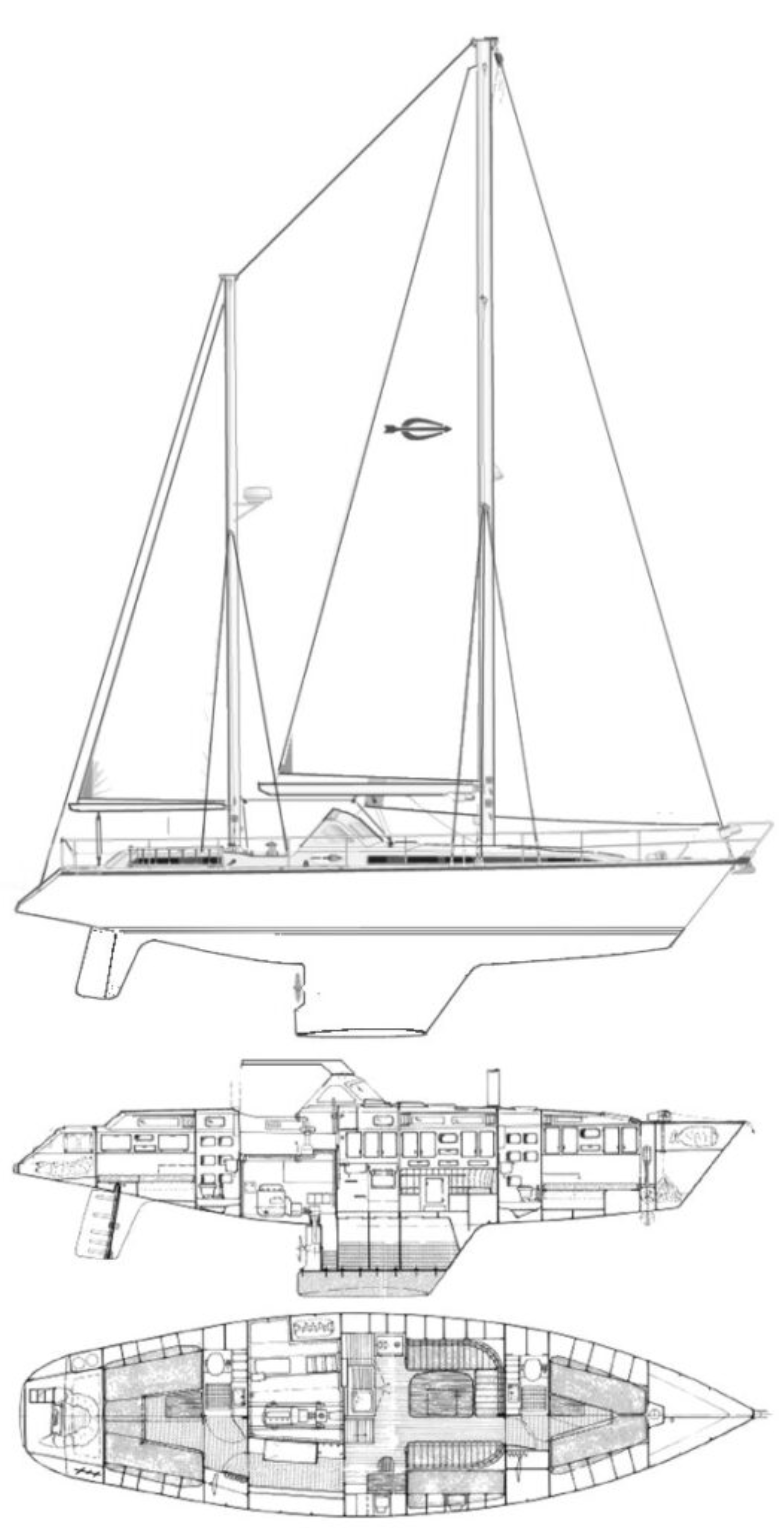
Amel’s own sailboatdata.com record notes the Santorin as the successor to the Maramu 46, introduced in 1989 as the range moved toward a slightly more modern hull while keeping the same cruising-system philosophy: build a boat a couple can sail around the world in comfort, without needing a large crew or constant maintenance. Chantiers Amel built roughly 150 hulls through 1997 before the line gave way to the Super Maramu.
Design and Construction
Yachting Monthly’s independent review is blunt about the build quality: “From the moment you step aboard she feels sturdy and well built,” with a solid fiberglass layup and a fully bonded hull, deck, and bulkheads that make her genuinely stiff, “bomb-proof” in the reviewer’s own words. Like the rest of the Amel line, ballast is cast iron rather than lead, and the ketch rig (a sloop version was also offered) keeps sail handling manageable from the security of a deep center cockpit.
Under Sail
She needs a real breeze to show what she can do. In light air, heavy displacement and in-mast furling sails cost her drive to windward, and Yachting Monthly notes she’ll struggle to point especially high, a real factor when trying to claw around a headland. Give her Force 6 or a gale, though, and she comfortably reaches 9-10 knots; the same review recommends planning around 7 knots off the wind in tropical trade-wind conditions, where she’s genuinely in her element.
Buyers Notes
Weigh the light-air pointing limitation against your intended cruising grounds; a boat built for downwind trade-wind passages rather than upwind coastal work. As with other Amel models, confirm ballast material and factor cast iron rather than lead into performance expectations against lead-ballasted competitors of similar size. Amel’s centralized parts and service model, with dedicated centers in Europe and the US, is worth confirming access to before buying outside those regions.