Overview
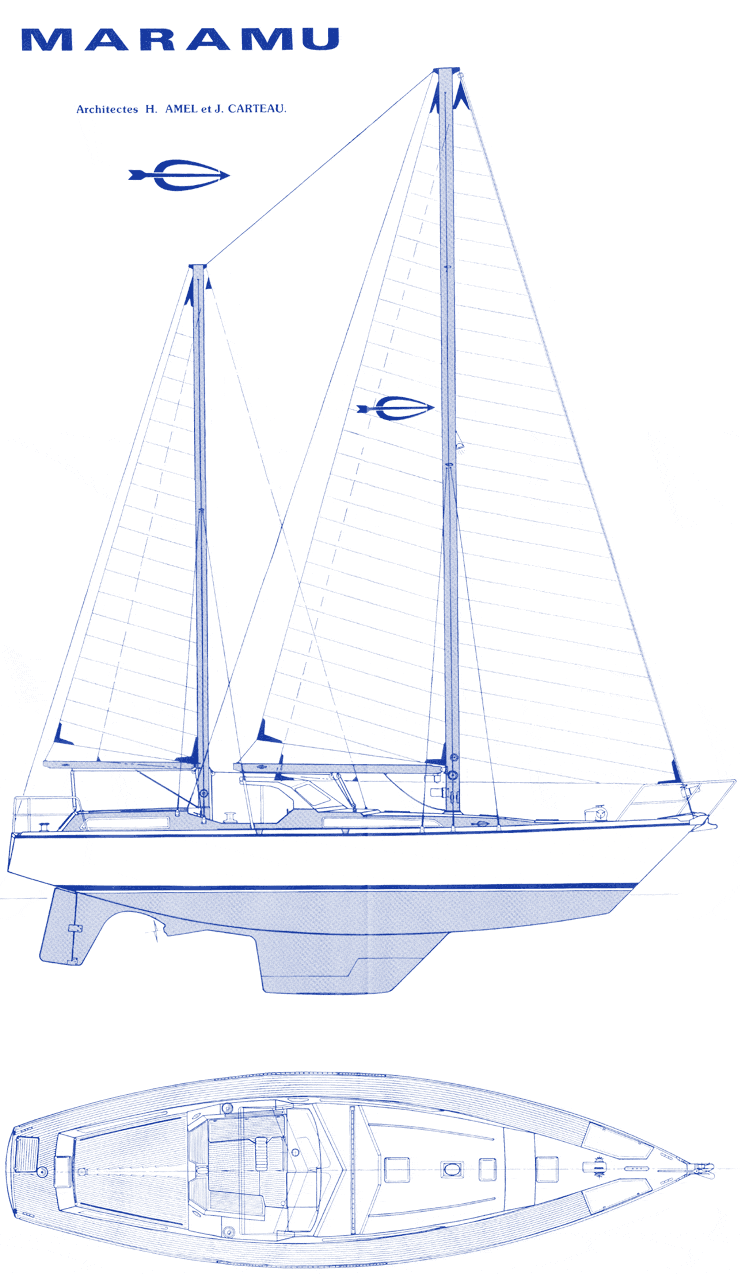
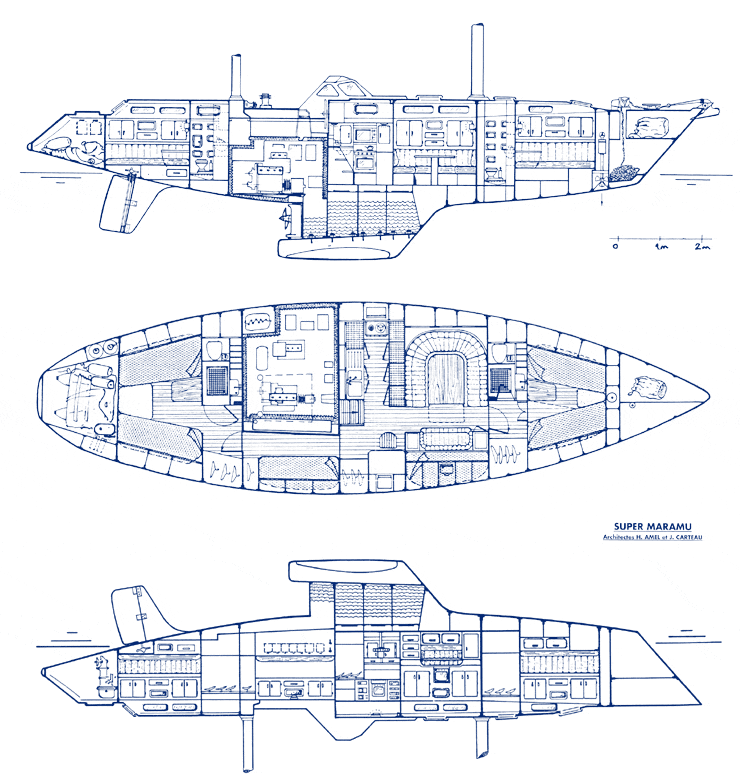
Henri Amel and Jacques Carteau designed the Super Maramu specifically to let a couple sail around the world in comfort and genuine safety, the culmination of six Amel designs built over Henri Amel’s lifetime and, by production numbers, one of the most numerous 50-foot ocean cruisers ever built by any yard. Amel remains 100 percent employee-owned, and the Super Maramu’s reputation as a “cruising system” rather than just a boat has earned it a genuinely devoted following.
History
The Super Maramu succeeded Amel’s earlier Mango 52 in 1989 and ran through 1998, with 237 hulls built before giving way to the updated Super Maramu 2000. Henri Amel, a WWII veteran who founded the yard in La Rochelle, France in 1965, was among the pioneers of fiberglass bluewater production sailing and passed away in 2005, just short of his 92nd birthday.
Design and Construction
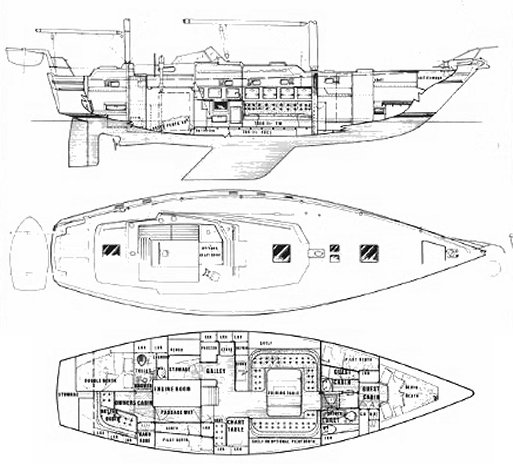
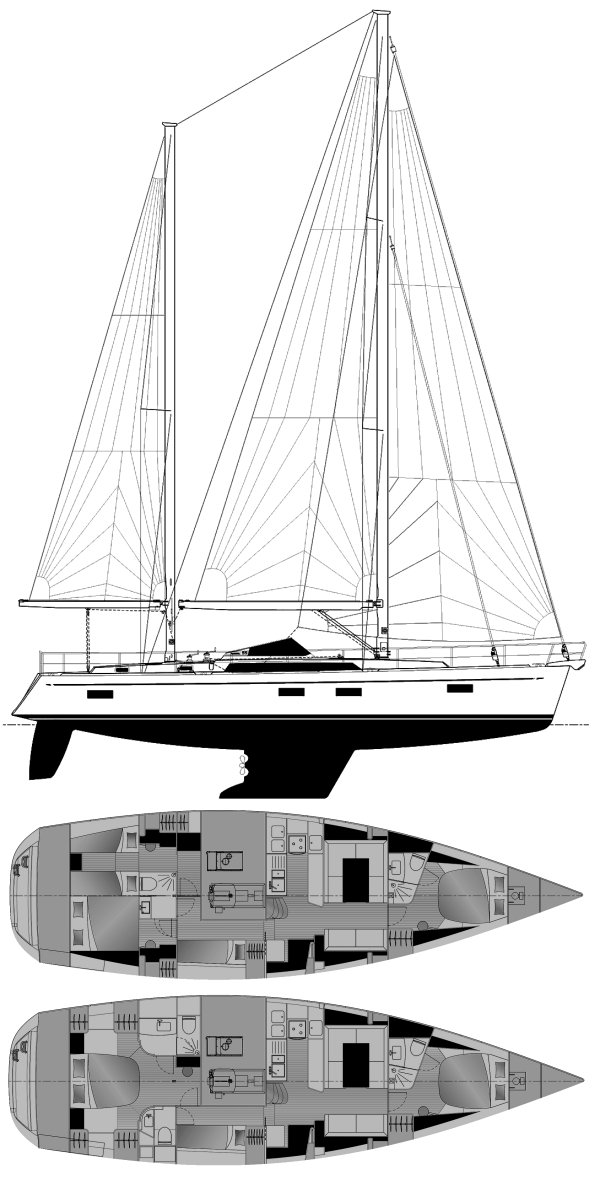
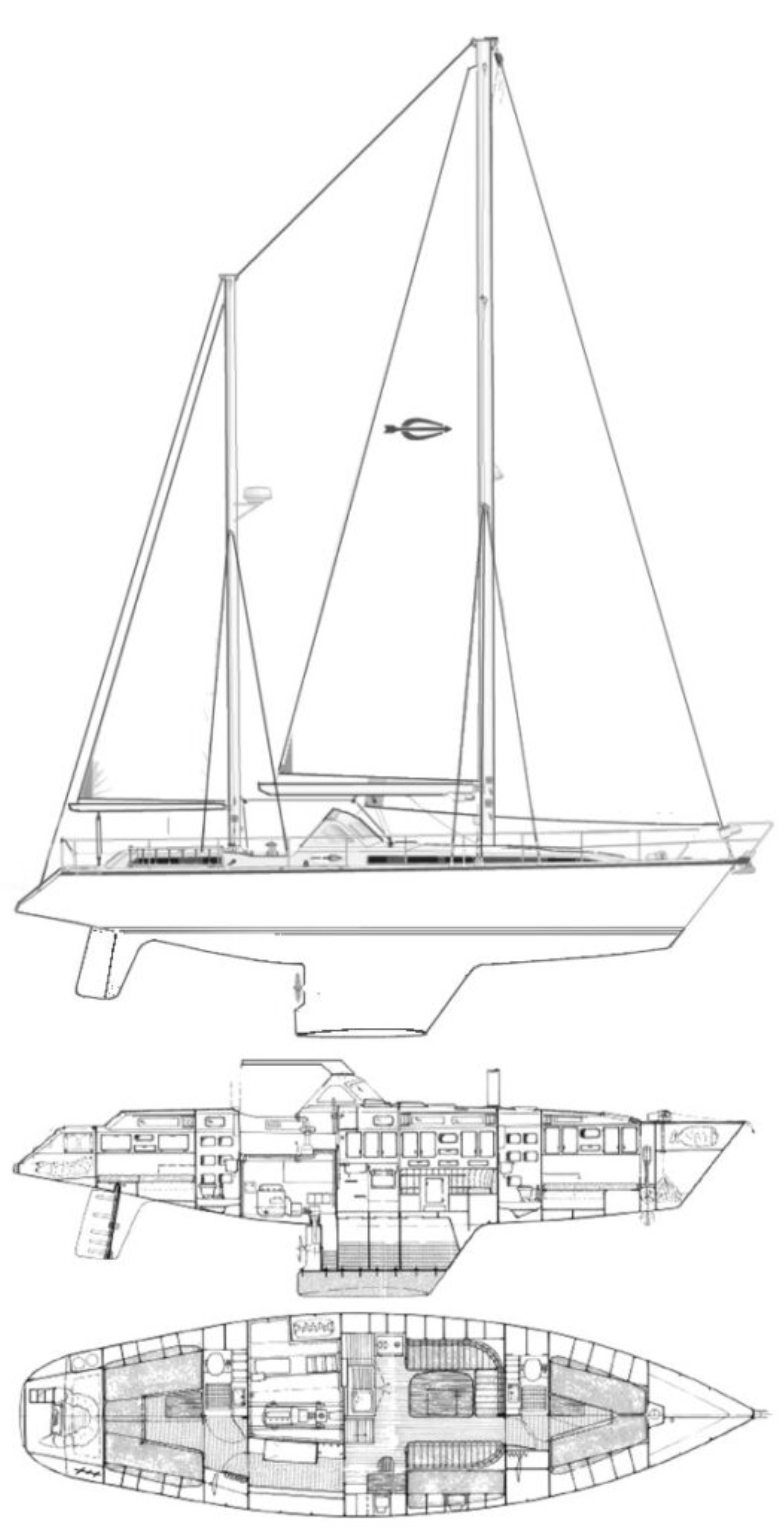
Every system aboard is built around one-person operation: electric winches, push-button furling for both the in-mast mainsail and headsail, a powered windlass, retractable bow thruster, and a protected center cockpit from which a single crew member handling no more than 50 lb can run the boat. Construction quality is genuinely high: the deck is fiberglassed to the hull from both sides while still in the mold, eliminating a conventional hull-to-deck joint and its fasteners entirely, and four full-height watertight bulkheads are bonded in during the same process. A proprietary blister barrier beneath the gelcoat is reported to have prevented osmotic blistering across the model line. The unusual U-drive propulsion system mounts the engine facing aft, transmitting thrust through a right-angle joint to a keel-mounted drive leg, allowing soft engine mounts that meaningfully cut vibration. Ballast is cast iron rather than lead, a deliberate cost tradeoff against some of Amel’s lead-ballasted competitors.
Under Sail
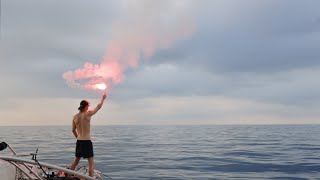
The Super Maramu isn’t a fast boat by racing standards, but reviewers describe her as “hardly a dog,” particularly reaching under her mizzen staysail; a twin-pole system for headsail poling downwind keeps handling simple without a spinnaker. Outboard chainplates limit genoa sheeting angle to roughly 30-35 degrees, a real constraint on windward pointing compared to inboard-sheeted designs. S/V Delos, a well-documented Super Maramu 53, has logged years of extensive Pacific and world cruising, real evidence of the design’s offshore durability beyond marketing claims; a maiden-voyage delivery from La Rochelle to Gran Canaria also independently documented a successful man-overboard recovery in 50-plus knot winds and 10 ft seas, itself real evidence of how the boat’s systems perform under genuine offshore stress.
Ocean Racing Record
Ipanema finished the Marion-Bermuda Race in 2017.
Buyers Notes
Confirm which of the three standard engine options a specific hull carries (Perkins MT80, Volvo TMD22A, or Yanmar 4JH4-HE); the Volvo was by far the most common. Ventilation is limited by design, only three hatches and no dorades, so the companionway generally needs to stay open for airflow; factor this into climate expectations. Amel’s parts and service model is genuinely centralized, with dedicated service centers in Europe and the US, worth confirming access to before buying outside those regions.