Overview
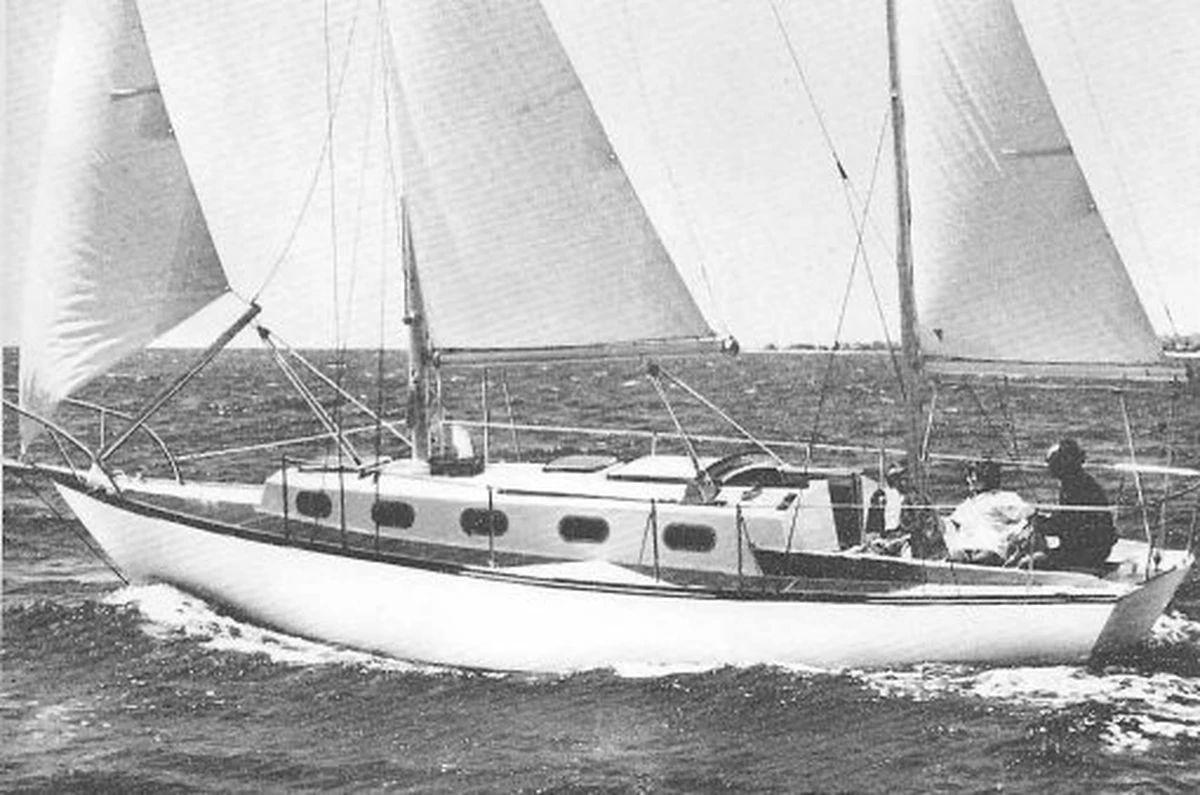
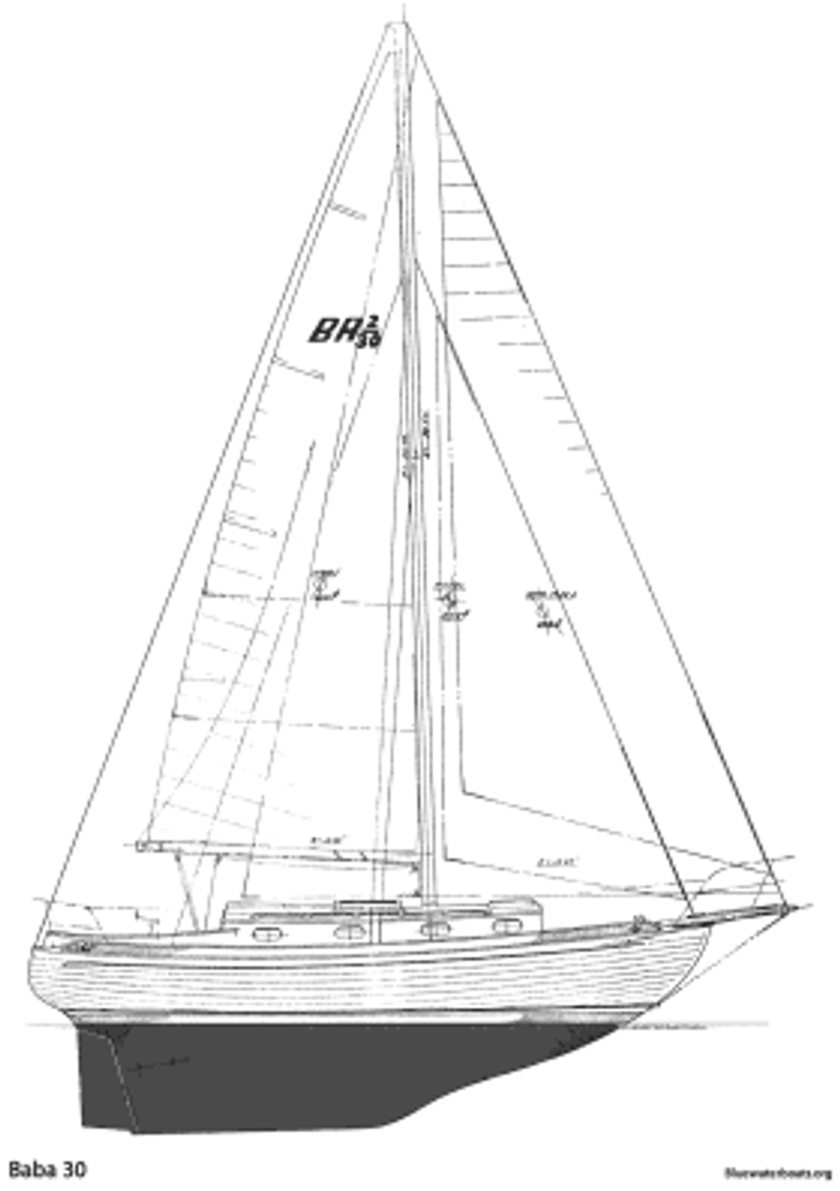
Bob Berg of Flying Dutchman International wanted a serious go-anywhere boat in a small package, and enlisted Bob Perry to design it. The result, built at a small Taiwanese yard, packs genuine offshore capability into a traditionally styled 30-foot double-ender. Excellent construction and a high-end interior have let Baba 30s age well, holding resale value and earning a following among cruising couples.
History
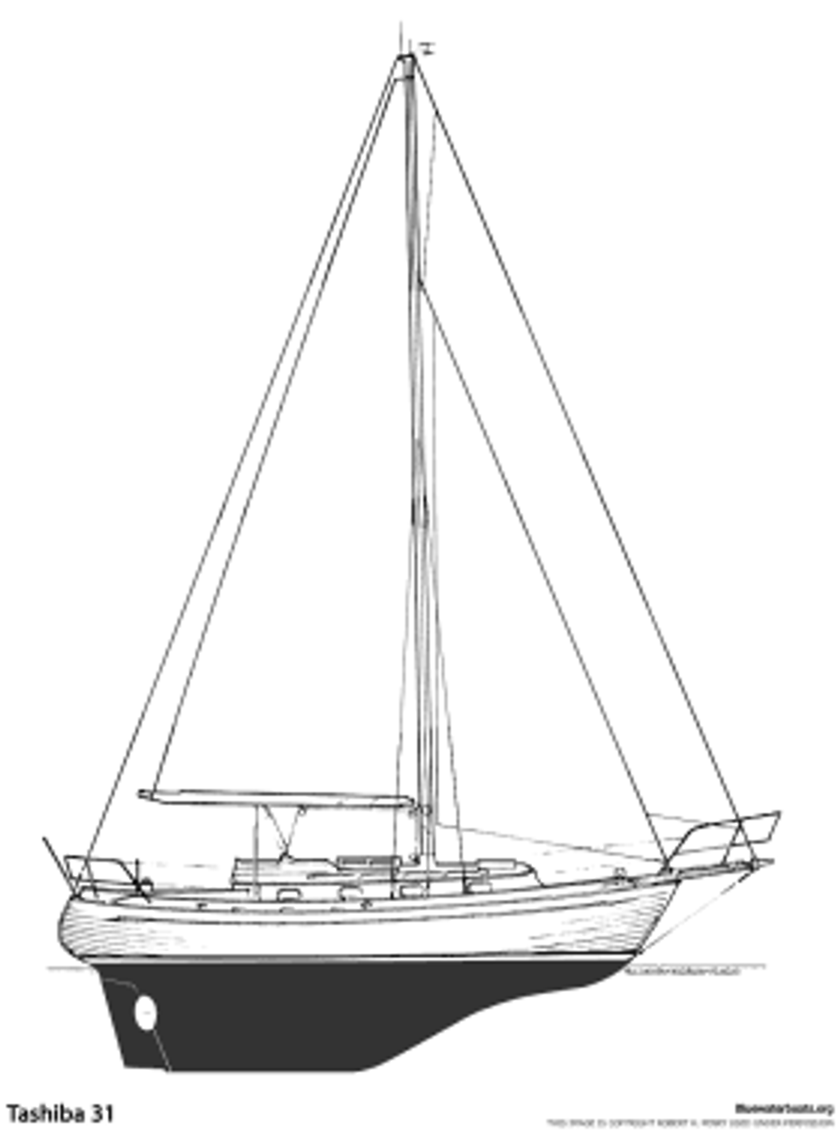
Perry designed the boat for Berg in 1977, and construction went to Shing Sheng, a boatyard in Tainan City, Taiwan that had until then built fishing boats, with a single sophisticated 27-foot racer for a Japanese customer as its only prior sailboat. The Baba 30 became Shing Sheng’s second yacht. Workers at the yard nicknamed Berg “Baba,” meaning father, and the name stuck to the boat too. By 1979 the yard had relocated to purpose-built facilities in the An-Ping Industrial Estate and renamed itself Ta Shing. Production ran 1978 to 1985, with roughly 170 hulls built (hull numbers reach #246, but a gap between #125 and #201 accounts for the difference), alongside two larger Perry-designed stablemates, the Baba 35 and Baba 40. Berg later evolved the concept into the Panda 34 with designer Gary Grant at a different yard, Hsin Hang; Ta Shing itself separately commissioned Perry for the Tashiba 31, an all-new design Perry considers one of his best full-keel efforts despite being frequently mistaken for a revised Baba 30.
Design and Construction
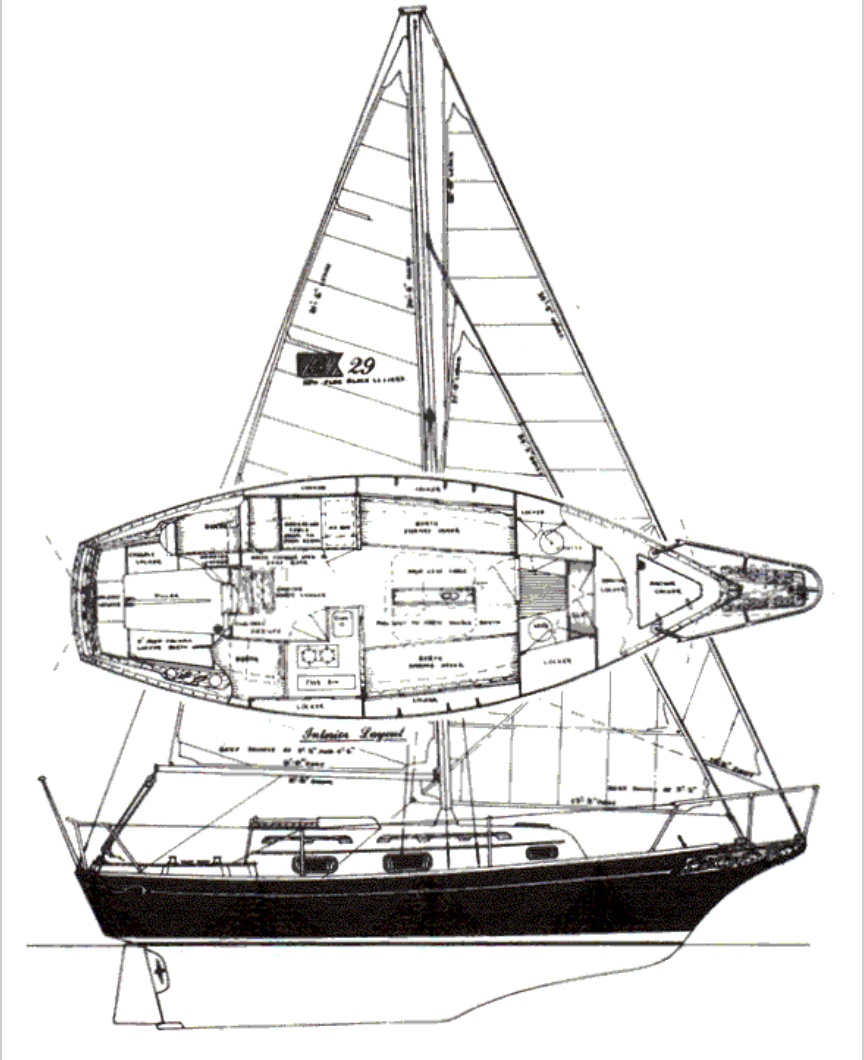
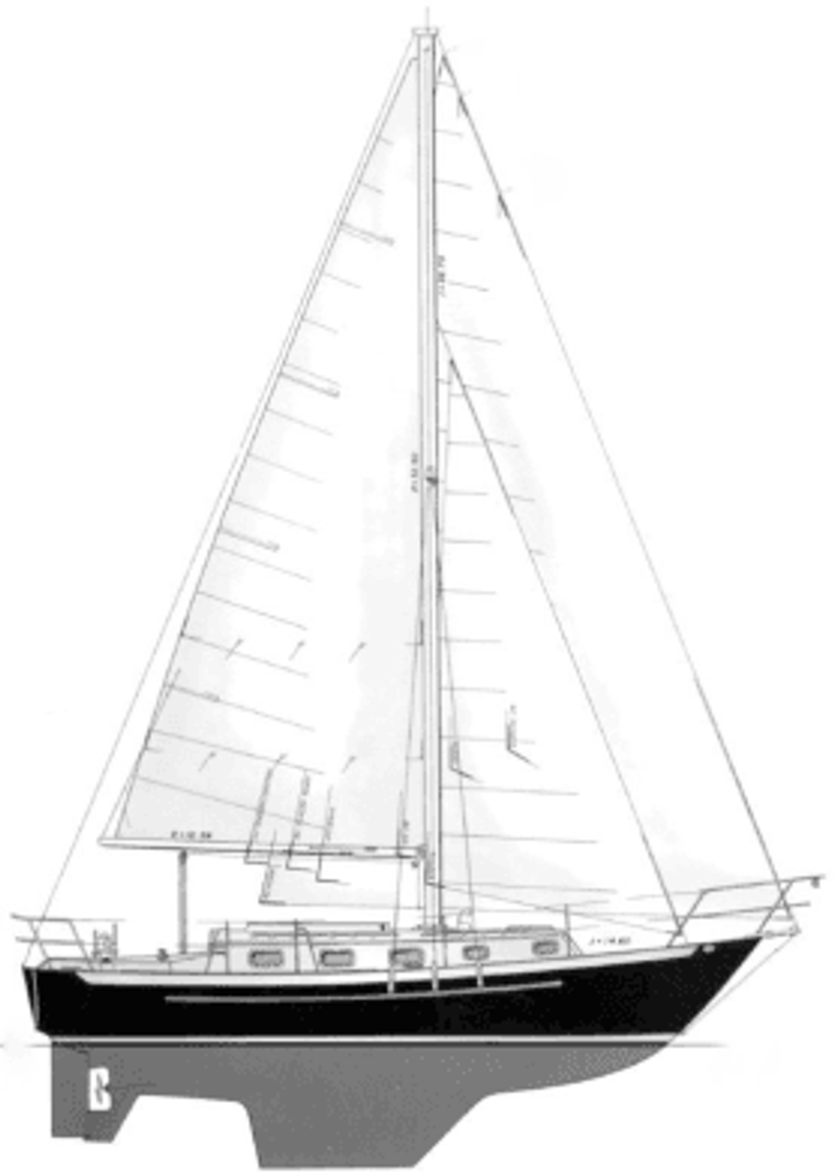
She’s a traditional full-keel double-ender in the Aitken/Colin Archer tradition, with balanced overhangs, a sweeping sheer, and Perry’s favored canoe stern. A 4-foot bowsprit carries the forestay for a cutter rig totaling 504 sq ft of working sail. John Kretschmer, writing for Sailing Magazine, called her “a big boat trapped in a short body,” and her displacement and ballast figures do run closer to boats several feet longer. The GRP hull follows the same layup schedule as the Valiant 32: just over a quarter inch at the topsides, over a third of an inch at the bilges, and more than half an inch through the keel and skeg, with a single iron ballast casting encapsulated in GRP. The hull-to-deck joint is glued and through-bolted under a teak caprail. Deck coring changed over the production run, kiln-dried end-grain luan mahogany early on, later replaced by end-grain balsa on scrim (Baltec Contour core), with high-quality marine plywood used locally around deck fittings; molded non-skid was standard, with Thiokol-bedded teak decking optional. Bulkheads are marine plywood staved with teak battens, with teak-veneered bulkheads offered late in production as a cost reduction. Early boats carry wooden spars (Oregon and B.C. hemlock) that need regular care but last the life of the boat if properly maintained; painted spars, common among owners who don’t realize the upkeep required, are a bad sign. Tim Ellis, who oversaw Baba 30 production at the yard from 1977, told bluewaterboats.org in an interview that if woven asbestos was used behind the stainless steel liner of the galley stove insert, as unconfirmed reports suggest, it poses no threat undisturbed and only becomes a hazard through improper handling during removal, adding: “To be honest, I don’t recall if we used it or not.”
Under Sail
She carries her crew safely and, for her size, comfortably. Well balanced and reasonably stiff, she’s best on a reach with the first reef in around 20 knots, and heaves-to beautifully in storm conditions, staying safe and dry. Owners generally report weak light-air performance, with little headway to windward under 6 knots of true wind and 12-18 knots her sweet spot; Perry himself disputes this, arguing the hull, though full, is easily driven and moves nicely in light air under well-trimmed sails.
Buyers Notes
As with any boat past 25 years, have a surveyor check chainplates, any balsa-cored areas for rot, and the teak and wooden mast if fitted. Most owners have already replaced the original mild-steel 30-gallon fuel tank, mounted in the bilge and prone to corrosion; it comes out in about half an afternoon, and replacements run $600-1,000 in a variety of materials. Both the stainless water tanks and the engine are unusually easy to remove for service compared to many boats this size. Overall condition varies more by care received than by hull number, so compare tank replacement, deck condition, rigging age, and refit history between individual boats.
Layout and Interior
A four-foot bowsprit sits up front ahead of the cutter rig. The cockpit is small, giving up most of the space to an expansive interior with 6’4” of headroom. The layout below is built with offshore work in mind: a seagoing berth and chart table combination on the starboard quarter, and a large U-shaped galley to port. Settees on either side of the saloon table provide two more berths, and on some boats the table folds away entirely, per Perry’s original plans. The forward cabin came with either a V-berth or a double berth, the double more popular on the East Coast. Workmanship throughout is excellent, with teak used generously.