Overview
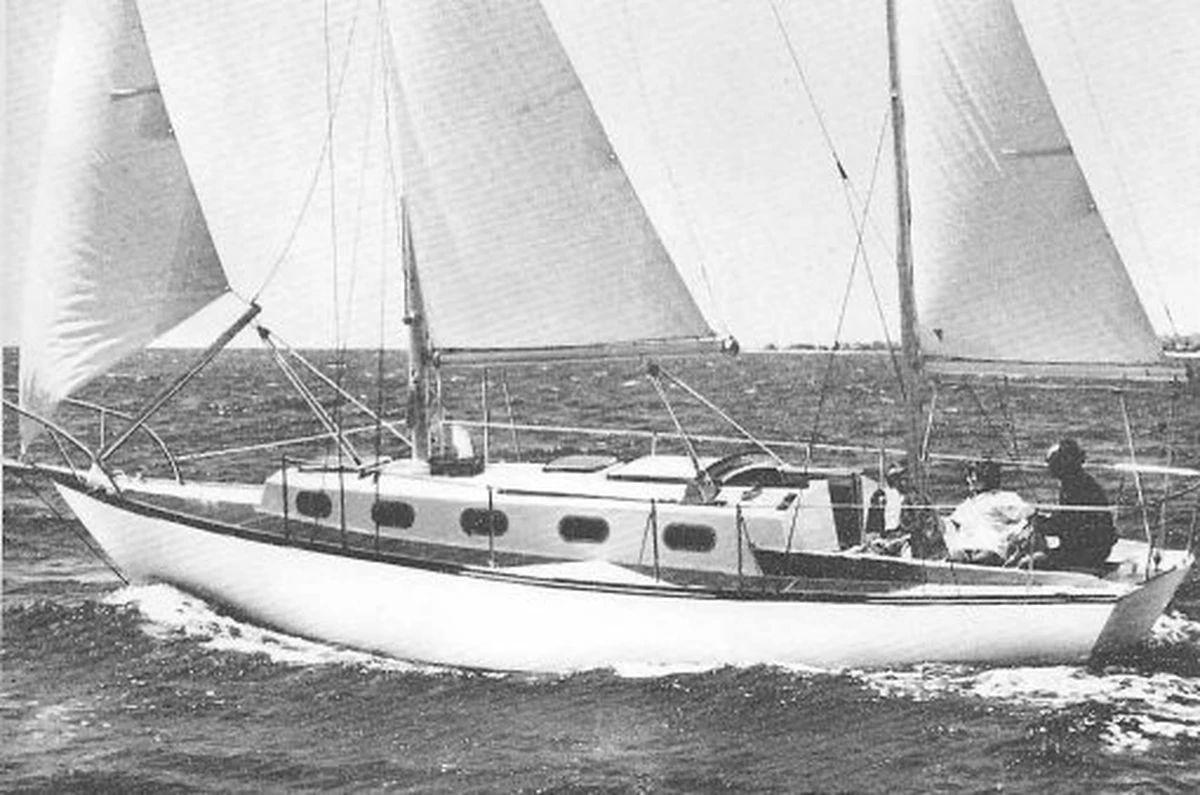
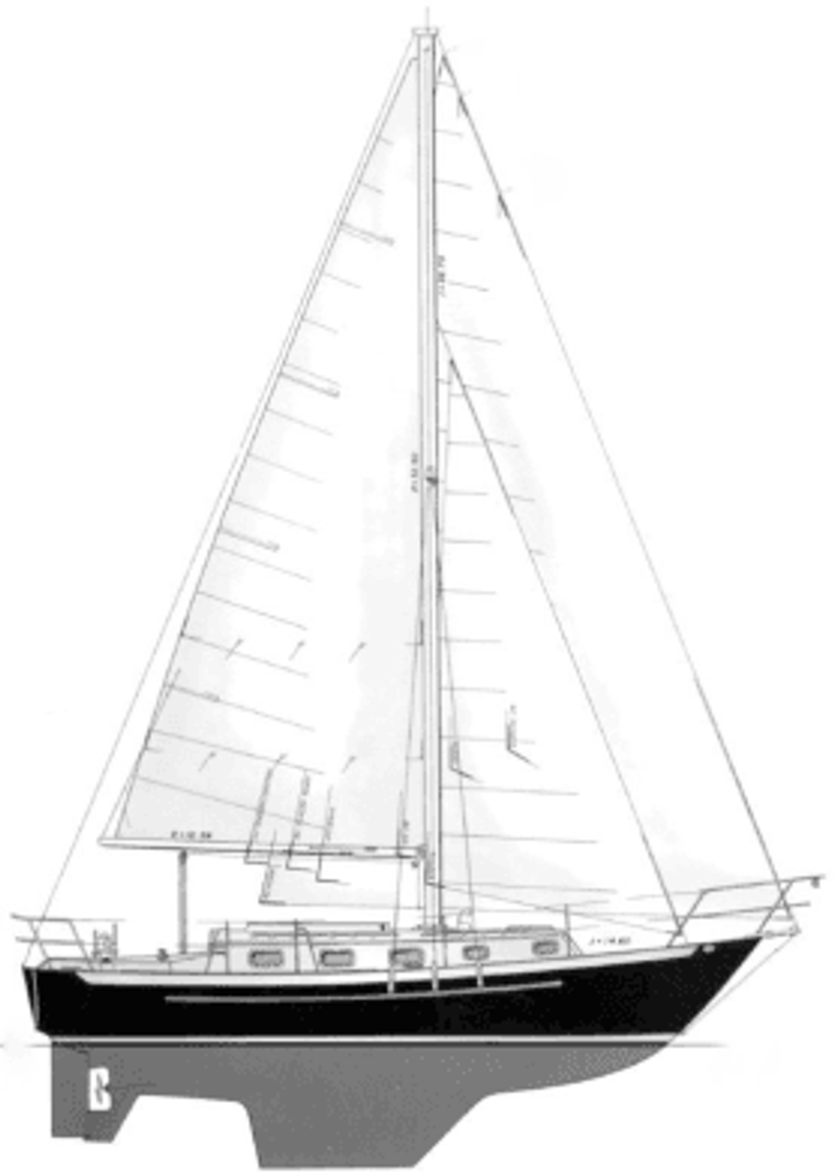
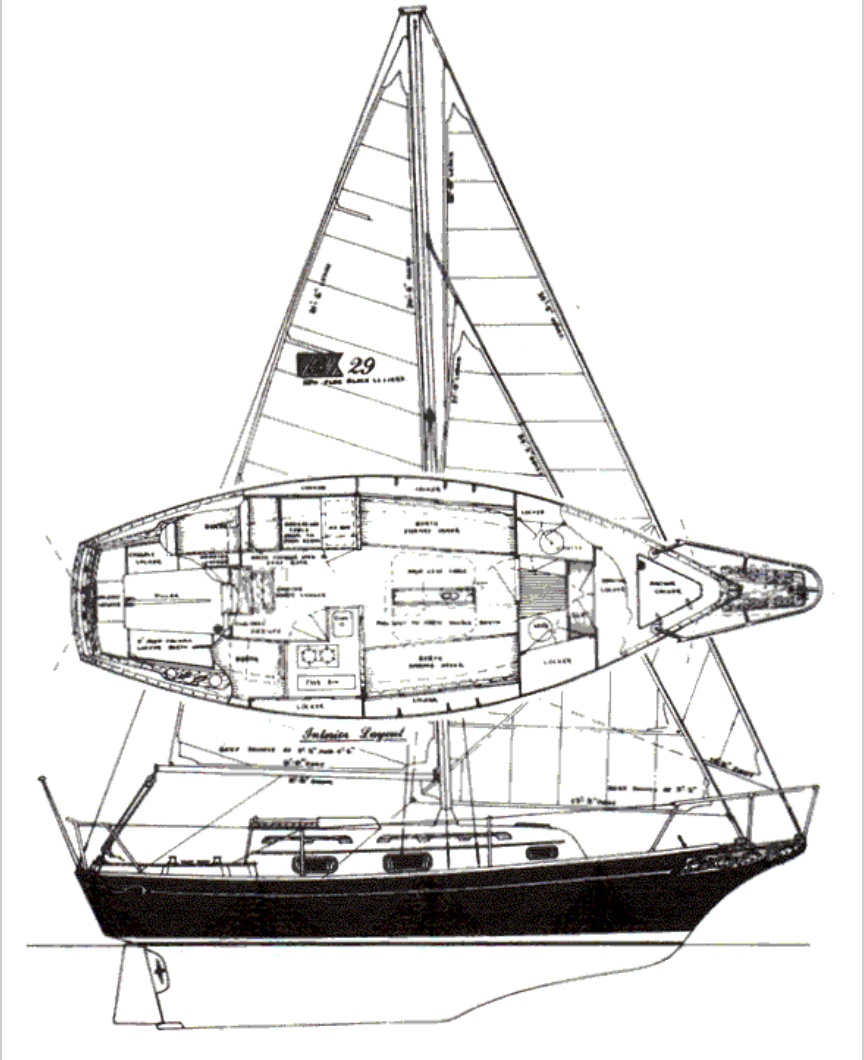
The Bayfield 29 is Ted Gozzard’s mid-size Bayfield, a shoal-draft cutter with the line’s trademark clipper bow, trailboards, and built-in bowsprit. Like its little sister the Bayfield 25, its argument is draft: a long full keel carrying just 3’6” of water lets it cruise ground that most 29-footers must sail around. Unlike the 25, it has the displacement, ballast, and cutter rig of a more serious cruising boat.
History
Bayfield Boat Yard of Bayfield, Ontario built the 29 from 1978 to 1983, and it sold well: about 350 boats, making it one of the more findable Canadian cruisers of its era on today’s market. Most were delivered as cutters with the staysail set on the molded bowsprit’s inner forestay; Baldwin notes the boat was “available sloop or cutter.” Tiller steering was reportedly standard from the factory, but as Baldwin observes, “most boats on the market today have wheel steering.”
Construction
The hull is solid fiberglass, and heavily so. The factory book figure is 7,100 lbs displacement with 3,000 lbs of ballast, a stout 42 percent ratio, but company president Jake Rogerson admitted in 1985 that the boats were overbuilt and actual displacement ran closer to 8,500 lbs. Treat the published performance ratios accordingly. The rudder is keel-mounted, the auxiliary was typically a Yanmar 2GM diesel, and tankage is 20 gallons each of fuel and water. Gozzard used the beamy, high-sided hull to buy interior volume, including what Baldwin highlights as “a spacious head instead of a cramped V-berth.”
Under Sail
With honest weight and a 21’9” waterline, the Bayfield 29 is a moderate performer that prefers a working breeze; the cutter’s divided sail plan keeps individual sails small and the boat manageable shorthanded, and the staysail alone makes a sensible heavy-weather headsail. The long keel tracks steadily and the boat heaves-to well. The trade-offs are the ones the type always carries: unremarkable light-air speed and windward angles, and the high topsides Baldwin lists as a minus add windage in a blow and at anchor.
Buyers Notes
Baldwin’s pluses center on the keel: “The long, full keel provides shallow draft for this size boat.” That, plus 350 hulls built, makes the 29 one of the easier boats on his list to actually find and afford. On survey: check the bowsprit and its knee (it is molded into the deck and loads the staysail and headstay), the trailboards and bow platform for rot and refastening, deck core moisture, and which steering the boat carries if a tiller matters to you. The displacement discrepancy is worth remembering when comparing listings: the boat is heavier and slower than the brochure numbers suggest, and also stiffer and more solid.