Overview
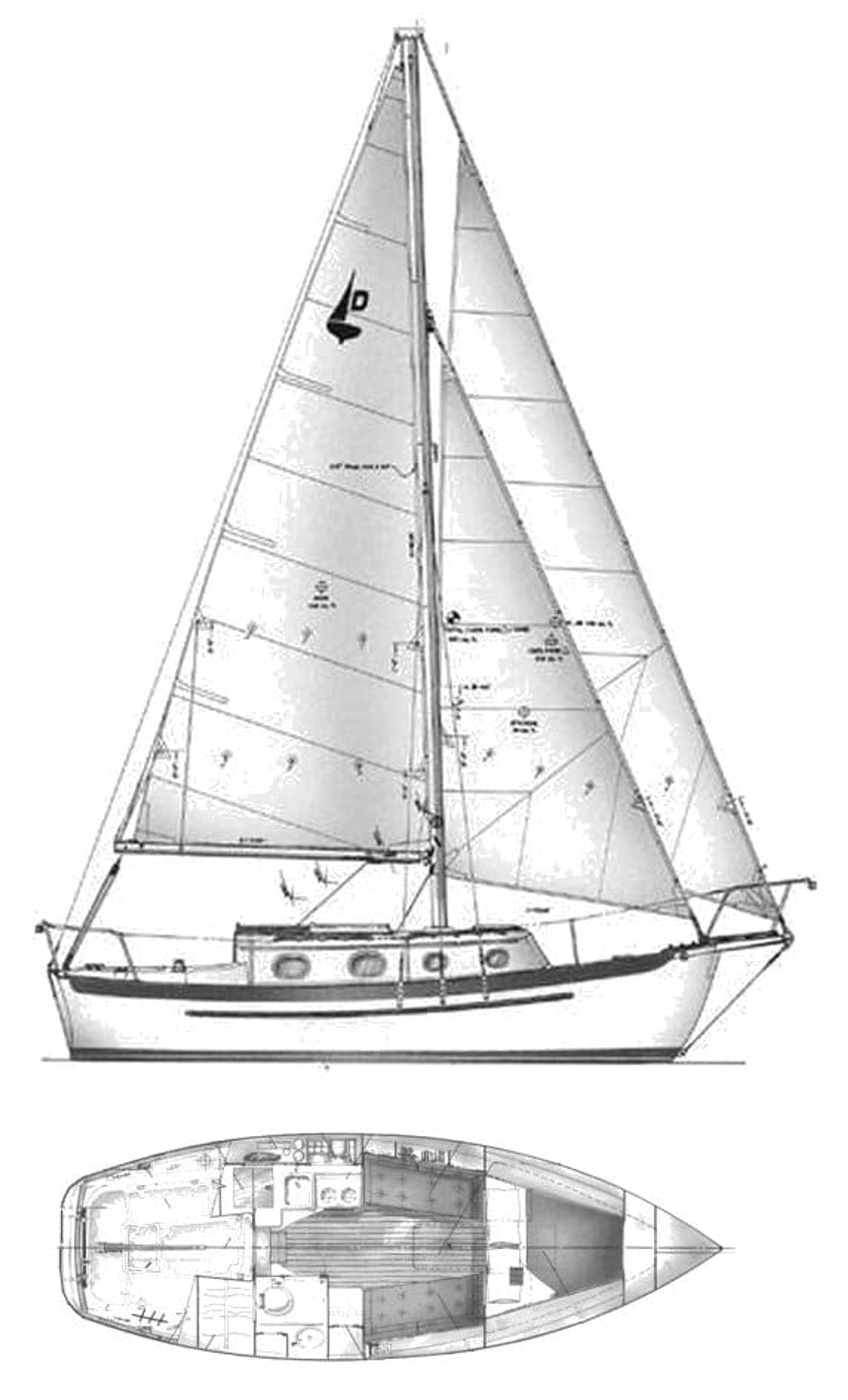
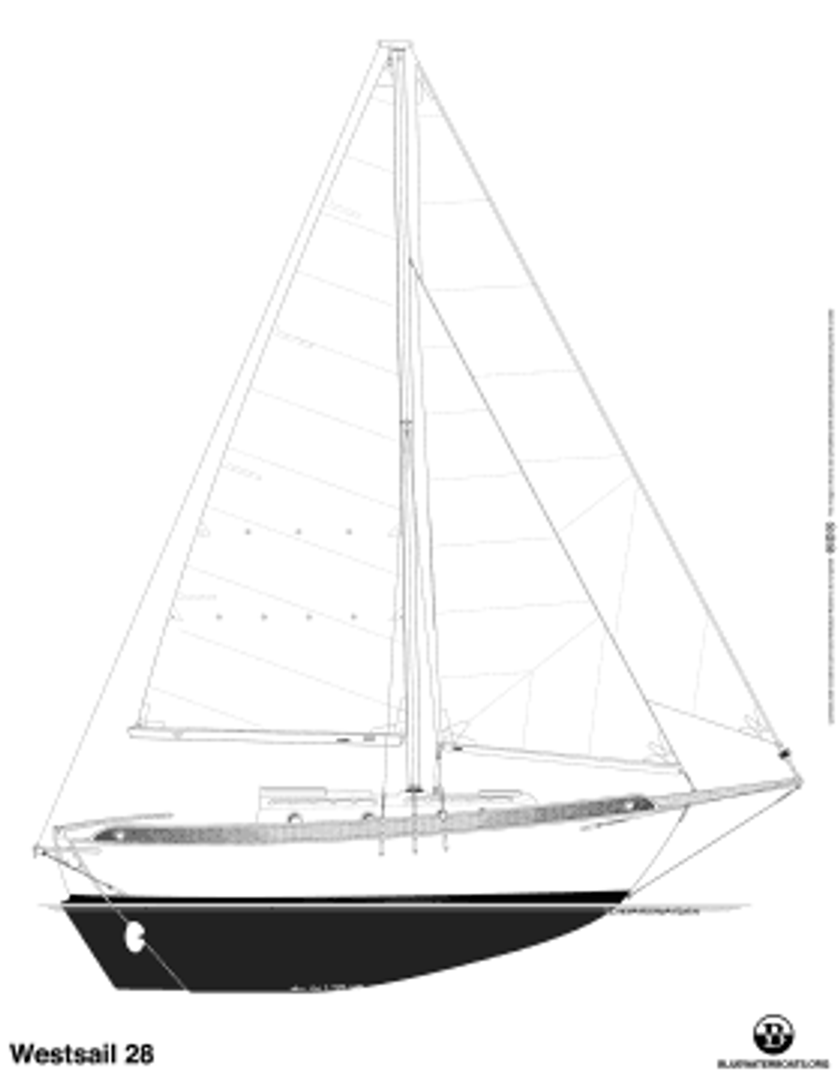
The Westsail 28 was Herb David’s answer to buyers who wanted the company’s heavy cruising construction in a smaller, less expensive boat. Westsail announced it in 1975 and built 78 hulls before the molds were sold in 1979. It resembles a reduced Westsail 32 above the water, but David drew a separate hull with a more cut-away forefoot and fuller garboard sections.
Westsail initially offered complete boats, then added kit stages in 1976. That matters in the used market. Two examples can share a hull number and have very different joinery, wiring, tank installations, and structural details depending on who completed them.
A Design That Changed Early
The published specifications describe the later and more common configuration: 28 feet 3 inches on deck, 23 feet 6 inches on the waterline, 9 feet 7 inches of beam, and 4 feet 4 inches of draft. Displacement is 13,500 pounds with 4,200 pounds of lead ballast. The cutter rig carried 545 square feet of working sail according to the Westsail construction manual.
Those figures do not fit every hull. The owners association reports that roughly the first six boats displaced about 9,500 pounds, carried 3,500 pounds of ballast, drew 4 feet, and used a smaller 480-square-foot sail plan. Westsail then increased ballast and displacement, enlarged the rudder, and added sail area. A boomkin appeared later, probably around hull 20. SailboatData reports 475 square feet from its calculated main and foretriangle, while the construction-manual figure includes the working cutter inventory. Both numbers are retained because they measure different things.
Under Sail
The long keel is cut away forward and carries the rudder at the stern. Robert Perry’s contemporary design comments, preserved by the owners association, expected that shape to turn more readily and sail closer to the wind than the more traditional Westsail form. It remains an ultra-heavy 28-footer. Light-air acceleration will be limited, and a short waterline sets a modest speed ceiling.
Once moving, the weight and narrow beam should favor an easier motion and steady tracking. The cutter plan divides the sail area into manageable pieces for a small crew. The archived review claims roughly 110-mile days and warns of hobbyhorsing in an unfavorable sea, but no passage log or test data is attached to those numbers. They are useful owner-era observations, not verified fleet averages.
Accommodation and Construction
The boat was laid out for a couple rather than for maximum berths. The original kit specification included a solid fiberglass hull, installed lead ballast, a molded deck and cockpit, primary bulkheads, a 37-gallon fuel tank, and a 77-gallon water tank. SailboatData lists a plywood-sandwich deck. Any surviving example should be checked for moisture around deck fasteners, stanchions, chainplates, hatches, and the substantial bowsprit fittings.
The owners association documents complete boats and several kit levels. Survey the individual boat, not the reputation of the mold. Pay particular attention to tabbing around owner-installed bulkheads, electrical protection, hose runs, fuel-system access, and how heavy equipment is restrained.
What to Inspect
John Neal’s Mahina list describes traditional Westsails as sturdy but gives the line a modest 2/5 assessment and warns that original aluminum fuel tanks can leak. The document groups Westsail models, so that warning is a prompt for inspection rather than a confirmed Westsail 28 defect rate.
Confirm the hull’s early or later specification from its number and actual draft. Inspect the rudder hardware, boomkin and bowsprit attachments, chainplates, deck core, tanks, and every part of a kit finish. Rick and Jean Gustavson completed a 1984-1991 circumnavigation aboard their Westsail 28, Mana, per Latitude 38’s own West Coast Circumnavigators roster, directly re-confirmed on that list September 15, 2026. That is currently the only source naming this voyage; a second, independent account of the same passage has not yet been found, so the record rests on one origin rather than the two this catalog’s evidence standard otherwise looks for.