Overview
Think of the Cape George 36 as a Bristol Channel Cutter scaled up for a couple wanting a bit more boat: the same traditional appeal and offshore manners William Atkin’s designs are known for, built into a bigger hull. Cecil Lange, the New Zealand-born builder behind them, built a genuine reputation on these boats, and the yard he founded has since become the place owners go for repairs and refits.
Working with naval architect Ed Monk, Lange adapted Atkin’s 1930s Tally Ho Major into fiberglass in the 1970s, keeping the original’s all-round sailing manners and honest turn of speed intact. Four sibling models have since grown out of that same lineage, and the design has built a genuinely loyal ownership base.
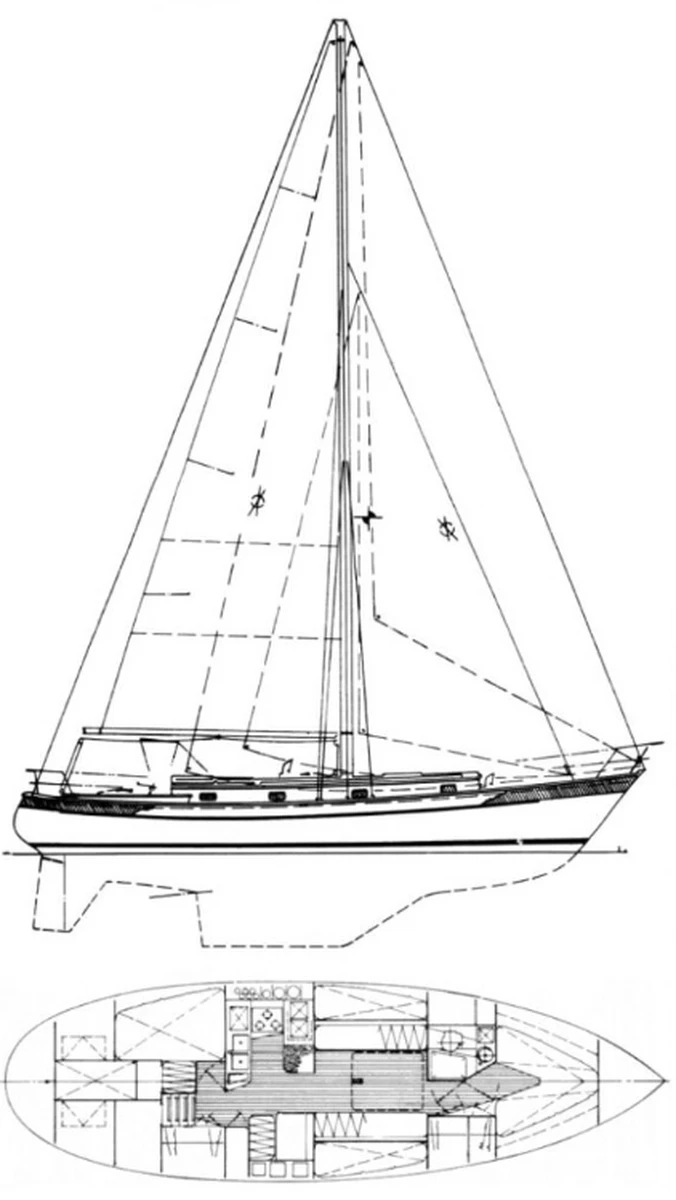
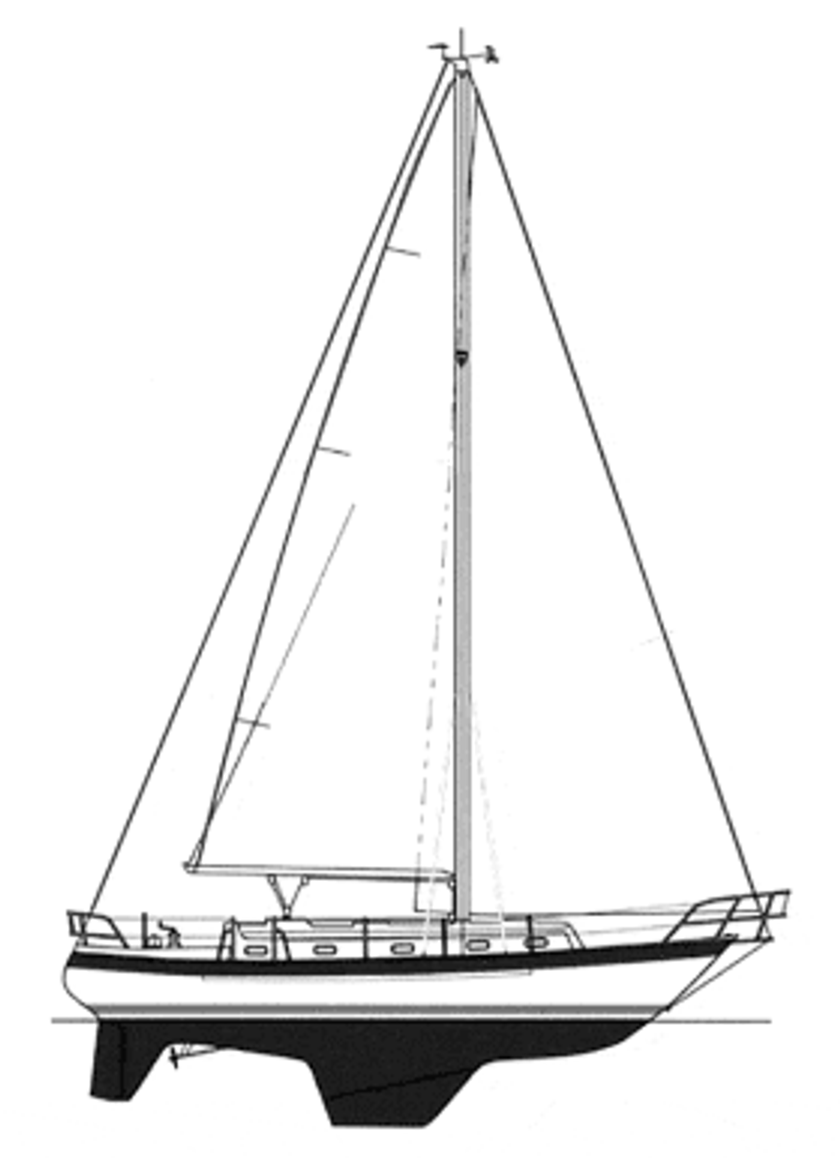
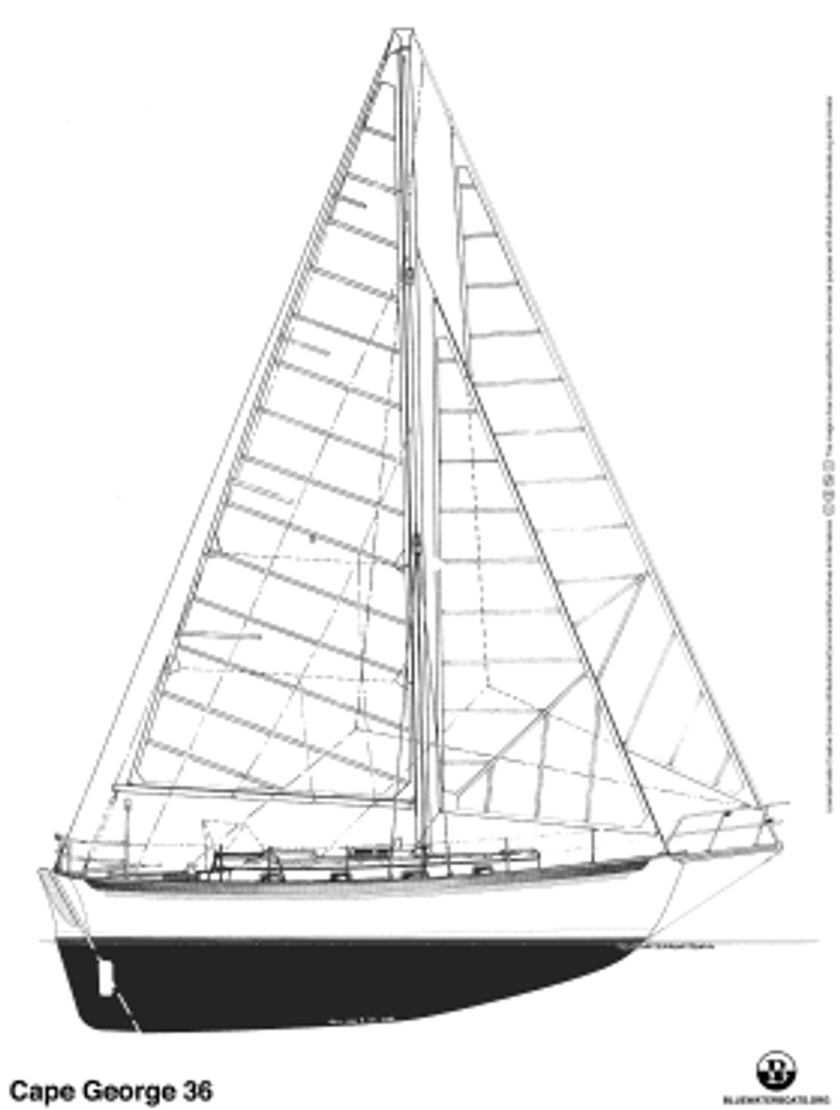
Her looks alone win over plenty of buyers: high bulwarks and broad side decks, a low, unassuming cabin house, a secure and spacious cockpit, a gentle sheer running into a wineglass transom, and an unusually large rudder hung off the stern, uncommon on an Atkin design but valued by owners for how simple it is to maintain.
Everything about her lines reflects her era. The full keel runs uncut, without the forefoot cutaway that later designs favored, trading some maneuverability for genuinely excellent directional stability, strong self-steering behavior, and predictable handling in any conditions. Short overhangs and a comparatively long waterline echo old-school pilot boats and stretch her hull speed, while deep wineglass sections give her both an easy, seakindly motion and real load-carrying capacity for extended cruising.
Loaded for a cruise, she sits solidly in the heavy-displacement category, yet a generous sail area relative to that displacement keeps her surprisingly quick. She holds her own in light air and comes alive as the breeze builds, without losing that speed when heavily laden.
History
Cecil Lange, born in New Zealand, and his son Brian founded the Cecil Lange and Son boatyard in 1974 on a wooded lot along Cape George Road in Port Townsend, Washington, just south of the Canadian border.
Lange had long admired William Atkin’s traditional yacht designs from the 1930s and 40s, and one boat in particular caught his eye: a wooden cutter called African Star, built to Atkin’s 34-foot Tally Ho Major lines, that was cleaning up in Puget Sound racing. Lange brought in designer Ed Monk to translate that design into fiberglass, and the result became the Cape George 36. Over the years that followed, the yard branched the same lineage out into 31, 34, 38, and 40-foot cutters.
During the boat’s heyday, the yard doubled as something like a small community: owners moved into motorhomes on site and built their own hulls alongside others doing the same, right at the factory’s door.
Lange retired in 2000, and the yard sat quiet until 2004, when Todd Uecker, who’d worked under Lange through the 1990s, bought it with his brother Tim and restarted production under a new name, Cape George Marine Works. The Ueckers later added Lyle Hess’s Sam Morse designs to their lineup as well, the 28-foot Bristol Channel Cutter and the 22-foot Falmouth Cutter.
Offshore Track Record
In 2022, South African sailor Kirsten Neuschafer entered the Golden Globe Race, a solo, non-stop, unassisted circumnavigation via the three Great Capes sailed under 1968-era rules (no GPS, no autopilot, sextant navigation only), aboard her Cape George 36 Minnehaha, launched in 1988. She won the race outright, finishing at Les Sables-d’Olonne, France on April 27, 2023 in an official time of 233 days, 20 hours, 43 minutes, becoming the first woman to win a round-the-world yacht race via the three Great Capes in any format, solo or crewed. The Golden Globe Race requires every entered boat to be individually approved against class rules for solo offshore suitability, so Minnehaha’s entry and win stand as a documented, third-party-verified case for the design’s offshore capability. Neuschafer is entered to defend her title in the next edition, departing Les Sables-d’Olonne on 6 September 2026, again sailing Minnehaha.
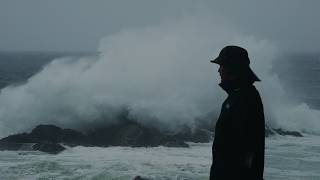
A second real-world case comes from Maya and Aladino, who document their Cape George 36 Magic Carpet II on the Sailing Magic Carpet YouTube channel. Their hull had been written off after a 2013 boatyard accident, dropped roughly 20 feet from a crane onto concrete, an isolated yard mishap unrelated to the design or its maintenance, not a structural or build-quality issue with the boat itself. They bought the wreck sight unseen and spent about five years rebuilding it, relaunching in 2025. In 2026, sailing the Pacific Northwest, they logged a deliberate downwind run into a Vancouver Island gale with apparent wind sustained above 40 knots, a real stress test of both the boat and the refit.
Buyers Notes
Boats were sold at every build stage, anywhere from a bare hull to a fully finished yacht, so used examples vary enormously in build quality and interior layout. Even the factory-finished boats were semi-custom. Treat every Cape George 36 you look at, factory-built or not, as a one-off.
Lange himself flagged a concern with some owner-finished boats: ballast that didn’t quite meet what he considered adequate. On survey, look closely at the teak-over-plywood decks too; rot underneath can be tough to spot until it’s advanced.
The wood-lined fiberglass bulwarks are a known trouble spot. Water gets in, the wood swells, and the swelling lifts the teak caprail, which only makes the leak worse; left long enough, that cycle rots out the deck and deck beams and turns into a genuinely expensive repair. Cape George redesigned around the problem in the mid-1990s, moving first to solid fiberglass and later to foam-cored fiberglass construction. According to Todd Uecker, converting older wood-lined bulwark boats over to that later construction remains a significant part of the yard’s work today.
Links, References and Further Reading
» The official Cape George Marine Works website» Best Boats to Build or Buy by Ferenc Mate
![First look at the boat we bought sight unseen! Cape George 36 [S4E2]](https://img.youtube.com/vi/PmtmVI238lw/mqdefault.jpg)