Overview
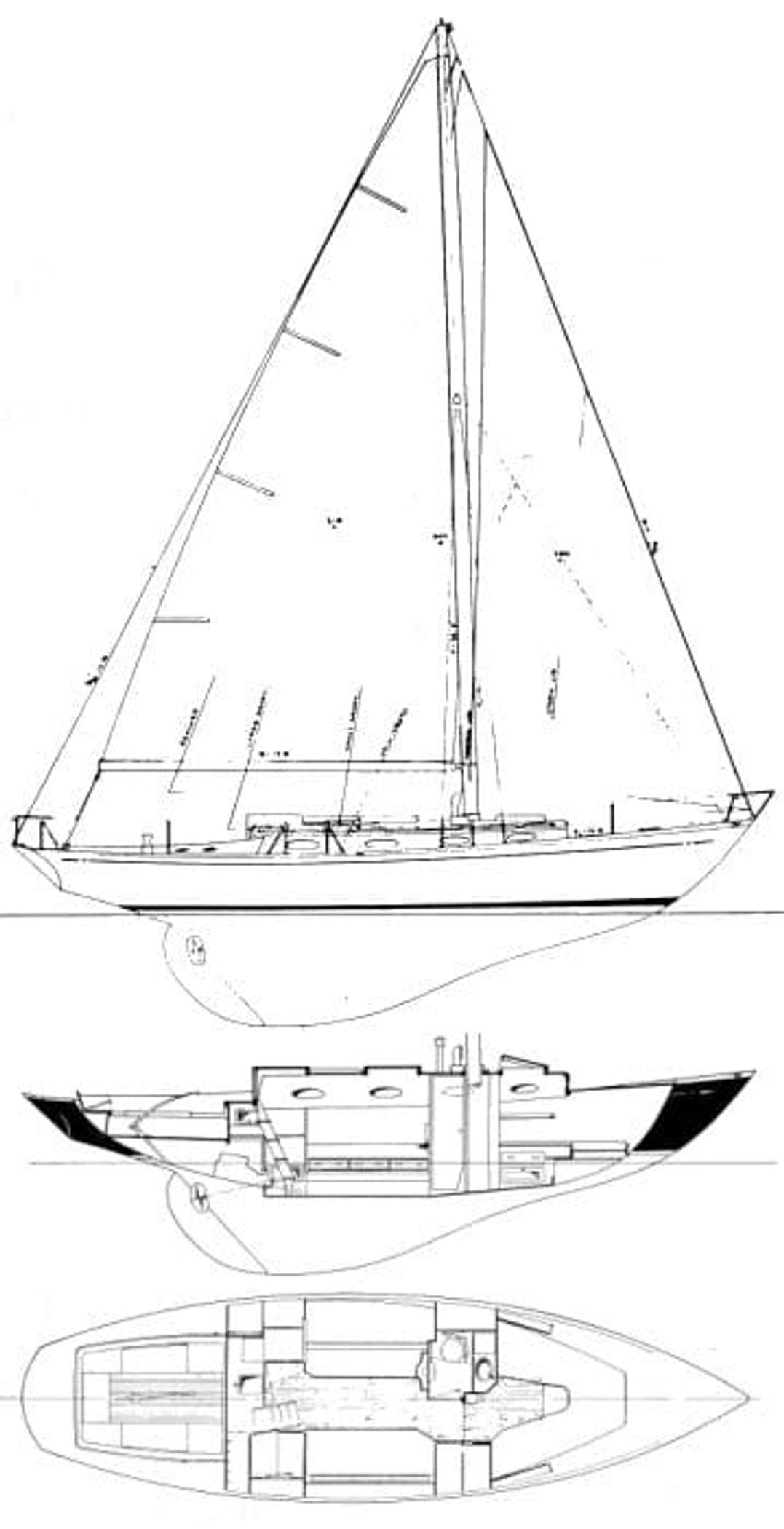
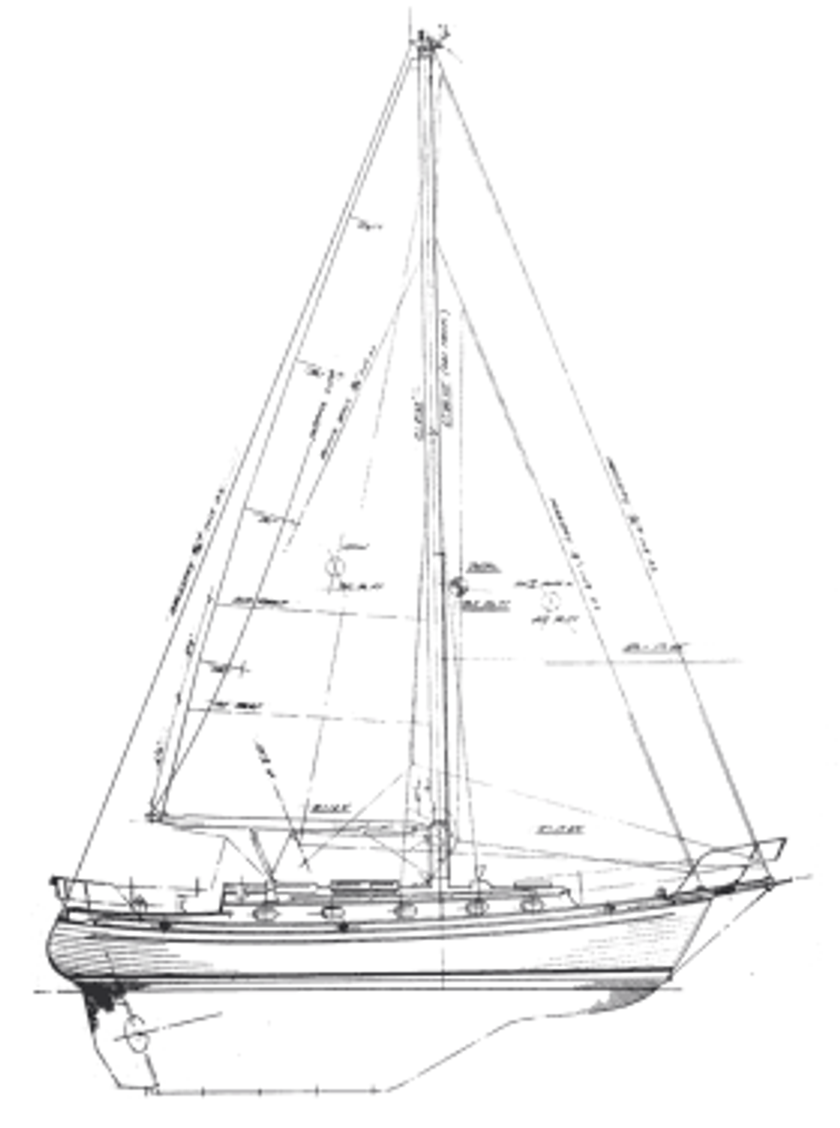
The Tashiba 36, launched in 1986 alongside her smaller sister the Tashiba 31, represents the last of Bob Perry’s full-keel double-enders, and Perry himself rates them among his best work. She carries forward the innovations Perry made on his earlier Baba 40 and pushes them further, landing on a boat that sailors consistently describe as fast, close-winded, stiff, and well balanced for her type.
Ta Shing built her, widely regarded as the best of the Taiwanese yards and a genuine contender for best quality worldwide. Interior fit and finish draws comparisons to fine furniture more often than not.
History
The Tashiba line traces directly back to the Baba boats. The name itself is likely a portmanteau, “Ta Shing” folded together with “Baba.” Bob Berg, the developer who paired designer Bob Perry with the yard that would become Ta Shing, built the original three-boat Baba lineup (30, 35, 40) into a genuine commercial hit.
When Ta Shing took over marketing from Berg, the flagship Baba 40 became the Tashiba 40, and the yard needed two smaller boats to round out the new line. Having already drawn the entire Baba range, Perry was the obvious choice for what became the Tashiba 36 and 31, developed in California with close input from Ta Shing’s Taiwanese representative.
Since the Baba/Tashiba 40 traced its lines back to the legendary Valiant 40 and had already proven itself a marked step forward from Perry’s earlier full-keel work, he pushed the formula further for the smaller boats. In his own words: “The turn to the bilges got even more firm for increased stability. The bows were finer.” The result sails well enough, fast and close-winded, to give many fin-keel designs a real run for their money.
Construction
Hulls are hand-laminated fiberglass, with vinylester resin in the outer layers to resist water intrusion and osmosis. Polyurethane insulation lines the interior as an option. The ballast casting is a single piece of iron, sealed inside a fiberglass shell.
The GRP deck is cored in end-grain balsa, switching to marine plywood coring with stainless backing plates wherever hardware bolts through.
Buyers Notes
Like most Baba, Panda, and Tashiba boats out of Ta Shing, the Tashiba 36’s black iron fuel tanks are prone to corrosion over time; many boats already have replacements, but it stays a priority inspection item regardless. Few examples turn up for sale at any given time.
Links, References and Further Reading
» Yacht Design According to Perry, by Robert H. Perry (p89-p95)» Baba, Panda, Tashiba sailboat Yahoo Group, information and owner discussions
Variations
Ta Shing offered both a standard aft-cockpit layout and a pilothouse version. The aft-cockpit boats carry a large forward stateroom and an aft quarter berth; the pilothouse variant instead has two full staterooms, one forward and one amidships, plus an interior steering station in addition to the usual cockpit pedestal. Both versions share a pressurized hot water system feeding a shower in the head.